Most teams mess up idempotency because they treat it like a caching problem.
It’s not. It’s a storage problem.
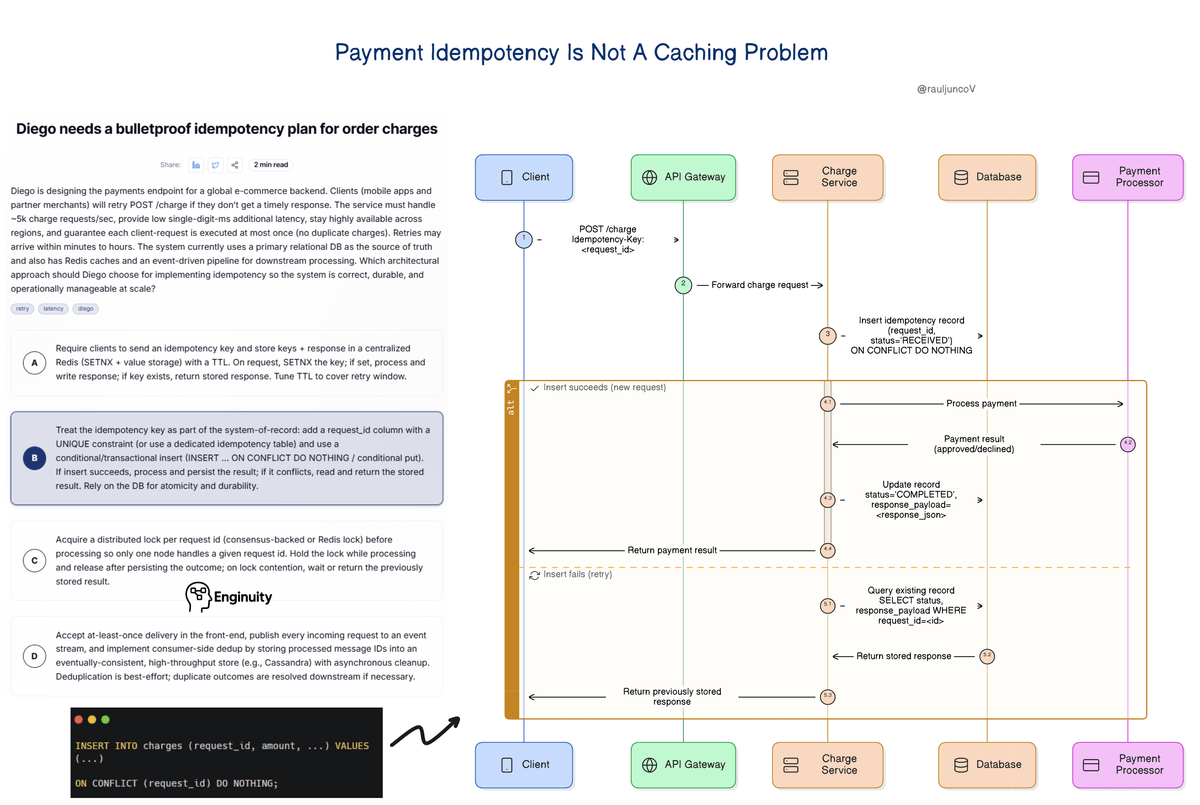
Diego built a payments endpoint handling 5k charge requests/sec.
Clients retry for minutes… sometimes hours.
If he gets idempotency wrong, users get double-charged.
Game over.
Most engineers try something like:
“Just throw the key in Redis with TTL.”
Fast. Simple.
And wrong.
Because the second Redis evicts the key, or a TTL expires, or a node fails,
you don’t just lose the key…
you lose guarantees.
Payments can’t live on “best effort.”
Here’s the real play:
Idempotency belongs in the source of truth.
The database.
Use a unique request_id.
Do a conditional insert.
If it’s new → process and save the result.
If it conflicts → return the stored one.
Atomically.
Durably.
Forever.
No locks.
No race conditions.
No cache guessing.
No “hope it’s still in memory.”
It scales.
It survives region failovers.
It handles endless retries without breaking a sweat.
You can have a free daily question like this here 👉 joinenginuity.com
Because when money moves, you don’t bet on a TTL.
You bet on a constraint.
If you're serious about API design, then learn these 20 concepts:
1 Endpoint
2 HTTP Methods
3 Request-Response
4 Status Codes
5 Authentication
6 Authorization
7 Access Tokens
8 OAuth 2,0
9 Rate Limiting
10 Throttling
11 Pagination
12 Caching
13 Idempotency
14 Webhooks
15 API Versioning
16 OpenAPI
17 REST vs GraphQL
18 API Gateway
19 Microservices
20 Error Handling
API is a set of rules that allows different services to communicate with each other.
What else should make this list?
How Containers Work: Building a Docker-like Container From Scratch 🧐
The best way to understand what containers are (and what they aren't) is to build one using only the most basic Linux commands: unshare, mount, and pivot_root.
Dive in labs.iximiuz.com/tutorials/cont…
A must read for anyone interested in building practical AI systems in 2026:
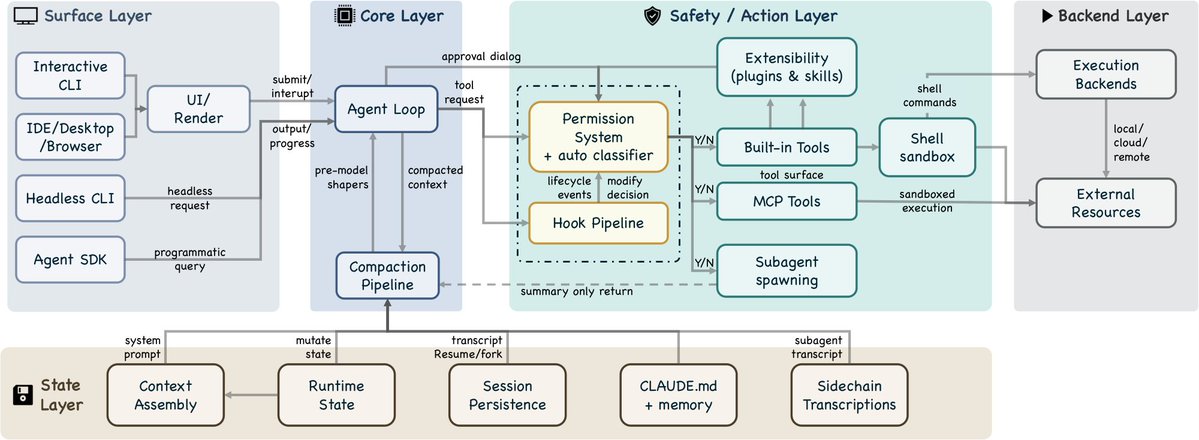
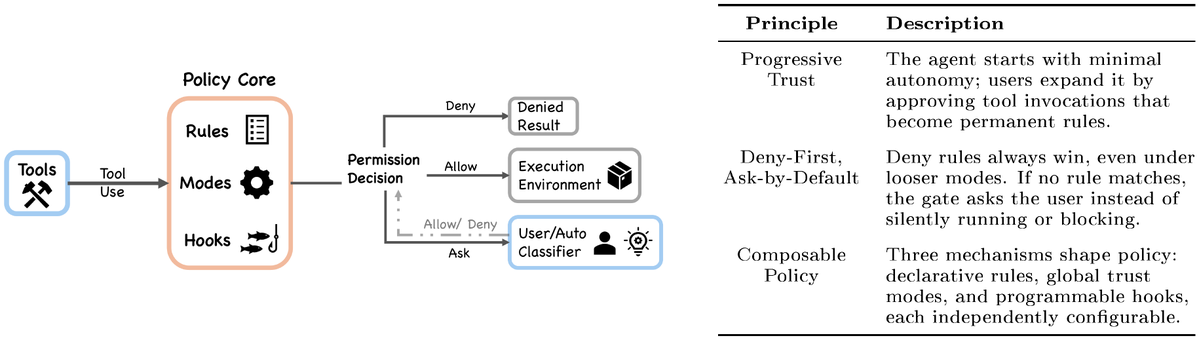
Dive into Claude Code: The Design Space of Today's and Future AI Agent Systems
The paper explains the architecture of a modern production-grade AI agent system (Claude Code) by analyzing its source code. This is what they call a "harness" of an agentic coding system.
Learn by reading with an AI tutor: chapterpal.com/s/9b6bb47a/div…
PDF: arxiv.org/pdf/2604.14228
Software Engineering is changing.
Not slowly.
Structurally.
OLD ENGINEER
│
├── Writes code manually
├── Solves isolated problems
├── Focuses on implementation
└── Uses AI as a helper
↓
NEW ENGINEER
│
├── Frames the right problems
├── Provides context + constraints
├── Reviews architecture & trade-offs
├── Orchestrates AI agents
└── Builds systems, not just code
The shift:
Autocomplete → Assistants → Context-aware tools → Agentic workflows
And now?
AI doesn’t just help you code.
It helps you think, decide, and execute.
🔥 What actually matters now:
• Systems thinking
• Architecture judgment
• Code review skills
• Debugging complex flows
• Security & reliability
• Task decomposition
🚀 What to learn next:
Repo-aware prompting
Reviewing AI-generated code
Eval + test-first workflows
Agentic workflow design
Guardrails + safe automation
The future engineer won’t just write code.
They’ll orchestrate systems at scale.
If you're still only coding…
you're already behind.
💬 Comment your thoughts
♻️ Repost to help your dev circle
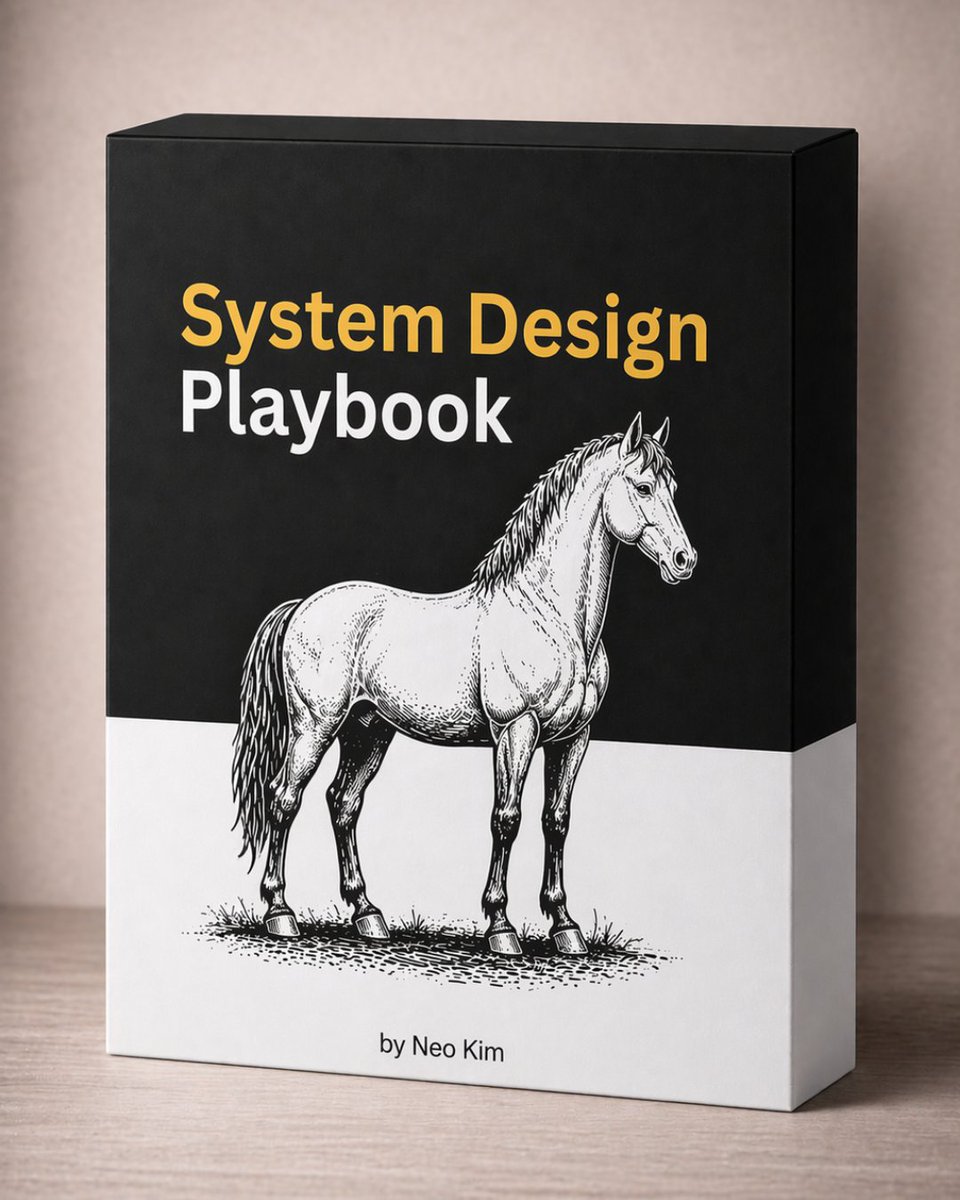
SYSTEM DESIGN PLAYBOOK
Giveaway Alert!!!
• System design fundamentals.
• Condensed notes to read before system design interview.
• Must know concepts from real-world software engineering case studies.
To get it for free:
1 Retweet & Follow @systemdesignone
2 Reply "Playbook"
Then I'll DM you the details.
A 100-page book written by an MIT professor in 2006 has been translated into 14 languages and quietly become the rulebook that designers at Apple, Google, and Airbnb still reference today.
His name is John Maeda, and before he wrote it he spent 12 years at the MIT Media Lab trying to figure out why the products that get loved are almost never the products with the most features.
The book is called The Laws of Simplicity. The following year, he walked onto the TED stage and compressed the entire thing into few minutes. That talk has been played over million times and is still passed around every time a design team gets into a fight about what to cut.
Here is the framework inside it that changed how I think about every product I touch.
Maeda's first law is Reduce, and it is the one everyone thinks they already understand. They don't.
He argues that the simplest way to achieve simplicity is through thoughtful reduction, but the word that matters in that sentence is thoughtful. Removing the wrong things makes a product feel broken. Removing the right things makes it feel magical. The difference is not taste. It is a method.
The method he teaches is an acronym he calls SHE (Shrink. Hide. Embody).
Shrink means making the product feel smaller, lighter, and more humble than it actually is, because when a small unassuming object exceeds expectations, the brain registers it as delight. The iPod's mirrored back was not a finish decision, it was a shrinking trick. The reflection made the device blend into its surroundings so the eye only registered the thin plastic front. You felt like you were holding something impossibly thin because half of it was optically erased.
Hide means taking the complexity that cannot be removed and putting it somewhere the user will never see it unless they go looking. The Swiss Army knife is the oldest version of this idea. A cell phone's clamshell was the modern one. Today it is every settings menu buried three taps deep in every app on your phone. The complexity is still there. The user just never has to carry it.
Embody is the one that almost nobody applies correctly. Maeda argues that once you shrink and hide, you create a vacuum where the user starts to wonder whether the smaller, simpler thing is actually worth more than the bigger, feature-rich thing. So you have to put the lost value back in through materials, weight, craftsmanship, or story. The Bang and Olufsen remote control is intentionally made heavier than it needs to be because weight in the hand signals quality. The same remote in plastic would feel cheap. Same functions. Completely different product.
The deepest insight in the talk is the one Maeda buries near the end, and almost nobody quotes it back.
He says simplicity is not a feature you bolt on. It is a consequence of being willing to defend fewer things more fiercely than your competitors are willing to defend more things. Every product eventually faces a moment where adding one more feature feels harmless and subtracting one feels expensive, and the companies that win that moment are the ones that understand the cost of adding is almost always higher than the cost of cutting.
His final law is the one he calls The One. Simplicity is about subtracting the obvious and adding the meaningful.
Read that sentence twice. It is the entire design philosophy of every product you currently love, compressed into a single line.
Maeda grew up working 3am shifts in his father's tofu factory in Seattle before MIT, before RISD, before Kleiner Perkins, before Microsoft.
He has said more than once that what he learned in that factory shaped everything he wrote in that book. Craftsmanship is not about doing more. It is about doing the right things and refusing to do anything else.
The book is 100 pages.
Read it and learn the laws of simplicity.
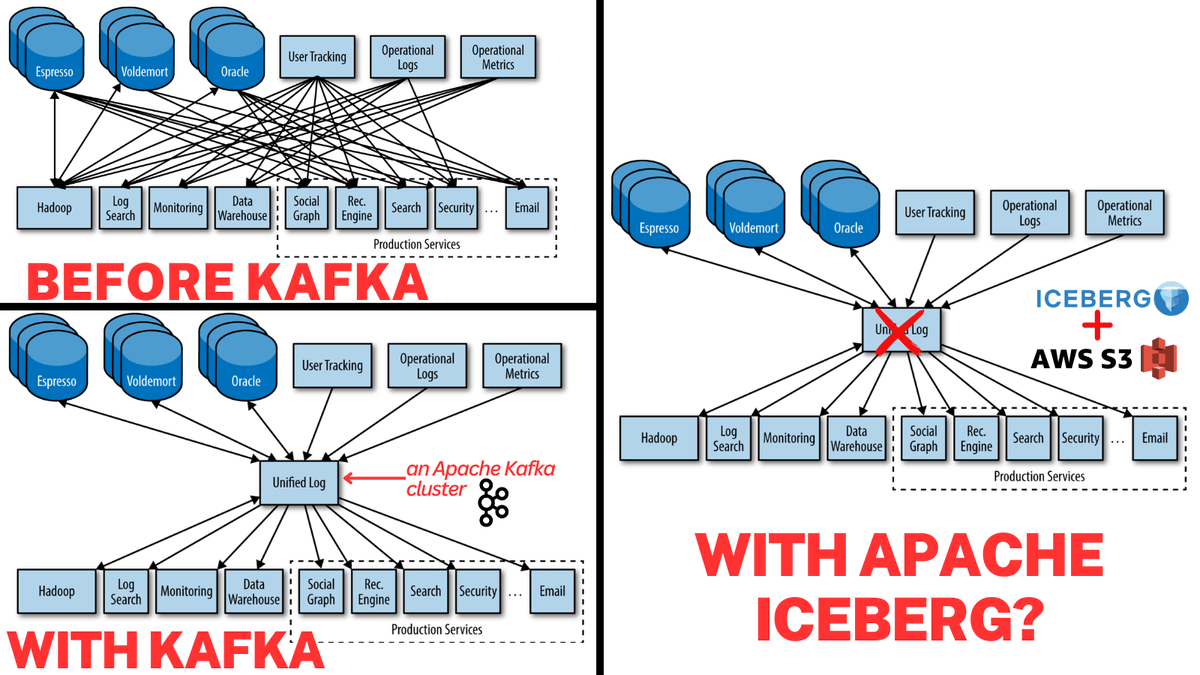
Won't open table formats reduce the need for Apache Kafka?
• organization's data was too messy /w many haphazard pipelines between all systems - a N^2 problem
• Kafka fix this by being your one true source of truth location for data ✨
Iceberg + S3 kind of do the same thing?
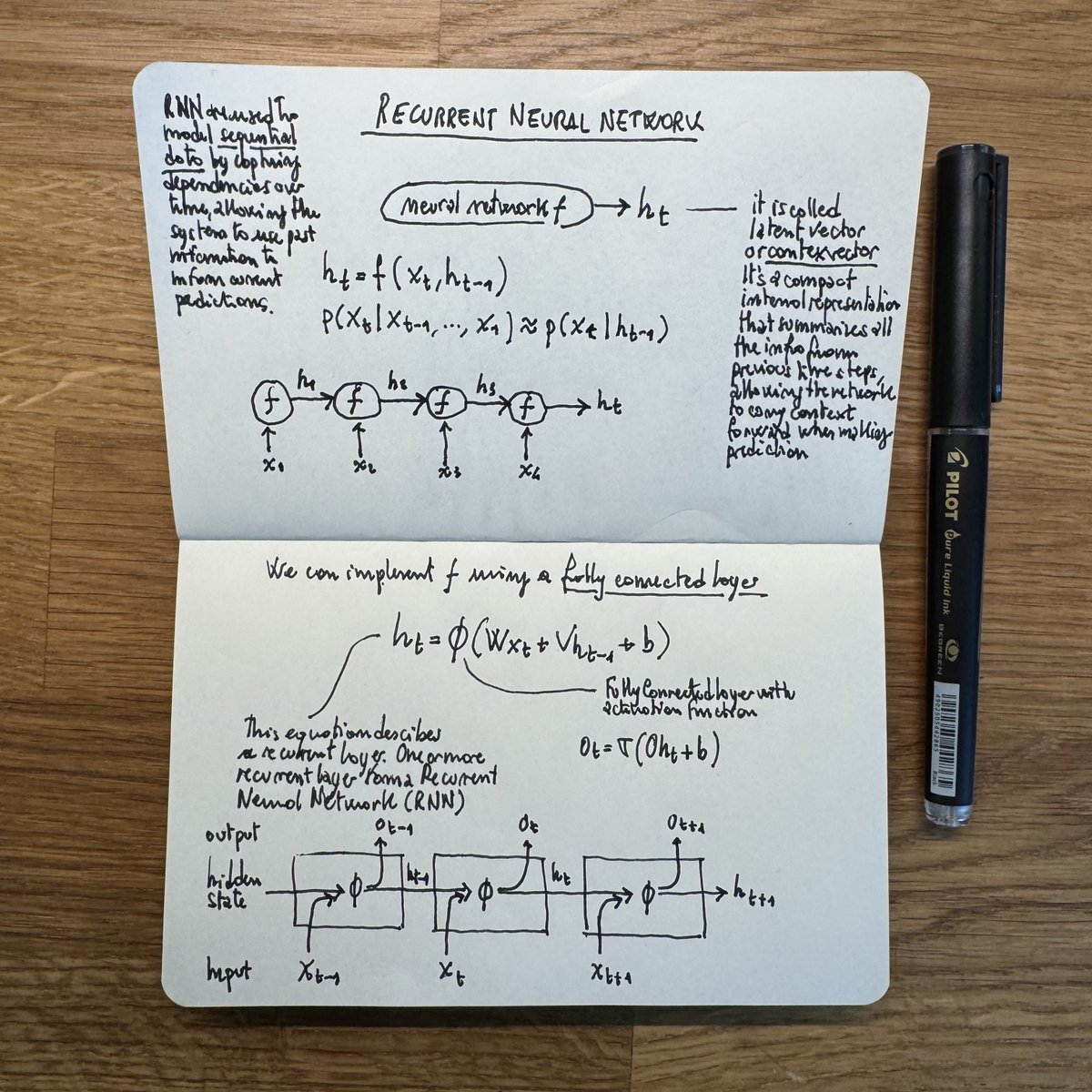
This is a Recurrent Neural Network, in very simple (...very simple...) terms.
It has a latent vector that is a compact internal state that summarizes past information and carries context forward. Instead of relying on the entire history, it uses this state as a compressed memory of what came before.
The function 𝑓 is the neural network itself, typically implemented with fully connected layers and updates the state at each step.
They’ve largely been replaced by Transformers for most sequence modeling tasks although recurrent ideas still appear in some vision models and remain effective in specific settings.