Philoveritas

9.2K posts

Philoveritas banner
Philoveritas

Philoveritas

@philosofveritas

Anthropology | aDNA | History 🏛️🇬🇷 I make maps on topics that interest me - check the highlights

Aegean Sea Katılım Ağustos 2022
113 Takip Edilen2.1K Takipçiler
Sabitlenmiş Tweet
Philoveritas
Philoveritas@philosofveritas·
Following the population exchanges, many settlements in Greece were named with the prefix 'New' and the name of the original settlement of the displaced inhabitants. I mapped 138 such places in Greece along with their original locations. Load the map in 4k for better clarity.
Philoveritas tweet media
Varangian Chronicler@Varangian_Tagma

Thread: New England, Crimea. How Anglo-Saxon migration transformed Byzantium and created the first English colony.

English
25
133
929
111.2K
Philoveritas
Philoveritas@philosofveritas·
@ushtar_i I wonder what it is that makes him so sure it’s Illyrian…
English
1
0
5
220
Last Son of Yamnaya
Last Son of Yamnaya@ushtar_i·
"Skanderbeg’s Y-haplogroup is Albanian in origin and is considered one of the most characteristic Illyrian lineages. Relatives of Skanderbeg have also been identified in Dibër." If you ask me this smells after J2b-L283. youtu.be/HivbLuJNncw?si…
YouTube video
YouTube
Last Son of Yamnaya tweet media
English
6
0
27
1.6K
Philoveritas
Philoveritas@philosofveritas·
@thejiggypenguin @SuperSrb3 @GonChangeLater I wonder why albs never post IA results and only Roman period. Roman Illyria (not Illyrians) encompassed plenty of non-Illyrians and was a well admixed region of the empire (East Med and East Balkan admixtures to name a few geneflows)
English
1
0
2
81
Philoveritas
Philoveritas@philosofveritas·
@HumbleFlow @CLT_Exam Never understood this reasoning. The kind of people not destined to become mere ”workers” (a minority) tend to emerge regardless, through independent pursuit
English
0
0
1
46
Humble Flow
Humble Flow@HumbleFlow·
@CLT_Exam Because education shifted from forming minds to training workers.
English
18
50
846
11.5K
Classic Learning Test
A 19-year-old Oxford student in 1900 would have read: — Homer — Virgil — Thucydides — Xenophon — Plato — Aristotle — Sophocles — Horace — Tacitus — Cicero Likely in the original Greek or Latin. Today, many elite graduates struggle to finish a book they weren’t assigned. Why did schools abandon the classics?
Classic Learning Test tweet mediaClassic Learning Test tweet mediaClassic Learning Test tweet media
English
310
1.4K
9.1K
336.1K
Philoveritas
Philoveritas@philosofveritas·
@ushtar_i Dude I never claimed that he’ from Pannonia, I said that they’re closest to ancient Pannonians, the same way you showed that the upstream carrier is closest to Illyrians.
English
0
0
1
48
Last Son of Yamnaya
Last Son of Yamnaya@ushtar_i·
@philosofveritas The sample is not from Pannonia as far i am aware of we dont know the specific location of the sample you just claiming it out of nothing with nor evidence thats this haplo is Pannonian lol
English
1
0
0
95
Last Son of Yamnaya
Last Son of Yamnaya@ushtar_i·
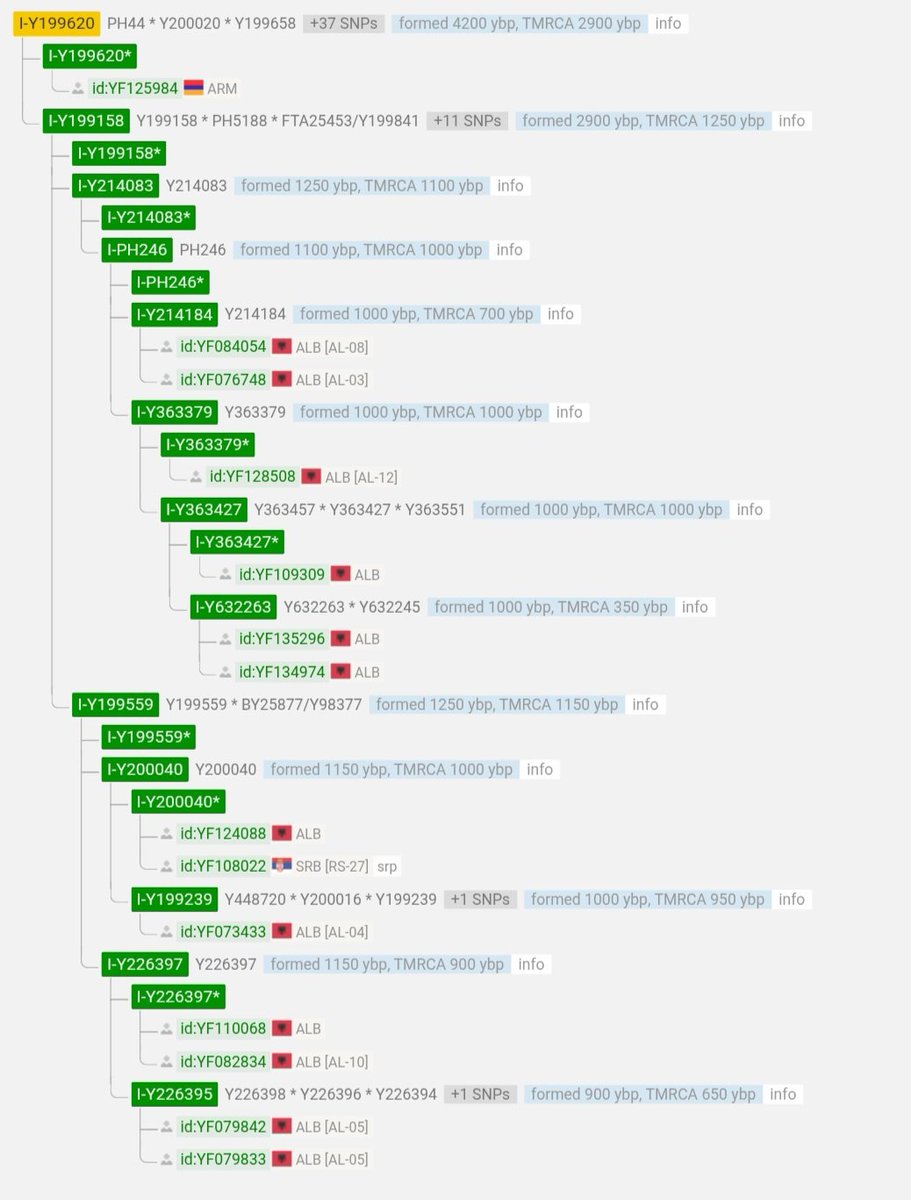
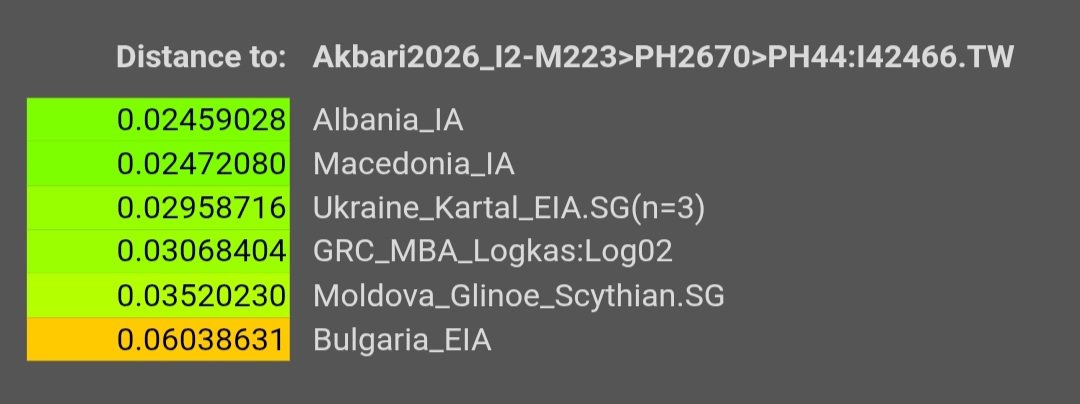
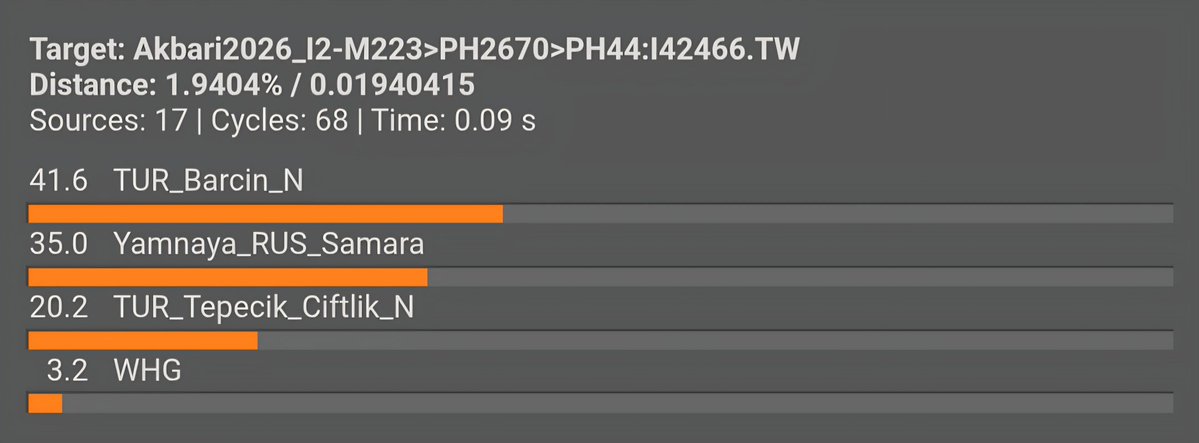
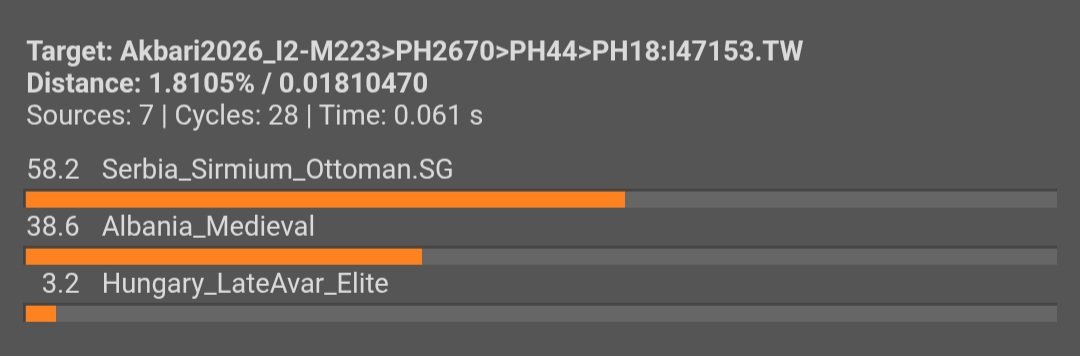
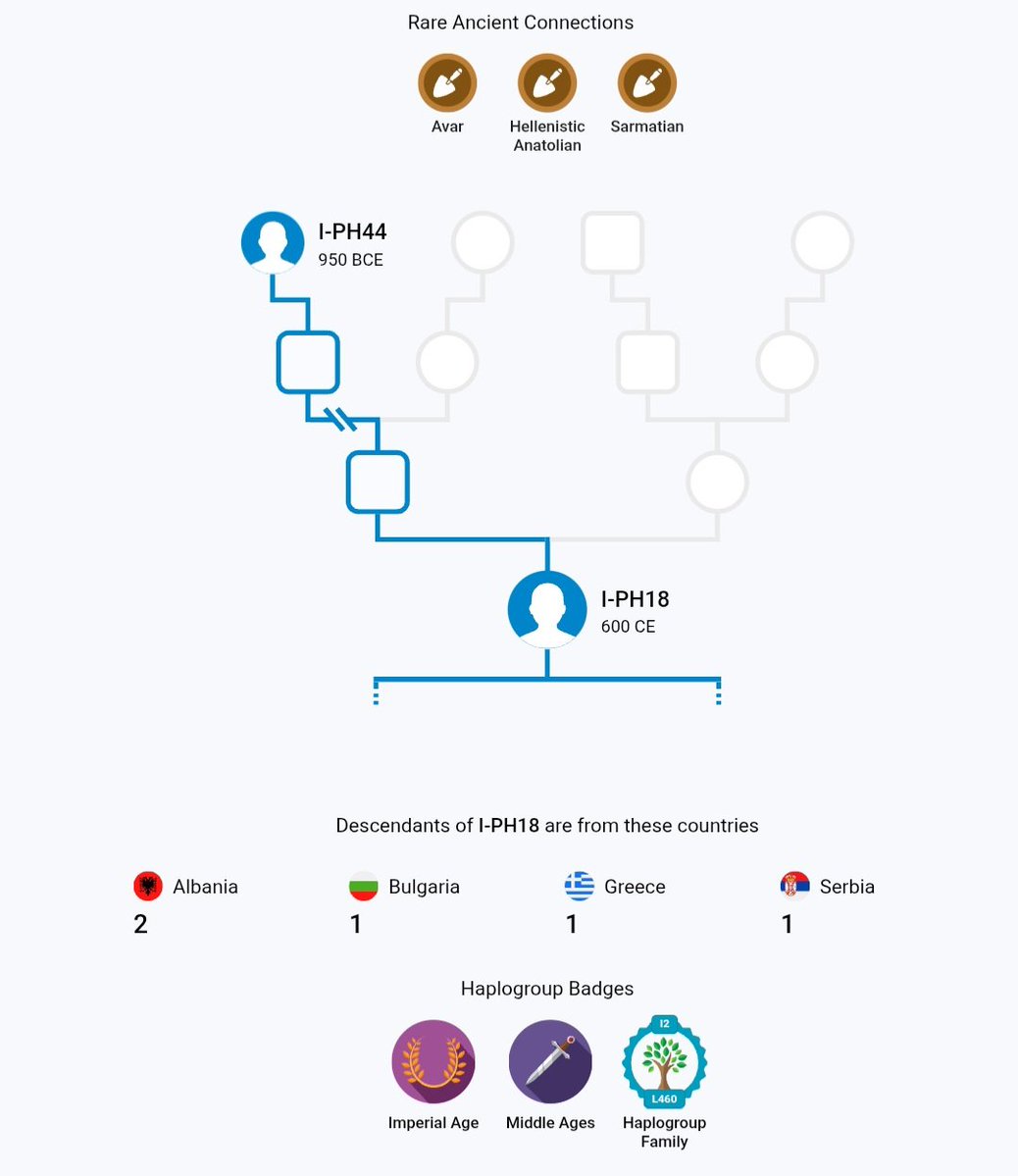
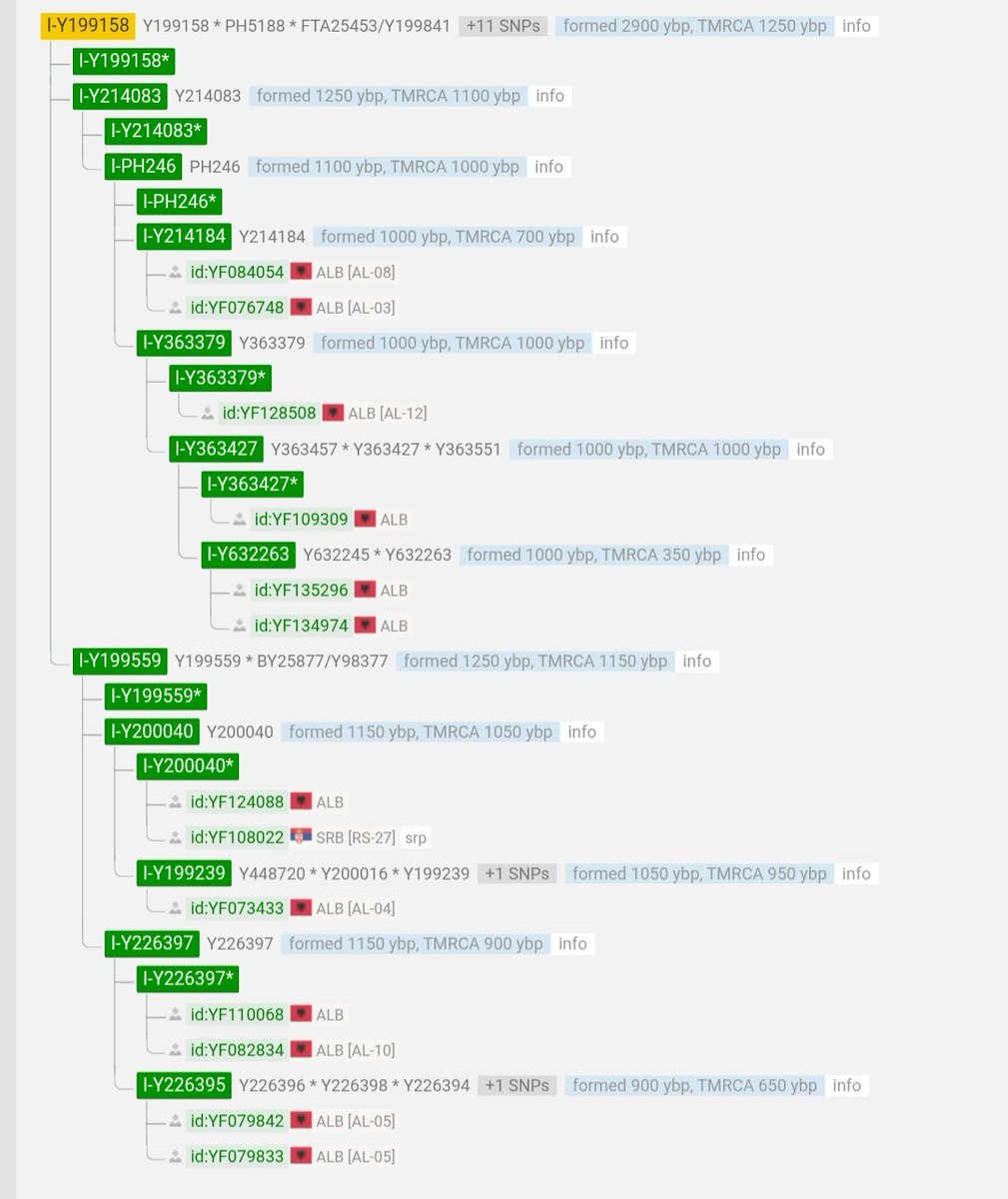
Sample with Y haplogroup I-M223>PH2670>PH44 from Akbari dataset this Y haplogroup almost exist exclusively among modern day Albanians
Last Son of Yamnaya tweet mediaLast Son of Yamnaya tweet mediaLast Son of Yamnaya tweet media
English
8
8
61
4.5K
Philoveritas
Philoveritas@philosofveritas·
Ottoman period inhabitant of Sirmium is as far from ethnically Illyrian one can be. Not that the inhabitants in antiquity were Illyrian either…. The southernmost Illyrians were literally closer to Athens than Sirmians were to the border of Illyria. Also, if the sample is truly from Pannonia, it further proves my point; the marker was not limited to Illyrians (not downstream enough) so you cannot ascertain descent. If anything, it’s more likely all those albanians derive this marker from Pannonians than Illyrians. Do yourself a favor and delete this post
English
1
0
1
76
Menhard
Menhard@IllyrianJ2bL283·
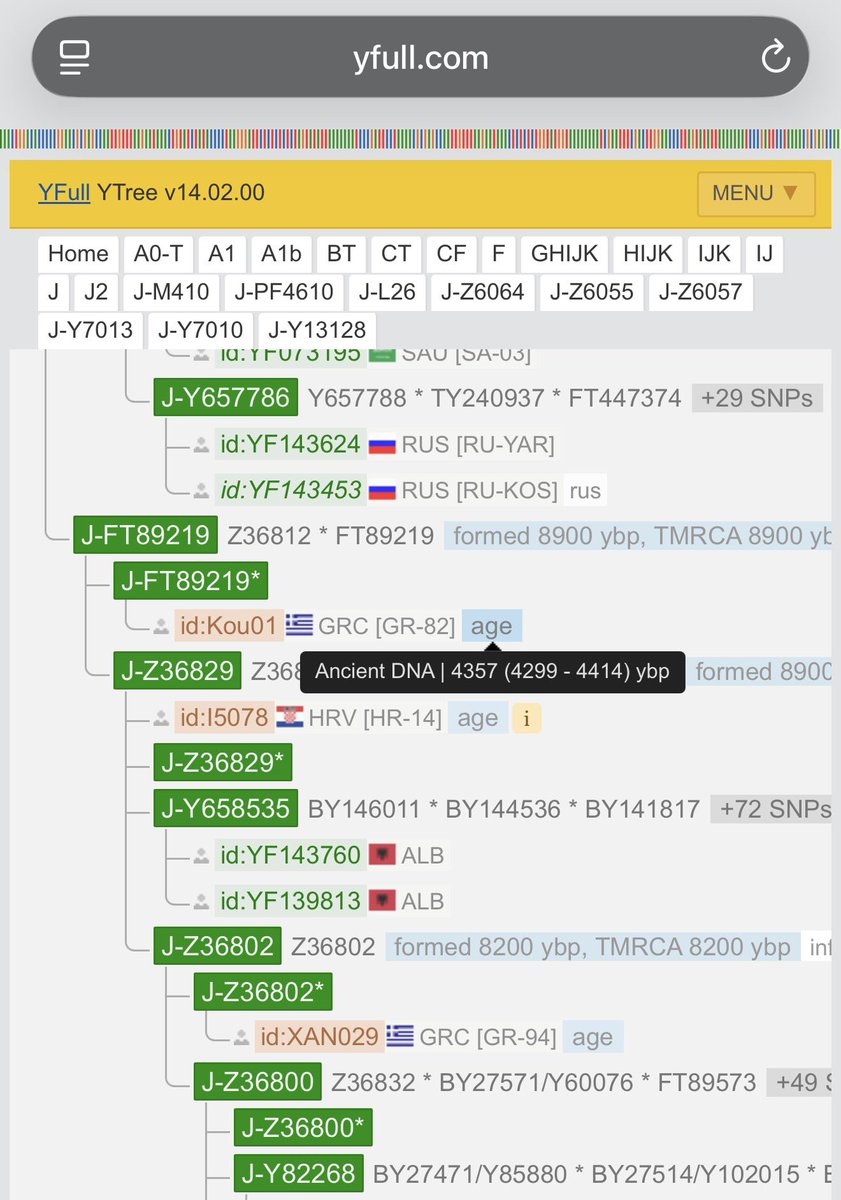
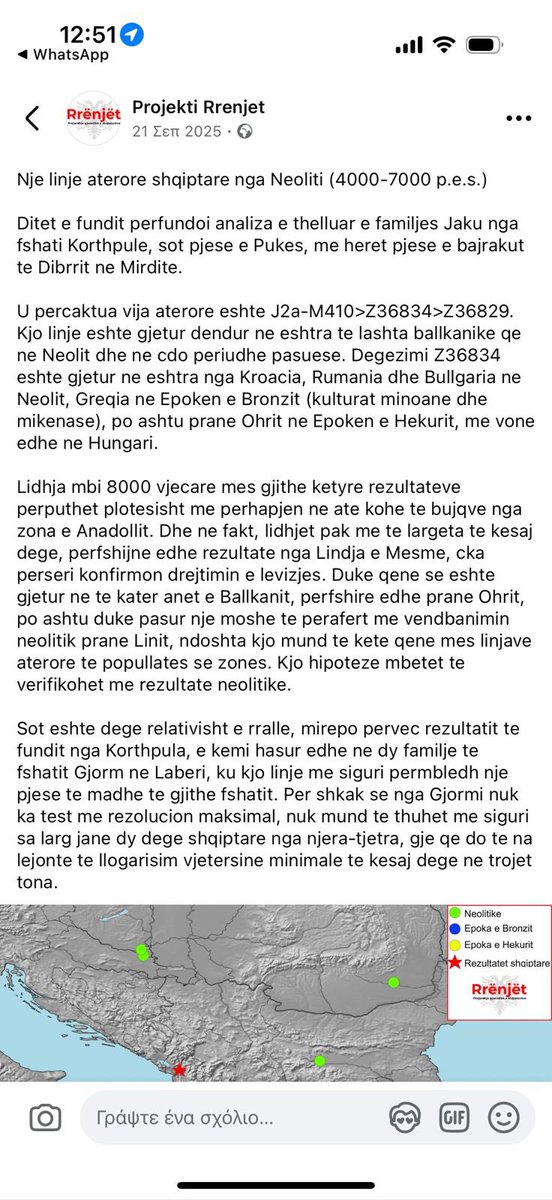
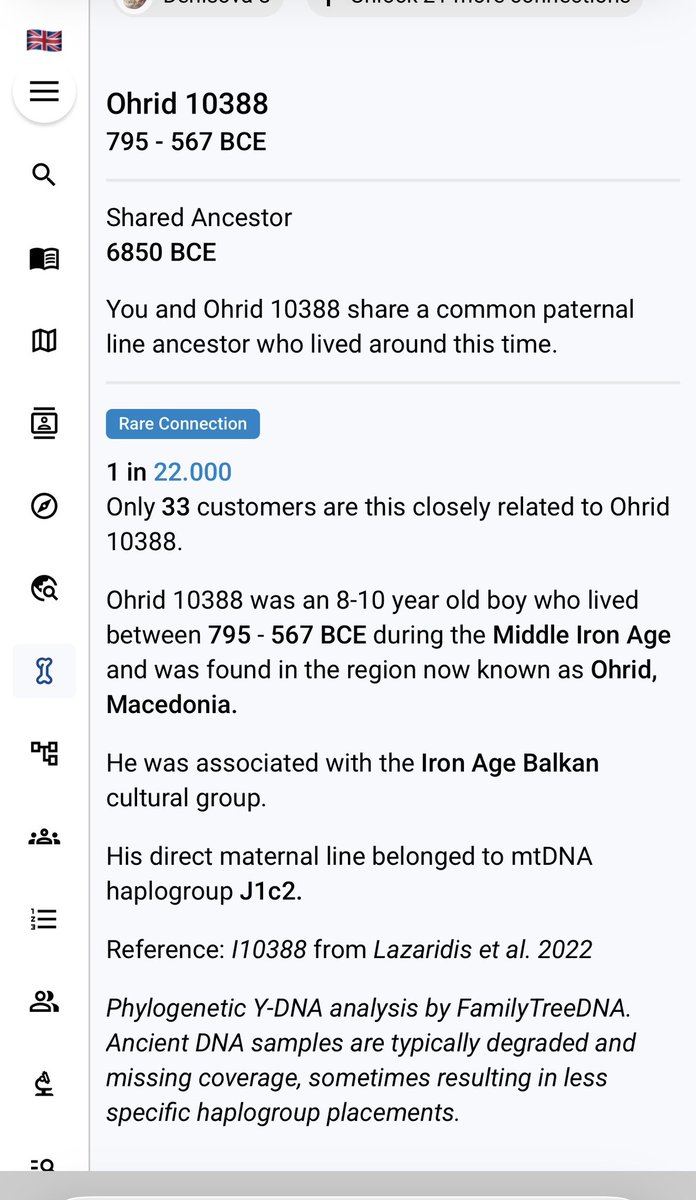
Nothing more indigenous Balkan than a contest on who is more native. Under that unerring criterion of Balkan indigeneity there is a clear winner. 👇🏽 @iosif_lazaridis 🧬 The DNA Truth About the "Labeled" Minoans & Mycenaeans Genetic research on the J-Z36829 lineage (part of J-Z36834) reveals the true history of the Balkans: • Minoans & Mycenaeans: Direct hits in ancient samples like Koufonisi 1 & Tiryns 1. • Paeonians: Sample Ohrid 10388 (Iron Age, ~795-567 BCE). • Neolithic: Osijek 5078 (~4357 ybp). The Reality: Modern Greeks claim the history of the so-called and labeled Minoans and Mycenaeans exclusively for themselves. Yet the data shows: Not a single modern Greek falls under this exact lineage today. In stark contrast, 5% of modern Albanians (including families from the Korthpulë and Gjorm regions) carry on this exact ancient line. The DNA proves an unbroken Albanian continuity dating back to a common ancestor around 6850 BCE. While others label history for themselves, genetics proves the Paleo-Balkan roots of the Albanians. #AlbanianDNA #PaleoBalkan #Minoan #Paeonian #AncientDNA #Rrenjet #J2 @HarvardHEB #fyp yfull.com/tree/J-Z36834/
Menhard tweet mediaMenhard tweet mediaMenhard tweet mediaMenhard tweet media
English
9
8
50
4.3K
Menhard
Menhard@IllyrianJ2bL283·
You are now internationally known as LARPers, descendants of slaves The process by which Turks, Armenians and Roma became “modern Greeks” is the result of complex historical, social and political developments over the course of the 19th and 20th centuries. This occurred mainly through the creation of a modern Greek nation-state, assimilation policies and migrations, especially after the Balkan Wars and the Treaty of Lausanne in 1923. 1. Population shifts and relocations: After the collapse of the Ottoman Empire, especially after the Balkan Wars (1912–1913) and World War I, massive population relocations occurred. The Treaty of Lausanne in 1923 led to an exchange of Muslims and Christians between Greece and Turkey. Many Turks who previously lived in Greece were resettled in Turkey, while Greeks living in Turkey came to Greece. Some Muslim Albanians and Turks who remained in Greece adopted a Greek identity over time. 2. Assimilation of minorities: Ethnic minorities such as Roma and Armenians were assimilated in the course of Greek nation-building. This was done through various mechanisms, including the Orthodox Church, the educational system and language policy. Many Roma and Armenians who were of Orthodox faith were integrated into the Greek nation-state and after a few generations were considered part of Greek society. 3. Influence of Orthodoxy: The Greek Orthodox Church played a central role in defining Greek national identity. Many people who were previously considered Turkish, Roma or Armenian were perceived as “Greeks” through their conversion or membership in the Orthodox Church, as Greek identity was strongly linked to the Orthodox faith. 4. Political and social assimilation: During the interwar period and after World War II, the Greek government pursued a policy of Hellenization. This included the promotion of the Greek language, the Greek educational system and the integration of minorities into Greek society. Armenians and Roma living in Greek cities were assimilated into Greek culture and language, which made them outwardly perceived as part of Greek society. These developments led to a change in the identity of many ethnic groups in the modern Greek nation-state. Turks, Armenians and Roma who remained in Greece were often recognized as "Greeks", especially if they conformed to the dominant social and religious norms of the state . 1.europenowjournal.org/issues/article… 2.en.wikipedia.org/wiki/Populatio…
English
1
0
0
81
Philoveritas
Philoveritas@philosofveritas·
Another braindead shqiptoid. (1) How is this remotely relevant to the subject; (2) what’s nahuatl? I suppose you mean Natufian? And no, we don’t, I can model albanians as Sub Saharan, would that make you Sub Saharan? (3) most samples in the table aren’t even from Greece but around the Mediterranean, you absolute buffoon. And those that are, were EBA pre-Greeks from the islands, preceding the formation and appearence of Greeks. The fact that you always manage to chime in to conversations with the absolute most irrelevant shit, that’s not even objectively true, while pasting images that aren’t even related to your claims is beyond retarded.
English
1
0
2
103
Philoveritas
Philoveritas@philosofveritas·
200 samples* and nowhere do they state in the short presentation that 100 males were carriers of this branch. But even if this was the case, heck let’s assume two thousand samples were carriers, all samples are from a single tumuli and all males post 750 BC were closely related. It would be like sampling a small modern village consisting of cousins, over its history. Wtf do you expect? If the founders happened to be J1b carriers, you’d have two thousand J1b samples from albania. As aforementioned, why would frequencies that are shaped by founder effects and bottlenecks matter over mere presence?
English
0
0
4
58
Philoveritas
Philoveritas@philosofveritas·
You claimed 0% in Greece and 0% in the Balkans, you absolute meathead, why the 1% now all of a sudden? Lol. No worries, it’s 2,4% in NMKD, 1,5% in Greece, 1% in Romania <1% in the rest of the Balkans. But why would frequencies even matter over mere presence, when they’re susceptible to founder effects and bottlenecks? Malta has 3,2%, who gives a flying f…? 100 ancient cases? Do you mind dropping the sample IDs of every single one? Afaik there’s only one single case from Cinamak. And modern albanians aren’t even all downstream specifically from Cinamak but even belong to a subclade from Mugla in ✨Anatolia✨
English
1
0
4
73
Philoveritas
Philoveritas@philosofveritas·
You know this is what I do right? You’re like a peasant trying to explain to a cardiothoracic surgeon how to perform surgery… In other words, you’re wrong. You haven’t read a single paper on this subject. You don’t understand genetics, nor what genealogy testing results show. Don’t even try…
English
0
0
2
61
Vanquisher
Vanquisher@CaptBanisher·
@philosofveritas @geegeeposts Yes actually. We have DNA tests that compare ancient Greek DNA to modern Greeks. The Greek reference populations will obviously align with these studies. So yes the most likely outcome for someone who is gets Greek or South Italian in his DNA test is that he has ancient Greek DNA
English
1
0
0
78
Vanquisher
Vanquisher@CaptBanisher·
@philosofveritas @geegeeposts Luckily we have DNA studies on relation of modern Greeks and ancient Greeks. In truth, modern Greeks have majority continuation to ancient Greeks. Someone who will get 100% Greek on a modern DNA test is almost certainly going to have majority continuation with ancient Greece.
English
1
0
0
64
Philoveritas
Philoveritas@philosofveritas·
Literally no. All reference populations are modern. What ”300 years back” means is detectable autosomal DNA from any random ancestor of yours from that period. Due to DNA recombination, looking beyond a certain number of generations doesn’t tell you anything. You inherit <0,1% of your DNA from a single ancestor from just 10 generations ago (1024 individuals). Think of it like descending from all your ancestors but at the same time not. All significant admixture events we underwent precede those 300 years. So he is by no means entirely related to ancient Greeks. Not even close
English
2
0
3
117
Vanquisher
Vanquisher@CaptBanisher·
@philosofveritas @geegeeposts The "Reference population" usually goes back 300 years. On top of that, we know that modern Greeks have majority continuation from ancient Greeks. He is probably almost entirely related to ancient Greeks if that's his DNA test results.
English
1
0
1
105
CYBERMANIOT
CYBERMANIOT@MLarsons94743·
@philosofveritas @geegeeposts I mean, it's not far off from what actual greeks look like. Armenoid types are outliers, not the rule. Same goes for nordids
English
1
0
3
173