David T

2K posts

David T banner
David T

David T

@phyTorres

Postdoctoral researcher at Wageningen University | Plant pathogens | (epi)Genomics | Evolution | he/him

Wageningen, Nederland Katılım Ocak 2011
1K Takip Edilen754 Takipçiler
Sabitlenmiş Tweet
David T
David T@phyTorres·
Im so happy to share this part of my PhD thesis just right now in ⁦@NatureComms⁩. Check it out! Implications of the 3D chromatin organization for genome evolution in a fungal plant pathogen Special thanks to ⁦@MFSeidl⁩ and ⁦@Team_Thommanature.com/articles/s4146…
English

5
22
92
7.5K
David T retweetledi
nature
nature@Nature·
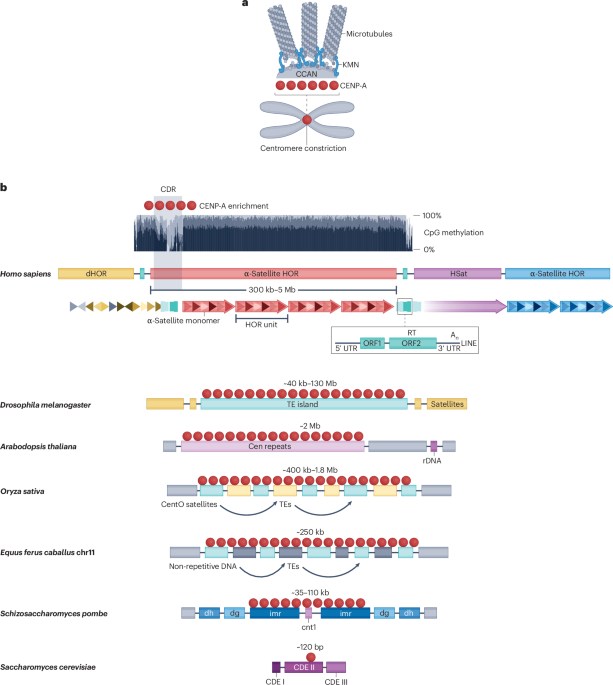
Nature research paper: Ancient co-option of LTR retrotransposons as yeast centromeres go.nature.com/404vd9X
English
0
27
117
15.3K
David T retweetledi
Sophien Kamoun
Sophien Kamoun@KamounLab·
Vorholt Lab re-created endosymbiosis in the lab: injected bacteria into a fungus and evolved a heritable partnership. Evolution, fast-forwarded. doi.org/10.1038/s41586…
English
0
23
106
5.2K
David T retweetledi
Kobe Lab
Kobe Lab@Kobe_Lab_·
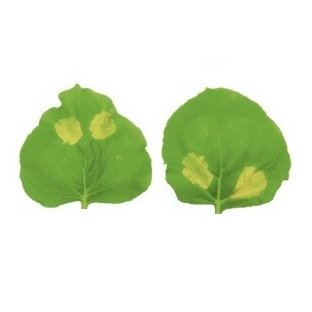
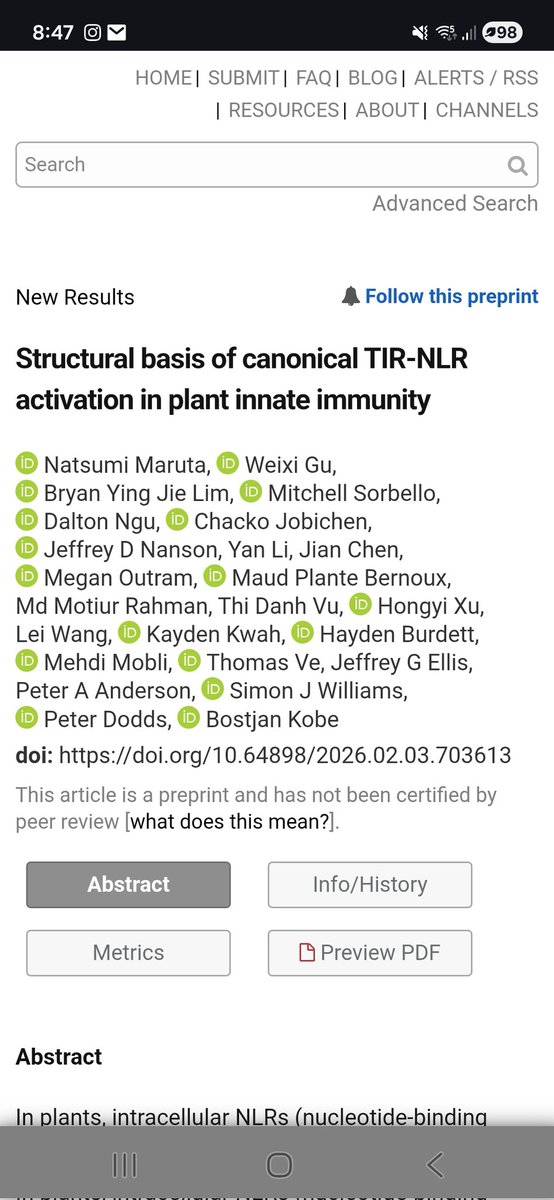
Check out our recent preprint on the structure of a non C-JID TNL resistosome from flax. We are very proud of the persistence of Natsumi who got this long running project over the line and a congratulations to all involved. Check it out... doi.org/10.64898/2026.…
Kobe Lab tweet mediaKobe Lab tweet media
English
2
30
81
4.7K
David T retweetledi
André Marques
André Marques@marques_et_al·
📢 Three new #bioRxiv preprints from our team on holocentric chromosomes. Together, they connect centromere repeat evolution, karyotype dynamics, and meiotic recombination outcomes, revealing how holocentric genomes evolve and function. 🧬👇
André Marques tweet media
English
2
8
19
970
David T retweetledi
Nicolas Corradi
Nicolas Corradi@Blunt_Microbe·
Big congrats to PhD @Ken_M_Mugambi for pulling together this amazing piece of work 🫡 This study details the genome biology of the largest #AMF genome (G. margarita) and its intricate links with its🦠 endosymbiont and 🌱hosts 😀 biorxiv.org/content/10.648…
English
1
14
34
3.1K
David T retweetledi
The Sainsbury Laboratory
The Sainsbury Laboratory@TheSainsburyLab·
Join us in Norwich this July for the TSL Summer Conference in Plant-Microbe Interactions! ☀️🌱🧬 Discuss the latest approaches & discoveries in plant health with international keynote and local speakers. APPLY by 30 March '26 ⬇️ Click link for more info tsl.ac.uk/tsl-summer-con…
English
0
41
60
13K
David T retweetledi
NatureStructMolBiol
NatureStructMolBiol@NatureSMB·
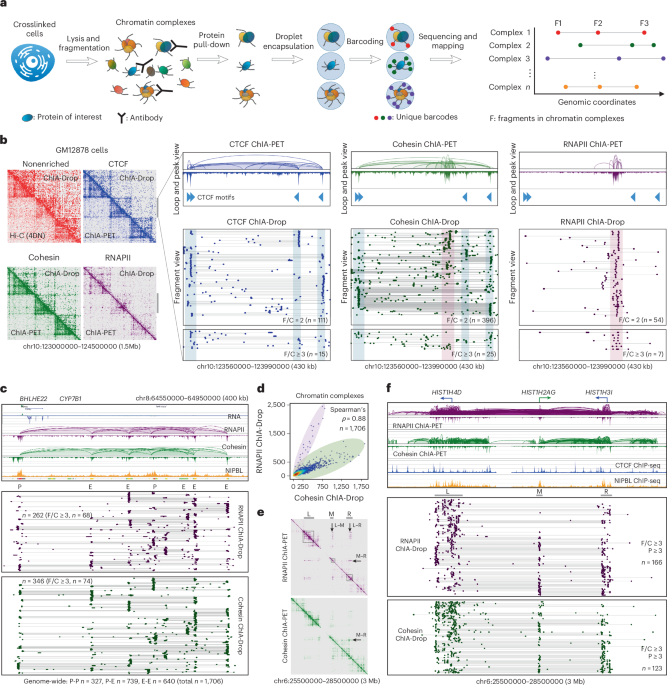
New online! Interplay between cohesin and RNA polymerase II in regulating chromatin interactions and gene transcription dlvr.it/TQKgsH
NatureStructMolBiol tweet media
English
0
27
113
7.4K
David T retweetledi
Alice Ting
Alice Ting@aliceyting·
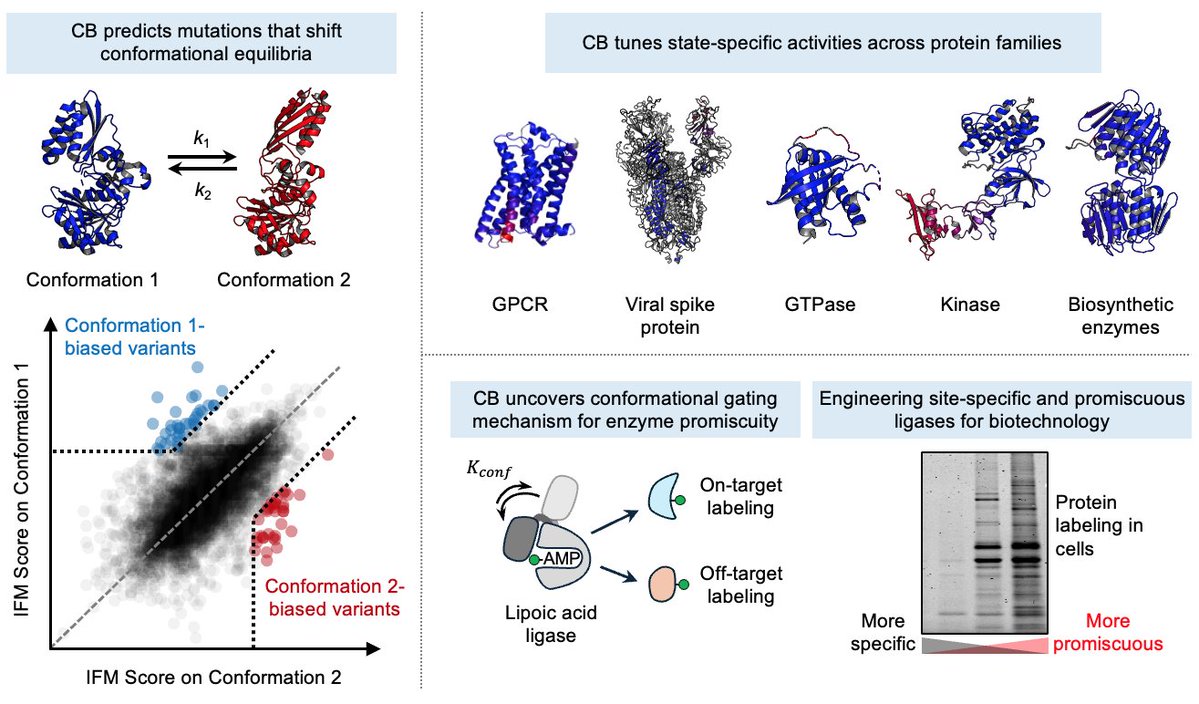
Can we design mutations that predictably bias proteins towards desired conformational states? Today in @ScienceMagazine, we introduce Conformational Biasing (CB), a simple and scalable computational method that uses contrastive scoring by inverse folding models to identify conformation-biasing mutations. science.org/doi/10.1126/sc…
Alice Ting tweet media
English
14
201
860
139.6K
David T retweetledi
Lauren Porter
Lauren Porter@Lauren_L_Porter·
How does AlphaFold select protein conformations? Its transformer model (Evoformer) associates them with sparse sequence patterns. We developed a method to identify these patterns readily🧵 biorxiv.org/content/10.648…
English
2
20
76
5.8K
David T retweetledi
Torii Lab
Torii Lab@Stomata_Tweets·
Well done, Akie! Identification of a peptide hormone-receptor module bypassing the ABA signaling to close stomata upon drought. A big breakthrough🍃😊 -Local peptide signalling induces stomatal closure under drought stress @NatureComms nature.com/articles/s4146…
Torii Lab tweet media
English
2
21
117
18.3K
David T retweetledi
New Phytologist
New Phytologist@NewPhyt·
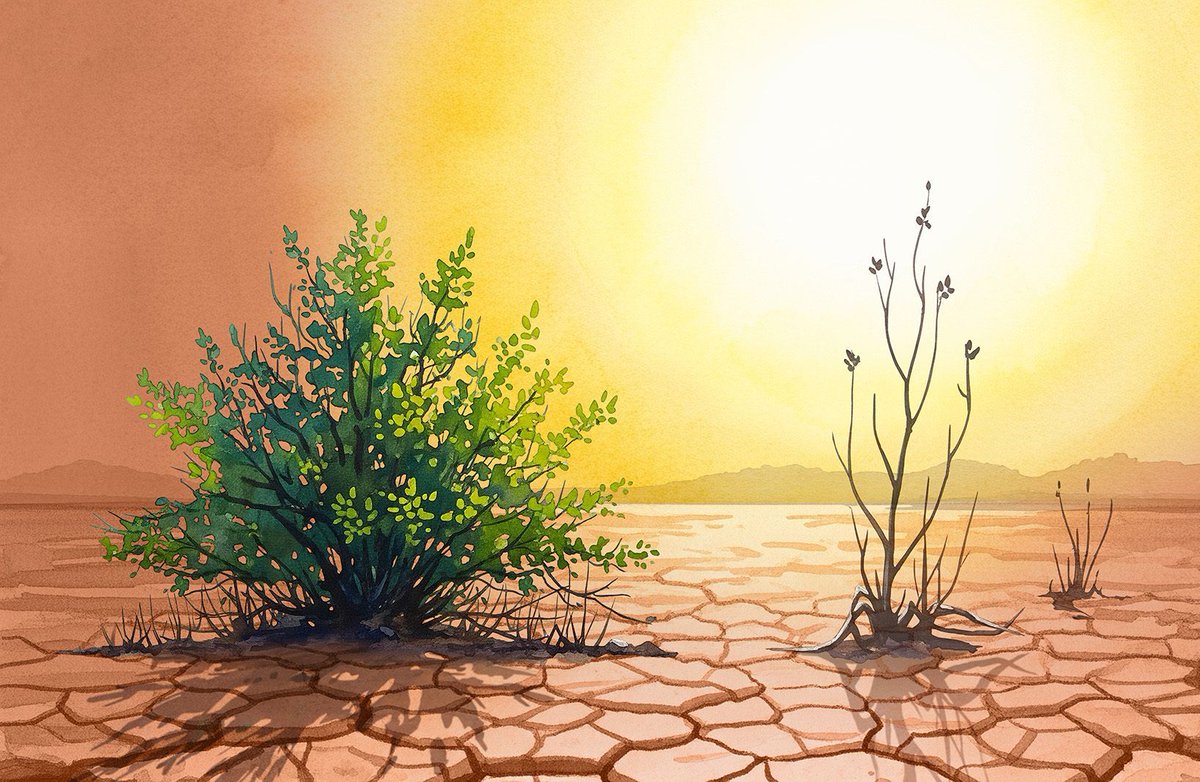
Abstract submission and registration for the #47NPS Extreme Heat: extending the thermal limits of life, are open! 2–5 June 2026 Travel grant, selected speaker application deadline: 2 February 2026 Poster abstract deadline: 2 March 2026 Full details at newphytologist.org/events/47-nps
New Phytologist tweet media
English
1
11
22
2.4K
David T retweetledi
Niko McCarty.
Niko McCarty.@NikoMcCarty·
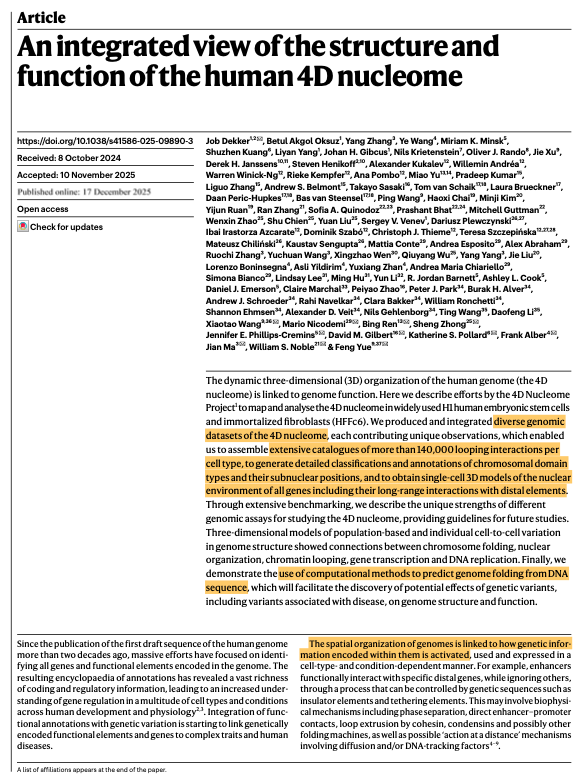
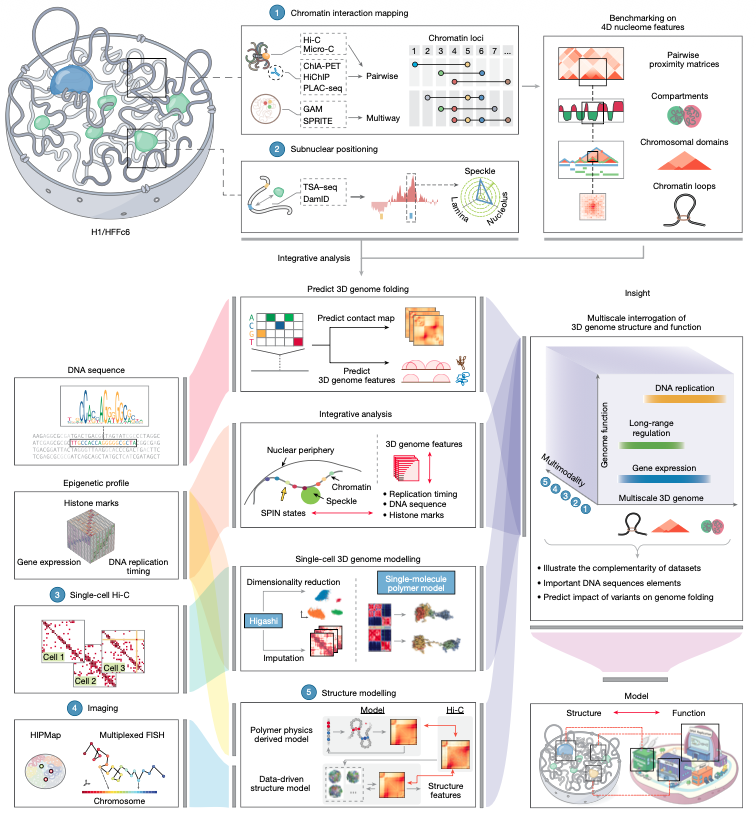
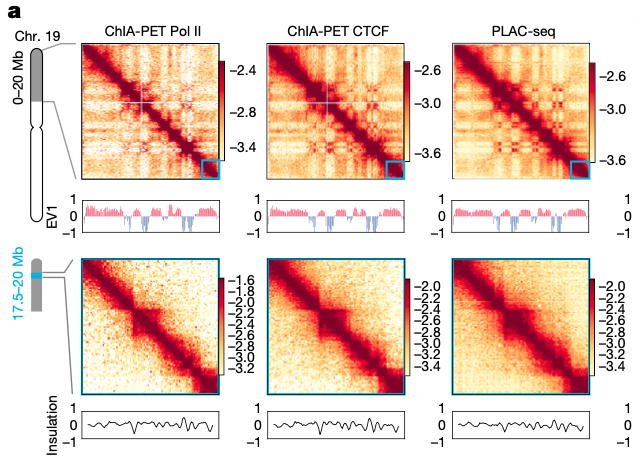
Many people think of the genome as a string of "letters." The human genome, say, has 3.2 billion base pairs of DNA organized across 23 pairs of chromosomes. But the genome is a 3D object. Genes located on entirely different chromosomes might be clustered together. Mutations in these "distant" genes can lead to disease in surprising ways. For a new paper in @Nature, researchers released several "maps" of human genomes from two types of cells: embryonic stem cells and fibroblasts. They compared methods to see which ones are least biased, and found many long-range interactions between genes. The article does a good job explaining how “the genome is organized at different scales”: > On a single chromosome, histones control which parts of the DNA sequence are accessible and expressed. > At the scale of hundreds of thousands of bases, “chromatin loops in a dynamic manner,” the authors write, bringing distant genes closer together. > Across chromosomes, sequences "cluster together in space to form subnuclear compartments." Examples abound. Enhancers, for example, are short DNA sequences that regulate the expression of far away genes. They do this by *physically* touching the genes they control; a protein called cohesin grabs the DNA and tugs it into big loops. Even promoters, which are thought of as being associated with one gene or operon, can cluster together across many genes! A protein, Ronin, grabs promoters and pulls them together. This is apparently done mostly for genes that tend to be "on," as it helps enzymes find genes faster/not have to diffuse far away to find targets. (This also happens with genes that tend to be "off;" so-called polycomb proteins grab onto promoters, cluster them up, and silence all of them at once. It's a way for the cell to conserve energy.) One consequence of this spooky "action-at-a-distance" is that diseases might arise from mutations in unexpected locations. Editing these regulatory sequences, in other words, might in turn affect a gene located on an entirely different chromosome that *is* associated with that disease. Genetic mutations linked to autism, for example, are known to disrupt the 3D organization of the genome. A single deletion at a gene, TAL1, also affects its ability to form long-range chromatin interactions with other genes, leading to leukemia. There are probably many other, as-yet-undiscovered, instances of this.
Niko McCarty. tweet mediaNiko McCarty. tweet mediaNiko McCarty. tweet media
English
23
205
935
108.3K