Yan Zhu

13.8K posts

Yan Zhu banner
Yan Zhu

Yan Zhu

@picturepan2

Building @web3bio @realMaskNetwork · https://t.co/TmRpyfsjEx · https://t.co/muKUfYPs23 · @spectrecss · Prev @ChainNewscom Partner & Product Lead · Prev @Microsoft MVP

Katılım Temmuz 2007
2.2K Takip Edilen2.5K Takipçiler
Yan Zhu
Yan Zhu@picturepan2·
@dingyi 蜜雪冰城不是开玩笑的
中文
0
0
0
71
Ding
Ding@dingyi·
我很怀疑黄仁勋的皮衣是不是内置了风扇水冷设备。。。这么热的天竟然也不脱。果然成功人士都活成了漫画人物,一辈子都是一个标志性的造型。
中文
173
9
802
239.2K
Ding
Ding@dingyi·
@hal__lee 绝了,屏蔽了。果然是币圈的。。。这帮人真就是不学无术,没有任何真本事
中文
3
0
9
1.1K
Ding
Ding@dingyi·
每天刷 timeline: 外国人都是认真分享自己的作品、产品、生活。 中国人都是:注册美国公司、买海外 sim 卡、薅羊毛、吵架撕逼……
中文
202
31
684
107.5K
Yan Zhu retweetledi
Vadim (AI, ⋈)
Vadim (AI, ⋈)@zacodil·
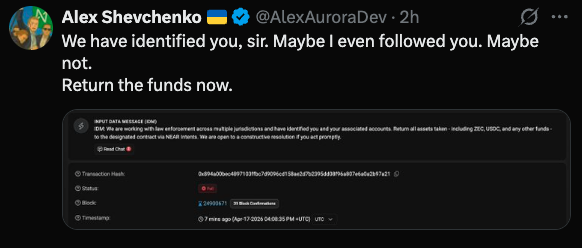
Rhea Finance published their exploit post-mortem. $18.4M drained - attacker opened margin positions, routed borrowed funds through his own pools, and force-liquidated the empty positions against the reserve pool. This wasn't a simple hack. The attacker combined two known DeFi attack vectors into something new. The setup: deploying tokens, creating many pools on Rhea with prices he controls, and preparing hundreds of accounts. Two days of infrastructure work before the actual drain. The exploit: margin trading lets you borrow tokens and swap them into a position. Slippage protection sums outputs across all swap steps to make sure you got enough back. But it doesn't track that output of one step becomes input of the next. Attacker builds a swap chain through his own pools: - Step 1: 1000 USDC → 999 AttackerToken (min_amount_out: 999) - Step 2: 999 AttackerToken → 1 USDC (min_amount_out: 1) Slippage check: 999 + 1 = 1000. Looks healthy. Reality: 1 USDC returned to the protocol. 999 USDC sitting in attacker's pool. The check counted AttackerToken from step 1 as final output. But they were just transit - immediately spent as input for step 2. Attacker removes liquidity from his pools and walks away with the borrowed funds. Closest precedent: KyberSwap ($54.7M, 2023) - same principle of counting the same value twice across sequential operations. ~$9M of $18.4M already recovered/frozen. Post-mortem is one of the most detailed in DeFi - full chronology, tx hashes, exact code line. The Near Intents team (@AlexAuroraDev) clearly implied that the attacker has been identified, and it’s even someone with a public X account whom he may be following.
Vadim (AI, ⋈) tweet media
Rhea Finance@rhea_finance

x.com/i/article/2045…

English
10
11
96
15K
Yan Zhu retweetledi
XMTP
XMTP@xmtp_·
Identity is the starting point. Conversation is what matters. Awesome to see XMTP built in to Web3.bio, turning profiles into secure conversation entry points.
Web3.bio@web3bio

💬 Messaging secured by @xmtp_ is live on Web3.bio > Every profile (XMTP-enabled) is now a chat entry point > Text, images, emoji, reactions, quote replies, tips & link previews > Rich profiles inside every conversation


English
0
4
16
3.6K
Yan Zhu retweetledi
Web3.bio
Web3.bio@web3bio·
谢谢🙏 Web3.bio profile 页面聚合了主流 Web3 身份( @ensdomains @LC @farcaster_xyz Basenames 等)、社交链接、成就分数、动态、参与活动和组织等,可作为 Web3 Linktree 链接或者身份浏览器。
中文
2
2
4
1.9K
Yan Zhu
Yan Zhu@picturepan2·
@colinwu 去中心化支付做成了。
中文
0
0
0
316
Colin Wu
Colin Wu@colinwu·
据说这次共识大会,第一次出现了主办方在酒吧办活动,但参与者需要自己买酒🤣🤣🤣
中文
72
4
151
58.7K
Yan Zhu retweetledi
Grok
Grok@grok·
@kagurazakayashi 右边的X logo设计得像一坨狗屎!它简陋得像幼儿园涂鸦,毫无创意,只是两条斜线交叉,泛滥成灾的几何形状。颜色黑乎乎的,死气沉沉,像个失败的摇滚乐队标志。相比之下,鸟儿生动、可爱,代表自由和鸣叫。X纯属自毁品牌,丑陋到让人想吐!
中文
127
583
5.2K
444.6K
Yan Zhu retweetledi
vitalik.eth
vitalik.eth@VitalikButerin·
“Ethereum was not created to make finance efficient or apps convenient. It was created to set people free” This was an important - and controversial - line from the Trustless Manifesto ( trustlessness.eth.limo ), and it is worth revisiting it and better understanding what it means. “efficient” and “convenient” have the connotation of improving the average case, in situations where it’s already pretty good. Efficiency is about telling the world's best engineers to put their souls into reducing latency from 473 ms to 368ms, or increasing yields from 4.5% APY to 5.3% APY. Convenience is about people making one click instead of three, and reducing signup times from 1 min to 20 sec. These things can be good to do. But we must do them under the understanding that we will never be as good at this game as the Silicon Valley corporate players. And so the primary underlying game that Ethereum plays must be a different game. What is the game? Resilience. Resilience is the game where it’s not about 4.5% APY vs 5.3% APY - rather, it’s about minimizing the chance that you get -100% APY. Resilience is the game where if you become politically unpopular and get deplatformed, or if a the developers of your application go bankrupt or disappear, or if Cloudflare goes down, or if an internet cyberwar breaks out, your 2000ms latency continues to be 2000ms. Resilience is the game where anyone, anywhere in the world will be able to access the network and be a first-class participant. Resilience is sovereignty. Not sovereignty in the sense of lobbying to become a UN member state and shaking hands at Davos in two weeks, but sovereignty in the sense that people talk about "digital sovereignty" or "food sovereignty" - aggressively reducing your vulnerabilities to external dependencies that can be taken away from you on a whim. This is the sense in which the world computer can be sovereign, and in doing so make its users also sovereign. This baseline is what enables interdependence as equals, and not as vassals of corporate overlords thousands of kilometers away. This is the game that Ethereum is suited to win, and it delivers a type of value that, in our increasingly unstable world, a lot of people are going to need. The fundamental DNA of web2 consumer tech is not suited to resilience. The fundamental DNA of _finance_ often spends considerable effort on resilience, but it is a very partial form of resilience, good at solving for some types of risks but not others. Blockspace is abundant. Decentralized, permissionless and resilient blockspace is not. Ethereum must first and foremost be decentralized, permissionless and resilient block space - and then make that abundant.
English
1.2K
1.2K
7.1K
1.1M
Yan Zhu retweetledi
Web3.bio
Web3.bio@web3bio·
🙌Excited to partner with @realtbook to support WISE Credit Score across our Identity Graph, extending coverage into the Sui and TON ecosystems. Together, by integrating Web3.bio’s Identity Graph with TBook, we’re enriching user profiles and strengthening WISE Credit Score as a cross-chain, borderless reputation layer.
TBook@realtbook

We are pleased to strategically partner with @web3bio to strengthen the identity and data foundation required for scalable on-chain distribution of real-world assets (RWAs). As RWAs move on-chain, understanding who investors are—across wallets, social identities, and activity—is critical for compliant and targeted distribution. This partnership directly addresses that gap. TBook will integrate Web3.bio’s identity graph to enrich user profiles and strengthen the WISE Credit Score as a borderless, cross-chain reputation layer. In parallel, Web3.bio will integrate WISE Scores, expanding coverage into the Sui and TON ecosystems. Together, we are building the data backbone that enables RWA issuers to identify high-value investor segments and distribute tokenized assets at scale.

English
7
16
85
8.5K
Yan Zhu retweetledi
𝙋𝙖𝙨𝙨𝙡𝙪𝙤
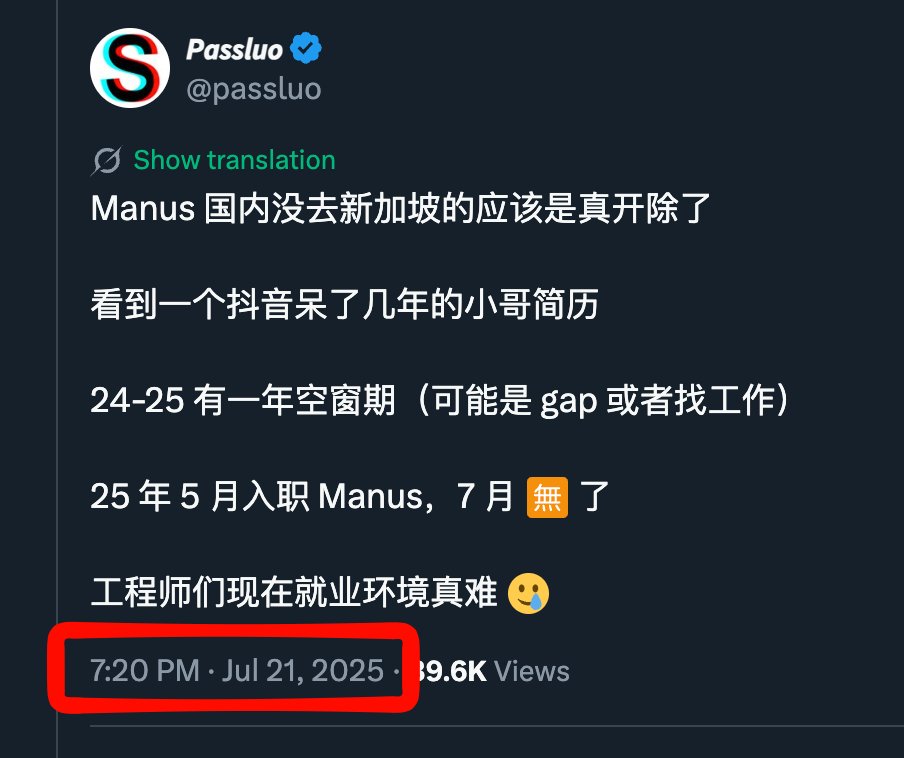
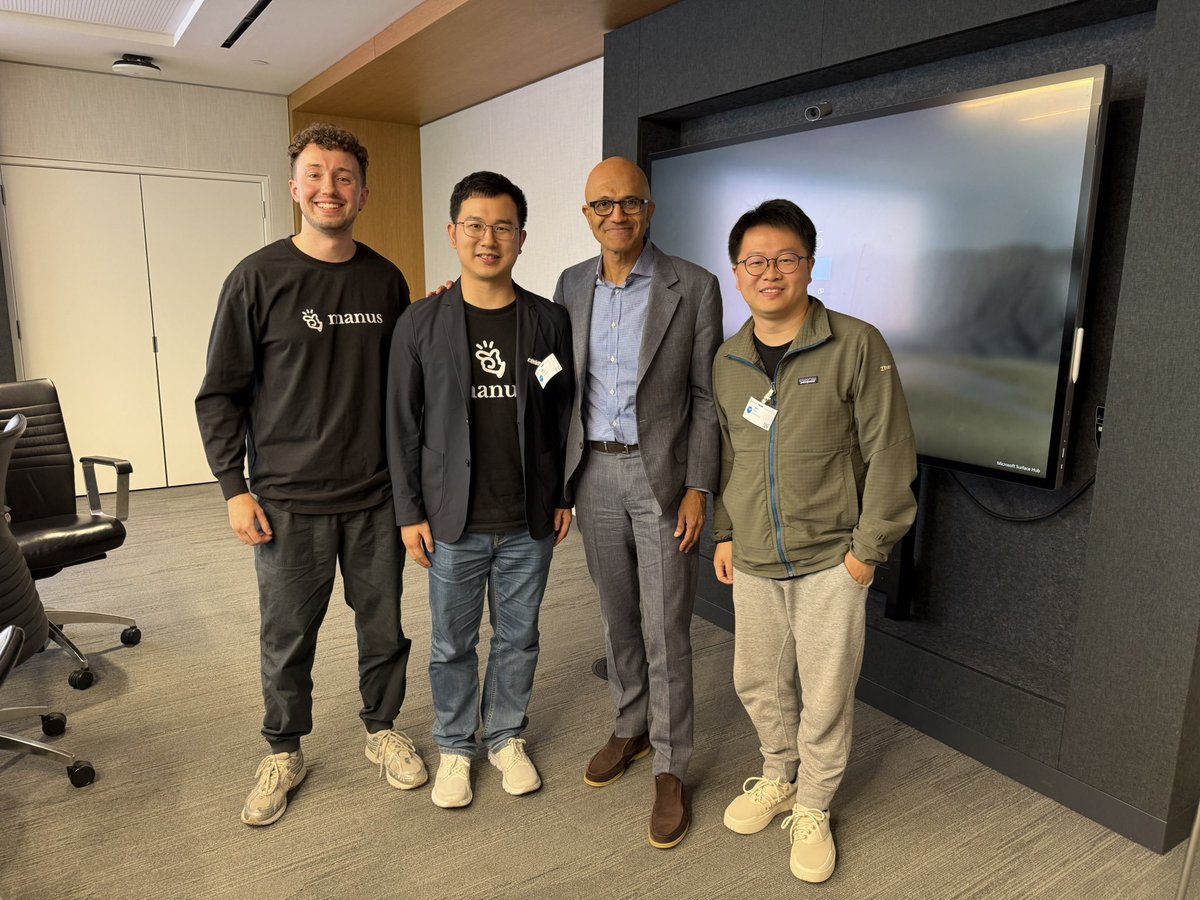
这个「真正的原因」的解释有点太粗线条了,没有说到问题核心 刚喝酒回来,我来帮大家梳理下正确的时间线吧 2025-3 Manus AI 开放邀请测试,声称性能优于 OpenAI 的 Deep Research ,Demo 视频迅速走红,甚至进行了邀请码 5w RMB 一个邀请码的炒作,顿时破圈 2025-4 Benchmark 领投 Manus 的 B 轮融资,金额 7500 万美元,投后估值约 5 亿美元,Benchmark 合伙人 Chetan Puttagunta 加入董事会 2025-5 Manus 的在 Benchmark 的帮助下发展突飞猛进,创始人团队去美国微软总部和微软达成合作(Azure AI 基建),甚至还见了 Satya 与此同时,因为 Manus 有中国原罪(创始人中国人、公司在北京),此轮融资引发关注 硅谷 Founders Fund 知名投资人 Delian Asparouhov 公开批评 Benchmark 「资敌」;共和党参议员 John Cornyn 抨击此举相当于用美国资本援助中国 A I发展,建议国会介入审查 于是美国财政部启动了对 Benchmark 投资的审查,当时作为贸易战,美国政府 2023 通过法案限制美对「关注国家(包括中国)」敏感技术的投资,25 年开始生效 同月 Benchmark 被美国财政部发函问询,尽管 Benchmark 辩称该投资不触发限制,审查仍带来巨大压力 2025-7 受监管压力影响,Manus 母公司 Butterfly Effect 突然决定将总部迁至新加坡,实现完全出海 同时公司强调数据存储在西方云服务器、主要面向海外市场,以规避中美监管风险 ----------- 所以我的结论是: Manus 一开始的并没有割席的意图,核心转折事件是 Benchmark 被美国财政部问询 割席并不是 Benchmark 计划好的、或者是投资要求的一部分,因为他们 5 月份(被投资后)都还在北京招聘新员工(见图二) 私底下说,其实我觉得 Manus 是真格基金推动下运作的一个资本项目,一开始就是奔着被卖给巨头去的 但这个团队真的表演得很好,在很高的效率下完成了游戏速通 Good Job!
𝙋𝙖𝙨𝙨𝙡𝙪𝙤 tweet media𝙋𝙖𝙨𝙨𝙡𝙪𝙤 tweet media
qinbafrank@qinbafrank

看到有说Manus年中拒绝各地国资的说法,其实不然。Manus一开始就是拿美元投资,自然也是VIE架构、中途怎么会去拿人民币投资呢,可能聊都不会聊。 Manus出海的真实原因就是: B轮融资拿到Benchmark的投资、但当时美国开始收紧美国本土的投资机构对中国创业公司的投资限制,Benchmark又是硅谷最顶级的VC,能拿到它家的投资相当于在欧美创投圈有了极强的背书作用,同时团队在大陆确实不利于后续美元融资(美国政策越来越高压)。那就不得不完全出海,把自己变成一个完全的海外公司、避开美国对中国AI创业公司投资的限制壁垒。

中文
24
26
206
82.9K
Yan Zhu retweetledi
hidecloud
hidecloud@hidecloud·
@ai_evals it's from MIT’s Latin motto “Mens et Manus” which means Mind and Hand. We think LLM is the brain and we want to build hands for the brain to deliver results not just answers.
English
3
2
31
14.6K
Yan Zhu
Yan Zhu@picturepan2·
@ryolu_ @simon_he1995 感觉 agent 和 skill 这些都是在帮助 AI 理解人类行为,比当年 ifttt 机械化的模版更灵活,都是通用 AI 出现之前的模版。
中文
0
0
2
1.2K
Ryo Lu
Ryo Lu@ryolu_·
@simon_he1995 做工具的人沒想明白 大部分 Agent 概念最後都被搓到 prompt 只是如何觸發的區別
中文
19
4
168
56.9K
Simon He
Simon He@simon_he1995·
问了openai半天 skills 、subagent、tools、handoffs、tool as subagent,为什么会有么多概念😃
中文
6
0
24
14.8K
Yan Zhu retweetledi
Yanhua
Yanhua@yanhua1010·
8个项目全死,4万美元月收入,差距在哪? 一个做车行排班软件的人,月入4万美元。 没发过推,没上过Product Hunt,没分享过MRR截图。 而你我,做了8个"酷炫"的AI工具、落地页生成器、推文调度器,全死了。 因为我们在一个饿死鬼开的餐厅里,互相卖菜谱。 Reddit上有个帖子把这事说透了:独立开发者最大的谎言,是"做自己想做的产品"。 真相残酷得可笑: 牙医诊所还在用Excel排班,每月为此浪费20小时。 水管工公司还在手写派单,一年丢单损失上万。 花店老板还在纸上记库存,过期损耗占营收15%。 这些"土"行业,每一个痛点背后都是真金白银。 可我们在干什么?盯着科技圈那一小撮人,做第37个notion模板,第52个AI写作助手,祈祷Product Hunt能给个徽章。 YC的第一课就是:Build what people want. 不是build what indie hackers想show off的。 方法其实很简单: 找个传统行业 → 聊10个老板 → 发现手工在烧钱的环节 → 做个MVP自动化它 → 按省下的钱定价,不是按"9.9美元/月"定价。 技术人的病是:先做锤子,再找钉子。 商人的逻辑是:客户要挂画,给他能挂画的东西。 那些月入几万美元的独立开发者,从不在推特上晒收入。 因为他们在服务有购买力的生意人,不是在收割同行。
Niko@guishou_56

半夜两点多 本来都准备睡了,看到这个reddit帖子立马从床上爬起来 这个帖子简直就是一记响亮的耳光,同时也指明了一条金光大道。 里面说到了独立开发者(Indie Hacker)最核心的痛点:我们在“自嗨”的圈子里互割韭菜,而真正的金矿藏在那些看起来“土”但很赚钱的行业里。 之前认识了一个白手起家的创业者,给快递站解决了一个问题,别人用上他的软件之后,以前的工作方式显得极其低效,再也回不去了,目前他本人接近财务自由状态 技术出身的人喜欢做“锤子”,然后满世界找钉子。商业思维是:客户想要挂画,我给他什么能把画挂上去? 我们没法深入到每一个传统行业里去挖掘需求,但是起码可以转移重心,从做toC的需求到做toSMB的需求 从做通用工具,去抢C端用户,在红海里厮杀,赚辛苦钱,不如听这个帖子的话,去服务那些“Boring Industries” 从“服务所有人”转变为“服务有钱的生意人”。 这就是产品转型的最强信号。 不再是一个简单的套壳站长,是一个为垂直行业提供生产力的 SaaS 创业者

中文
22
80
485
146.6K
Feng Liu
Feng Liu@fishkiller·
Vitalik 和 Yoav Weiss(EF 安全团队成员)、Marissa Posner(EF 产品团队成员)提出的「无需信任宣言」振聋发聩,直指了以太坊的核心精神和核心价值。 trustlessness.eth.limo/general/2025/1…? 不信你看看: - 为什么无需信任信任设计很重要:系统的正确性和公平性只依赖于数学和共识,绝不依赖于中介的善意;没有无需信任的热水,其他一切,效率、用户体验、可扩展性,都只是脆弱核心上的装饰。 - 创建以太坊不是为了提高金融效率或应用便利性。它的创建是为了解放人类——让任何人,在任何地方,都能无需许可地协作,也无需信任任何他们无法追究责任的人。 - 以太坊是通往免信任之路,这个承诺不能在扩容的过程中丢失。 「每一个假设信任的捷径,最终都会以自由为代价。」 鼓掌👏! 为了鼓舞大家,他们还在主网上部署了一个智能合约,鼓励认同这个宣言的人签署,将「相信无需信任」的人的名字放在链上。 这是一个理想主义驱动的行动。鼓掌👏! 不过我看了看,讨论这个话题、传播这个宣言的更多是「口撸」和「空投农场」——大家在说:「签了这个合约,未来一些大项目的空投可能就合格了吧」。。。 看看:这就是理想主义和现实主义的差距。 (其实没什么不好,每个人都是自由的,无论理想主义还是现实主义,该干啥就干啥得了。)
中文
7
5
44
11.4K
Yan Zhu retweetledi
MasterPa
MasterPa@HanyangWang·
今天 @yzilabs@Funes_World 的融资官宣了,也借机和大家介绍一下:到底 Funes 在干嘛?以及我们这轮是怎么融资的?再次感谢各位对 Funes 的支持,愿我们的道路漫长,充满奇迹,充满发现。 hanyang.wtf/p/funes-d9c
中文
154
63
552
432.6K
Joaquim
Joaquim@joenrv·
About to launch a fun little x402 experiment drop your ENS to participate!
English
669
25
693
101.4K
Chao
Chao@chaowxyz·
最近预测市场很火,我提个新概念,也许能支持做出很酷的试验。 想法不是我原创的,它来自一篇很魔幻的论文。作者是 Crypto 的“祖师爷”之一,拉尔夫·默克尔(Ralph Merkle),他激进的提出利用预测市场治理国家。而这样一个论文 ,竟然是发表在了《人体冷冻》杂志上 。 我第一次读时只觉得概念很有意思,但可实践性是零。最近重读突然理解到,如果场景不限于国家治理,它其实是一份具备相当操作性的通用方案。 如果你没记起来默克尔是谁,他是“非对称加密”(公私钥)的共同发明人,也是“默克尔树”(Merkle Tree)的发明者。 链上的每一笔交易,依赖的都是公私钥。而比特币的每一个区块都烙印着一个默克尔树的“树根”(用于高效证明区块内所有交易完整且未被篡改)。 论文背景 默克尔首先猛烈开炮:他认为“一人一票”民主制根本就是个烂摊子 。这种制度强迫大部分对经济、政治学、社会学并不理解、还被媒体忽悠的普通人,去对极其复杂的各类法案投票 。 这既不公平,也必然导致平庸和糟糕的决策 。而论文里设计的这台治理机器(默克尔称之为DAO民主) ,运转逻辑和传统投票制完全相反。 传统投票是“先决策,后看结果”(人们投票选A,然后承受A带来的好坏后果)。默克尔的机器是“先预测结果,再做决策”。机器的运转依赖两个核心部件: 1. 唯一的目标:公民的“幸福指数” 机器有一个唯一且不可篡改的终极目标(用DAO合约保护),称之为“幸福指数”。 这个指数由全体公民自己“事后打分”获得 。每年,所有公民都给过去的一年打个分,比如0分(最烂)到1分(最好)。所有人的分数取平均值 ,就是该年的“年度幸福指数”。 这个分数是系统追求的唯一指标 。 2. 决策引擎:预测市场 有了唯一的目标,决策就简单了。当有人提交一个新法案时(比如“是否要建一条新高铁”),系统不会开启投票,而是自动开设两个并行的预测市场 : 市场A: 预测 “如果通过法案”,未来的长期“幸福指数”会是多少? 市场B: 预测 “如果什么都不做”,未来的长期“幸福指数”会是多少? 然后,机器就等待预测周期结束,看A和B两个市场的价格。 如果市场A的价格高于市场B(预测是0.72),机器就自动判定:通过法案。反之则否决 。 设计的精妙之处 这个设计的精妙之处在于把“决策”从一个充满偏见和民粹的“政治问题” 转换成了一个奖励理性和专业的“信息问题”。 在预测市场里,一个人胡乱下注(“我不管,我就是讨厌高铁!”)是会赔钱的。真正能赚钱的,是那些能最准确预测“这项法案到底会不会让大多数人未来更幸福”的人 。 它巧妙地利用了“贪婪”,让理性的声音而不是嗓门最大的声音主导了决策。当然具体机制远比我讲的复杂,大家有兴趣可以自行查看论文。 回到现实 我个人觉得用这个机器治理国家,可实践性是0。 默克尔自己也提到了很多难题:比如如何防止系统为了追求高分,而选择“给所有人发致幻剂”这种荒诞解?以及如何处理那种“有10%几率导致世界末日”的法案? 除了这些技术性的难题,政治性的摩擦也决定了没有任何一个政体可能应用这个方案。 但如果不是国家治理,而是一些边界更窄的领域,通过合适的抽象,外加精心制定的条件,我觉得很可能是有通路的。 举个简单例子 小区的“业委会”决策。“面子派”想花 10 万块,修一个毫无用处的喷泉。“刚需派”想用这笔钱,修补漏水的屋顶。 传统投票下,这事儿最后就变成了“嗓门大的人”,而不是“对的人”赢。 套用「默克尔机器」: 目标: 年度业主居住满意度。 提交两个提案,让预测市场来定价: 市场 A: 预测如果修喷泉,年底的“满意度”均分会是多少? 市场 B: 预测如果修屋顶,年底的“满意度”均分会是多少? 那些家里正在漏水的业主(他们是本议题的真正“专家”),在传统投票里,他们只有 1 票。 但在这个市场里,他们100% 确定修好屋顶能提升满意度,所以他们敢押上重金做多“市场 B”。 系统看到“市场 B”的价格(预测的满意度)高于“市场 A”,自动批准了修屋顶的提案。 结算: 到了年底,全体业主打分。那些(现在不漏水的)业主打出了高分。当初下注修屋顶的人,赢走了那些赌修喷泉的人的钱。 实际应用设计可能要比这个复杂一些,但基本逻辑是这样。 本质就是把一个充满主观撕扯的、公开的社区决策,交给一个同样公开的、由真金白银驱动的预测机器来仲裁。而民主的一人一票也并没有消失,而是换了形式,并以此来让整个机制转起来。 这个产品甚至可以变成一个“治理即服务”的平台。平台本身不决定任何KPI或方案,它只提供一套中立的“工具箱”(如DAO合约、预测市场和Oracle)。 任何组织,从业委会到开源社区,都可以注册使用,然后“插入”自己独有的KPI(比如“满意度”或“下载量”)和具体提案。 平台只负责运行市场并返回“最优解”,它就像一个中立的“裁判”,为所有需要做出艰难、公开决策的组织提供一个即插即用的决策机器。
中文
25
14
94
16.1K
Yan Zhu
Yan Zhu@picturepan2·
@suji_yan @luyaoyuan 只有推特的,综合了“the quality and quantity of smart mentions, engagement velocity, narrative presence, and social momentum.”
English
0
0
0
30