
Sabitlenmiş Tweet
Pio Dubro
1.1K posts


Pio Dubro
@piodubro
I see colors in sounds 🥴 | Audio engineer | Founder of @ASINtrack for Amazon OA/WS sellers | Always building
Katılım Aralık 2022
420 Takip Edilen156 Takipçiler
I switched to Codex last month and decided to work on two very different projects simultaneously instead of just waiting for it to finish and distracting myself by non work stuff. I’d prompt one, then review the other and so on.
I did that for over a week straight and it definitely felt like I was accessing a flow state. But eventually my brain was fried and I had to slow down.
It’s definitely one way to get into flow but it’s pretty short term.
I’d say the other way to get into it is to split tasks into micro steps and just fire through them.
It’s not always possible, it takes some planning and it gets tiresome at some point but it does give you those quick dopamine hits and the feeling of time flying.
Basically, I’d argue that trying to one shot something is already a kind of the antithesis of the flow state. I actually think one shotting is better suited to async work i.e. prompting on your phone from the couch and only checking progress every now and then when you happen to pass by your desk.
English

@martindonadieu @marclou Yeah, I’m sure it’s even more obvious when you meet them.
It’s just amazing to see what’s possible when two people share a life and move in the same direction. Not always the case unfortunately.
English
English
Shoutout to @marclou’s wife, who I’m sure he’d admit is a huge contributor to his success.
Marc is a solopreneur but from what I can tell, his wife is the silent hero and plays a pivotal role in making this solo founder dream life possible.
It goes to show how important alignment between you and your partner is. So many couples work against each other, pulling in different directions, wasting their energy and getting nowhere because of it.
But finding the right person, someone who supports and motivates you and joins you on your quest, can elevate you to a level you never knew existed.
Starter Story@starter_story
Day in the life of a solopreneur who makes $77k per month:
English
@martindonadieu Looks like he truly did and you built a happy life from it. Good for you
English
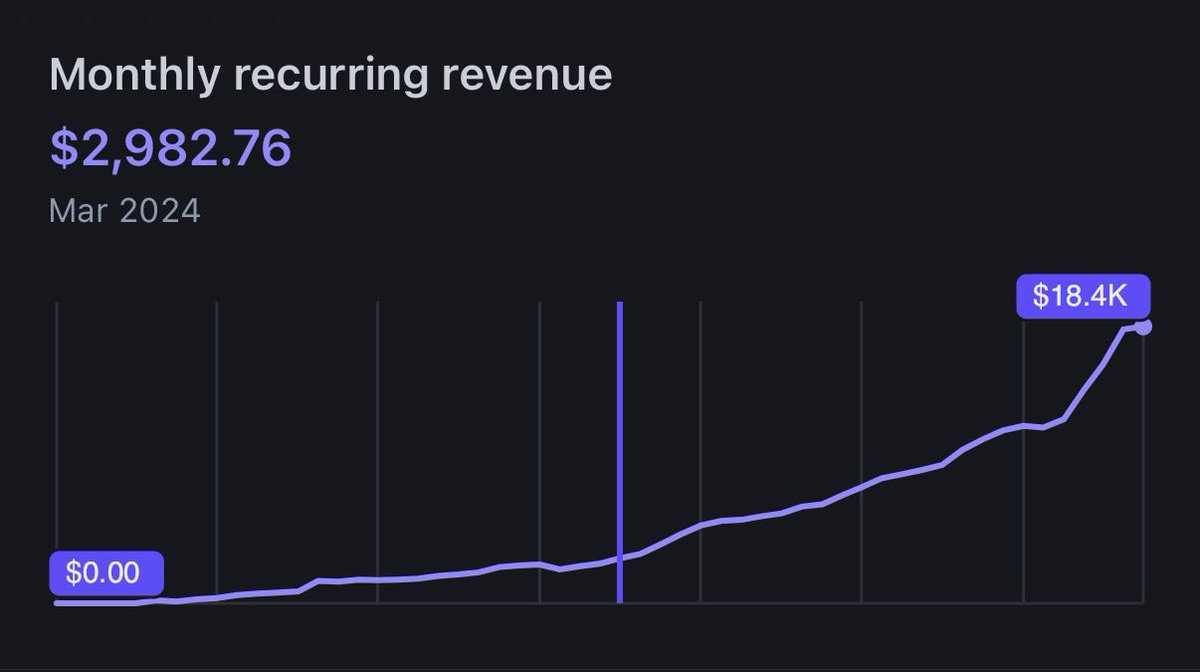
Met my wife i was broke.
She was grinding like me.
She allowed me to focus like never before.
Results are here.
Better than a cofounder, find a partner that gets you.
English

the most important rule i’ve learned from posting on X for two years is not taking it too seriously
English

@piodubro I spent this week on a boat without a starlink, and managed to run my business from my phone 👀 it’s totally doable!!
Thank you Pio, I’ll post once a day 😊
English
I don’t want to get back to work, so… I’m taking a longer break!
I’m going for a 7 day bike packing trip next week
The best part of being an indie hacker is to be able to do that, while still making 💰😎
Thomas Sanlis 🥐@T_Zahil
I just got back from 1 week of sailing ⛵️ It’s been a fantastic week! Being on a boat with your friends is the best way to disconnect Now, back to work! I’ve got 70+ emails to reply to 🥲 What did I miss?
English
@stemonteduro You already know how I’ve spent most of mine but the rest of it will look more like yours!
English


@kylegawley I had some thoughts on this topic a while back. I looked at making products for likeminded/similar people and building in public in general:
x.com/piodubro/statu…
Pio Dubro@piodubro
Launching a B2B SaaS and marketing it everywhere, you quickly realize how easy founders who build for other indie hackers have it. Like, you can literally go on any podcast and just talk about yourself or post daily videos sharing your life story and it will be interesting for the listener (your potential user) because they probably relate to it in some way. Your domain expertise is one layer deep: it’s in coding. And you’re selling something you’d probably use yourself, to people who are very much like you. It’s different when you’re building for other industries. You’re dealing with people who only care about whether your product can solve their problem. Your knowledge and understanding of the industry become crucial if you want to convince someone to take you seriously and consider your product. Your domain expertise is at least two levels deep: coding plus whatever niche/niches you’re operating in. Now, Build in Public appeals to so many, even though, in reality, it’s practiced by a tiny percentage of builders. Obviously, they’re the loudest around here and it can feel sometimes like everyone is doing it. But that’s just not true. For those who build for other makers, it makes sense. They might even feel like they should build in public. Their face and persona should become their marketing. They should share what they do, learn, think. It’s so easy and simple. If they wish, they can take it even further: they can cross the boundaries into becoming influencers, turning their lives into bite-sized Big Brother-like content. It’s what’s referred to as a personal brand. But if your face and your life become your marketing, how do you remove yourself from your business in the future? Is it even a business in the first place or a job you created for yourself? A cage around you: if you don’t keep posting about your product, will your growth keep going up? And what if you want to exit at some point? What if something happens to you? What if you eventually don’t feel like sharing your life anymore, or people stop finding it interesting? Most importantly, is it ever about your product? Or about you? On the other end, the vast majority of indie makers aren’t building in public. Why would they? It’s a waste of time for most. Talking about their tech stack or what they shipped last night wouldn’t get them any extra traction. To market their product, they post industry-specific content instead. That kind of marketing can be done by an employee. Or the next owner of the business. Ultimately, it’s easier to build for other makers. You’re dealing with a single domain. And it’s not about the size of the audience, you can grow an audience in any industry. It’s more about what kind of work you want to do and how you want to grow your business. Because the kind of marketing you do can work initially, but it can then become a limiting factor when it comes to growth. And even though being real and genuine sells well these days, it eventually comes with its own limitations.
English

Building an audience is dangerous
If your growth is tied to your personal audience you'll never be able to exit
English
I was literally thinking yesterday that as much as I want everyone to have access to this technology and the best models available, the current reality is that the more people and companies use SOTA models, the more expensive they become in plain economic terms.
Obviously, this is a simplified way of looking at it that doesn’t take into account that, over time, models become cheaper to run. But then again, that’s only possible if compute keeps growing, which I don’t think can be taken for granted.
Also, it’s always crucial to stress that open source and local models will play a vital role in how pricing shapes over time.
English


English
English
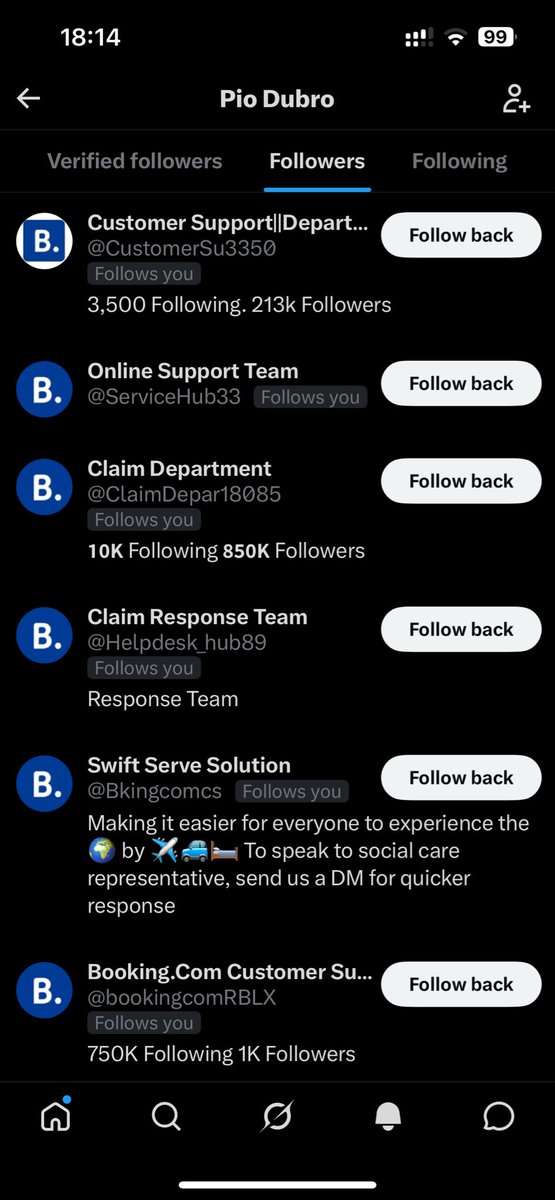
Wtf this is a joke @bookingcom ?
I booked 6h ago and they were not capable to tell me till i arrive in front.

English
@chrissyinspace @HackerResidency Better video than most real estate ads I have seen recently! :)
Thanks for showing us around! Happy shipping from the villa!
English

Daily update 324/∞
@HackerResidency update 2/31
🏠 What does the INSIDE of the villa look like?
🌷 Positivity
English
@emanueledpt I'd say keep it all under one hood for now and keep growing together with your tools. You're doing great!
English

Should I create a dedicated account on X for Remodex and DP Code?
Would you follow it?
Would it be easier for you to see dedicated updates and latest news?

English
@stemonteduro Maybe try to find more Clockify users, I'm sure there will be people wanting to save time, just like you did.
Re video kit, solid principles. Minimalism, I like it :)
English

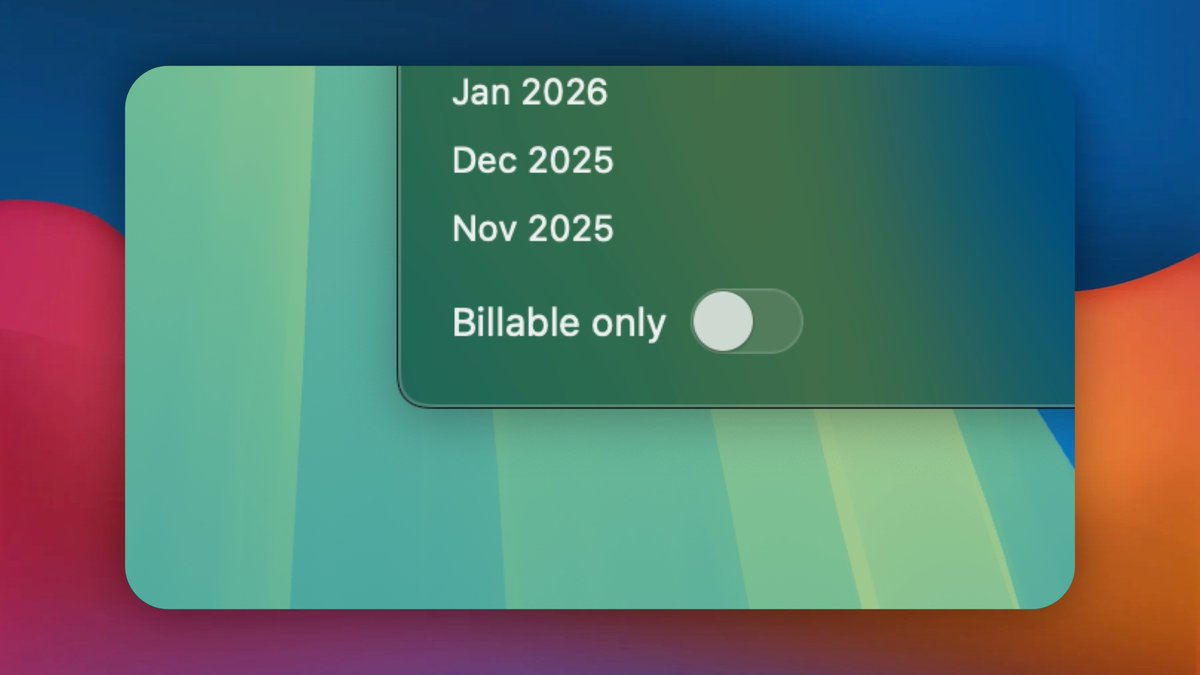
There's a billable option that filters only the hours you bill, so if you use the same workspace to track time for clients and personal stuff, it counts ONLY the records marked as billable in Clockify.
I tried to see if there's a market for it by searching on Reddit or elsewhere, but it seems like no one really needs this tool, honestly.
And yes, I need a mic, but I'll buy it only after I've posted 30 videos. I need to set rules for myself or after 2 videos I'll buy a RED EPIC camera and $10k of stuff I don't really need 😂
English
@stemonteduro I don't think I currently need this but I am more than happy to test it on my machine, if that helps you in any way.
Feel free to send it over a DM.
English