While the US and EU are paralyzed by bureaucracy, El Salvador is optimizing for speed.
Stacy Herbert details the pivot from pervasive gang warfare to bitcoin, AI, and robotics laws.
0:57 - El Salvador is bitcoin country
7:23 - Bukele has the soul of a tech founder
9:40 - Building capital markets on bitcoin
12:17 - Charity is dependency, investment is independence
14:07 - The war on gangs
26:51 - Bitcoin, AI, and robotics laws
29:04 - Citizenship in El Salvador
32:14 - Attracting digital nomads with 0% tax
34:51 - Reaction to money printing and drugs
39:25 - We have a leader with a clear vision
44:49 - Don't trust, verify
Political risk is technical risk. The state is a platform. If the OS fails, the app fails.
Cory Levy and Balaji discuss where the ambitious should go.
0:26 Easier to start Netflix than reform Blockbuster
3:09 Denial in the United States
9:44 Dollar inflation is global taxation
13:41 The US passport has dropped out of the top 10
17:57 Talent pipelines: where should talent shift to?
21:59 Talent calibrates by going outside the US
24:05 The major opportunity for talent
28:18 Second passport > your first home
37:15 Next rules-based order is the code-based order
38:36 What will be the next thing you do? (Balaji)
The next evolution of SaaS is Society as a Service.
Cursor is proving the demand for physical connection by converting local cafes into power user hubs.
Ben Lang explains the logistics of materializing a digital network.
0:21 - Story of Cursor popups
3:04 - Users want to connect with each other
4:56 - Convincing cafes to host popups
7:39 - Popups are the new startups
9:02 - From popups to permanents
11:51 - Society-as-a-Service
13:22 - Inviting the top 1% of users
Political systems actually reboot when a parallel hierarchy renders the legacy stack obsolete.
Kamil Galeev joins the podcast to reverse engineer the history of power.
2:22 People think revolution ends in freedom
4:50 Revolution as a hostile takeover
8:58 Beyond feudalism: medieval republics
16:21 The Sun King's parallel institutions
23:03 Complete breakdown leading to innovation
25:33 The art of not noticing things
30:07 Stalin was a citational priest
31:24 The surprising bureaucracy of Soviet terror
42:20 Russian crash vs Chinese reform in 1990s
49:35 Dragon's hoard mentality ruined Russian privatization
THE FRACTAL FRONTIER
When David Friedberg visited Network School, we talked about how the next frontier might not be in the West. Perhaps it's actually on the Internet.
Perhaps what comes next is the fractal frontier.
4:14 - The fractal frontier
7:45 - Network vs state
12:16 - The state as a metaorganism
19:50 - They always want more
29:40 - America was built on rugged individualism
34:50 - FDR as the least-bad communist dictator
40:47 - In the West, network > state
48:10 - Consensual moderation
53:12 - Saving the American empire?
59:34 - No reindustrialization without deregulation
1:16:24 - How China sees things
1:28:21 - Ascending and descending world
1:37:37 - Getting ready for the reboot
New season of the Network State podcast! This one features David Friedberg, Ben Horowitz, Bryan Johnson, and Andrew Huberman. We talk with authors, founders, intellectuals, and governments from around the world about passing pro-tech policies and building startup societies.
After the trade war, China rerouted trade away from America towards other countries. The US actually got down[1] to 15% of Chinese exports, so China wasn’t fully dependent on the US market.
Some would argue that’s a win/win — China just exports goods to other countries, and America builds up its homegrown manufacturing.
Similarly, after the talent war, India is rerouting talent away from America and towards other countries. The US actually has only ~17% of the Indian diaspora[2], so Indians aren’t fully dependent on the US market.
Some would also argue that’s a win/win — India just exports talent to other countries, and America builds up its homegrown talent.
Where do they go? The #1 destination for Indian talent may shift to the UAE and the Middle East more generally, while the #2 could be Singapore. A global rerouting of talent flows.
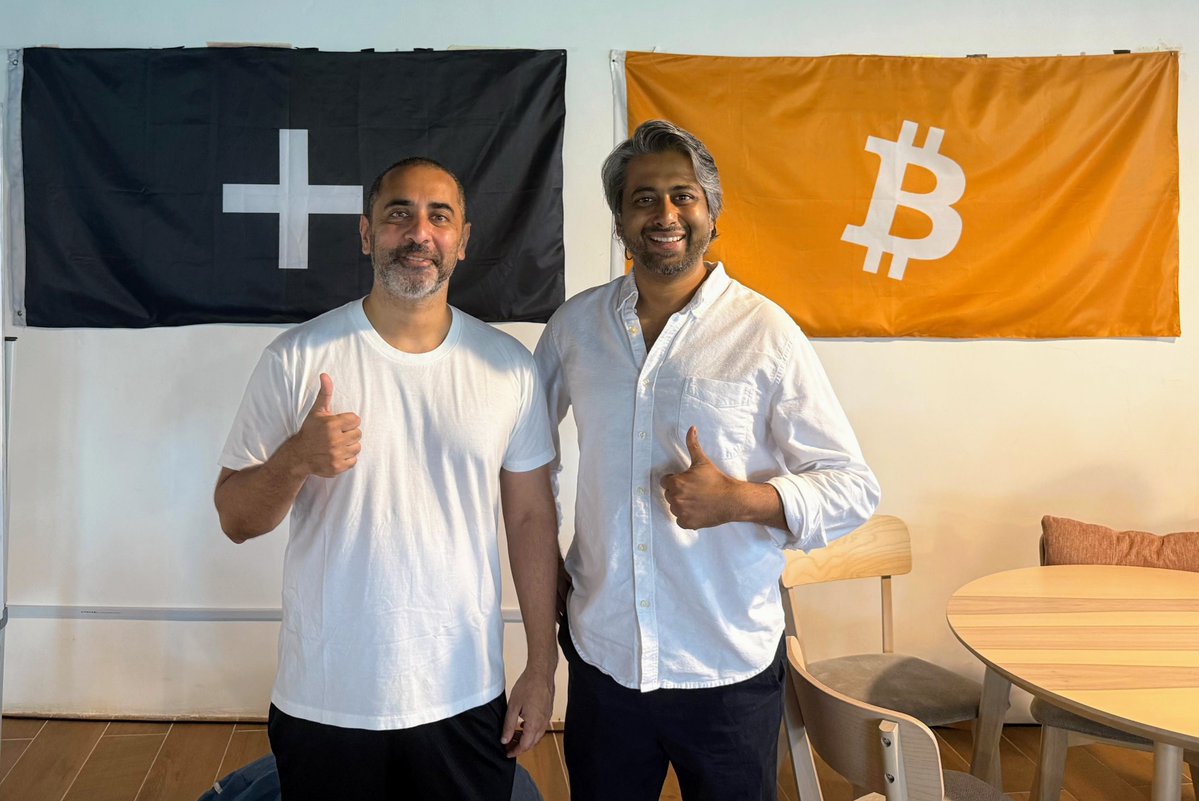
Just spent the morning with my old boss and sparring partner @balajis at his new city state experiment right outside Singapore
Honestly in awe of what he's building here (pics in thread)
It seems crazy to attempt to build a new society / state, but looks like its working - 300 builders from 100+ countries, vibe is great, everyone's building something and comparing notes, sharing ideas, forming teams
If you're a builder or a small team, this feels like a great place to lock in for days/weeks/months. Like SF, but without the needles and grime
I'm long the Network State