Podarcis Lilfordi

823 posts

Podarcis Lilfordi banner
Podarcis Lilfordi

Podarcis Lilfordi

@plilfordi

Katılım Ocak 2014
1.1K Takip Edilen44 Takipçiler
Podarcis Lilfordi
Podarcis Lilfordi@plilfordi·
@JesusFerna7026 @JMilei @dreidel1 My view is that it is not possible to detect AI, except most flagrant cases, and that it is easy to get false positives in such tests. I don't like Milei, but your tweet doesn't seem serious.
English
3
0
42
4K
Jesús Fernández-Villaverde
Jesús Fernández-Villaverde@JesusFerna7026·
Yesterday I came across a paper, “Minimum Viable Scale: Extinction and Escape under Increasing Returns,” by Javier Milei (@JMilei) and Demian Reidel (@dreidel1): drive.google.com/file/d/1u8iZzd… I downloaded it because it sits close to something I am working on (and I am actually sympathetic toward the point the authors are trying to make). As I read, I had the clear sense that a large language model had produced the text: the formatting, the style, the kind of assumptions, the way the derivations were laid out, the papers cited. So I took the abstract and four paragraphs at random and ran them through Pangram. In all five cases, it returned a 100% probability of AI generation. Now, I don’t mind economists using LLMs in their research. I do it all the time, for many purposes. Nor do I mind economists whose first language is not English using them to polish their prose. I do that too, and I have been open about it (this very same post has been tested for grammatical accuracy). But there is a line between “I use LLMs to help with my research” and “I asked an LLM to write a paper and put my name on it.” I may be wrong, of course, and I will gladly correct this assessment.
Jesús Fernández-Villaverde tweet mediaJesús Fernández-Villaverde tweet mediaJesús Fernández-Villaverde tweet mediaJesús Fernández-Villaverde tweet media
English
88
446
1.6K
341.8K
Podarcis Lilfordi retweetledi
Fr. Dwight Longenecker
Fr. Dwight Longenecker@dlongenecker1·
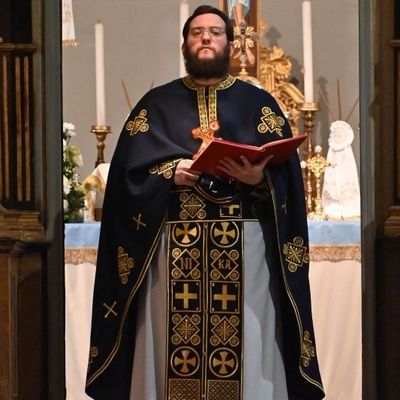
Old Monk: Why do you wish to change the church when you cannot change yourself?
Fr. Dwight Longenecker tweet media
English
15
51
431
7.4K
Podarcis Lilfordi retweetledi
León de Nemea
León de Nemea@Jorodon3·
Esto es absolutamente inaudito. Están leyendo como si nada el juramento de fidelidad al Papa. Literalmente han dicho "juro servir y obedecer al Papa León..." terminando el juramento poniendo sus manos sobre el evangelio diciendo "que Dios me ayude a cumplirlo". Es un acto
León de Nemea tweet media
Español
75
111
1K
137.8K
Podarcis Lilfordi retweetledi
Shane Schaetzel †☧
Shane Schaetzel †☧@ShaneSchaetzel·
In 1999, after having read the Church Fathers, the decrees of all the ecumenical councils, and then finally the documents of Vatican II, it was this sentence that sealed the deal for me, making me decide to become Catholic... "But in subsequent centuries much more serious dissensions made their appearance and quite large communities came to be separated from full communion with the Catholic Church—for which, often enough, men of both sides were to blame." — Unitatis Redintegratio (Decree on Ecumenism), paragraph 3 Why? It all came down to this line: "men of both sides were to blame." Because all of my life as a Protestant, I had heard that the reason why we are Protestants was because it was all Rome's fault. Rome was totally to blame. Never once, in my 29 years as a Protestant, did I ever hear (not once) that Protestants beared some responsibility for the matter. All the fingers pointed to Rome, and they all absolved themselves and the Reformation Fathers of any guilt. This one line, just seven words in English, demonstrated to me a willingness to take ownership of what happened, man up to it, and admit some guilt. I had never seen that before. It was earth-shattering for me. It was then I knew I had to become Catholic. It's funny what just an ounce of humility can do, especially when it's at a Church leadership level.
English
15
27
178
8.4K
Podarcis Lilfordi retweetledi
Pope Respecter
Pope Respecter@poperespecter1·
A lot of Catholics are saying that unless liberal (rainbow) priests are excommunicated, it is hypocritical of Rome to excommunicate the SSPX. While I understand the sentiment, this is "apples and oranges". The SSPX situation is not fundamentally a liberal/conservative issue but a Catholic ecclesiology question. Do bishops (whether liberal or conservative) have the right to consecrate new bishops against the express wishes of the Pope? The danger of saying "yes" to such a claim is that such a precedent would also obviously help liberal schismatics as much as conservative ones. Liberals could start consecrating the most wildly unorthodox bishops you could imagine (in openly gay relationships, radically pro abortion, etc). There would be no limit. This question on whether the Pope gets to decide who is made bishop is a much bigger question than whether you like the TLM or not. It is a much bigger question than what to do when a particular priest does something scandalous. It is the very foundation of Catholicism at risk.
Pope Respecter tweet media
English
178
114
1.4K
56.9K
Podarcis Lilfordi
Podarcis Lilfordi@plilfordi·
@BishopBarron I agree with the message, but I question the timing. I guess that Trumpism and what it represents is, now, more dangerous than fringe communists.
English
0
0
0
3
Bishop Robert Barron
Bishop Robert Barron@BishopBarron·
Like many others, I have been alarmed by the success of certain politicians in our country who identify as extreme socialists or communists. This is not a matter of classical liberals triumphing over standard-issue conservatives; this is the victory of people who stand athwart the fundamental principles that undergird our country. There are many reasons why I detest Communism, but I want to draw attention to just one issue of supreme importance. Karl Marx said that the first critique is the critique of religion. He meant that, before a complete re-working of the politics and economics of a society can take place, religion has to be taken down. This is because religion, as he saw it, is the “opium of the masses,” a drug taken to dull our sensitivity to the suffering caused by economic exploitation. As long as the suffering populace is lured into complacency by fantasies about God's providence and the promise of eternal life, they will never rise up and throw off their chains. But there is a second reason why the elimination of religion is of paramount significance for Marx. Communism aspires to be a totalizing system, involving the government's control over education, entertainment, communication, politics, and especially economics. What stands resolutely athwart this ambition is religion, which declares that all of these societal expressions are finally under the judgment of God. So, if you want Communism to succeed, religion has to be stamped out. If you doubt me on any of this, I would encourage you to read the recent histories of China, Russia, Cuba, Nicaragua, Vietnam, Cambodia, and Venezuela. Revisit those histories and tell me I'm wrong about the attack on religion. Might I encourage my fellow believers in God not to be complacent in the face of this very troubling development in the American body politic?
English
707
2.8K
11.4K
480.9K
Stephen A Schoenhoff
Stephen A Schoenhoff@Schoenhoff58480·
@BishopBarron Why do you think the Protestant cultures have been more resilient in the face of communism than those dominated by the old high church hierarchies?
English
1
0
0
376
Donnchadh
Donnchadh@ElwellDenn17038·
@TD_Barrett @BishopBarron WHOA…. “Vatican being run by slaves” where exactly are you getting this from?? That’s just complete BS.
English
1
0
3
62
Bishop Robert Barron
Bishop Robert Barron@BishopBarron·
In a recent interview, Archbishop Vincenzo Paglia, former grand chancellor of the John Paul II Institute on Marriage and Family Life, confirmed the worst suspicions that many of us had. He admitted that the changes he made at the Institute during the Pope Francis years were designed to initiate a "very profound" reform of the idea of the natural law. Instead of absolute moral norms grounded in a keen understanding of the basic goods, he and his colleagues were proposing a moral theory rooted in historical discernment of subjective and cultural experience--not an "armchair theology" but one operating "within history and within people's lives." This, of course, is the language of trendy postmodernism, and it is dangerous indeed. Allow me to illustrate the principle with one example. Is slavery wrong? Intrinsically wrong? Wrong no matter what public opinion polls say about it, no matter what the current consensus on it might be? I imagine any decent person would say yes. But that yes is predicated upon precisely what the tradition calls the natural law and the basic goods. There are some values so fundamental that acts repugnant to them are by their very nature wicked. If you want a highly articulate presentation of this idea, go to St. John Paul II's Veritatis Splendor. If we say that this is just "armchair theologizing" and that morality is a function of ever-shifting cultural and experiential data, then why couldn't slavery be justified? One of the very smartest persons that ever lived, the philosopher Aristotle, thought it was; extremely bright and morally upright persons in our country, well into the 19th century, thought it was permissible. Who is to say whether the consensus might shift back again? Who is to say that "lived experience" might come to justify it? What any truly coherent moral program requires is the very thing that Archbishop Paglia and his colleagues were endeavoring to eliminate, namely, absolute moral norms. Ridding ourselves of these in the name of freedom or pastoral sensitivity actually renders moral discourse dysfunctional, just as relativizing the basic principle of logic would render any rational conversation impossible. The Archbishop's interview, frankly, reminded me of the discussions I had at the Synod on Synodality with some of my German colleagues. Under the rubric of the development of doctrine, they were eager to relativize or radically change the principles undergirding classical morality. If this was and is truly the game, we have ventured onto perilous seas. Link to the article below.
English
410
1.2K
5.7K
472K
Podarcis Lilfordi
Podarcis Lilfordi@plilfordi·
@LoreCardenasX Cuidado con la causalidad. No creo que la gente enferme por dormir demasiado, es al revés, la gente enferma duerme más.
Español
0
0
0
24
Lore Cárdenas.
Lore Cárdenas.@LoreCardenasX·
2. Mito: Necesitas 8 horas de sueño. La mayoría de las culturas tradicionales no duermen 8 horas. Lieberman y sus colegas estudiaron a personas que, a lo largo de los siglos, vivían sin teléfonos, electricidad ni despertadores. Dormían entre 6 y 7 horas por noche, incluyendo siestas. Entonces, ¿de dónde surgió la idea de las 8 horas?👇
Español
2
5
58
61.6K
Lore Cárdenas.
Lore Cárdenas.@LoreCardenasX·
Esto podría salvarte la vida: El profesor de Harvard Daniel Lieberman dedicó 17 años a estudiar cómo dormían, se movían y envejecían los humanos antiguos a lo largo de los siglos. Los 5 mitos que desmintió cambiarán para siempre tu forma de pensar sobre la salud: 1. Mito: Estar sentado te está matando.
Español
24
213
1.1K
488.4K
Podarcis Lilfordi
Podarcis Lilfordi@plilfordi·
@JesusFerna7026 Desde que terminó el juego de la gallina entre Junts i ERC, han tomado claramente caminos muy diferentes. ERC ya no es la de 2017.
Español
0
0
1
115
Jesús Fernández-Villaverde
Jesús Fernández-Villaverde@JesusFerna7026·
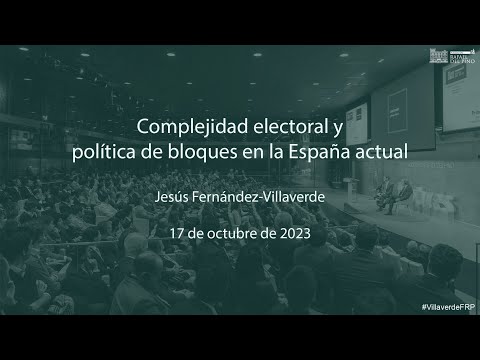
Me entristece, aunque no me sorprende, cuánta gente no ha entendido mi post de esta mañana sobre la “política sin romance”. España es un país de letras, sin tradición de análisis ni formal ni cuantitativo. Lo explico de otra manera. Uno: si con Zapatero el PSOE hubiera tenido más diputados en Castilla y León que en Cataluña, el Archivo se habría quedado en Salamanca. Dos: si el PP hubiera tenido más diputados en Cataluña que en Castilla y León, Aznar lo habría trasladado a Cataluña. La idea es sencilla: las decisiones políticas responden, ante todo, a intereses electorales. Las justificaciones son eso, justificaciones. El motivo es claro. Quien ignora esos intereses no llega a liderar su partido, y un partido que obvia esos intereses no forma gobierno. Nos gusta creer que votamos de forma desinteresada e idealista. No es así. Ni en España ni en ninguno de los casi 200 estados del mundo. Como un demócrata no puede llegar a la Casa Blanca sin ganar Michigan, en Estados Unidos no te puedes comprar un BYD. Es exactamente lo mismo que el Archivo de Salamanca. Por eso mi análisis no justifica en ningún momento recortar el poder de los votantes catalanes. Los catalanes eligen a sus diputados, y es lógico que estos defiendan lo que consideran sus intereses. Es más, Cataluña está infrarrepresentada en el Congreso, así que ni siquiera cabe alegar que pese más de lo que le correspondería en cualquier sistema sensato. Mi post solo señala una cosa: sin entender que el camino del PSOE hacia el gobierno pasa por Cataluña, no se entiende la política española. Los muchos que me han insultado, atribuyéndome intenciones aviesas, delatan sus propias ansiedades más que cualquier otra cosa. Mi análisis tampoco predice que, con una Cataluña independiente, la derecha gobernaría siempre en España. La posición de los partidos es endógena. Sin Cataluña, los partidos de las 16 comunidades restantes se reubicarían en el espectro ideológico y, en ese nuevo escenario, la derecha no tendría por qué ganar. Ese razonamiento no vale para la situación actual, porque al PSOE le sale más barato entenderse con Junts y ERC que reposicionarse en el resto de España. Y no, lo siento: reformar la ley electoral no cambiará nada. La realidad, guste o no, es esta. Primero, en 2023, el bloque territorial (ERC, Junts, EH Bildu, PNV, BNG, CC, UPN, CUP, NC y Teruel Existe) obtuvo el 7,9% de los votos y el 8,0% de los escaños. Está, pues, en su nivel de representación casi exacto, aunque con grandes desigualdades internas: la CUP, con casi el doble de votos que UPN, se queda fuera del Congreso, mientras que la formación navarra logra un escaño. Segundo, PSOE y Sumar obtuvieron el 44,0% de los votos y el 43,4% de los escaños, de nuevo, casi a su nivel de representación exacto. Tercero, el único bloque sobrerrepresentado es la derecha nacional (PP y Vox): el 48,6% de los escaños con el 44,5% de los votos. El 99% de quienes proponen reformar la ley electoral para recortar el poder nacionalista está diciendo, en realidad, lo siguiente: que el 51,9% de los españoles que votó al bloque territorial o al de izquierdas no puede gobernar, pese a poder pactar entre sí, y que debe ceder el gobierno al 44,5% de la derecha mediante algún artilugio electoral. Artilugios que, además, fracasarían en el 99% de los casos, porque es facilísimo sortearlos con partidos instrumentales. Esto no solo es injusto. A largo plazo, además, sería contraproducente. El problema del nacionalismo catalán está, en lo esencial, resuelto. Lo ha matado la inmigración masiva (a la que yo me he opuesto por otros motivos). Los “nuevos catalanes” no hablarán catalán fuera de la escuela, por más miles de millones que la Generalitat gaste en lo contrario, ni se sentirán nacionalistas y, por tanto, muy pocos votarán a ERC y casi ninguno a Junts. De hecho, en términos electorales, el nacionalismo catalán atraviesa su peor momento desde 1907. Y, casi más importante, esa misma inmigración ha creado AC, que crecerá en los próximos años absorbiendo el voto nacionalista, y con la que el PSOE/PSC no podrá pactar jamás. Pero hay algo más de fondo. Quienes piden reformar la ley electoral ofrecen la típica solución castiza: en lugar de afrontar el problema real, que el PP es un partido de inútiles incapaz de elegir líderes y construir una hegemonía electoral, prefieren el apaño legislativo. La ironía es redonda: la derecha nacional es mediocre porque sus votantes, al exigir cambiar una ley electoral que ya les favorece, demuestran su propia mediocridad intelectual. La política siempre es sin romance. Adjunto una conferencia mía en la que explico todo esto en detalle. youtube.com/live/nLKsPOFLG…
YouTube video
YouTube
Español
51
148
628
71.2K
Amir
Amir@AmirAminiMD·
I am not sure if Trump realizes that he has screwed Israel, particularly Netanyahu, in a way that they can’t even complain about without admitting their own lies and hypocrisy. For decades, Israeli politicians had carefully created a fictional Iranian nuclear threat, while Israel’s actual objectives always were Iran’s destruction as functioning country, through civil war and in the best case scenario: balkanization. And if that’s not possible, then at least the continued isolation and sanctioning of Iran, along with continued outside meddling, sabotage, and endless terror. The worst-case scenario for Israel has never been a nuclear Iran (sure, that would have prevented them from regularly attacking Iran) but an unleashed, unsanctioned and internationally accepted Iran, which never needed nuclear weapons in the first place to become a superpower. Netanyahu, in his hubris and with the sole goal of saving his own ass, started this catastrophe -and Trump, in his desperation to get out of this catastrophe to save his own ass, just absolutely nuked the entire Israeli agenda by giving them something they always claimed to want -in return for something they absolutely NEVER wanted.
English
373
1.5K
11.3K
692.4K
Podarcis Lilfordi
Podarcis Lilfordi@plilfordi·
@SteveStuWill This plot certainly does not allow to reach such a conclusion. There are points everywhere, there is no linear relationship.
English
0
0
0
34
Podarcis Lilfordi
Podarcis Lilfordi@plilfordi·
@pitiklinov Más que cadenas causales, yo creo que los más probable es que hubiera ciclos de retroacción y que cultura, lenguaje e inteligencia avanzasen en paralelo (de manera no lineal). El mundo es altamente no lineal.
Español
1
0
2
27
Podarcis Lilfordi
Podarcis Lilfordi@plilfordi·
@pitiklinov La nueva teoría parece más solida, pero tiene un agujero: la violencia. Entre humanos siempre ha habido mucha violencia. Habría que ver como encaja. Había cooperación, pero también coerción.
Español
1
0
0
485
Pablo Malo
Pablo Malo@pitiklinov·
¿Tú con quién estás? ¿Con Harari o con Henrich? Joseph Heath critica en este artículo el relato de la evolución humana que presenta Yuval Noah Harari en Sapiens por ser anticientífico y obsoleto. Lo contrasta con la teoría mucho más sólida y actual, según él, de Joseph Henrich (The Secret of Our Success), que invierte completamente el orden explicativo. Heath identifica cuatro capacidades únicas que diferencian a los humanos: -Inteligencia superior (incluyendo razonamiento abstracto y matemático). -Lenguaje complejo y gramatical. -Cooperación ultrasocial (con no parientes). -Cultura acumulativa (transmisión y mejora continua de conocimiento y artefactos). Cualquier teoría seria debe explicar cómo evolucionaron estos rasgos en un tiempo evolutivo muy corto (Homo erectus apareció hace unos 2 millones de años o así). La secuencia de Harari sigue el orden clásico: Inteligencia → Lenguaje → Cooperación → Cultura. Pero Heath le ve muchos problemas: -El cerebro grande es muy costoso (energía y mortalidad en el parto). No está claro qué beneficio compensatorio habría tenido en la sabana. -El lenguaje como “mutación casual” (Tree of Knowledge) tiene problemas graves: el primer mutante no tendría con quién hablar (problema de arranque). -Sin cooperación previa, el lenguaje sería “cheap talk” (habla barata) y poco creíble. -La cooperación no surge fácilmente de la inteligencia (teoría de juegos y dilema del prisionero lo demuestran). -La cultura no es solo “más gente trabajando junta”; es evolución cultural acumulativa. Así que Heath prefiere la secuencia que propone Henrich (siguiendo a Boyd y Richerson): Cultura → Cooperación → Lenguaje → Inteligencia. La historia sería más o menos lo siguiente. El ajuste inicial que lo arranca todo fue una mayor capacidad de imitación fiel: los humanos copian comportamientos complejos con gran precisión, incluso sin entenderlos del todo, a diferencia de los chimpancés. Esta capacidad permitió el surgimiento de la evolución cultural acumulativa, es decir, que las herramientas, técnicas y conocimientos mejoren y se transmitan de generación en generación. La imitación conformista (“haz lo que hace la mayoría”) y la tendencia a imitar a los más exitosos aumentaron la homogeneidad cultural dentro de los grupos, lo que potenció la selección entre grupos: aquellos más cooperativos culturalmente dominaron a los demás, favoreciendo el surgimiento de normas prosociales. Esto, a su vez, desencadenó un proceso de auto-domesticación, en el que los individuos más agresivos eran marginados reproductivamente, haciendo a los humanos más prosociales por naturaleza. Con mayor cooperación, el lenguaje se volvió útil y creíble. Finalmente, la inteligencia (incluido el cerebro grande) fue impulsada por la explosión cultural: valía la pena invertir en mejor memoria y cognición porque permitía absorber y aprovechar una cultura cada vez más compleja. En resumen, el artículo es una defensa clara de la co-evolución gen-cultura.
Joe Henrich@JoHenrich

This is a great piece that accurately captures the challenges of explaining what makes us human. josephheath.substack.com/p/harari-vs-he…

Español
76
442
1.5K
106.5K
Father João Silveira
Father João Silveira@joaosilveiraaa·
Today, the Mass was denied to me in Ávila (Spain). I am the chaplain of a pilgrimage group from the United States. This pilgrims usually attend the Traditional Latin Mass, so they wanted to be accompanied by a priest who would celebrate in the Old Rite. We had the chapel booked, but we were told that this rite required authorization from the Bishop. I went to the Episcopal Curia to request the authorization, so the Mass could take place. However, the Bishop, not to me personally, but through the Vicar General, categorically stated: “That Mass is prohibited in this diocese.” Prohibited why? And by what authority? Has this rite been abrogated? I was going to celebrate it in a chapel with the group of pilgrims. What harm could possibly come to the world? The rite is exactly the same one used in the convents of the Discalced Carmelites, stemming from the reform of Saint Teresa of Ávila and Saint John of the Cross. The rite was good for those great saints, but now it is bad for us? The Code of Canon Law - Canon 932 §1 - prohibits Masses outside of sacred places, except in cases of necessity: “The Eucharistic celebration must be carried out in a sacred place unless, in a particular case, necessity requires otherwise; in that case, it must be celebrated in a decent place.” In this case, there was no necessity to celebrate the Mass in a hotel room, since we were surrounded by chapels and churches with beautiful altars (that are almost never used). The necessity was created by the Bishop himself, who, instead of promoting sacred things, decided to prohibit them. Who benefited from the Mass being celebrated in a profane place? Was Our Lord more praised in a hotel room than He would have been in a church? Were the souls of the faithful more edified by seeing a table serving as an altar? It is normal for people to be scandalized by these tyrannical and anti-pastoral decisions, especially from those who claim that everyone is welcome in the Church. But not everyone is. That is quite clear. I have gone through several similar episodes before and remained silent. But this must be denounced, this cannot be the normal state of the Church. Pope Leo must act quickly to put an end to these abuses of authority.
English
290
796
3.4K
221.2K