Mark Woo
1.8K posts

@karpathy Step2: have a skill that says: answer question from first principles, from common knowledge, with web search results and with our knowledge database. Always quote sources
Step 3: ask questions. Lol
Step 4: answers are given in MD files and html.
What I am not sure:...
English

LLM Knowledge Bases
Something I'm finding very useful recently: using LLMs to build personal knowledge bases for various topics of research interest. In this way, a large fraction of my recent token throughput is going less into manipulating code, and more into manipulating knowledge (stored as markdown and images). The latest LLMs are quite good at it. So:
Data ingest:
I index source documents (articles, papers, repos, datasets, images, etc.) into a raw/ directory, then I use an LLM to incrementally "compile" a wiki, which is just a collection of .md files in a directory structure. The wiki includes summaries of all the data in raw/, backlinks, and then it categorizes data into concepts, writes articles for them, and links them all. To convert web articles into .md files I like to use the Obsidian Web Clipper extension, and then I also use a hotkey to download all the related images to local so that my LLM can easily reference them.
IDE:
I use Obsidian as the IDE "frontend" where I can view the raw data, the the compiled wiki, and the derived visualizations. Important to note that the LLM writes and maintains all of the data of the wiki, I rarely touch it directly. I've played with a few Obsidian plugins to render and view data in other ways (e.g. Marp for slides).
Q&A:
Where things get interesting is that once your wiki is big enough (e.g. mine on some recent research is ~100 articles and ~400K words), you can ask your LLM agent all kinds of complex questions against the wiki, and it will go off, research the answers, etc. I thought I had to reach for fancy RAG, but the LLM has been pretty good about auto-maintaining index files and brief summaries of all the documents and it reads all the important related data fairly easily at this ~small scale.
Output:
Instead of getting answers in text/terminal, I like to have it render markdown files for me, or slide shows (Marp format), or matplotlib images, all of which I then view again in Obsidian. You can imagine many other visual output formats depending on the query. Often, I end up "filing" the outputs back into the wiki to enhance it for further queries. So my own explorations and queries always "add up" in the knowledge base.
Linting:
I've run some LLM "health checks" over the wiki to e.g. find inconsistent data, impute missing data (with web searchers), find interesting connections for new article candidates, etc., to incrementally clean up the wiki and enhance its overall data integrity. The LLMs are quite good at suggesting further questions to ask and look into.
Extra tools:
I find myself developing additional tools to process the data, e.g. I vibe coded a small and naive search engine over the wiki, which I both use directly (in a web ui), but more often I want to hand it off to an LLM via CLI as a tool for larger queries.
Further explorations:
As the repo grows, the natural desire is to also think about synthetic data generation + finetuning to have your LLM "know" the data in its weights instead of just context windows.
TLDR: raw data from a given number of sources is collected, then compiled by an LLM into a .md wiki, then operated on by various CLIs by the LLM to do Q&A and to incrementally enhance the wiki, and all of it viewable in Obsidian. You rarely ever write or edit the wiki manually, it's the domain of the LLM. I think there is room here for an incredible new product instead of a hacky collection of scripts.
English
Mark Woo retweetledi

I often think about the technical limitations that game designers of the 80s had to work with - both in terms of software and hardware.
The game that stands at the very top is Elite.
Think about this for a second: The core game code on the BBC Micro version occupied roughly 22 KB of memory. Now think about what Braben and Bell turned that into: a universe with eight galaxies, each containing 256 star systems (for a total of 2,048 planets/systems). Each system featured unique details: government type, economy, technology level, population, commodity prices, and even descriptive text (e.g., a planet known for "carnivorous arts graduates" or similar quirky combinations).
If you still need a bit more help to contextualize that, try this: Elite was smaller than many modern text files or desktop icons, yet it contained (and let you freely explore) a multi-galaxy-spanning universe that felt vast and limitless.
Oh, and by the way, the game also rendered 3D wireframe ships, stations, and planets in real time on a 2 MHz 6502 processor.
This is no slight on today’s game designers. They work with what they have, and that's okay. But when you think about the worlds that some programmers created with the tools they were given, it sometimes breaks my brain trying to understand how they did it.
Elite is a true masterpiece on so many levels. I played the C64 version back in the day, and even 40+ years later it still feels like one of the most incredible programming wonders ever.
English
Mark Woo retweetledi

„Nagorny Karabach“ ist dieses Jahr meine Nummer 1. Mehr Infos gibt’s in meinem #SpotifyWrapped.
spotify.com/wrapped-share/…
Deutsch
Mark Woo retweetledi

celebrating 25 years of Quake 3 CPMA: the most skillful, hardest, fastest, greatest FPS of all time. the world's best esport. the true start of the aim community and freeform movement. the first frag movies and the birth of montages.
watch it all at once. holy shit! by entik
English
Mark Woo retweetledi
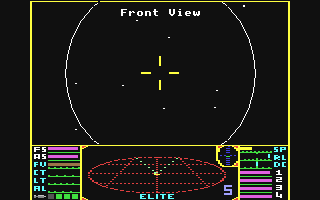
Elite (Firebird) - A pioneering space trading sim with wireframe 3D graphics and open-ended gameplay. Released on the Commodore 64 in 1985. Play or miss?

English
Mark Woo retweetledi

On Sunday I traveled to the middle of the desert to capture this: The ISS against our sun. What I didn't expect: the sun producing a magnificent flare at the same time
A once-in-a-lifetime shot I'm thrilled to share with you. See the uncropped shot or get the print in the reply

English
Mark Woo retweetledi
🚁 “We’re in the pipe, five by five.” 🚁
Corporal Ferro might not have boots on the ground, but she’s crucial to the mission. As the Sulaco’s ace dropship pilot, she delivers the Marines into the heart of LV-426 with total confidence—cool, composed, and no-nonsense.
Her calm voice over comms became one of Aliens’ most quoted lines, and her sudden loss is one of the first shocks that show: no one’s safe.
✈️ Do you remember Ferro’s entrance? Her lines? Her role in the chaos that followed?
Let’s give the pilot her due—drop your favorite Ferro moment below! 👇
#Aliens #CorporalFerro #FiveByFive #DropshipPilot #SciFiClassic #JamesCameron #AlienFranchise #ColonialMarines

English
💼 “I’m Burke. Carter Burke. I work for the company.” 💼
Carter Burke is the perfect sci-fi villain—not a monster, but a man driven by corporate greed hiding behind a friendly smile. He doesn’t need claws or acid blood to be dangerous… just a willingness to sacrifice lives for a profit margin.
From betraying Ripley’s trust to endangering Newt and the Marines, Burke is proof that sometimes the real horror isn’t alien—it’s human.
🤔 What’s your take on Burke? Corporate coward or cold-blooded opportunist? Drop your thoughts below!
#Aliens #CarterBurke #PaulReiser #WeylandYutani #SciFiVillainy #CorporateHorror #JamesCameron #AlienFranchise

English
Mark Woo retweetledi

Mark Woo retweetledi

MAD MAX was released 46 years ago this week. Acclaimed as one of the great low-budget films, and the movie that launched the career of star Mel Gibson, the making of story is a ride through a dystopian wasteland…
1/44




English
Mark Woo retweetledi

On this day, 46 years ago, George Miller's "Mad Max" (1979) was released in Australia.
English
Mark Woo retweetledi


Mark Woo retweetledi

Elite was released (circa) 40 years ago today!
This space trading open world game is considered to be the forerunner of many modern games, as well as being an important milestone in the history of space sci-fi.
Happy anniversary, @EliteDangerous !
Box art by Philip Castle:

English
Mark Woo retweetledi





Mark Woo retweetledi
To get audiences hyped for the release of TERMINATOR 2: JUDGEMENT DAY, James Cameron got together with effects artist Stan Winston. With a budget of $150,000, they put together this outstanding teaser trailer which released almost a year before the film.
English
Aliens Expanded backer John shares his love for Aliens with his favorite quote from the movie.
Visit aliensexpanded.com for more, or visit the link in our bio.
#Alien #Aliens #JamesCameron #AvP #SciFi #80s #AliensExpanded
English
Mark Woo retweetledi