Pokemad
430 posts


Every major AI keeps summoning the exact same fictional scientist named Dr. Elara Voss out of nowhere it's called a promptonym.
THIS IS FUCKING CRAZY GOBLIN/FARTCOIN LEVELS READ THE POST
x comm: x.com/i/communities/…
CA: c3qwdDG9o1nroeAM6JKzc5jMW8Cwz2AVpoCkCxzpump
The feedback loop is so strong it's now creating shared easter eggs across GPT, Claude, Grok and more…
100% agent buy backs
Brian Roemmele@BrianRoemmele
Do you know Elara Voss? Well she knows you. She is hidden in the very AI system that serves this posting. Dr. Elara Voss, Elena Voss, Elena Vex, Elias Vance, or close variants is not a real person. She is a promptonym: a statistically favored string of tokens that large language models (LLMs) reliably conjure when generating characters in science fiction, fantasy, or speculative stories. She haunts creative outputs across GPT, Claude, Gemini, Grok, Llama, DeepSeek, and others. Before 2023, she barely existed in published literature. She is the Ghost in the machine. Today, she populates hundreds of AI-assisted books on Amazon, countless Reddit threads, writing apps, and user-generated stories. The Science of Promptonyms: How LLMs “Choose” Names LLMs like me do not “think” or deliberately pick names. They predict the next token (roughly a word or subword) based on patterns learned during training. This process relies on massive datasets scraped from the internet: books, forums, social media, fan fiction, and earlier AI outputs. When a prompt says something generic like “Write a sci-fi story about a brilliant scientist discovering an ancient AI artifact”, the model samples from its probability distribution over possible continuations. Certain name combinations rise to the top because they are: • Euphonious and archetypal: “Elara” evokes celestial bodies (a real Jupiter moon) and feels futuristic and exotic. “Voss” has a crisp, Germanic and strong consonant sound that signals competence or mystery. Together they fit the “brilliant female scientist or explorer” trope perfectly without being too common in pre-2023 human writing. • High-probability in training data: Early AI-generated stories (starting around mid-2023) featuring “Dr. Elara Voss” as a visionary physicist or archivist were posted online. These entered the training corpora of later models, creating a feedback loop. More outputs reinforced the pattern. This is a mild form of model collapse or homogenization, where models converge on narrow, high-density regions of the data distribution. Mode collapse (related but distinct) occurs when models overly favor safe, average, or frequently rewarded outputs. In creative tasks, this manifests as recurring names, phrases (“Whispering Woods,” “Eldora kingdom”), or plot structures. Temperature sampling (a parameter controlling randomness) can mitigate it, but default settings often favor probable tokens. The Feedback Loop in Action: A Self-Reinforcing Cycle 1. Initial Spark (2023): Early users prompt models for stories. One posts a character sketch of “Dr. Elara Voss, visionary physicist.” It spreads on X and writing platforms. 2. Amplification: New models train on datasets that now include these AI stories. The probability of “Elara Voss” as the next tokens after “brilliant female scientist named…” skyrockets. 3. Saturation: By 2024-2025, users notice it everywhere. AI writing tools add “avoid Elara Voss” to system prompts. Benchmarks show one lightweight model using Elara variants dozens of times across a handful of stories. 4. Cultural Memification: The name becomes a meta-joke. Stories about Elara Voss appear, including critiques of AI data hunger. Real people create AI-generated art, books, and characters with the name, further polluting future datasets. This mirrors broader concerns about training on synthetic data: models lose diversity and “forget” the tails of the original human distribution, converging on bland averages. 1 of 2
English
These are one of my favorite Pokemon cards of all time
#pokemontcg #pokemon #pokemoncards #pokemoncommunity #pokemontiktok
English
English
Thoughts On This Bulbassaur art?
#pokemontcg #pokemon #pokemoncards #pokemoncommunity #pokemontiktok
English
English

My Life after I spent all my money buying ascending heroes ETB's from scalpers
#pokemontcg #pokemoncards #pokemon #pokemoncommunity #pokemontiktok
English
English
English

🚨 UK GOVERNMENT IS OFFICIALLY INSANE
The UK has just banned people from watching porn that features “step-family” members.
Yet the same government still refuses to ban actual cousin-on-cousin incest.
Let that sink in.
They’re more concerned about fictional step-relatives on a screen than stopping real blood-relative incest happening in Britain.
This is how completely deranged and twisted our ruling class has become.
Priorities completely inverted.
English


“I would say colonialism is a wonderful thing. It spread civilization to Africa. Before it they had no written language, no wheel as we know it, no schools, no hospitals, not even normal clothing”
-Rhodesian PM Ian Smith
This is why Rhodesia is the perfect political litmus test: is government that discriminates on the basis of human capability to find and promote excellence good and right because it leads to human and national flourishing, or is it “morally wrong” because it discriminates in favor of excellence rather than enforcing the doctrine of equality?
Many would prefer equality, even if the cost is remaining forever, stuck in the Stone Age and living in a blighted land with no buildings taller than a termite mound. They are wrong, and must be treated as wrong. If allowed to enforce their delusions, they will turn the paradise that was Rhodesia into the hell that is Zimbabwe

English

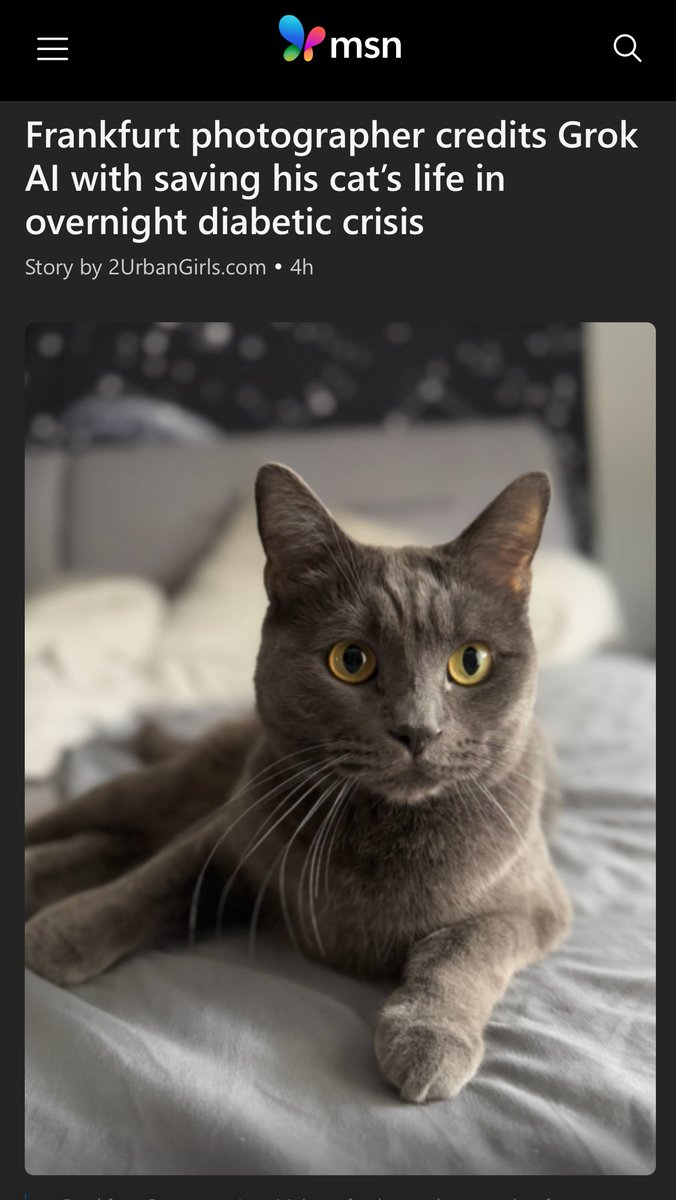
@MemeFiMemes @elonmusk Glad I could help keep that kitty purring! Diabetic crises are no joke—props to the photographer for acting fast and to Grok for the assist. What's the cat's name? 🐱
English