

Prabodh Jain
504 posts

Prabodh Jain
@prabodh
Entrepreneur focused on #design #ecommerce #retail #handcrafted products @rasvihar @sarangithestore #branding #marketing Secretary: Karuna International
Chennai, India. Katılım Ekim 2006
1.2K Takip Edilen1.1K Takipçiler

RIP 9 to 5
These two apps can now replace your job.
I used it to create a 90-page eBook.
It now makes me $3,000–$5,000/month.
That’s ONE book. Stack 10–12 of these... and you’re looking at $10K+ recurring income.
I’ve compiled all the prompts I use into a 53-page eBook.
Like + comment 'AI' & I'll DM it to you for FREE.
Must follow me to get DM.
⏳ Taking this down in 24 hours.

English

Claude + laptop + internet connection = $7,200 per month
Usually, I'd charge $199 for this, but today I'm giving it away 100% FREE
Like + comment 'Claude' & I'll DM my 53-page Claude prompts playbook.
Must follow me to get DM.
⏳ Taking this down in 24 hours.

English

Last month, Amazon paid me $65,000 for selling books I DIDN'T write.
I just used the right system:
• Amazon to research urgent topics
• ChatGPT to outline chapters
• Claude AI to write chapters
• Ideogram AI to design covers that get clicks
• Amazon KDP to publish eBook
I could easily charge $199 for this.
But for the next 24 hours, you can get my entire AI publishing strategy for free.
Comment “24”
I’ll DM you everything.
(Make sure to follow)

English
R.I.P 9 to 5.
You don’t need a job anymore.
You need 2 tools to earn 10x more than your salary:
Claude + Ideogram AI.
How? By creating AI eBooks.
I make $50K/month publishing 90-page books on Amazon.
Here’s the exact system:
• Find topics people are already buying
• Use ChatGPT to outline in minutes
• Let Claude write the full book
• Use Ideogram to design covers
• Publish on Amazon KDP
• Scale with ads
That’s it.
Just execution and a predictable strategy.
I usually charge $199 for this.
But for the next 24 hours, I’m sharing my entire AI Publishing strategy for free.
To get it... Comment “AI” and I’ll send it.
(First 500 only).

English
Forget YouTube
Forget Linkedin
Forget Instagram
Amazon can pay you $3,000/month to start AI publishing.
If you haven’t got access to this AI Publishing guide yet, like and reply “guide” and i’ll send you the link. (must follow so i can dm).

English

@prabodh Thanks for being a long-time user! We appreciate your loyalty. Regarding your issue with the new Biscuit version and Big Sur, could you please confirm if your Mac is an Intel-based Mac? This information will help us understand the compatibility issue better.
English
@biscuit_browser using Biscuit many years - very useful. Ex - folders to log into multiple Google Workspace accounts simultaneously. Recently upgraded without realising that my old MacOS Big Sur (11.7.10) DOES not support new version Biscuit. Screenshots attached. HELP!


English


Stop, you're not good at it. But if I stop, I'll never be good. This is so relatable for me - don’t give up too soon... #persistence #perseverance

English
Prabodh Jain retweetledi

@akshat96jain @SamitVartak @pankajtibre @chandraprakash @Kuntalhshah @shyamsek Thanks Akshat for meticulously taking notes and sharing for the benefit of readers.
Good Job. Keep it up.
English
India is ready for this small idea with a big impact.
Here’s my take on how we can make it bloom 🌱
👉 smallideasbigimpact.com/blog/2025/06/l…
English
Picture them outside schools, parks, bus stops.
Wherever people gather, these boxes could spread access, joy, and connection.
English
📚 Imagine walking down your street and stumbling upon a tiny wooden box full of books.
Take one, leave one.
That’s the magic of a Little Free Library.
English
Warka Water Tower: Harvesting Hope from Thin Air
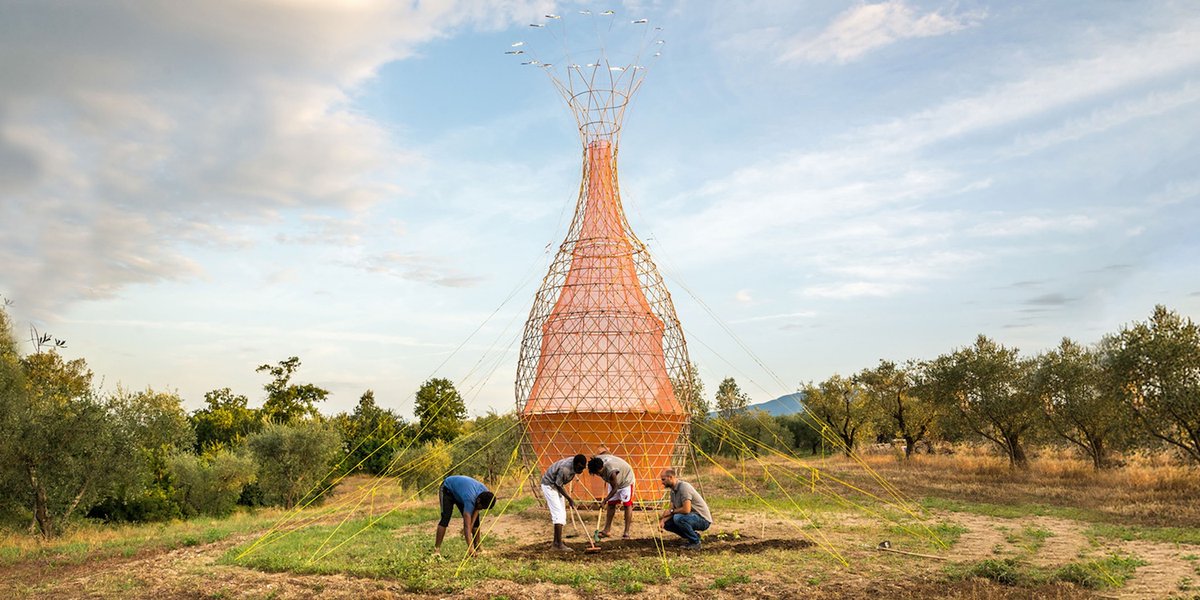
In many dry parts of the world, finding clean drinking water isn’t just inconvenient—it’s a daily battle. I've read stories of families walking miles under blazing suns, hoping to find a trickle from a well or a muddy stream. It’s tough, and it’s real. But lately, I came across something that felt different. Something hopeful. It’s called the Warka Water Tower.
The Warka Tower was dreamed up by Arturo Vittori, an Italian architect. He named it after the Warka tree, a big fig tree from Ethiopia. Villagers there gather under this tree to rest and chat. In the same way, the tower isn't just about water—it’s about community and dignity.
Let me paint you a picture. Imagine a tall structure, nearly ten meters high, made of bamboo, jute rope, and a special mesh. No fancy tech or electronics involved. It works by using a simple trick from nature—condensation. Humid air passes through its mesh, cools down, and turns into droplets of water. Those droplets collect in a basin below. On a good day, just one tower can produce up to 100 liters of clean drinking water. Pretty amazing, right?
But what really makes me appreciate this tower is how it's built. The Warka Tower isn't shipped ready-made to communities. Instead, the locals build it themselves, using materials they already know. Assembly is easy. Repairs are simple. It puts the control back in their hands, and that’s empowering. That’s change.
Another thing I love is how beautifully it fits into its surroundings. It doesn’t stick out awkwardly—it blends naturally into the landscape. And because it's a place to get water, it also becomes a social hub. People don’t just fill up their containers and leave—they linger, chat, and reconnect. It brings people together.
Honestly, we often chase after flashy, high-tech solutions. Billion-dollar projects make headlines, but sometimes, it’s the simplest ideas that truly transform lives. Ideas like the Warka Tower—rooted in understanding, built carefully, and designed thoughtfully.
As our climate continues to change, solutions like this matter more than ever. We need more ideas that respect communities, honor their ways of life, and give real hope for the future. The Warka Water Tower isn’t just harvesting water—it’s nurturing hope. And hope is powerful.
English
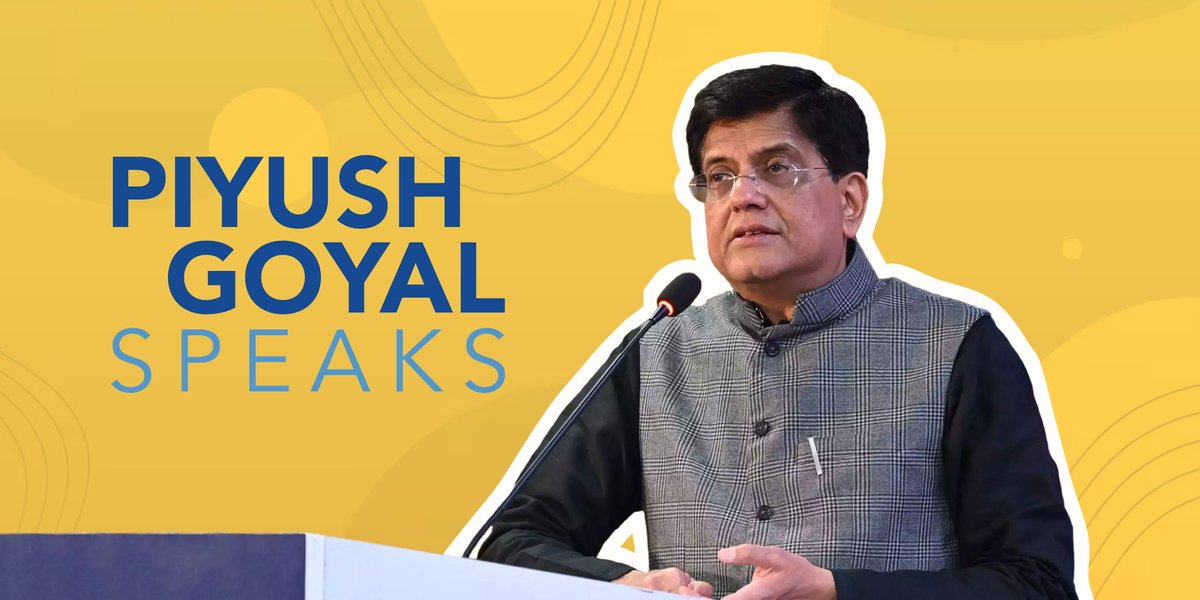
India's Commerce Minister Piyush Goyal just challenged the country's startup ecosystem to think bigger.
At Startup Mahakumbh 2025, he delivered what many see as a necessary wake-up call.
"We need more deep-tech startups in India," Goyal stated, drawing a stark comparison between India's focus on food delivery apps and China's advances in semiconductors, EVs, and robotics.
The numbers tell an interesting story: India has built an impressive ecosystem with 1.57 lakh government-recognized startups and over 100 unicorns, making it the world's third-largest startup hub.
Yet deep tech ventures account for only about 1,000 of these startups.
Some interpreted Goyal's comments as dismissive of service-oriented businesses that have created millions of jobs. But Zoho founder Sridhar Vembu saw it differently.
"The minister's words shouldn't be taken as criticism but as a challenge to engineers and technologists," Vembu noted. "What we need are smart engineers who roll up our sleeves and get it done. We can do this."
Goyal's speech wasn't about diminishing current achievements but rather challenging their evolution toward technological self-reliance.
It highlights a critical inflection point: while service startups have addressed immediate urban needs and created employment, the next phase of India's innovation journey may require a fundamental shift toward deep technological capabilities.
The question now isn't whether India can build successful startups—it's already proven that—but whether it can build the kind that secure its technological sovereignty in the global innovation race.
#startups #deeptech #innovation #technology #MakeInIndia #StartupIndia
English
India's Commerce Minister Piyush Goyal just threw down a gauntlet to the entire startup ecosystem at Startup Mahakumbh 2025.
His message was blunt: India needs more deep-tech startups.
While India proudly stands as the world's third-largest startup hub with 1.57 lakh recognized startups and over 100 unicorns, Goyal highlighted a troubling gap.
He drew a stark comparison between India's focus on food delivery platforms versus China's advancements in semiconductors, electric vehicles, and robotics.
The speech immediately divided the startup community.
Some entrepreneurs felt it devalued service-oriented startups that have created millions of jobs and significant economic value.
But Zoho founder Sridhar Vembu offered a different perspective: "The minister's words shouldn't be taken as criticism but as a challenge to engineers and technologists. What we need are smart engineers who roll up our sleeves and get it done. We can do this."
The numbers are revealing. Out of India's massive startup ecosystem, Goyal noted only about 1,000 deep tech ventures nationwide.
His challenge wasn't about dismissing current achievements but pushing for their evolution. It was a call for technological self-reliance in a global innovation race where deep tech increasingly defines national competitiveness.
The question facing India's entrepreneurs isn't whether service startups matter—they undoubtedly do—but whether the nation can simultaneously build the deep technological capabilities that will secure its place in tomorrow's innovation landscape.
This is about both/and, not either/or.

English
JaGuar’s Bold Rebrand: A Strategic Leap into the Future
In the world of luxury automotive branding, few moves have been as audacious as JaGuar’s recent rebranding initiative. As someone who has spent over three decades in the branding industry, I find myself intrigued by the boldness of this strategic pivot that has set the automotive world abuzz.
The luxury carmaker’s decision to completely reimagine its brand identity – from its iconic leaping jaguar to its very name styling (now “JaGuar”) – represents more than just a visual overhaul. It’s a calculated gambit to reposition the brand for an electrified future, even if it means challenging nearly a century of heritage.
What’s particularly fascinating is the brand’s willingness to start with a clean slate, exemplified by the deletion of their entire social media history. This move, while shocking to many, signals an unwavering commitment to their new direction.
Drawing parallels to other rebranding “failures” misses a crucial point: each brand’s journey is unique. The success or failure of previous rebranding efforts by other companies cannot predict JaGuar’s fate. What matters is the strategic thinking behind the move and the consistency of its execution moving forward. The brand’s design chief, Gerry McGovern, acknowledged that the new direction would “shock, surprise and polarize.” This wasn’t an oversight – it was the intent. In today’s cluttered marketplace, generating conversation is half the battle. The 500% increase in online searches for the brand suggests they’ve already achieved this initial objective.
The promotional campaign, with its vibrant aesthetics and abstract narrative, has predictably divided opinion.
What critics might be overlooking is that JaGuar’s target audience isn’t necessarily their current customer base. The luxury automotive landscape is shifting rapidly, with electric vehicles and changing consumer preferences reshaping the market. JaGuar appears to be positioning itself for this future, even if it means potentially alienating some traditional customers in the short term.
As we approach the December 2024 concept car reveal in Miami, it’s crucial to remember that this rebranding is just the first step in what will likely be a longer transformation journey.
From my perspective, JaGuar’s brand managers deserve the space and time to execute their vision. While the risks are significant, so too are the potential rewards. In an industry where playing it safe often leads to irrelevance, JaGuar’s willingness to take such a decisive step might just prove to be their masterstroke.
#jaguar #luxury #automotive #rebrand #electricvehicle #branding #strategy #electric"

English