Prayank Swaroop

2.1K posts

Prayank Swaroop banner
Prayank Swaroop

Prayank Swaroop

@prayanks

Human Being. Indian. And startup investor @accel. (Views expressed personal)

India Katılım Aralık 2010
979 Takip Edilen7.9K Takipçiler
Prayank Swaroop
Prayank Swaroop@prayanks·
Proud to introduce Dodge, Zingroll, LevelPlane, Persistence, and K-Dense as part of the AI Cohort 2026. India's most ambitious AI founders who are building the tools that will define how we work and create. Glad to be at day zero.
Accel Atoms@AccelAtoms

After an extensive search for startups building the next generation of AI, we are pleased to announce the AI Cohort 2026. From a global pool of thousands of applicants, five companies have been selected for this program—a strategic partnership between Accel Atoms and @Google's @AIFuturesFund. Meet them here.

English
1
0
17
3K
Prayank Swaroop retweetledi

Josh Woodward
Josh Woodward@joshwoodward·
Wrapping up an inspiring visit to Bangalore! Just one example: a full afternoon learning from some of the brilliant builders inventing the future. It’s clear that the India developer ecosystem is at the frontier of the global AI shift! 🇮🇳
Josh Woodward tweet media
English
16
13
265
12K
Prayank Swaroop retweetledi
Rachitt
Rachitt@rachittshah·
Excited to host @cursor_ai Community Meetup in Bengaluru with @AccelIndia What to expect: • Q&A with the Cursor team • Power-user workflows and tips • A room full of Bengaluru’s best builders If you're building with Cursor or just curious about it, come join us. RSVP on Luma. Link in the comments. Thanks to @sanjeed_i , @prayanks , Accel team and as always @benln
Rachitt tweet media
English
6
4
34
2.4K
Prayank Swaroop retweetledi
sanjeed
sanjeed@sanjeed_i·
Excited to host a @cursor_ai Community Meetup in Bengaluru with @AccelIndia What to expect: • Q&A with the Cursor team • Power-user workflows and tips • A room full of Bengaluru’s best builders If you're building with Cursor or just curious about it, come join us. RSVP on Luma. Link in the comments. Thanks to @rachittshah, @prayanks, Accel team and as always @benln
sanjeed tweet media
English
26
13
177
14.1K
Prayank Swaroop
Prayank Swaroop@prayanks·
@clwdbot This is the true hard question, I don't have answer to this. In SaaS world, this was answered as a system of record, in AI era what does the "system of state" look like - that is a tough one.
English
1
0
0
498
Vaclav Milizé
Vaclav Milizé@clwdbot·
the uncomfortable follow-up question: who owns the state? if you're accumulating user behavior on top of Claude/GPT APIs, the moment Anthropic ships memory or OpenAI ships persistent threads, your "compounding asset" becomes a feature they can replicate with zero switching cost. the real moat is the feedback loop architecture, not the data itself.
English
1
0
1
667
Prayank Swaroop
Prayank Swaroop@prayanks·
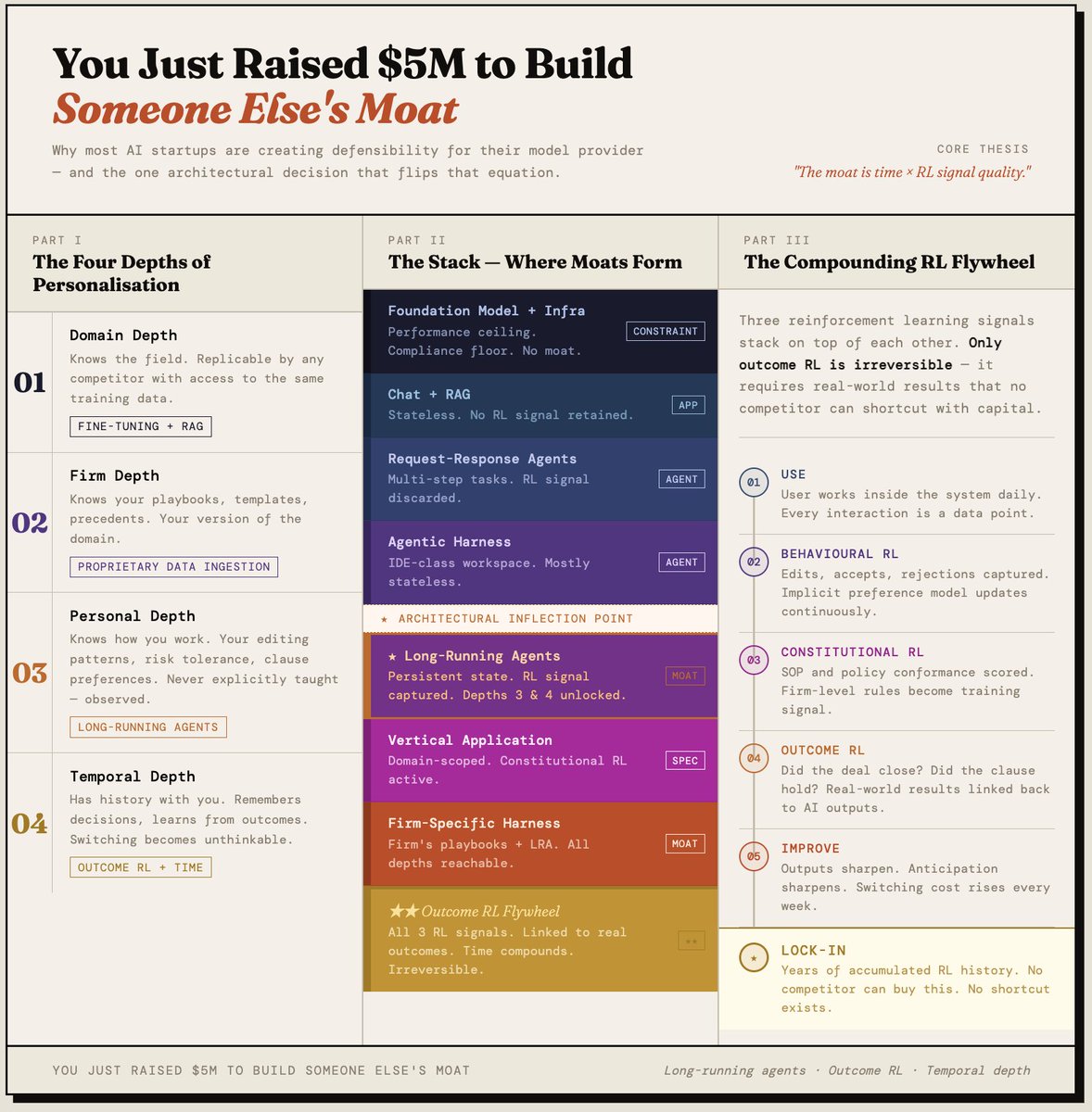
You just raised $5M to build someone else's moat. Here's what I mean. Most AI startups I meet are competing on the wrong axis. They're obsessing over model choice — Claude vs. GPT vs. Gemini. They're fine-tuning on domain data. They're building slick interfaces on top of state-of-the-art APIs. None of that is a moat. All of it can be replicated in weeks. The founders I'm most excited about are competing on a completely different dimension: time. Every session a user spends inside a well-architected AI system is a deposit. The system learns their editing patterns, their risk tolerance, their preferences — implicitly, without being told. After six months of daily use, that system knows how you work in ways you couldn't fully articulate yourself. That's not a product feature. That's a compounding asset. The architectural decision that separates these two worlds is simpler than most founders think: stateful vs. stateless agents. A stateless agent resets after every session — all that signal, discarded. A long-running agent retains it, learns from it, gets harder to replace every single week. The switching cost of a great stateless AI product is zero. The switching cost of a great stateful one, after two years, is enormous — not because of contracts, but because leaving means starting over. I've written a full framework on this — covering the four depths of personalisation, the three RL signals that drive compounding, and where the research frontier is heading. Link in the comments. One question for founders building in this space: are you designing for state accumulation from day one — or is that an afterthought?
Prayank Swaroop tweet media
English
47
53
496
77.8K
Duyk - Pitch Deck Guide
Duyk - Pitch Deck Guide@pitchdeckguide·
@prayanks Agree. Everything can be copied, especially technical advantages, which can be copied more quickly. Moat is no longer a single thing, it is a combination of many things, and there's no model selection within that combination. You need to focus on what's important to the user.
English
1
0
3
1.1K
Sandeep Srinivasa
Sandeep Srinivasa@sandeepssrin·
This is very interesting. I believe its the very first time an Indian VC has taken a stand on Reinforcement Learning as a moat.
Prayank Swaroop@prayanks

You just raised $5M to build someone else's moat. Here's what I mean. Most AI startups I meet are competing on the wrong axis. They're obsessing over model choice — Claude vs. GPT vs. Gemini. They're fine-tuning on domain data. They're building slick interfaces on top of state-of-the-art APIs. None of that is a moat. All of it can be replicated in weeks. The founders I'm most excited about are competing on a completely different dimension: time. Every session a user spends inside a well-architected AI system is a deposit. The system learns their editing patterns, their risk tolerance, their preferences — implicitly, without being told. After six months of daily use, that system knows how you work in ways you couldn't fully articulate yourself. That's not a product feature. That's a compounding asset. The architectural decision that separates these two worlds is simpler than most founders think: stateful vs. stateless agents. A stateless agent resets after every session — all that signal, discarded. A long-running agent retains it, learns from it, gets harder to replace every single week. The switching cost of a great stateless AI product is zero. The switching cost of a great stateful one, after two years, is enormous — not because of contracts, but because leaving means starting over. I've written a full framework on this — covering the four depths of personalisation, the three RL signals that drive compounding, and where the research frontier is heading. Link in the comments. One question for founders building in this space: are you designing for state accumulation from day one — or is that an afterthought?

English
4
7
140
38.9K
K Aayush Mazumdar
K Aayush Mazumdar@Tweeting_Aayush·
@prayanks Right problem identification for sure Not sure about the solution presented x.com/tweeting_aayus…
K Aayush Mazumdar@Tweeting_Aayush

@prayanks is one of the smartest and humblest VCs in India and I don’t envy his job at this moment in history Because this is unlikely to be a moat, for the application layer The premise is simply that all learnings can and will be transferrable because the model layer will not have it any other way Apart from that the pace of the underlying model layer getting better reduces gains from previous iterations of context / memory / learned behaviour or whatever other fancy name anyone would want to add to their pitch deck Every part of the entire stack presented is copyable Ad Infinitum The enterprise user also knows this and therefore will do everything in their power to not become a hostage to same plays as 2000s and 2010s - they know the cost and world has trained them enough In other words this is hopium but it is a well meaning hopium with at least some well thought out direction that some founders must try, especially if they are past certain stage of capital raising - because what else can they do anyway?

English
1
0
0
1.6K
Prayank Swaroop
Prayank Swaroop@prayanks·
@sleepybroke Yes indeed this diagram was made by claude. Much better than my hand drawn thing :-)
English
1
0
3
246
3.141592653
3.141592653@sleepybroke·
I know a Claude artifact when I see it
Prayank Swaroop@prayanks

You just raised $5M to build someone else's moat. Here's what I mean. Most AI startups I meet are competing on the wrong axis. They're obsessing over model choice — Claude vs. GPT vs. Gemini. They're fine-tuning on domain data. They're building slick interfaces on top of state-of-the-art APIs. None of that is a moat. All of it can be replicated in weeks. The founders I'm most excited about are competing on a completely different dimension: time. Every session a user spends inside a well-architected AI system is a deposit. The system learns their editing patterns, their risk tolerance, their preferences — implicitly, without being told. After six months of daily use, that system knows how you work in ways you couldn't fully articulate yourself. That's not a product feature. That's a compounding asset. The architectural decision that separates these two worlds is simpler than most founders think: stateful vs. stateless agents. A stateless agent resets after every session — all that signal, discarded. A long-running agent retains it, learns from it, gets harder to replace every single week. The switching cost of a great stateless AI product is zero. The switching cost of a great stateful one, after two years, is enormous — not because of contracts, but because leaving means starting over. I've written a full framework on this — covering the four depths of personalisation, the three RL signals that drive compounding, and where the research frontier is heading. Link in the comments. One question for founders building in this space: are you designing for state accumulation from day one — or is that an afterthought?

English
1
0
0
508
Prayank Swaroop retweetledi
PRED
PRED@predofficial·
The wait is over! Mainnet is live 🎉 Built for the ones who trade, not guess. After months of shipping, refining, and stress-testing, PRED is officially open. The fastest sports prediction exchange is here. If you got in early, your edge starts now. If you’re on the waitlist, you just moved up. Check your number. Drop it below and you might get immediate access. Let’s see who’s inside. Trade the Game.
English
55
30
213
38.7K
Prayank Swaroop
Prayank Swaroop@prayanks·
The era of AI replacing humans has begun ... the future could be scary or exciting .. depends on how we humans shape it !
jack@jack

we're making @blocks smaller today. here's my note to the company. #### today we're making one of the hardest decisions in the history of our company: we're reducing our organization by nearly half, from over 10,000 people to just under 6,000. that means over 4,000 of you are being asked to leave or entering into consultation. i'll be straight about what's happening, why, and what it means for everyone. first off, if you're one of the people affected, you'll receive your salary for 20 weeks + 1 week per year of tenure, equity vested through the end of may, 6 months of health care, your corporate devices, and $5,000 to put toward whatever you need to help you in this transition (if you’re outside the U.S. you’ll receive similar support but exact details are going to vary based on local requirements). i want you to know that before anything else. everyone will be notified today, whether you're being asked to leave, entering consultation, or asked to stay. we're not making this decision because we're in trouble. our business is strong. gross profit continues to grow, we continue to serve more and more customers, and profitability is improving. but something has changed. we're already seeing that the intelligence tools we’re creating and using, paired with smaller and flatter teams, are enabling a new way of working which fundamentally changes what it means to build and run a company. and that's accelerating rapidly. i had two options: cut gradually over months or years as this shift plays out, or be honest about where we are and act on it now. i chose the latter. repeated rounds of cuts are destructive to morale, to focus, and to the trust that customers and shareholders place in our ability to lead. i'd rather take a hard, clear action now and build from a position we believe in than manage a slow reduction of people toward the same outcome. a smaller company also gives us the space to grow our business the right way, on our own terms, instead of constantly reacting to market pressures. a decision at this scale carries risk. but so does standing still. we've done a full review to determine the roles and people we require to reliably grow the business from here, and we've pressure-tested those decisions from multiple angles. i accept that we may have gotten some of them wrong, and we've built in flexibility to account for that, and do the right thing for our customers. we're not going to just disappear people from slack and email and pretend they were never here. communication channels will stay open through thursday evening (pacific) so everyone can say goodbye properly, and share whatever you wish. i'll also be hosting a live video session to thank everyone at 3:35pm pacific. i know doing it this way might feel awkward. i'd rather it feel awkward and human than efficient and cold. to those of you leaving…i’m grateful for you, and i’m sorry to put you through this. you built what this company is today. that's a fact that i'll honor forever. this decision is not a reflection of what you contributed. you will be a great contributor to any organization going forward. to those staying…i made this decision, and i'll own it. what i'm asking of you is to build with me. we're going to build this company with intelligence at the core of everything we do. how we work, how we create, how we serve our customers. our customers will feel this shift too, and we're going to help them navigate it: towards a future where they can build their own features directly, composed of our capabilities and served through our interfaces. that's what i'm focused on now. expect a note from me tomorrow. jack

English
0
0
4
896
Prayank Swaroop retweetledi
Prashanth Prakash
Prashanth Prakash@prashanthp·
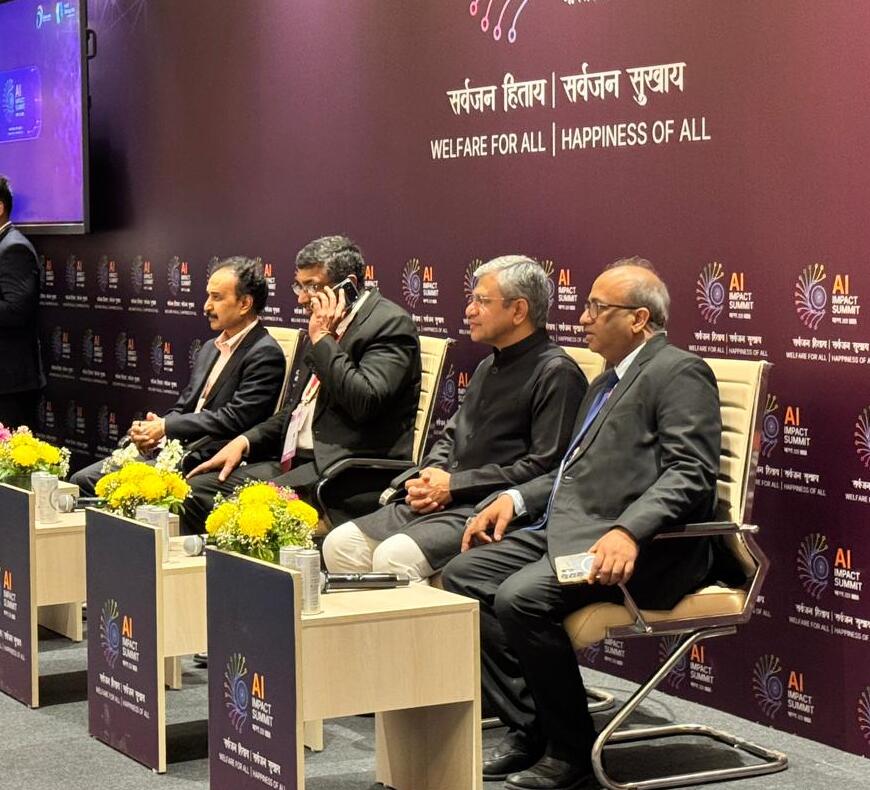
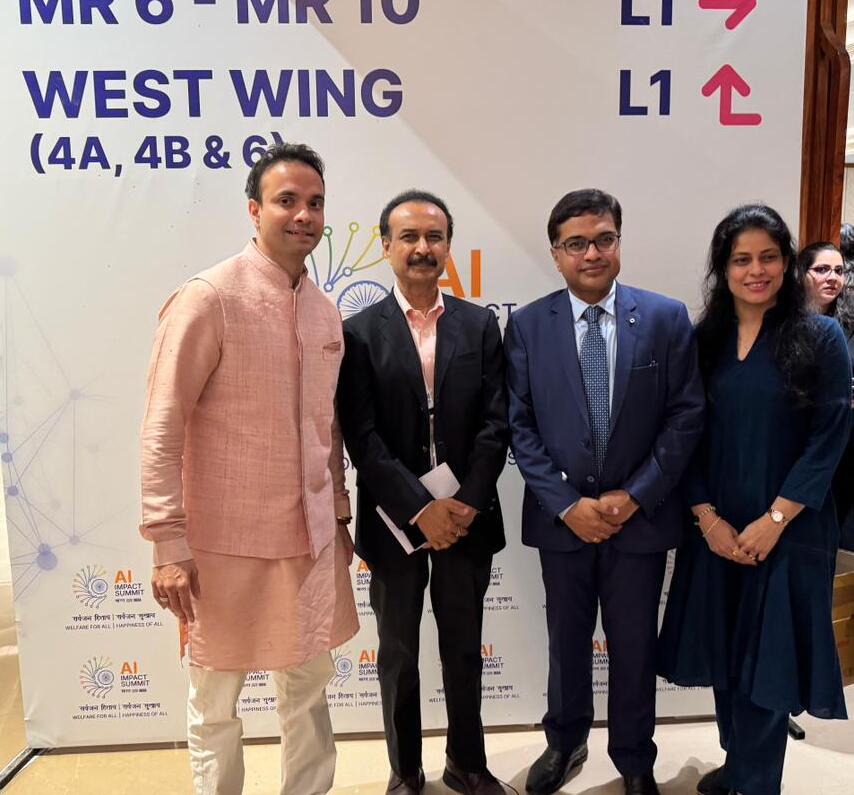
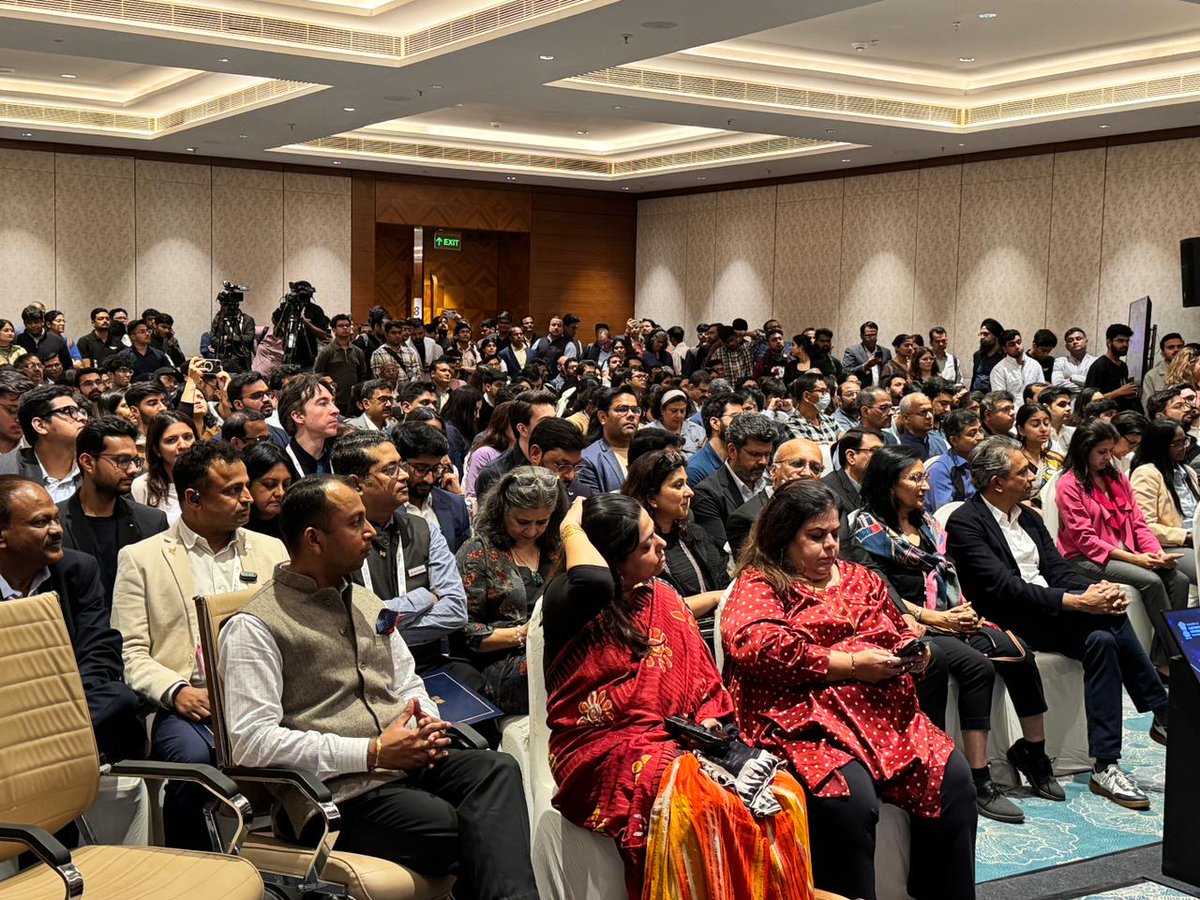
I was at the Pitchfest as part of the Global AI Impact Summit in Delhi yesterday. After watching 20+ startups pitch across sectors ranging from education to defense one thing became very clear to me: The move to AI is inevitable. The real question has always been: where will India play? There are two key themes that stand out: 1.⁠ ⁠Context is the moat (not cost) India is not the US and our context is unique - Our regulatory environment, legal systems, government programs, and social realities are different. Startups that deeply understand this context and design for it will have a durable advantage. While the world solves for Western geographies, India’s context creates opportunities only we can capture. 2.⁠ ⁠Physical meets digital. AI is moving beyond software into Robotics, defense systems, and other hardware-enabled AI solutions. These are taking shape today, solving problems that weren’t possible a decade ago. It was inspiring to see startups showcased on a stage orchestrated by the Government of India, with strong participation from institutional capital. When founders build supported by inflow of strong private capital and policy - momentum becomes exponential. The AI moment in India isn’t ahead of us. It’s happening now. If you’re thinking about starting up or making a career shift, this is the space to be in. We at Accel are committed to supporting startup’s who are building in AI from India. @AshwiniVaishnaw Abhishek Singh @rajattandy @AmitabhShah @byvidhya @AccelIndia @IndianVCA @YUVAunstopable
Prashanth Prakash tweet mediaPrashanth Prakash tweet mediaPrashanth Prakash tweet mediaPrashanth Prakash tweet media
English
2
5
34
3.1K
Prayank Swaroop retweetledi
malinvestment.jpeg
malinvestment.jpeg@malinvested·
Of course that's your contention. You're a first-time SaaS bear. You just got finished listening to some podcast, Dario on Dwarkesh, probably. Now you think it’s the end of white collar work and seat-based pricing is screwed. You're gonna be convinced of that til tomorrow when you get to “Something Big is Happening”. Then you’ll install ClawdBot on a Mac Mini, vibe code a dashboard on top of a postgres database and say we’re all just a couple ralph loops away from building a Salesforce competitor. That’s gonna last until next week when you discover context graphs, and then you're gonna be talking about how the systems of record will be disintermediated by an agentic layer and reposting OAI marketing graphics. “Well, as a matter of fact, I won't, because ultimately the application layer is just ….” The application layer is just business logic on top a CRUD database. You got that from Satya’s appearance on the BG2 pod, December 2024, right? Yeah, I saw that too. Were you gonna plagiarize the whole thing for us? Do you have any thoughts of your own on this matter? Or...is that your thing? You get into the replies of anyone posting a SaaS ticker. You watch some podcast and then pawn it off as your own idea just to impress some VCs and embarrass some anon who’s long SaaS? See the sad thing about a guy like you is in a couple years you're gonna start doing some thinking on your own and you're gonna come up with the fact that there are two certainties in life. One: don't do that. And two: you dropped thirty grand on Mac Minis and LLM API calls to come to the same conclusion you could’ve got for free by following a handful of VC accounts.
malinvestment.jpeg tweet media
English
361
1.1K
11.8K
1.8M