Paul Preece

175 posts

Paul Preece

Paul Preece

@preecep

Greetings, programs. Would you like to play a game?

Katılım Ağustos 2009
122 Takip Edilen3.3K Takipçiler
Paul Preece
Paul Preece@preecep·
@getjonwithit @naval AI is essentially causing a massive regression to the mean. Doing things close to mean is now easy and requires minimal context.
English
0
0
0
32
Jonathan Gorard
Jonathan Gorard@getjonwithit·
I think one of the conclusions we should draw from the tremendous success of LLMs is how much of human knowledge and society exists at very low levels of Kolmogorov complexity. We are entering an era where the minimal representation of a human cultural artifact... (1/12)
English
191
499
4.5K
757.3K
Lutra Gaming (OtterPops) 🦦
Lutra Gaming (OtterPops) 🦦@Lutra_Gaming·
In a way, this ties in with Babylon 5. #StarfleetAcademy #StarTrek WTF happened Star Fleet Academy? Star Trek: Deep Space Nine proved that you could tell a story with real substance while keeping the setting mostly stationary. Instead of a ship exploring a new world each week, the fixed location allowed for deeper political arcs, long-term character development, and layered storytelling that built over time. What do you think, did DeepSpace Nine go with the same premise as Babylon 5?
English
56
41
480
25.3K
Ad Professor
Ad Professor@The_AdProfessor·
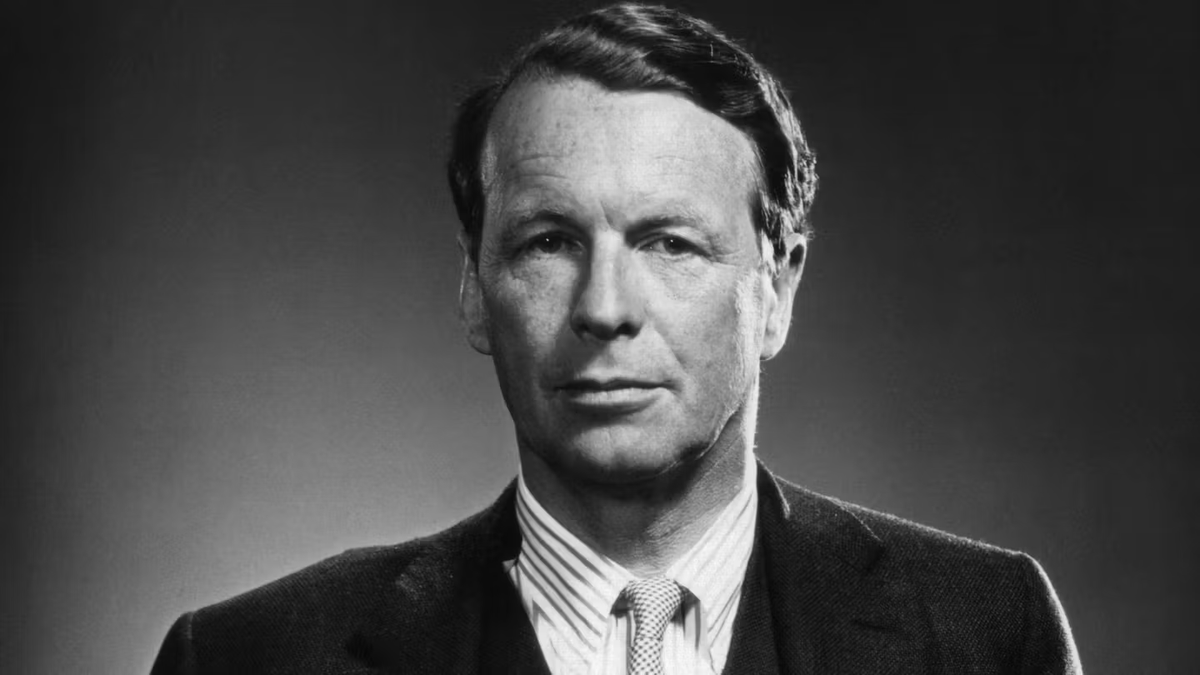
24 lessons from David Ogilvy: 1. Search all the parks in all your cities; you'll find no statues of committees. 2. The best ideas come as jokes. Make your thinking as funny as possible. 3. You are advertising to a moving parade, not a standing army. 4. Do not address your readers as though they were gathered together in a stadium. When people read your copy, they are alone. 5. Remember you are a human being writing to another human being. Neither of you is an institution 6. Tell your prospective client your weakness before they notice them. This will make you more credible when you boast about your strong points. 7. Avoiding excess in all things is a recipe for dullness and mediocrity. 8. A good advertisement is one which sells the product without drawing attention to itself. 9. There is no need for advertisements to look like advertisements. If you make them look like editorial pages, you will attract about 50% more readers 10. Big ideas come from the unconscious. This is true in art, in science, and in advertising. But your unconscious has to be well-informed, or your idea will be irrelevant 11. People who think well, write well 12. The most important word in the vocabulary of advertising is 'test'. 13. On average, five times as many people read the headline as read the body copy. 14. When you have written your headline, you have spent eighty cents out of your dollar. 15. Tell the truth, but make the truth fascinating 16. Advertising is only evil when it advertises evil things. 17. Advertising people who ignore research are as dangerous as generals who ignore decodes of enemy signals. 18. Raise your sights. Blaze new trails. Compete with the immortals. 19. I am a lousy copywriter, but I am a good editor. So I go to work editing my own draft. 20. If you're trying to persuade people to buy something, use the language in which they think. 21. Insist that due dates are kept even if it means working all night. Hard work never killed a man. People die of boredom 22. If you are lucky enough to write a good advertisement, repeat it until it stops selling. 23. At the start of your career in advertising, what you learn is more important than what you earn. 24. When Fortune published an article about me and titled it: 'Is David Ogilvy a Genius?', "I asked my lawyer to sue the editor for the question mark.”
Ad Professor tweet media
English
18
196
1K
90.1K
Paul Preece
Paul Preece@preecep·
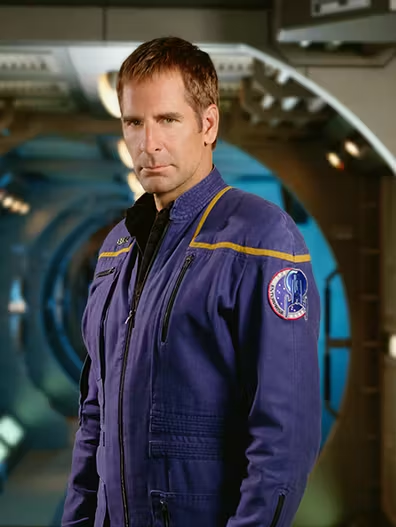
@HariSel57511397 When they cast Captain Archer I anticipated a return to the Kirk era of heart, charisma and humor. Instead we got the wooden yet hyperactive performance of a 13 year old doing Shakespeare.
English
0
0
0
101
Isaac Young
Isaac Young@HariSel57511397·
A meditation on the final two Star Trek Captains, excerpt from my essay. Captain Janeway was the only Star Trek Captain who “won” and that’s a fact that frustrates me to no end. She got everything she wanted out of her storyline (which is quite humorous in hindsight. She’s the only female Captain and all she wants is to go home). It isn’t that she’s a poor Captain—she has the aid of the writers after all—but she’s a thoroughly unremarkable one. Besides a few questionable choices that strike me more as poor scriptwriting than a commentary on Janeway, there’s not a lot I find especially interesting about her. Which is, ironically, the very interesting thing. The Left want to put women in leadership positions, and that’s fine, but to pretend that this doesn’t drastically alter the social dynamics is nonsense. The writers genuinely want Janeway to be the woman Picard. But making Picard a woman destroys what Picard is. Throughout watching Star Trek: Voyager, it felt like the show was in a constant state of unease. It wanted Janeway to inhabit this very masculine role and pretend that a woman in the Captain’s chair changes nothing. But it changes everything, and it requires so much work to brush past that. Every word and line of script has to be second-guessed so it doesn’t get misinterpreted. How quickly disciplining a subordinate can become scolding! How fast emotional drama can become bitchy pouting! How easy it is to step over from the professional and into the personal! And even still, Janeway was never so much a military commander as she was grandma—which makes the episodes with sexual themes really bizarre—but that’s leave that aside. The problem is that professionalism cuts very deeply into the grandma archetype and vice versa. Janeway is the Captain with the least internal conflict, and that’s because the writers can’t access those dimensions without compromising her as a ship commander. They have to rely on gender neutral or masculine plotlines because expressing the feminine aspects would very quickly lead them down dangerous waters. And meanwhile, the problem of grandma affects all the relationships with the rest of the crew. It might surprise some people to hear this, but Chakotay had the most potential out of any second-in-command officer in Star Trek. He was a defector from Starfleet who joined up with the Maquis (a rogue faction from the Federation). He had a spiritual side to him, well, as much as a person can have in Star Trek. And during the pilot episode, he was his own Captain before joining up with Voyager. This sounds almost like the kind of well-written character we see from DS9! So how did he clash with Janeway? How did his command style conflict with hers? What were his ideological and religious misgivings which must’ve been a recurring plot arc as the series progressed? How did this rebel with a very real cause mesh with the Starfleet Captain who represented everything he stood against? Well… he didn’t. He just shrugged his shoulders and went along with it. And while you can argue this is from a lack of vision on the writer’s part, I want you to try to imagine how a strong Chakotay would play out against Janeway. It’s very clear if any serious conflict happened between them, Chakotay could overwhelm Janeway with a force of personality and access to violence that she fundamentally doesn’t. I could imagine a fistfight or even a shootout with Kirk, but how would this ever resolve with Janeway coming out on top? It becomes almost farcical to consider. There are a lot of stories where two opposing sides come together to work for a common cause, and usually that’s mediated through threat of mutual violence. But Janeway doesn’t have that kind of spiritual force in the believable way a man would. You’d have to walk a really thin tightrope with some seriously competent writers to pull that off, and even then it could only ever be Janeway wearing the archetypal guise of a man. There’s very few realistic options for Janeway to force Chakotay to submit and work together if he doesn’t want to. And so the easiest path for the writers is just to neuter Chakotay and kind of go along with everything. You’ll notice a lot of stuff around Janeway happens like that. That’s why the best stories in Voyager are almost always away from its titular Captain. Just compare her with the charisma of her own helmsman, Tom Paris, and you’ll quickly see the issue. There’s so much mental calculation that is needed to prop up Janeway, and that’s why Voyager was the weakest of the five. All that narrative energy was being spent on selling her as a strong commander. I imagine it was probably to the point where they were axing more interesting plotlines and character beats because they might’ve made Janeway look bad. How can you have a serious treatment of the feminine soul in a profoundly militaristic—a.k.a masculine—context? The result could only be at best an uneven mediocrity, and that’s exactly what Voyager was. Archer is a strange ouroboros for our final Captain. Now I’m not against prequel shows like Star Trek: Enterprise on principle, but the reason our culture defaults to prequels so regularly is because we have lost the ability to look forward, to create something new. And so the function of many prequels is as a self-devouring commentary, always circling further and further inward, explaining minutiae that never needed explaining in the original product. And while Enterprise does a far better job than most, I still find the practice superfluous. Did I really need to know why Klingons had no forehead ridges in the original series versus The Next Generation? It’s nice, but not really. I mention this as Archer takes on his most interesting dimension when viewed as a prequel character. Because the future he is set up to explain is not the future of the Federation—at least not as we would have in the original series and The Next Generation. Archer starts off as an optimistic explorer not unlike Kirk, but instead he’s slowly worn down as the series progresses. You have a man who is supposed to lead the way for a prosperous utopia who instead embraces increasingly militant positions. He realizes the value of weapons and force of arms and comes to strongly advocate for them. The galaxy is hostile and indifferent in a way that it never was in Kirk’s day. The narrative won’t let Archer away from his destiny to found the Federation, but it’s so incredible that the final episode of classic Trek ends with a tragedy—the death of a close friend—rather than a glorious victory. It casts a surprisingly somber shade over everything that comes after, despite the heartfelt message it’s going for. It highlights how despite moving narratively back in time, writers weren’t able to really roll back the clock. They couldn’t reach the same hopeful optimism you have with the first two entries. Instead, there’s this creeping cynicism that underlies the whole project. While I doubt it would’ve ever threatened to rock the franchise, the realism points to a far grimmer version of events, one where the Federation takes on the connotations of empire. We’re supposed to believe that things improve by Kirk’s heyday, but the objections Archer faces and articulates are never really disproven or go away. Archer is the most reactionary Captain besides Sisko. And you see in this man a niggling crisis of faith. Archer doubts in a way that sets him apart from all the rest. Should humanity explore the stars? Does the galaxy want us poking around? Would it be better if humanity stayed home, or barring that, send out warships instead of exploration vessels? The narrative rushes to reassure Archer at every turn, that this is the best path forward, that this is the manifest destiny, but it never feels final. The doubts always come creeping back, and Archer never stops pondering. I can never fully make the leap from Star Trek: Enterprise to the original series, despite the story itself setting me down and recounting the events. Archer’s is the story of a Starfleet Captain set at the Federation’s inception when he ought to have been at the Federation’s collapse. His narrative makes infinitely more sense as the last of the galactic explorers rather than the first. But there was no way you were ever going to find a writer’s room bold enough to do that in the early 2000s. And so from that time onwards, we could only create ever more cynical versions of the same product, first narratively, and then finally on part of the writers. But Archer was, in a sense, the last of the Captains anyway. He was the last who honestly dreamed of the Federation, and he was the last who made you want to believe in it too.
Isaac Young tweet mediaIsaac Young tweet media
Isaac Young@HariSel57511397

My essay proven right yet again

English
35
28
266
35.2K
Paul Preece
Paul Preece@preecep·
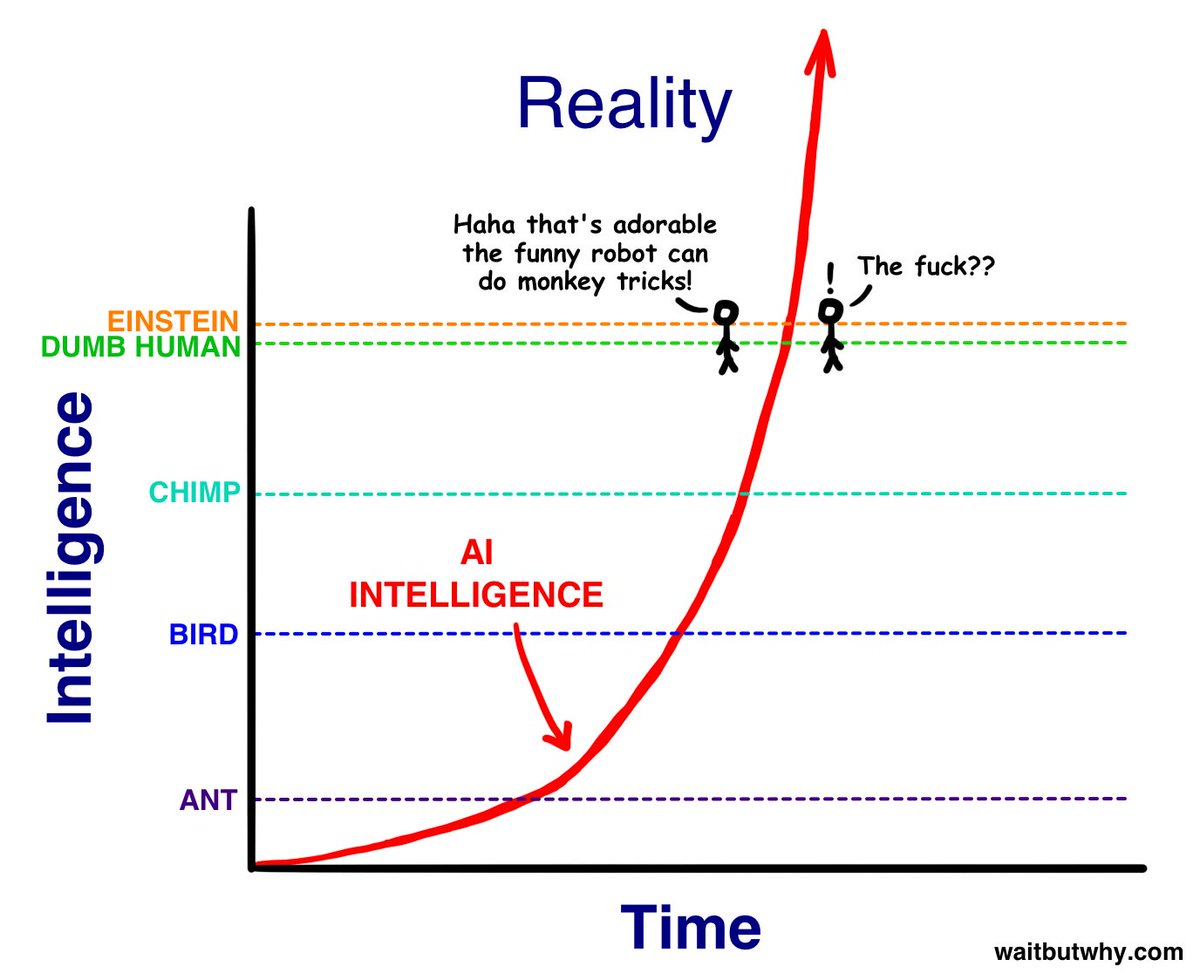
@elonmusk @waitbutwhy Problem with this is that the ant has no idea the bird is smarter than it. Nor the bird vs the chimp, chimp vs the human. So to will it be from human to super AI. We won't know how smart it is.
English
0
0
0
8
Paul Preece
Paul Preece@preecep·
@OldDegen @sabrdance If an officer is aware that their own actions will likely lead to increased danger for themselves and, via use of force escalation, other nearby civilians they should be required to weigh those consequences against the original reason for those actions.
English
0
0
0
9
DisgruntledVet
DisgruntledVet@OldDegen·
@sabrdance Great thread. As a former USAF cop, you are correct on your training points. The Use of Force model is widely misunderstood by the general public. It heavily depends on perception of threat in the moment. I agree with both your anaylsis of the BP agents and your criticism
English
1
0
4
557
Sabrdance
Sabrdance@sabrdance·
There's a scene in the book "The Sum of All Fears" when, after a nuclear bomb goes off in Denver, the President goes to Defcon 3. In the Mediterranean Sea, a carrier has passed east of Malta, and is now in a strategic position, which means its defense condition is always -1 1/
English
23
70
854
389.2K
Paul Preece
Paul Preece@preecep·
@webdevMason This is the most Reddit-level thread on X right now. Congrats.
English
0
0
0
193
Mason
Mason@webdevMason·
I came across this interaction in the wild and it perfectly encapsulates my issue with parenting philosophy discourse A lot of perfect parents are kinda just lying to themselves and others about what they're doing
Mason tweet mediaMason tweet media
English
111
54
2.5K
174.2K
Paul Preece
Paul Preece@preecep·
@TheCinesthetic It feels like one story layered on top of another. The original being one where the human (Sam) is forced to become logical and the computer (Clu) is forced to become emotional. It has many faults as a sequel; Tron not actually appearing in the movie is the biggest.
English
1
0
0
187
Paul Preece
Paul Preece@preecep·
@newstart_2024 Strip away the technology that has driven all other technologies for the last 50 years and well... yeah.
English
0
0
1
511
Camus
Camus@newstart_2024·
Jimmy Carr drops a wild take on AI + physics "Strip the screens away, and we're still living in the 1970s. Nothing real has happened in physics since 1972. String theory? Nowhere. But point AI at real physics now? Everything else is just stamp collecting. Physics gave us all our technology. We could get a 50x productivity leap and true human flourishing... or it could go the other way." The real revolution isn't just AI—it's AI meeting physics. 1:02 clip inside—mind-blowing perspective.
English
333
279
4.3K
1.5M
Paul Preece
Paul Preece@preecep·
@abarrallen Apply Pay + tracking in Wallet is as good - especially as Amazon's delivery has become more unreliable over time. Shame Apple does not advertise it better. I'm 10x more likely to buy if a website supports both.
English
0
0
0
42
Allison Barr Allen
Allison Barr Allen@abarrallen·
You forget that Amazon delivery & fulfillment is 100x better than any other online retailer, until you decide to order from somewhere else.
English
2
1
6
1.1K
Paul Preece
Paul Preece@preecep·
It is true that we cannot predict the results of commoditization. In previous cycles the intelligence and effort that was freed up moved on to solving other friction points; preserving the need for (human) intelligence and effort. This time it is intelligence itself being commoditized. This cycle is not like the others.
English
1
0
0
355
Ian Andrews
Ian Andrews@IanAndrewsDC·
I met someone this week who shared that in the 90s Bain paid employees to make slides for customer presentations. This was pre-PowerPoint so the job was literally using an exacto knife and ruler to cut and splice together materials for overhead transparencies. As soon as laptops, PowerPoint and digital projectors became widespread this job went away. Somehow the consulting industry is 10x the # of employees that it was then 🤣 What Aaron is describing is how almost every technology adoption cycle has played out. No evidence to suggest AI will happen differently
Aaron Levie@levie

In 5 years from now, probably 95% of the tokens used by AI agents will be used on tasks that humans never did before. I just met with about 30 enterprises across 2 days and a dinner, and some of the most interesting use-cases that keep coming up for AI agents are on bringing automated work to areas that the companies would not have been able to apply labor to before. Most of the world hasn’t quite caught on to this point yet. We imagine AI as dropping into today’s workflows and just taking what we already do and making it more efficient by 20% or something. Yet most companies realize that most of the time they’re doing far less than they could because of the cost or limited capacity of talent. This shows up in different ways across every industry. In real estate it’s ideas like being able to read and analyze every lease agreement for every trend and business opportunity possible. In life sciences it’s being able to rapidly do drug discovery or improve quality by looking through errors in data. In financial services it’s being able to look through all past deals and figure out better future monetization. In legal it’s being able to execute on contracts or legal work for previously unprofitable segments or projects. And these are just the Box AI use cases that deal with documents and content. The same is going to be true in coding, where companies tackle software projects they wouldn’t have done before. Security of all systems and events they couldn’t get to. And so on. If you are working on AI Agents right now, the big opportunity is to bring enterprises “work” for problems that they couldn’t do before because it was nearly impossible to afford or scale. And if you’re deploying AI agents in an enterprise, consider what things you’d do more of (or differently) if the cost and speed of labor became 100X cheaper and faster. This is going to get you the real upside of automation.

English
37
79
1.4K
385.3K
Paul Preece
Paul Preece@preecep·
@curious_vii This one stings. As an ex-coder, manually doing the same thing multiple times immediately makes me want to create better tooling.
English
0
0
1
23
christian
christian@curious_vii·
Don’t try to automate the thing you should be doing
English
2
1
4
289
𝐃𝐦𝐢𝐭𝐫𝐲 (𝐬𝐚𝐥𝐮𝐭𝐚𝐫𝐲.𝐢𝐨)
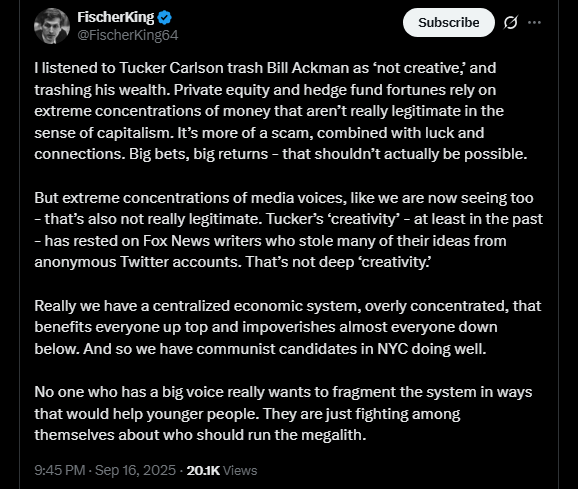
this is completely misguided. a top-down story to describe bottom-up phenomena. power laws are synonymous with natural systems. the term "capitalism" is just a politicized, quasi-pejorative term to say "natural system where people do what they want". wealth, accolades, sales, financial success: all these abide by intense 80:20 Pareto-style distributions. nature breeds extremes, by design. number of books sold, paintings painted, hockey goals scored, three-pointers made, doesn't matter. life is fundamentally unequal and trends towards concentration and extremes in open arenas where people compete. why do you think anti-trust laws exist? they are literally "keep power laws in check" rules. that's it. monopolies are a natural product of a natural system when left unconstrained. they only way you'd stop this is by imposing the very centralization you're accusing these participants of doing. this is a form of leftist thinking (denial of power laws, appeal to fairness/cheating moral foundations) masquerading as rightwing. it's a top-down story to explain a bottom-up phenomenon.
𝐃𝐦𝐢𝐭𝐫𝐲 (𝐬𝐚𝐥𝐮𝐭𝐚𝐫𝐲.𝐢𝐨) tweet media
English
3
2
20
2.9K
Garry Tan
Garry Tan@garrytan·
Flock Safety currently solves 700,000 reported cases of crime per year, which is about 10% of reported crime nationwide And they're just getting started
Ilya Sukhar@ilyasu

It’s happening

English
492
195
5.2K
1.4M
Paul Preece
Paul Preece@preecep·
@BackTheBunny The reason intelligent systems resort to growth is because the more complex something is the easier it is to bump it into nearby states, which tend to be less complex. Overcoming this process requires structure duplication at a rate that exceeds complexity reduction. Aka growth.
English
0
0
0
20
Paul Preece
Paul Preece@preecep·
Atoms and molecules are stable not because they give off entropy but because they won't. They sit at local minima and require added energy to change. Life and intelligent systems do not function in the same manner. They are not bound by minima but by maxima. They construct themselves in such a way that they grow. Because things that grow persist more than things that shrink. And persistence IS existence.
English
2
0
0
82
𝐃𝐦𝐢𝐭𝐫𝐲 (𝐬𝐚𝐥𝐮𝐭𝐚𝐫𝐲.𝐢𝐨)
Politics is the visible behavior of biology constrained by physics. Successful societies persist by balancing the order that forms containers with the freedom that fills them. Physics authors laws, biology issues templates within them, and the human-readable submission to them is seen by how we organize at scale. Everything obeys the dictates of physics, not metaphorically, but materially. An immutable constitution that all earthly inhabitants abide by. Some domains have optics that make this difficult to see. We gaze into them. The same competition between entropy and emergent order that sculpts stars also births civilizations. The thermodynamic edict that compels atoms to form molecules guides man to form countries. - Under gravity, diffuse matter coalesces into stars even as the universe’s overall entropy climbs. - Electromagnetic interactions drive atoms into molecules by lowering energy and releasing heat, trading exported entropy for localized structure. - Human societies mirror these fractals. By organizing into complex institutions and coordinating ourselves into increasingly intricate patterns, we establish localized structures that resist the winds of chaos. Star, molecule, and nation: different scales of self-organizing systems that trade energy flows for stability and order. All are dissipative structures that only differ by degree. Why would this apply to us? A better question: why would it not?
𝐃𝐦𝐢𝐭𝐫𝐲 (𝐬𝐚𝐥𝐮𝐭𝐚𝐫𝐲.𝐢𝐨) tweet media
𝐃𝐦𝐢𝐭𝐫𝐲 (𝐬𝐚𝐥𝐮𝐭𝐚𝐫𝐲.𝐢𝐨)@BackTheBunny

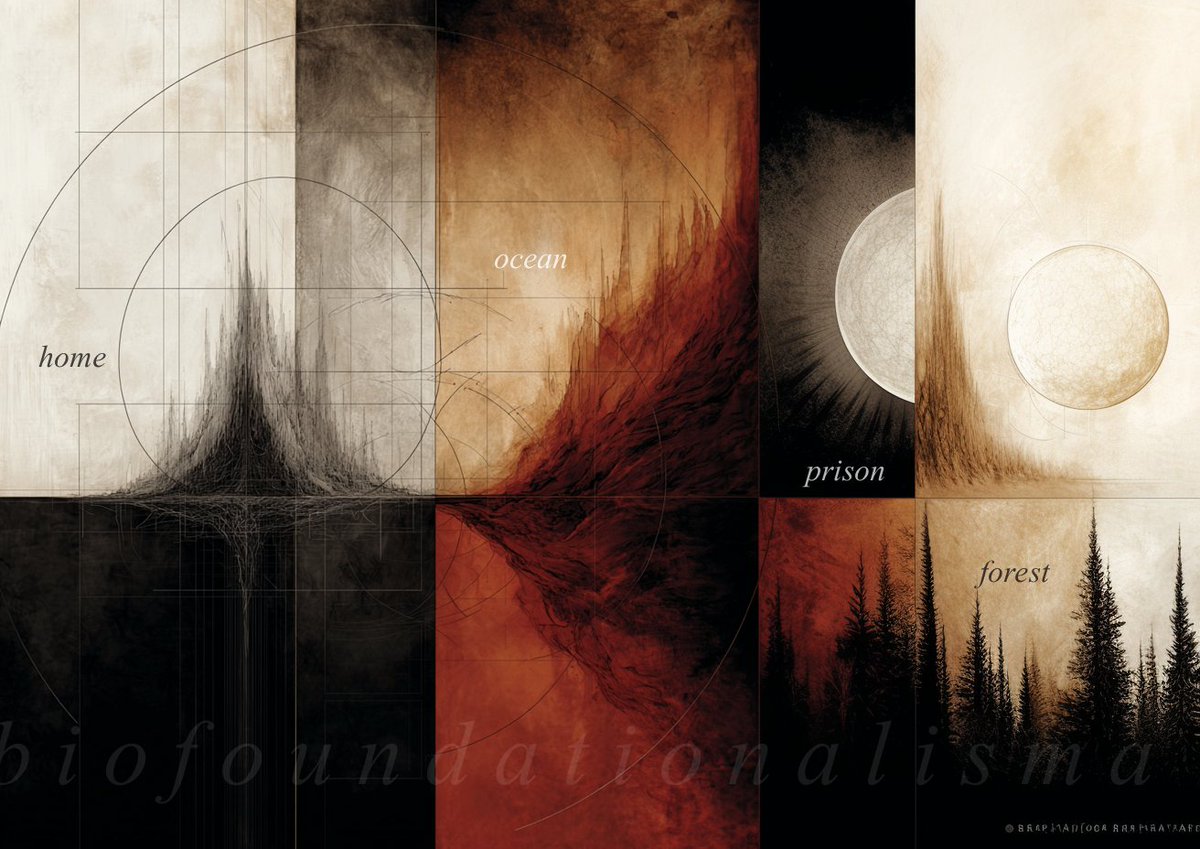
Biofoundationalism V: Power Acts, Beauty Is The primordial dyad isn’t conservative/liberal or even masculine/feminine, but the cosmic tension between order and chaos. Structure and flow. Human civilization propagates by these principles: through action, the masculine converts chaos into order at great energetic cost, while the feminine enacts the entropic flow that makes change and growth possible. Neither can survive without the other; pure order is death by crystallization, pure chaos is death by dissolution. Male accomplishment informs male value, whereas women are valuable simply by being. Women are born, men are made. One force proves itself through movement, the other generates gravity by existing. In cosmically comparable fashion, order is exclusively established through maintenance and effort; whereas chaos is what happens when you do nothing. Order acts, chaos is The omnipresent relationship between order and chaos is both oppositional and symphonic: the supreme dyad through which all other dyads flow, it manifests in every dimension of existence, with different veneers. Continued in comments

English
4
6
39
39.4K