David Prihoda

121 posts

David Prihoda banner
David Prihoda

David Prihoda

@prihodad

Building tools 🛠️ 🧬 Ovo, BioPhi, DeepBGC. Deep learning, protein design, bioinformatics & random Czech stuff

Prague, Czech Republic Katılım Aralık 2014
306 Takip Edilen193 Takipçiler
Sabitlenmiş Tweet
David Prihoda
David Prihoda@prihodad·
Our biggest "side project" so far. Ovo, an open-source ecosystem for de novo protein design, is released today 🧵👇
David Prihoda tweet media
English
1
1
4
312
David Prihoda retweetledi
Zechen Zhang
Zechen Zhang@ZechenZhang5·
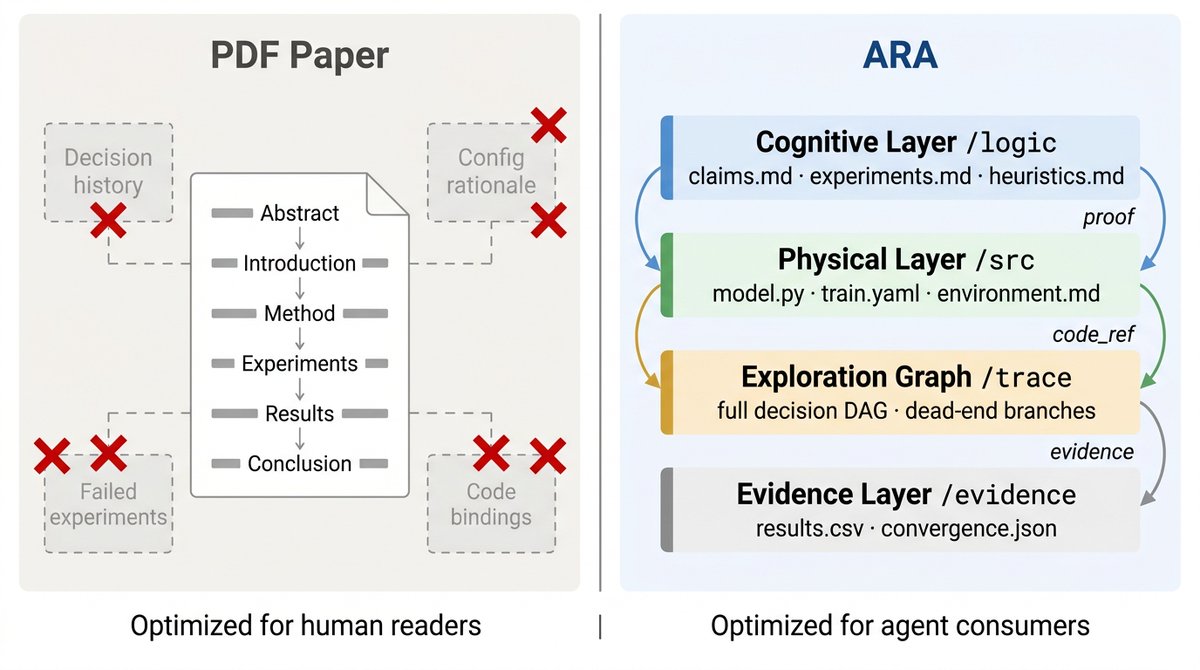
4/ We propose the Agent-Native Research Artifact (ARA): a protocol that recasts the primary research object from a narrative document into an executable knowledge package, with four interlocking layers. The paper, if you still want one, is a compiled view of the artifact, not the source.
Zechen Zhang tweet media
English
3
13
124
7.4K
Arjun Raj
Arjun Raj@arjunrajlab·
Why is MacTeX a 6gb download? Isn’t this like just some markup language from the 80s?
English
2
0
16
6K
David Prihoda
David Prihoda@prihodad·
Version 1.0.0 is out, you can now “pip install ovo”
Biology+AI Daily@BiologyAIDaily

Ovo, an Open-Source Ecosystem for De Novo Protein Design 1. Ovo is a novel open-source platform for de novo protein design, addressing the fragmented landscape of current tools. It integrates models, workflows, data management, and interactive visualization into a scalable ecosystem, making it easier for both experts and non-technical users to design proteins at scale. 2. The platform leverages Nextflow for workflow orchestration, ensuring modularity and scalability across different infrastructures, from local machines to cloud environments. This infrastructure-agnostic design allows for flexible deployment and execution of protein design pipelines. 3. Ovo introduces a novel ProteinQC module that computes comprehensive sequence and structure descriptors, contextualizing designs against reference sets. This feature helps users evaluate the quality and feasibility of their protein designs more effectively. 4. The ecosystem supports scaffold design, binder design, and diversification workflows, with interactive interfaces that simplify the process of choosing appropriate models and submitting jobs. It also includes advanced filtering capabilities to prioritize high-quality candidates for downstream validation. 5. Community-driven development is a core aspect of Ovo, allowing users to add new workflows and plugins. This extensibility ensures that the platform can rapidly adopt and integrate emerging methods, facilitating benchmarking and standardization in the field. 6. Ovo's data management layer ensures efficient organization and retrieval of designs and descriptors, supporting retrospective analysis and linking experimental success rates with computational scores. This robustness is crucial for reproducibility and scalability in industrial settings. 7. The platform's interactive visualization tools enable users to inspect and filter designs based on confidence scores and protein properties, making it easier to identify the most promising candidates for experimental testing. 📜Paper: biorxiv.org/content/10.110… #ProteinDesign #OpenSource #ComputationalBiology #Bioinformatics #Nextflow #DeNovoProteins

English
0
0
1
53
David Prihoda
David Prihoda@prihodad·
Generating proteins is now easier than ever 🐣
English
0
0
0
32
David Prihoda retweetledi
Biology+AI Daily
Biology+AI Daily@BiologyAIDaily·
Ovo, an Open-Source Ecosystem for De Novo Protein Design 1. Ovo is a novel open-source platform for de novo protein design, addressing the fragmented landscape of current tools. It integrates models, workflows, data management, and interactive visualization into a scalable ecosystem, making it easier for both experts and non-technical users to design proteins at scale. 2. The platform leverages Nextflow for workflow orchestration, ensuring modularity and scalability across different infrastructures, from local machines to cloud environments. This infrastructure-agnostic design allows for flexible deployment and execution of protein design pipelines. 3. Ovo introduces a novel ProteinQC module that computes comprehensive sequence and structure descriptors, contextualizing designs against reference sets. This feature helps users evaluate the quality and feasibility of their protein designs more effectively. 4. The ecosystem supports scaffold design, binder design, and diversification workflows, with interactive interfaces that simplify the process of choosing appropriate models and submitting jobs. It also includes advanced filtering capabilities to prioritize high-quality candidates for downstream validation. 5. Community-driven development is a core aspect of Ovo, allowing users to add new workflows and plugins. This extensibility ensures that the platform can rapidly adopt and integrate emerging methods, facilitating benchmarking and standardization in the field. 6. Ovo's data management layer ensures efficient organization and retrieval of designs and descriptors, supporting retrospective analysis and linking experimental success rates with computational scores. This robustness is crucial for reproducibility and scalability in industrial settings. 7. The platform's interactive visualization tools enable users to inspect and filter designs based on confidence scores and protein properties, making it easier to identify the most promising candidates for experimental testing. 📜Paper: biorxiv.org/content/10.110… #ProteinDesign #OpenSource #ComputationalBiology #Bioinformatics #Nextflow #DeNovoProteins
Biology+AI Daily tweet media
English
0
22
75
4.5K
David Prihoda
David Prihoda@prihodad·
We are trying to establish an ecosystem where developers benefit from building on a shared tech stack: Nextflow, the standard for building bioinformatics pipelines, and Streamlit, the magic new way of building web apps in Python, on top of a single data model shared by all users
English
1
0
0
51
David Prihoda
David Prihoda@prihodad·
Our biggest "side project" so far. Ovo, an open-source ecosystem for de novo protein design, is released today 🧵👇
David Prihoda tweet media
English
1
1
4
312
David Prihoda
David Prihoda@prihodad·
Also in case you want to number a large number of sequences quickly, check `Chain.batch()` that accepts a dictionary of sequences and returns a dictionary of Chain objects and a dictionary of errors. This is available since version 0.3.3.
English
0
0
0
29
David Prihoda
David Prihoda@prihodad·
If you are using abnumber to number your antibodies, it now supports ANARCII (the deep learning re-implementation of ANARCI). Just use `from abnumber.future import Chain`. This also means that you can `pip install abnumber` without conda. Feedback welcome.
David Prihoda tweet media
English
1
0
0
63
David Prihoda
David Prihoda@prihodad·
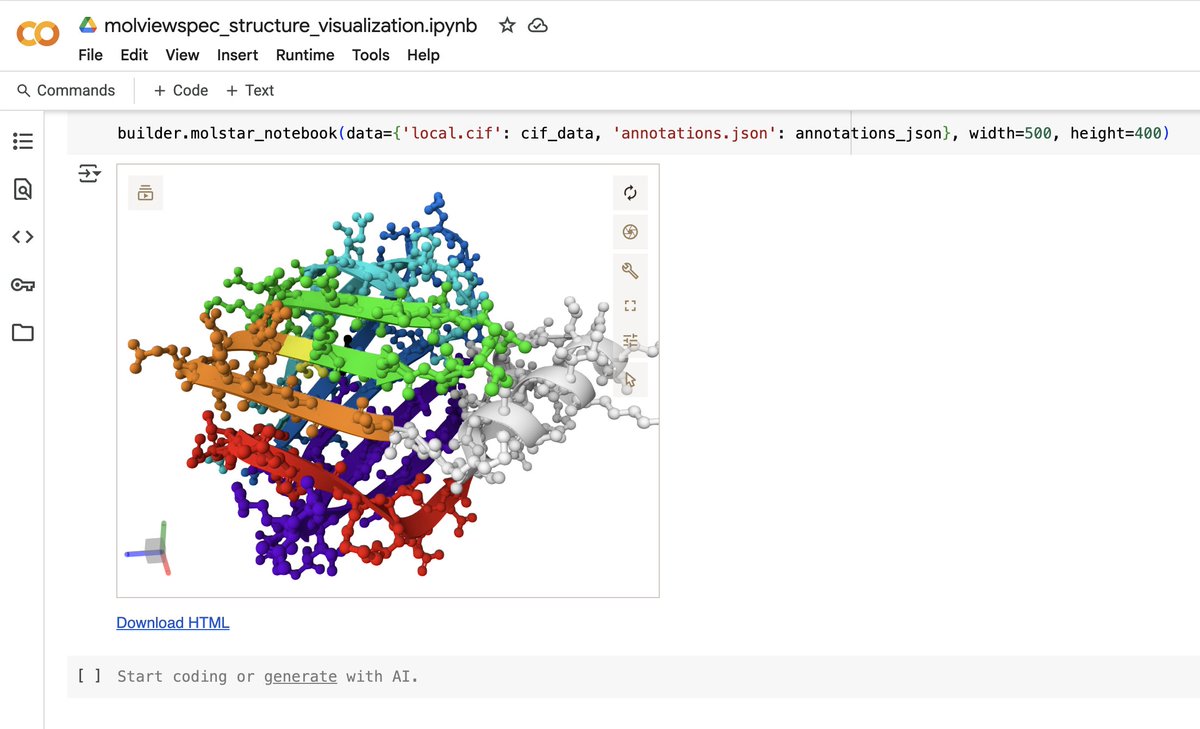
Looking to visualize protein structures in Jupyter, Colab, Streamlit, or anything that can embed an iframe? Check out the new molviewspec library:
David Prihoda tweet media
English
1
0
5
84
David Prihoda
David Prihoda@prihodad·
I migrated the Sapiens human antibody language model to huggingface, you can use it to suggest humanizing mutations
David Prihoda tweet media
English
1
0
0
79
David Prihoda
David Prihoda@prihodad·
@IanRHum Great resource! Have you considered running predictions for all human isoforms of the confident pairs?
English
0
0
0
19
Ian Humphreys
Ian Humphreys@IanRHum·
Here’s our human protein-protein interactome. We mined the SRA, devised a new distillation dataset for protein complexes, trained a new version of RF2 to screen millions of protein pairs, and identify > 18k binary interactions. biorxiv.org/content/10.110…
Ian Humphreys tweet media
English
3
43
195
15.2K