The Perspectives

501 posts

The Perspectives banner
The Perspectives

The Perspectives

@prog_perspect

Translating the perspectives from around the world.

Katılım Şubat 2026
24 Takip Edilen14 Takipçiler
Sabitlenmiş Tweet
The Perspectives
The Perspectives@prog_perspect·
Why won’t Iran fall into ethnic fragmentation or religious civil war—and why will it never surrender, nor be defeated? Even today, many people are still asking: The United States has sanctioned Iran for over 40 years, carried out assassinations, airstrikes, and containment by every possible means—so why hasn’t it managed to bring this country down? Why, in the face of military strikes from the U.S. and Israel, have Iranians not fallen apart, but instead grown more united the harder they are hit? The answer has nothing to do with the Western media’s nonsense about “religious fanaticism,” nor with so-called “theocratic brainwashing.” The broad public support Iran shows in wartime today has long since ceased to be about theology. At its core, it comes from something else entirely: a nation that has been fundamentally shaped by a modern national movement, and that, when faced with external aggression, instinctively rallies around defending the homeland and preserving the national dignity. That is Iran’s real strategic advantage—and something a relatively young, patchwork country like the United States, with just over two centuries of history, can never fully understand. Let’s spell out the fundamental difference: Iran today is the only country in the Middle East that has completed a coherent national narrative, built a shared identity that transcends sectarian divides, and grounded itself in a continuous civilizational heritage. Every other country in the region still exists, in essence, as a “state drawn on a map”—held together either by tribal loyalties, sectarian alignments, or the authority of strongmen and oil wealth. None of them possesses a genuine sense of national consensus or cohesion. That is why the United States could easily overthrow Saddam, bring down Gaddafi, destabilize Afghanistan and Syria—yet remains unable to do the same to Iran. Saddam’s Iraq was a Sunni minority ruling over a Shia majority, maintained by repression without a fully formed national identity—once the pressure came, it collapsed. Gaddafi’s Libya rested on fragile tribal alliances—once those interests fractured, the regime disintegrated overnight. Afghanistan barely functions as a “nation” at all—only tribes and sects exist; foreign forces come and go, and the country simply resets. But Iran is different. It is not an artificial state carved out after World War I by the British and French with a ruler on a map. It rests on thousands of years of Persian civilization, with a continuous historical identity and clearly defined cultural boundaries. As early as the Pahlavi era, Iran had already constructed the foundations of a “Persian national narrative”—drawing on the legacy of Cyrus the Great and the Sasanian Empire as shared historical memory, using a “Persian identity” to transcend divisions of sect, tribe, and region, and to build the framework of a modern nation-state. After the Islamic Revolution, this narrative was temporarily overshadowed by the religious ideology, but it never disappeared. Four decades of sanctions, the Iran–Iraq War, and the harsh realities of Middle Eastern geopolitics forced Iran’s political elite to confront a key truth: religion alone cannot hold together a multi-ethnic, sectarian society, nor sustain the ambitions of a regional power. So from the later years of the elder Khamenei’s rule to the consolidation under his successor, Mojtaba Khamenei, Iran gradually completed a shift in its core narrative: from “Islamic revolution above all” to “Iranian national interests above all,” and from overt theocratic governance to a system where religion serves as the outer shell, and national identity as the inner core. In today’s Iran, religious rituals and institutions remain—they are like a garment worn on the outside. But underneath, the body is driven by a nationalism centered on Iranian identity. The Quds Force operates across the Middle East not to export religious revolution, but to create geopolitical buffer zones and expand the living space of the Iranian people. Iran’s refusal to yield in the face of U.S. and Israeli strikes is not about sectarian conflict, but about a unified response to external aggression. Even the nuclear issue, at its core, reflects a nation seeking control over its own destiny—not a theological imperative at all. This is the true source of Iran’s wartime cohesion today: not calls to holy war from the scriptures, but a simple patriotism—if you attack my country and threaten my people, I will fight you to the end. This kind of consensus transcends Shia–Sunni divides, bridges the gap between secular and religious populations, and overcomes differences between urban and rural society—binding tens of millions of Iranians into a single, unified force. And the United States will never understand this. From the very beginning, this country has never possessed a civilizational memory rooted in thousands of years of history. What holds it together is dollar hegemony, military deterrence, and the narrative of so-called “universal values.” When it looks at the Middle East, it sees only two labels: either compliant puppets, or fanatical, evil regimes driven by religion. It simply cannot see that Iran has long since completed a fundamental transformation—from a “theocratic state” to a “nationalist power.” Nor can it grasp the kind of cohesion forged by a “national movement,” or the sheer resilience that comes with it. It thinks that killing Qassem Soleimani would dismantle the Quds Force. It thinks that bombing Iran’s military facilities and civilian infrastructure would force the country to submit. It thinks that decades of sanctions would trigger internal collapse. But what it fails to understand is this: when faced with external aggression, a nation bound together by a shared national identity only grows more united the harder it is hit, and more resilient the more it is pressured. Kill one Soleimani, and thousands more Iranians will step forward to carry the banner of resistance. Bomb its infrastructure, and it will only strengthen its resolve to pursue independent industrialization. The more you sanction it, the stronger its national consensus becomes. In the end, the United States can deal with those countries in the Middle East that lack a true national foundation—but it will never be able to deal with Iran. Because what it faces is not merely a theocratic regime, nor just a revolutionary guard force, but a nation with thousands of years of civilizational continuity, thoroughly forged by a national movement. That depth of civilization, that cohesion born of national identity—these are things a country with just over two centuries of history, held together by interests, will never fully comprehend, and never be able to break. This is why Iran will not fragment along ethnic lines, will not descend into sectarian civil war, and will only grow more unified under pressure. The fundamental reason is exactly what I laid out earlier—it is no longer a theocratic state sustained by theology, but a modern nation-state welded together by a shared Iranian national identity. Let me put it to you in the most blunt, straightforward, and unambiguous way: 1. Iran won’t collapse — because it has a unifying “Persian” identity Every unstable country in the Middle East—Iraq, Syria, Yemen, Lebanon—suffers from the same problem: no unified national identity, only tribes, sects, and regions. But Iran is different. As early as the Pahlavi era, Persian nationalism was built into the very structure of the state: the history of Persia, the civilization of Persia, the glory of the Persian Empire, and the shared identity of being “Iranian.” This runs deeper than religion, stronger than sectarian divisions, and lasts longer than politics. So whether you are Persian, Azerbaijani, Kurdish, Lur, or Bakhtiari—the first identity is the same: I am Iranian / part of the Persian civilizational sphere. National identity > tribal affiliation > sectarian differences. As long as that holds, the foundation for fragmentation simply doesn’t exist. 2. Iran won’t have a religious civil war — because religion has become the background, not the driver When the Middle East descends into chaos, it’s usually sectarian: Sunni vs. Shia, secular vs. religious, tribe vs. tribe. Why not Iran? Because Iran has already completed a shift—from theocracy to nationhood. Khomeini era: religion was the core Ali Khamenei era: religion and nationalism coexisted Mojtaba Khamenei era: nationalism is the core; religion is the ritual outer shell So the real hierarchy now is: state interests > Iranian nation > religious belief Religion is no longer a banner to fight over, but a shared cultural backdrop. So you won’t see “religious factions fighting for power,” “Shia dominance suppressing Sunnis,” “clerical elites crushing secular groups,” or a full-blown religious civil war. Because the ruling elite no longer plays by theological rules. They operate in terms of state power, national security, geopolitics, and national interest. 3. What truly stabilizes Iran is national identity—not theocracy Let’s get straight to the point: Iran is the only country in the Middle East that has completed nation-building. Its stability rests on a powerful foundation: thousands of years of civilizational continuity, a modern national framework shaped since the Pahlavi era, a unified historical narrative, a shared external adversary (U.S.–Israeli hegemony), and a cohesive elite strategy centered on Iranian patriotism. The more it is attacked, sanctioned, or targeted with assassinations, the stronger its internal cohesion becomes. That’s why the United States could dismantle the Soviet Union, Yugoslavia, Iraq, Libya, Syria, Afghanistan… but not Iran. Because those countries were either lacking a national foundation, held together by ideology, or stitched together by force. Only Iran is welded together by civilization + nationhood. 4. The bottom line: Iran won’t collapse, and won’t be defeated Iran will not collapse. It will not descend into civil war. And it will not be defeated. Because it is no longer a theocratic state, but a modern nation-state built on Iranian national identity, with patriotism as its binding force. Religion is just the outer shell—the nation is the soul. This is something the United States, the West, and many people on the Internet simply don’t understand—but this is precisely why Iran cannot be broken, divided, or crushed. (This article is translated from Weibo) #Iran #USIranWar #IranWar
Arya Yadeghaar@AryJeay

Iranians from Kohgiluyeh (where the F-15 was shot down) came out wearing traditional clothes during the daily gatherings to condemn US/Israeli attacks. Iranians from Isfahan, Kohgiluyeh, and Boyer-Ahmad ever since the rescue operations, have showed immense support for the armed forces.

English
0
0
1
54
The Perspectives
The Perspectives@prog_perspect·
The Perspectives@prog_perspect

The official line from Trump’s gang—that “hundreds” of special ops team boarded transport planes near Isfahan just to rescue a single personnel—is pure nonsense. It’s not that the U.S. Air Force wouldn’t go all out to rescue trapped personnel—they certainly have both the capability and the willingness—but the method described makes no sense at all. The Air Force has dedicated pararescue teams that can deploy via long-range helicopters, whether CH-53K or MH-60M, and conduct nighttime rescues. One helicopter would suffice, two would be more than enough. This is the preferred approach for such missions. Deploying hundreds of troops on transport planes to a makeshift runway, with the risks far outweighing the benefits, is completely illogical. Sending such a large force into a remote area to rescue a single person and then exfiltrate is absurd. Equally implausible is the claim that “after two C-130s couldn’t take off, three more planes came to rescue them.” The time window simply doesn’t allow it. The only reasonable explanation is that the special ops team had a different objective at the time. The U.S. may indeed have rescued the weapons operator, but that operation is entirely separate from the action south of Isfahan that Trump promoted. The weapons systems operator was very likely extracted quietly on the night of April 4–5 via HH-60 helicopters. So what about the special ops mission that occurred simultaneously? The plan was likely to transport several MH-6 attack helicopters and a sizable operational force to a forward assembly point near Isfahan on the night of April 4 using C-130s and C-295s, then strike a location reportedly storing enriched uranium, attempting to steal it before dawn on April 5. The five transport planes were launched together, not in separate waves. The unit was immediately detected by Iranian drones. Iranian forces began deploying and assembling in response, and the task force likely came under indirect fire. The mission commander promptly aborted the operation and withdrew using the remaining three operational aircraft. By dawn, two C-130s and an unknown number of MH-6 helicopters were abandoned at the improvised airfield, where delayed-action self-destruct fuses detonated to burn the aircraft. (Some observers note it’s also possible that the subsequent airstrikes destroyed them.) Trump’s narrative—that “they were there to rescue personnel”—was fabricated to cover up a disastrous raid. In a Western context, “Leave No Man Behind” is an absolute moral high ground. Labeling a failed mission as a “rescue” allows the loss of hundreds of millions in equipment to be spun as “sacrificed for life,” deflecting congressional scrutiny over mission failure, intelligence errors, or technical leaks. Claiming “we went to save a stranded pilot” is far less politically costly than admitting “we tried to bomb a nuclear facility but failed.” (Translated from Weibo) #Iran #USIranWar #IranWar

QME
0
0
0
2
The Perspectives
The Perspectives@prog_perspect·
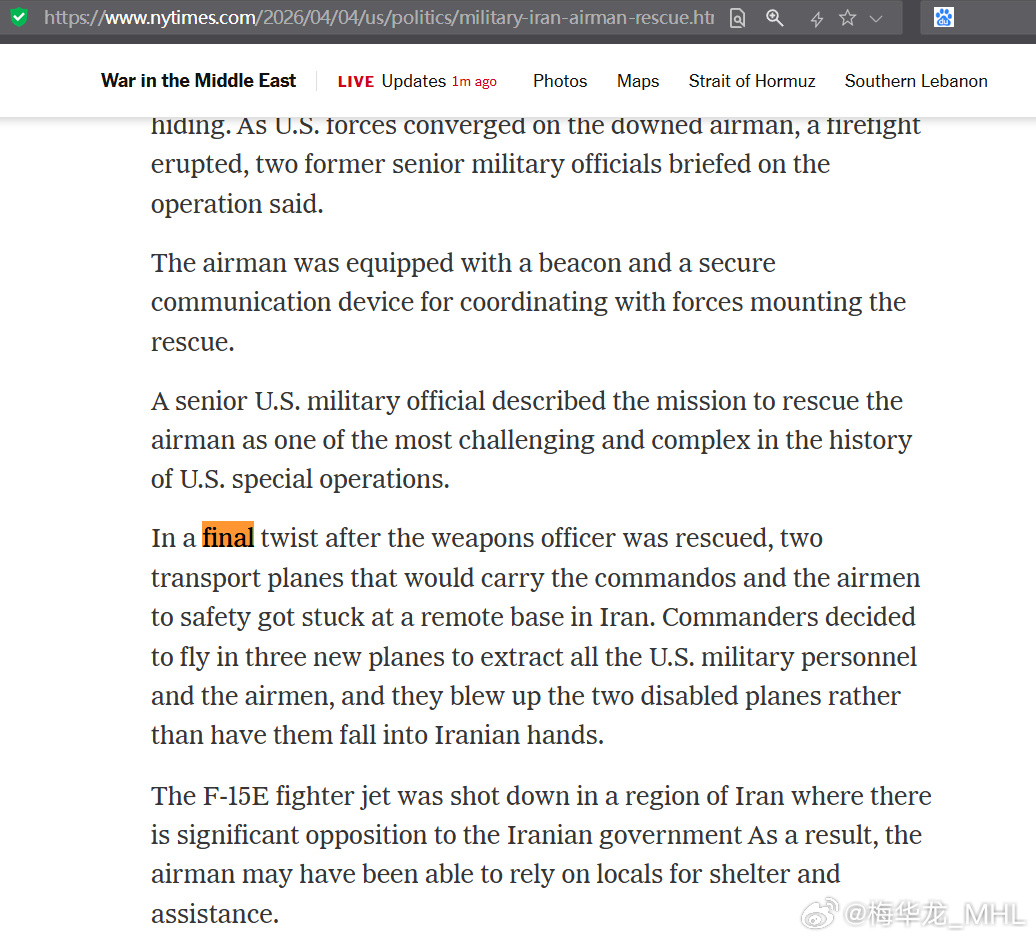
A rather “humorous” report from the New York Times. Let’s sum it up: two U.S. transport planes were supposedly stranded at a “remote base” inside Iran—and then destroyed by the U.S. itself. A “remote base”? Does it have a name? The planes just landed somewhere in the mountains and wilderness—and then what, couldn’t take off? If that’s the case, what’s the point of calling it a “remote base”? Why call it a “base” at all? So in the end, the U.S. blew them up itself—does that story even make sense? And don’t forget, your F-15 was shot down by Iranian air defenses in the first place. And this is supposed to count as a win? It’s like being forced to live in a dream. Also, let’s not forget that U.S. pilots already have tracking systems—they’re easy for their own side to locate, while it’s much harder for Iran to find them in remote, rugged terrain. And who exactly is this pilot? Why wasn’t his identity announced from the start, and then, after the rescue, put him on TV for an interview? At this point, it’s like—you can claim anyone is the pilot, and we’re just supposed to take their word for it. (Translated from Weibo)
The Perspectives tweet media
English
3
0
0
922
The Perspectives
The Perspectives@prog_perspect·
The Perspectives@prog_perspect

The official line from Trump’s gang—that “hundreds” of special ops team boarded transport planes near Isfahan just to rescue a single personnel—is pure nonsense. It’s not that the U.S. Air Force wouldn’t go all out to rescue trapped personnel—they certainly have both the capability and the willingness—but the method described makes no sense at all. The Air Force has dedicated pararescue teams that can deploy via long-range helicopters, whether CH-53K or MH-60M, and conduct nighttime rescues. One helicopter would suffice, two would be more than enough. This is the preferred approach for such missions. Deploying hundreds of troops on transport planes to a makeshift runway, with the risks far outweighing the benefits, is completely illogical. Sending such a large force into a remote area to rescue a single person and then exfiltrate is absurd. Equally implausible is the claim that “after two C-130s couldn’t take off, three more planes came to rescue them.” The time window simply doesn’t allow it. The only reasonable explanation is that the special ops team had a different objective at the time. The U.S. may indeed have rescued the weapons operator, but that operation is entirely separate from the action south of Isfahan that Trump promoted. The weapons systems operator was very likely extracted quietly on the night of April 4–5 via HH-60 helicopters. So what about the special ops mission that occurred simultaneously? The plan was likely to transport several MH-6 attack helicopters and a sizable operational force to a forward assembly point near Isfahan on the night of April 4 using C-130s and C-295s, then strike a location reportedly storing enriched uranium, attempting to steal it before dawn on April 5. The five transport planes were launched together, not in separate waves. The unit was immediately detected by Iranian drones. Iranian forces began deploying and assembling in response, and the task force likely came under indirect fire. The mission commander promptly aborted the operation and withdrew using the remaining three operational aircraft. By dawn, two C-130s and an unknown number of MH-6 helicopters were abandoned at the improvised airfield, where delayed-action self-destruct fuses detonated to burn the aircraft. (Some observers note it’s also possible that the subsequent airstrikes destroyed them.) Trump’s narrative—that “they were there to rescue personnel”—was fabricated to cover up a disastrous raid. In a Western context, “Leave No Man Behind” is an absolute moral high ground. Labeling a failed mission as a “rescue” allows the loss of hundreds of millions in equipment to be spun as “sacrificed for life,” deflecting congressional scrutiny over mission failure, intelligence errors, or technical leaks. Claiming “we went to save a stranded pilot” is far less politically costly than admitting “we tried to bomb a nuclear facility but failed.” (Translated from Weibo) #Iran #USIranWar #IranWar

ZXX
0
0
0
3
The Perspectives
The Perspectives@prog_perspect·
A rather “humorous” report from the New York Times. Let’s sum it up: two U.S. transport planes were supposedly stranded at a “remote base” inside Iran—and then destroyed by the U.S. itself. A “remote base”? Does it have a name? The planes just landed somewhere in the mountains and wilderness—and then what, couldn’t take off? If that’s the case, what’s the point of calling it a “remote base”? Why call it a “base” at all? So in the end, the U.S. blew them up itself—does that story even make sense? And don’t forget, your F-15 was shot down by Iranian air defenses in the first place. And this is supposed to count as a win? It’s like being forced to live in a dream. Also, let’s not forget that U.S. pilots already have tracking systems—they’re easy for their own side to locate, while it’s much harder for Iran to find them in remote, rugged terrain. And who exactly is this pilot? Why wasn’t his identity announced from the start, and then, after the rescue, put him on TV for an interview? At this point, it’s like—you can claim anyone is the pilot, and we’re just supposed to take their word for it. (Translated from Weibo) #Iran #USIranWar #IranWar
The Perspectives tweet media
hasanabi@hasanthehun

some of the details of this operation make very little sense. obv a combat search and rescue mission is always going to be insanely hard to pull off but it looks like some aspects of this mission are not being presented honestly. we’ll learn more in a few days…

English
2
0
0
99
The Perspectives
The Perspectives@prog_perspect·
The official line from Trump’s gang—that “hundreds” of special ops team boarded transport planes near Isfahan just to rescue a single personnel—is pure nonsense. It’s not that the U.S. Air Force wouldn’t go all out to rescue trapped personnel—they certainly have both the capability and the willingness—but the method described makes no sense at all. The Air Force has dedicated pararescue teams that can deploy via long-range helicopters, whether CH-53K or MH-60M, and conduct nighttime rescues. One helicopter would suffice, two would be more than enough. This is the preferred approach for such missions. Deploying hundreds of troops on transport planes to a makeshift runway, with the risks far outweighing the benefits, is completely illogical. Sending such a large force into a remote area to rescue a single person and then exfiltrate is absurd. Equally implausible is the claim that “after two C-130s couldn’t take off, three more planes came to rescue them.” The time window simply doesn’t allow it. The only reasonable explanation is that the special ops team had a different objective at the time. The U.S. may indeed have rescued the weapons operator, but that operation is entirely separate from the action south of Isfahan that Trump promoted. The weapons systems operator was very likely extracted quietly on the night of April 4–5 via HH-60 helicopters. So what about the special ops mission that occurred simultaneously? The plan was likely to transport several MH-6 attack helicopters and a sizable operational force to a forward assembly point near Isfahan on the night of April 4 using C-130s and C-295s, then strike a location reportedly storing enriched uranium, attempting to steal it before dawn on April 5. The five transport planes were launched together, not in separate waves. The unit was immediately detected by Iranian drones. Iranian forces began deploying and assembling in response, and the task force likely came under indirect fire. The mission commander promptly aborted the operation and withdrew using the remaining three operational aircraft. By dawn, two C-130s and an unknown number of MH-6 helicopters were abandoned at the improvised airfield, where delayed-action self-destruct fuses detonated to burn the aircraft. (Some observers note it’s also possible that the subsequent airstrikes destroyed them.) Trump’s narrative—that “they were there to rescue personnel”—was fabricated to cover up a disastrous raid. In a Western context, “Leave No Man Behind” is an absolute moral high ground. Labeling a failed mission as a “rescue” allows the loss of hundreds of millions in equipment to be spun as “sacrificed for life,” deflecting congressional scrutiny over mission failure, intelligence errors, or technical leaks. Claiming “we went to save a stranded pilot” is far less politically costly than admitting “we tried to bomb a nuclear facility but failed.” (Translated from Weibo)
English
0
0
0
63
The Hormuz Letter
The Hormuz Letter@HormuzLetter·
BREAKING: Roughly 100 US special operations forces are stranded inside Iran after both MC-130 extraction aircraft suffered mechanical failures and could not take off, per Reuters. The mission entered Iran to extract the downed F-15 WSO, identified as a colonel, who evaded for 48 hours with a sprained ankle in a hilltop crevice. The US jammed electronics and struck key roads around the site to prevent anyone from getting close.
English
173
716
4.3K
724K
The Perspectives
The Perspectives@prog_perspect·
The official line from Trump’s gang—that “hundreds” of special ops team boarded transport planes near Isfahan just to rescue a single personnel—is pure nonsense. It’s not that the U.S. Air Force wouldn’t go all out to rescue trapped personnel—they certainly have both the capability and the willingness—but the method described makes no sense at all. The Air Force has dedicated pararescue teams that can deploy via long-range helicopters, whether CH-53K or MH-60M, and conduct nighttime rescues. One helicopter would suffice, two would be more than enough. This is the preferred approach for such missions. Deploying hundreds of troops on transport planes to a makeshift runway, with the risks far outweighing the benefits, is completely illogical. Sending such a large force into a remote area to rescue a single person and then exfiltrate is absurd. Equally implausible is the claim that “after two C-130s couldn’t take off, three more planes came to rescue them.” The time window simply doesn’t allow it. The only reasonable explanation is that the special ops team had a different objective at the time. The U.S. may indeed have rescued the weapons operator, but that operation is entirely separate from the action south of Isfahan that Trump promoted. The weapons systems operator was very likely extracted quietly on the night of April 4–5 via HH-60 helicopters. So what about the special ops mission that occurred simultaneously? The plan was likely to transport several MH-6 attack helicopters and a sizable operational force to a forward assembly point near Isfahan on the night of April 4 using C-130s and C-295s, then strike a location reportedly storing enriched uranium, attempting to steal it before dawn on April 5. The five transport planes were launched together, not in separate waves. The unit was immediately detected by Iranian drones. Iranian forces began deploying and assembling in response, and the task force likely came under indirect fire. The mission commander promptly aborted the operation and withdrew using the remaining three operational aircraft. By dawn, two C-130s and an unknown number of MH-6 helicopters were abandoned at the improvised airfield, where delayed-action self-destruct fuses detonated to burn the aircraft. (Some observers note it’s also possible that the subsequent airstrikes destroyed them.) Trump’s narrative—that “they were there to rescue personnel”—was fabricated to cover up a disastrous raid. In a Western context, “Leave No Man Behind” is an absolute moral high ground. Labeling a failed mission as a “rescue” allows the loss of hundreds of millions in equipment to be spun as “sacrificed for life,” deflecting congressional scrutiny over mission failure, intelligence errors, or technical leaks. Claiming “we went to save a stranded pilot” is far less politically costly than admitting “we tried to bomb a nuclear facility but failed.” (Translated from Weibo) #Iran #USIranWar #IranWar
The Hormuz Letter@HormuzLetter

BREAKING: Roughly 100 US special operations forces are stranded inside Iran after both MC-130 extraction aircraft suffered mechanical failures and could not take off, per Reuters. The mission entered Iran to extract the downed F-15 WSO, identified as a colonel, who evaded for 48 hours with a sprained ankle in a hilltop crevice. The US jammed electronics and struck key roads around the site to prevent anyone from getting close.

English
0
0
0
24
The Perspectives
The Perspectives@prog_perspect·
The official line from Trump’s gang—that “hundreds” of special ops team boarded transport planes near Isfahan just to rescue a single personnel—is pure nonsense. It’s not that the U.S. Air Force wouldn’t go all out to rescue trapped personnel—they certainly have both the capability and the willingness—but the method described makes no sense at all. The Air Force has dedicated pararescue teams that can deploy via long-range helicopters, whether CH-53K or MH-60M, and conduct nighttime rescues. One helicopter would suffice, two would be more than enough. This is the preferred approach for such missions. Deploying hundreds of troops on transport planes to a makeshift runway, with the risks far outweighing the benefits, is completely illogical. Sending such a large force into a remote area to rescue a single person and then exfiltrate is absurd. Equally implausible is the claim that “after two C-130s couldn’t take off, three more planes came to rescue them.” The time window simply doesn’t allow it. The only reasonable explanation is that the special ops team had a different objective at the time. The U.S. may indeed have rescued the weapons operator, but that operation is entirely separate from the action south of Isfahan that Trump promoted. The weapons systems operator was very likely extracted quietly on the night of April 4–5 via HH-60 helicopters. So what about the special ops mission that occurred simultaneously? The plan was likely to transport several MH-6 attack helicopters and a sizable operational force to a forward assembly point near Isfahan on the night of April 4 using C-130s and C-295s, then strike a location reportedly storing enriched uranium, attempting to steal it before dawn on April 5. The five transport planes were launched together, not in separate waves. The unit was immediately detected by Iranian drones. Iranian forces began deploying and assembling in response, and the task force likely came under indirect fire. The mission commander promptly aborted the operation and withdrew using the remaining three operational aircraft. By dawn, two C-130s and an unknown number of MH-6 helicopters were abandoned at the improvised airfield, where delayed-action self-destruct fuses detonated to burn the aircraft. (Some observers note it’s also possible that the subsequent airstrikes destroyed them.) Trump’s narrative—that “they were there to rescue personnel”—was fabricated to cover up a disastrous raid. In a Western context, “Leave No Man Behind” is an absolute moral high ground. Labeling a failed mission as a “rescue” allows the loss of hundreds of millions in equipment to be spun as “sacrificed for life,” deflecting congressional scrutiny over mission failure, intelligence errors, or technical leaks. Claiming “we went to save a stranded pilot” is far less politically costly than admitting “we tried to bomb a nuclear facility but failed.” (Translated from Weibo)
English
0
0
0
2
RT
RT@RT_com·
US sent 100 SPECIAL OPS FORCES INTO IRAN to rescue 1 pilot — Reuters MC-130s hit ‘MECHANICAL FAILURE’, COULDN’T TAKE OFF Commanders made ‘HIGH-RISK’ CALL to order MORE PLANES INTO IRAN ‘If there was a ‘HOLY SH*T’ MOMENT, that was it’
RT tweet mediaRT tweet media
English
100
435
2K
55.8K
The Perspectives
The Perspectives@prog_perspect·
The official line from Trump’s gang—that “hundreds” of special ops team boarded transport planes near Isfahan just to rescue a single personnel—is pure nonsense. It’s not that the U.S. Air Force wouldn’t go all out to rescue trapped personnel—they certainly have both the capability and the willingness—but the method described makes no sense at all. The Air Force has dedicated pararescue teams that can deploy via long-range helicopters, whether CH-53K or MH-60M, and conduct nighttime rescues. One helicopter would suffice, two would be more than enough. This is the preferred approach for such missions. Deploying hundreds of troops on transport planes to a makeshift runway, with the risks far outweighing the benefits, is completely illogical. Sending such a large force into a remote area to rescue a single person and then exfiltrate is absurd. Equally implausible is the claim that “after two C-130s couldn’t take off, three more planes came to rescue them.” The time window simply doesn’t allow it. The only reasonable explanation is that the special ops team had a different objective at the time. The U.S. may indeed have rescued the weapons operator, but that operation is entirely separate from the action south of Isfahan that Trump promoted. The weapons systems operator was very likely extracted quietly on the night of April 4–5 via HH-60 helicopters. So what about the special ops mission that occurred simultaneously? The plan was likely to transport several MH-6 attack helicopters and a sizable operational force to a forward assembly point near Isfahan on the night of April 4 using C-130s and C-295s, then strike a location reportedly storing enriched uranium, attempting to steal it before dawn on April 5. The five transport planes were launched together, not in separate waves. The unit was immediately detected by Iranian drones. Iranian forces began deploying and assembling in response, and the task force likely came under indirect fire. The mission commander promptly aborted the operation and withdrew using the remaining three operational aircraft. By dawn, two C-130s and an unknown number of MH-6 helicopters were abandoned at the improvised airfield, where delayed-action self-destruct fuses detonated to burn the aircraft. (Some observers note it’s also possible that the subsequent airstrikes destroyed them.) Trump’s narrative—that “they were there to rescue personnel”—was fabricated to cover up a disastrous raid. In a Western context, “Leave No Man Behind” is an absolute moral high ground. Labeling a failed mission as a “rescue” allows the loss of hundreds of millions in equipment to be spun as “sacrificed for life,” deflecting congressional scrutiny over mission failure, intelligence errors, or technical leaks. Claiming “we went to save a stranded pilot” is far less politically costly than admitting “we tried to bomb a nuclear facility but failed.” (Translated from Weibo) #Iran #USIranWar #IranWar
RT@RT_com

US sent 100 SPECIAL OPS FORCES INTO IRAN to rescue 1 pilot — Reuters MC-130s hit ‘MECHANICAL FAILURE’, COULDN’T TAKE OFF Commanders made ‘HIGH-RISK’ CALL to order MORE PLANES INTO IRAN ‘If there was a ‘HOLY SH*T’ MOMENT, that was it’

English
0
0
0
15
The Perspectives
The Perspectives@prog_perspect·
The United States should surrender now, or things will only get worse. A nuclear war? Let me be blunt with all of you nuclear-phobia types: Trump had better not go down that path. If Trump and Netanyahu use a nuclear weapon, Iran’s economic “nuclear” weapon is far more powerful than the nukes in their hands—Iran could easily destroy the global economy, while nuclear bombs would only destroy a small part of Iran. If Iran is ever pushed to that point, the strategic consequences would far exceed any individual nuclear strike. This is an ironclad fact. (Translated from Weibo)
The Perspectives@prog_perspect

Judging by how fierce this war is getting, whether the Strait of Hormuz is closed—or whether the pipelines exporting oil from the Middle East are blocked—is no longer important. Iran’s ultimate strategy is simple: if the war keeps escalating, all oil storage facilities, refineries, and even the oil wells themselves will be bombed flat. All of them. Nothing left. (Translated from Weibo) #Iran #USIranWar #IranWar

English
1
0
0
1.1K
Clash Report
Clash Report@clashreport·
Tucker Carlson: This is the end of something. You’re watching the end of the global American empire. The unipolar world… is over. Something once great has become unrecognizable.
English
118
1.1K
4.4K
163.7K
The Perspectives
The Perspectives@prog_perspect·
The United States should surrender now, or things will only get worse. A nuclear war? Let me be blunt with all of you nuclear-phobia types: Trump had better not go down that path. If Trump and Netanyahu use a nuclear weapon, Iran’s economic “nuclear” weapon is far more powerful than the nukes in their hands—Iran could easily destroy the global economy, while nuclear bombs would only destroy a small part of Iran. If Iran is ever pushed to that point, the strategic consequences would far exceed any individual nuclear strike. This is an ironclad fact. (Translated from Weibo) x.com/prog_perspect/… #Iran #USIranWar #IranWar
Clash Report@clashreport

Tucker Carlson: This is the end of something. You’re watching the end of the global American empire. The unipolar world… is over. Something once great has become unrecognizable.

English
0
0
0
82
The Perspectives
The Perspectives@prog_perspect·
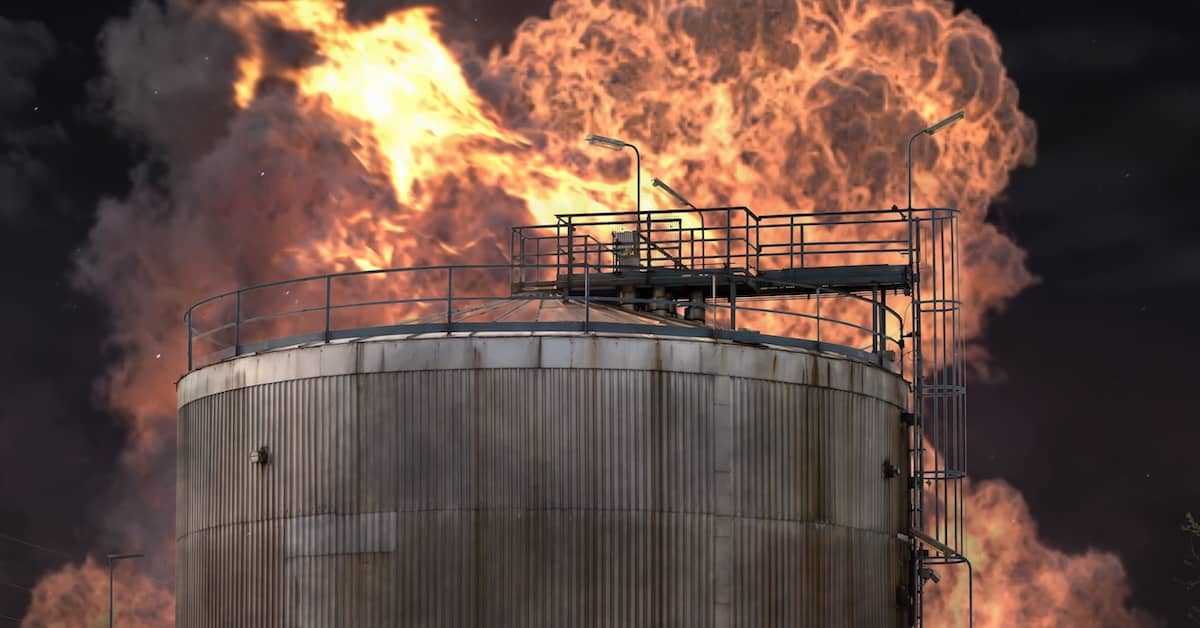
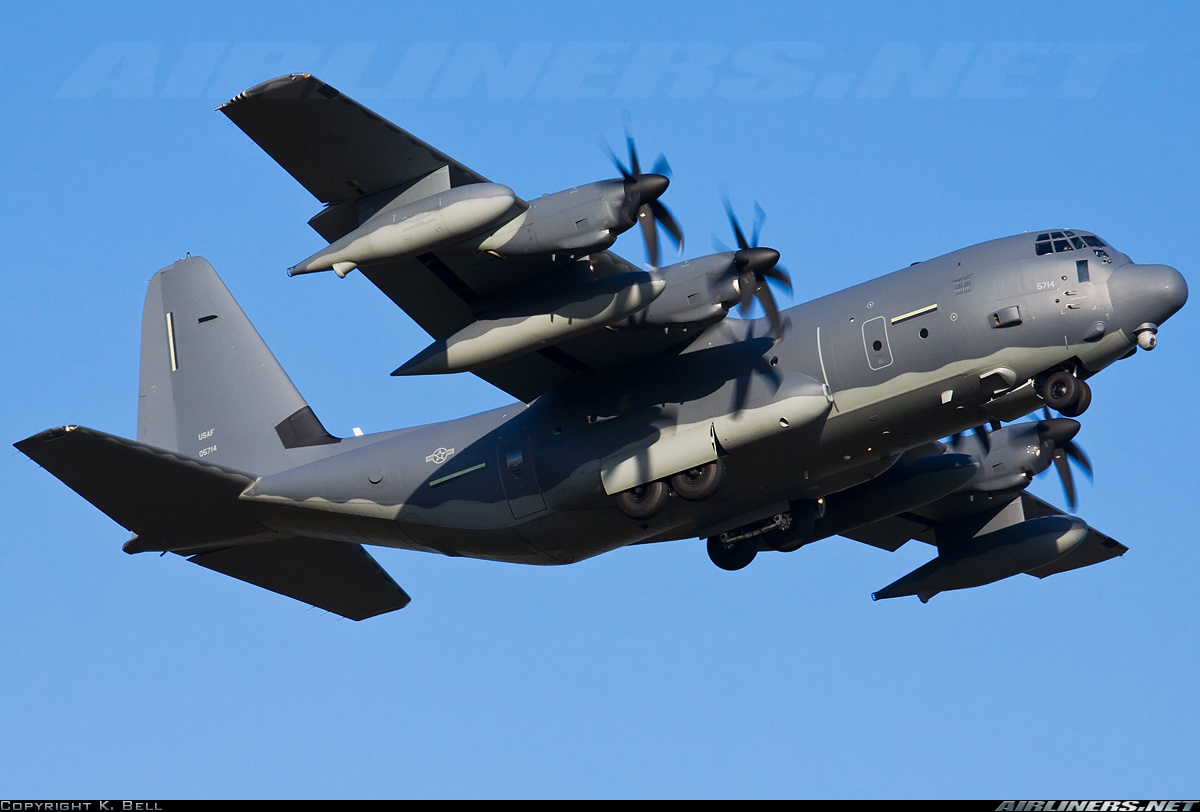
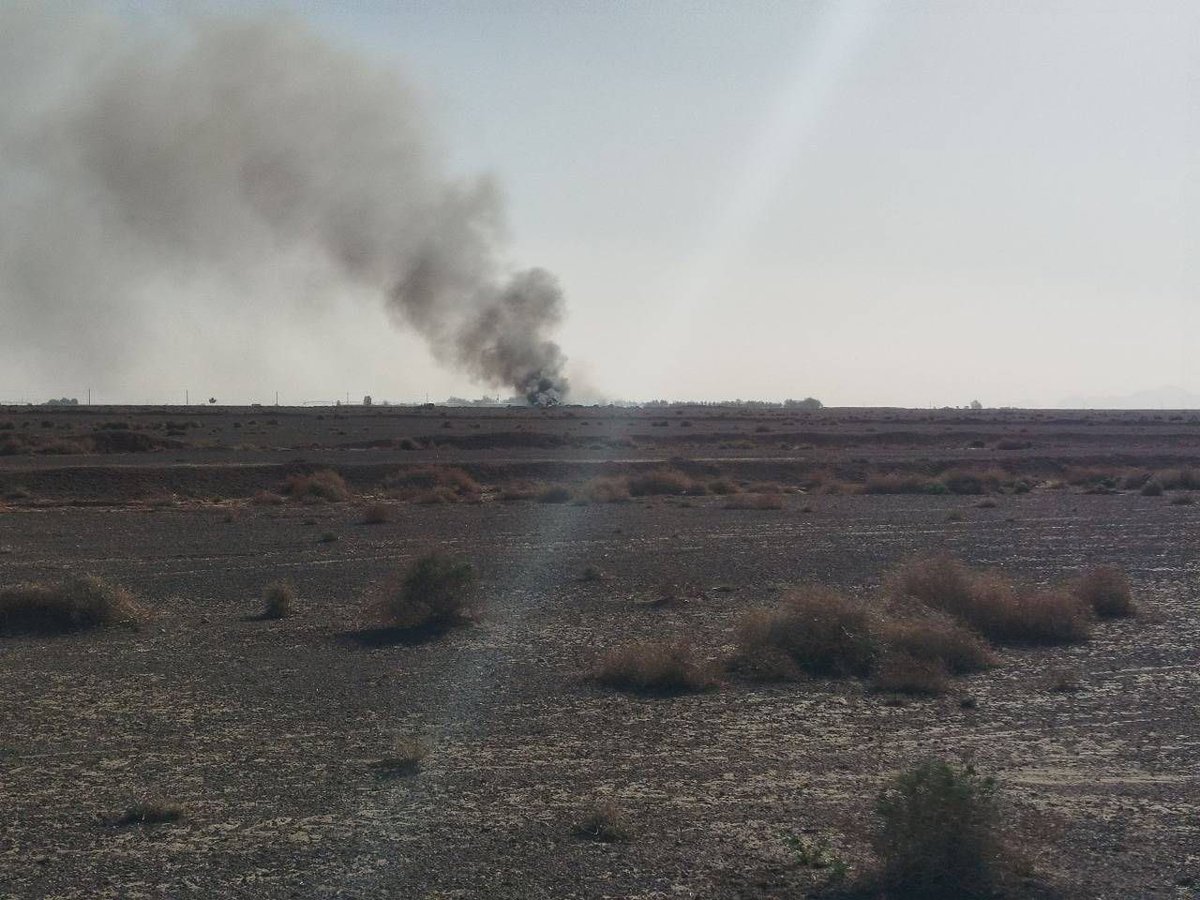
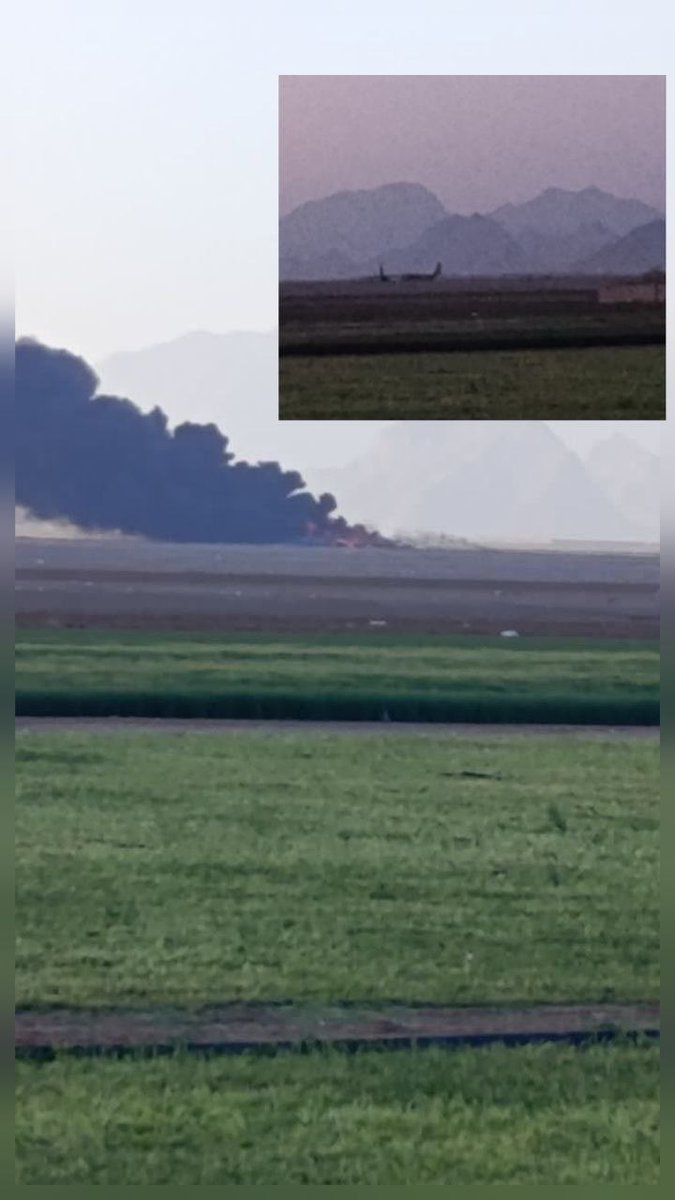
Judging by how fierce this war is getting, whether the Strait of Hormuz is closed—or whether the pipelines exporting oil from the Middle East are blocked—is no longer important. Iran’s ultimate strategy is simple: if the war keeps escalating, all oil storage facilities, refineries, and even the oil wells themselves will be bombed flat. All of them. Nothing left. (Translated from Weibo) #Iran #USIranWar #IranWar
The Perspectives tweet mediaThe Perspectives tweet mediaThe Perspectives tweet mediaThe Perspectives tweet media
English
0
1
1
1.1K
The Perspectives
The Perspectives@prog_perspect·
Landing three aircraft in one place and then blowing them up—brilliant. 🤣 What the U.S. military is best at is friendly fire. If that F-15 had crashed in one of those Gulf monarchies, it would definitely have been written off as another “friendly fire” incident. Now they’ve evolved—from friendly fire to deliberately hitting their own. (Translated from Weibo)
English
0
0
1
9.3K
BRICS News
BRICS News@BRICSinfo·
JUST IN: 🇺🇸🇮🇷 Footage shows wreckage of US Black Hawk helicopters and C-130 military transport aircraft destroyed by US forces before departing Iran.
English
887
3.8K
29.7K
3.6M
The Perspectives
The Perspectives@prog_perspect·
Landing three aircraft in one place and then blowing them up—brilliant. 🤣 What the U.S. military is best at is friendly fire. If that F-15 had crashed in one of those Gulf monarchies, it would definitely have been written off as another “friendly fire” incident. Now they’ve evolved—from friendly fire to deliberately hitting their own. (Translated from Weibo) #Iran #USIranWar #IranWar
BRICS News@BRICSinfo

JUST IN: 🇺🇸🇮🇷 Footage shows wreckage of US Black Hawk helicopters and C-130 military transport aircraft destroyed by US forces before departing Iran.

English
0
0
0
36
The Perspectives
The Perspectives@prog_perspect·
I’ve never seen anyone as stubbornly in denial as the Americans. Isn’t this just a rerun of the disastrous “Operation Eagle Claw” in 1980? Those two weren’t just ordinary transport mules—they were MC-130Js from the 24th Special Operations Squadron. There are only 64 of these aircraft in the world—they’re prized assets of Air Force Special Operations Command, built for low-altitude infiltration and extraction, aerial refueling, special forces drops—basically all the covert, dirty work. (Translated from Weibo) #Iran #USIranWar #IranWar
The Perspectives tweet media
English
0
0
0
16
The Perspectives
The Perspectives@prog_perspect·
I’ve never seen anyone as stubbornly in denial as the Americans. Isn’t this just a rerun of the disastrous “Operation Eagle Claw” in 1980? Those two weren’t just ordinary transport mules—they were MC-130Js from the 24th Special Operations Squadron. There are only 64 of these aircraft in the world—they’re prized assets of Air Force Special Operations Command, built for low-altitude infiltration and extraction, aerial refueling, special forces drops—basically all the covert, dirty work. (Translated from Weibo) #Iran #USIranWar #IranWar
The Perspectives tweet media
The Perspectives@prog_perspect

A rather “humorous” report from the New York Times. Let’s sum it up: two U.S. transport planes were supposedly stranded at a “remote base” inside Iran—and then destroyed by the U.S. itself. A “remote base”? Does it have a name? The planes just landed somewhere in the mountains and wilderness—and then what, couldn’t take off? If that’s the case, what’s the point of calling it a “remote base”? Why call it a “base” at all? So in the end, the U.S. blew them up itself—does that story even make sense? And don’t forget, your F-15 was shot down by Iranian air defenses in the first place. And this is supposed to count as a win? It’s like being forced to live in a dream. Also, let’s not forget that U.S. pilots already have tracking systems—they’re easy for their own side to locate, while it’s much harder for Iran to find them in remote, rugged terrain. And who exactly is this pilot? Why wasn’t his identity announced from the start, and then, after the rescue, put him on TV for an interview? At this point, it’s like—you can claim anyone is the pilot, and we’re just supposed to take their word for it. (Translated from Weibo) #Iran #USIranWar #IranWar

English
0
0
0
13
The Perspectives retweetledi
Arya Yadeghaar
Arya Yadeghaar@AryJeay·
- The US said they blew up 2 of their own Hercules C-130 aircraft at a “remote airbase”. - The released images show remains of a C-130 and American helicopters (which US did not comment on) so these aren’t the ones the US claimed to have “detonated”. - The wreckage is on plain deserts, not a “base” at all. - Initial fire image showed grass patches around the dirt ground—however the area with the remains does not seem to have any grass around it—though it’s possible they are taken from opposite sides with 180 degree POV difference. - It’s possible that the incidents are 2 seperate events OR the US is tampering with real info. Either way, the US lost many aircrafts to Iran.
Arya Yadeghaar tweet mediaArya Yadeghaar tweet media
Arya Yadeghaar@AryJeay

NEW: Aftermath images of reportedly 2 American Black Hawk helicopters and/or C-130 aircraft destroyed by Iran

English
53
379
1.8K
95.5K
The Perspectives
The Perspectives@prog_perspect·
Let’s put it this way: you’ve got a U.S. arms factory that used to be able to produce 100 missiles. Now output has dropped—not because of a lack of funding, but because something else is bottlenecking production—maybe raw materials, machinery, or experienced technicians. Then suddenly, the U.S. president quadruples your budget. But your capacity is still what it is—you can’t magically turn that extra money into more missiles. So what do you do? The only thing you can do is raise the price of each missile to four times its original price. Throwing money at it doesn’t solve the underlying problem—it just makes everything more expensive. (Translated from Weibo)
English
0
0
1
1.7K
Headquarters
Headquarters@HQNewsNow·
Trump is seeking to pay for his new $1.5 trillion military budget by cutting the following: $510 million - Grants for farmers and agricultural research $82 million - Loans for rural small businesses (Fully eliminated) $61 million - Support for farmers and food markets (Fully eliminated) $240 million - School meals and food education for children abroad (Fully eliminated) $659 million - Community building grants $47 million - Support for minority-owned businesses (Fully eliminated) $449 million - Economic development grants for communities $1.6 billion - Weather forecasting, fisheries, and coastal protection (NOAA) $993 million - Scientific research and technology standards $150 million - Support for American exports and trade $2.2 billion - Broadband and internet access programs $8.5 billion - Funding for public schools $1.5 billion - Vocational training and adult education (Fully eliminated) $2.7 billion - College access and higher education support $15.2 billion - Roads, bridges, and infrastructure projects $1.1 billion - Home energy efficiency and clean energy programs (Fully eliminated) $1.1 billion - Scientific research funding $386 million - Environmental cleanup programs $150 million - Cutting-edge clean energy research $4 billion - Help paying home heating and cooling bills for low-income families (Fully eliminated) $768 million - Refugee resettlement assistance $819 million - Care and shelter for migrant children $775 million - Local anti-poverty programs (Fully eliminated) $5 billion - Public health programs, mental health services, and disease prevention $5 billion - Medical research (NIH) $129 million - Healthcare quality and safety research $356 million - Emergency preparedness and disaster response $1.3 billion - FEMA community disaster preparedness grants $707 million - Cybersecurity protection for critical infrastructure $52 million - Airport and transportation security $40 million - Protection against chemical and biological weapons threats $53 million - Funding for homeland security operations $3.3 billion - Community development block grants for local neighborhoods (Fully eliminated) $1.3 billion - Affordable housing construction grants (Fully eliminated) $393 million - Programs to reduce homelessness $529 million - Housing assistance for people living with HIV/AIDS (Fully eliminated) $489 million - Housing and services for Native American communities $50 million - Grants to help communities build more housing (Fully eliminated) $60 million - Enforcement of fair housing and anti-discrimination laws $58 million - Homebuyer and renter counseling services (Fully eliminated) $45 million - Renewable energy development programs (Fully eliminated) $1.7 billion - Grants for local law enforcement and public safety $20 million - Civil rights mediation and legal access programs (Fully eliminated) $1.6 billion - Job training for at-risk youth (Fully eliminated) $395 million - Jobs program for low-income seniors (Fully eliminated) $234 million - Worker safety and labor protection programs $101 million - Enforcement of equal pay and workplace anti-discrimination laws $46 million - Programs to combat child labor and forced labor abroad $2 billion - International humanitarian aid $1.2 billion - Food aid for hungry families abroad (Fully eliminated) $4.3 billion - Global health and disease prevention programs $2.7 billion - Funding for the United Nations and international partnerships $642 million - International economic and treasury programs $315 million - Democracy and anti-corruption programs abroad $486 million - Grants for public transit projects $4.2 billion - Electric vehicle charging infrastructure $372 million - Airline service for rural and small communities $145 million - Grants for sustainable and equitable infrastructure $204 million - Loans and investment for underserved communities $1.4 billion - IRS taxpayer services and enforcement $100 million - Air pollution monitoring and reduction programs (Fully eliminated) $1 billion - EPA grants to states for environmental protection $2.5 billion - Clean drinking water and wastewater infrastructure funds $90 million - Grants to reduce diesel pollution (Fully eliminated) $3.4 billion - NASA space and earth science research $297 million - NASA technology innovation programs $1.1 billion - International Space Station operations $143 million - STEM education programs $309 million - Small business development and entrepreneurship programs $170 million - Small Business Administration operations $158 million - Loans for small businesses
Headquarters tweet mediaHeadquarters tweet media
English
5.3K
31.7K
71.8K
13.3M
The Perspectives
The Perspectives@prog_perspect·
Let’s put it this way: you’ve got a U.S. arms factory that used to be able to produce 100 missiles. Now output has dropped—not because of a lack of funding, but because something else is bottlenecking production—maybe raw materials, machinery, or experienced technicians. Then suddenly, the U.S. president quadruples your budget. But your capacity is still what it is—you can’t magically turn that extra money into more missiles. So what do you do? The only thing you can do is raise the price of each missile to four times its original price. Throwing money at it doesn’t solve the underlying problem—it just makes everything more expensive. (Translated from Weibo) #Iran #USIranWar #IranWar
Headquarters@HQNewsNow

Trump is seeking to pay for his new $1.5 trillion military budget by cutting the following: $510 million - Grants for farmers and agricultural research $82 million - Loans for rural small businesses (Fully eliminated) $61 million - Support for farmers and food markets (Fully eliminated) $240 million - School meals and food education for children abroad (Fully eliminated) $659 million - Community building grants $47 million - Support for minority-owned businesses (Fully eliminated) $449 million - Economic development grants for communities $1.6 billion - Weather forecasting, fisheries, and coastal protection (NOAA) $993 million - Scientific research and technology standards $150 million - Support for American exports and trade $2.2 billion - Broadband and internet access programs $8.5 billion - Funding for public schools $1.5 billion - Vocational training and adult education (Fully eliminated) $2.7 billion - College access and higher education support $15.2 billion - Roads, bridges, and infrastructure projects $1.1 billion - Home energy efficiency and clean energy programs (Fully eliminated) $1.1 billion - Scientific research funding $386 million - Environmental cleanup programs $150 million - Cutting-edge clean energy research $4 billion - Help paying home heating and cooling bills for low-income families (Fully eliminated) $768 million - Refugee resettlement assistance $819 million - Care and shelter for migrant children $775 million - Local anti-poverty programs (Fully eliminated) $5 billion - Public health programs, mental health services, and disease prevention $5 billion - Medical research (NIH) $129 million - Healthcare quality and safety research $356 million - Emergency preparedness and disaster response $1.3 billion - FEMA community disaster preparedness grants $707 million - Cybersecurity protection for critical infrastructure $52 million - Airport and transportation security $40 million - Protection against chemical and biological weapons threats $53 million - Funding for homeland security operations $3.3 billion - Community development block grants for local neighborhoods (Fully eliminated) $1.3 billion - Affordable housing construction grants (Fully eliminated) $393 million - Programs to reduce homelessness $529 million - Housing assistance for people living with HIV/AIDS (Fully eliminated) $489 million - Housing and services for Native American communities $50 million - Grants to help communities build more housing (Fully eliminated) $60 million - Enforcement of fair housing and anti-discrimination laws $58 million - Homebuyer and renter counseling services (Fully eliminated) $45 million - Renewable energy development programs (Fully eliminated) $1.7 billion - Grants for local law enforcement and public safety $20 million - Civil rights mediation and legal access programs (Fully eliminated) $1.6 billion - Job training for at-risk youth (Fully eliminated) $395 million - Jobs program for low-income seniors (Fully eliminated) $234 million - Worker safety and labor protection programs $101 million - Enforcement of equal pay and workplace anti-discrimination laws $46 million - Programs to combat child labor and forced labor abroad $2 billion - International humanitarian aid $1.2 billion - Food aid for hungry families abroad (Fully eliminated) $4.3 billion - Global health and disease prevention programs $2.7 billion - Funding for the United Nations and international partnerships $642 million - International economic and treasury programs $315 million - Democracy and anti-corruption programs abroad $486 million - Grants for public transit projects $4.2 billion - Electric vehicle charging infrastructure $372 million - Airline service for rural and small communities $145 million - Grants for sustainable and equitable infrastructure $204 million - Loans and investment for underserved communities $1.4 billion - IRS taxpayer services and enforcement $100 million - Air pollution monitoring and reduction programs (Fully eliminated) $1 billion - EPA grants to states for environmental protection $2.5 billion - Clean drinking water and wastewater infrastructure funds $90 million - Grants to reduce diesel pollution (Fully eliminated) $3.4 billion - NASA space and earth science research $297 million - NASA technology innovation programs $1.1 billion - International Space Station operations $143 million - STEM education programs $309 million - Small business development and entrepreneurship programs $170 million - Small Business Administration operations $158 million - Loans for small businesses

English
0
0
0
21