
Pew-Thian Yap

103 posts

Pew-Thian Yap banner
Pew-Thian Yap

Pew-Thian Yap

@pt_yap

Malaysian-American Scientist. Professor of Radiology, Computer Science, and Biomedical Engineering @UNCRadiology @BRIC_UNC @UNC_SOM @UNC

North Carolina, USA Katılım Ekim 2020
263 Takip Edilen194 Takipçiler
Sabitlenmiş Tweet
Pew-Thian Yap
Pew-Thian Yap@pt_yap·
Today we report in @Nature how the human brain evolves functionally from birth to old age—revealing a continuous trajectory of maturation, specialization, and later-life reorganization. 🧠 Paper: doi.org/10.1038/s41586… N & V: doi.org/10.1038/d41586… @UNCRadiology @BRIC_UNC
Hoyt Patrick Taylor@hptayloriv

11/ Huge thanks to all of my coauthors on this paper, especially @pt_yap @sahar_ahmad4 @khoi_hm, for making this work possible.

English
1
10
27
3.1K
Pew-Thian Yap retweetledi
nature
nature@Nature·
Nature research paper: Functional hierarchy of the human neocortex across the lifespan go.nature.com/47jv4Dt
English
1
36
136
17.8K
Pew-Thian Yap retweetledi
thmonk
thmonk@thmonk_pf·
ヒト新皮質の機能的結合勾配(SA/VS/MR軸)のLifespan規範atlasを出生〜100歳で初構築 乳幼児期に一次感覚系主導で始まり小児期〜青年期に連合/制御軸が分化、加齢で脱分化する三相性軌跡 SA軸の忠実度は汎ドメイン認知を予測 OA #network #lifespan #papers nature.com/articles/s4158…
thmonk tweet mediathmonk tweet media
日本語
0
5
13
741
Pew-Thian Yap
Pew-Thian Yap@pt_yap·
Great text-and-figure summary of our Nature paper: rdcu.be/e91Uy
James Clement@jamesclementjnc

Mapping the lifelong journey of the human brain New research has established a comprehensive map of how the human brain’s functional organisation evolves across an entire century of life. By studying over 3,500 individuals from birth to 100 years of age, scientists have identified three primary 'gradients' essentially invisible axes of communication that dictate how different brain regions coordinate their activity. These findings provide a new lens through which to view human development and the natural processes of ageing. The study reveals that a newborn's brain is primarily anchored by basic sensory systems, such as touch and sight. As a child grows into adolescence, the brain undergoes a complex process of differentiation. It begins to develop more sophisticated networks responsible for high-level thinking, planning, and social interaction. This architectural complexity peaks in early adulthood, roughly around the age of twenty, marking the height of the brain’s organisational efficiency. This period is characterised by a clear distinction between the areas of the brain that handle raw sensory input and those that manage complex, abstract thought. However, as the human body enters later life, the brain begins a process known as 'dedifferentiation'. The once-sharp boundaries between specialised networks start to blur, leading to a more homogenous or blended organisational structure. Interestingly, the study found that the way the brain is organised can directly predict an individual’s cognitive abilities. Those whose brains more closely follow the 'ideal' adult map often perform better in tasks related to memory, attention, and reading. The researchers also explored the biological foundations of this lifelong journey. They discovered that the physical structure of the brain and its functional activity are most closely linked early in life. As we age, these two aspects become increasingly decoupled, suggesting that the mature brain relies more on flexible patterns of activity rather than just its hard-wired physical connections. Furthermore, the study identified specific genetic programmes that scaffold this brain architecture, particularly during the first few years of life. Ultimately, these results provide a normative chart for brain health. By understanding the typical path, the brain follows from infancy to old age, medical professionals may be better equipped to identify early signs of neurodevelopmental conditions in children or neurodegenerative disorders in the elderly. This lifelong atlas offers a foundational reference for future studies into the texture of human cognition. #brain #neurodevelopment #autism #memory #learning #adolescent #neuroscience #research #science #brainageing #brainmapping #neurobiology #brainhealth nature.com/articles/s4158…

English
0
1
4
281
Pew-Thian Yap retweetledi
nature
nature@Nature·
Neuroscientists have created a continuous atlas showing how patterns of functional connectivity between brain regions change from birth to old age go.nature.com/4rNqUeh
English
0
46
199
29.5K
Pew-Thian Yap retweetledi
Luiz Pessoa
Luiz Pessoa@PessoaBrain·
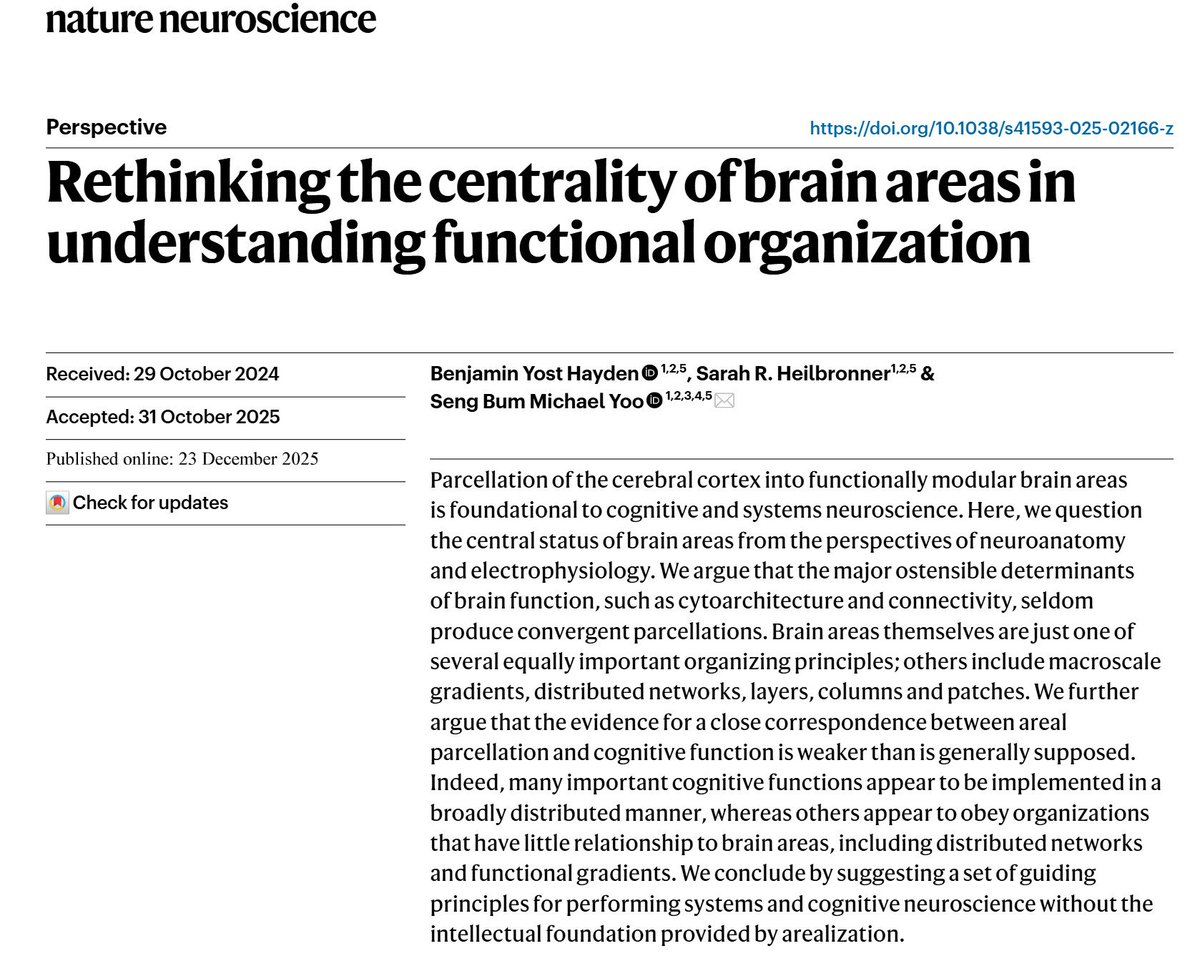
𝗥𝗲𝘁𝗵𝗶𝗻𝗸𝗶𝗻𝗴 𝘁𝗵𝗲 𝗰𝗲𝗻𝘁𝗿𝗮𝗹𝗶𝘁𝘆 𝗼𝗳 𝗯𝗿𝗮𝗶𝗻 𝗮𝗿𝗲𝗮𝘀 New paper I anticipate will become a classic in neuroscience and a must-read for students at all levels. Understanding brain function beyond brain areas. doi.org/10.1038/s41593…
Luiz Pessoa tweet media
English
17
205
940
53.2K
Pew-Thian Yap retweetledi
Bruker
Bruker@bruker·
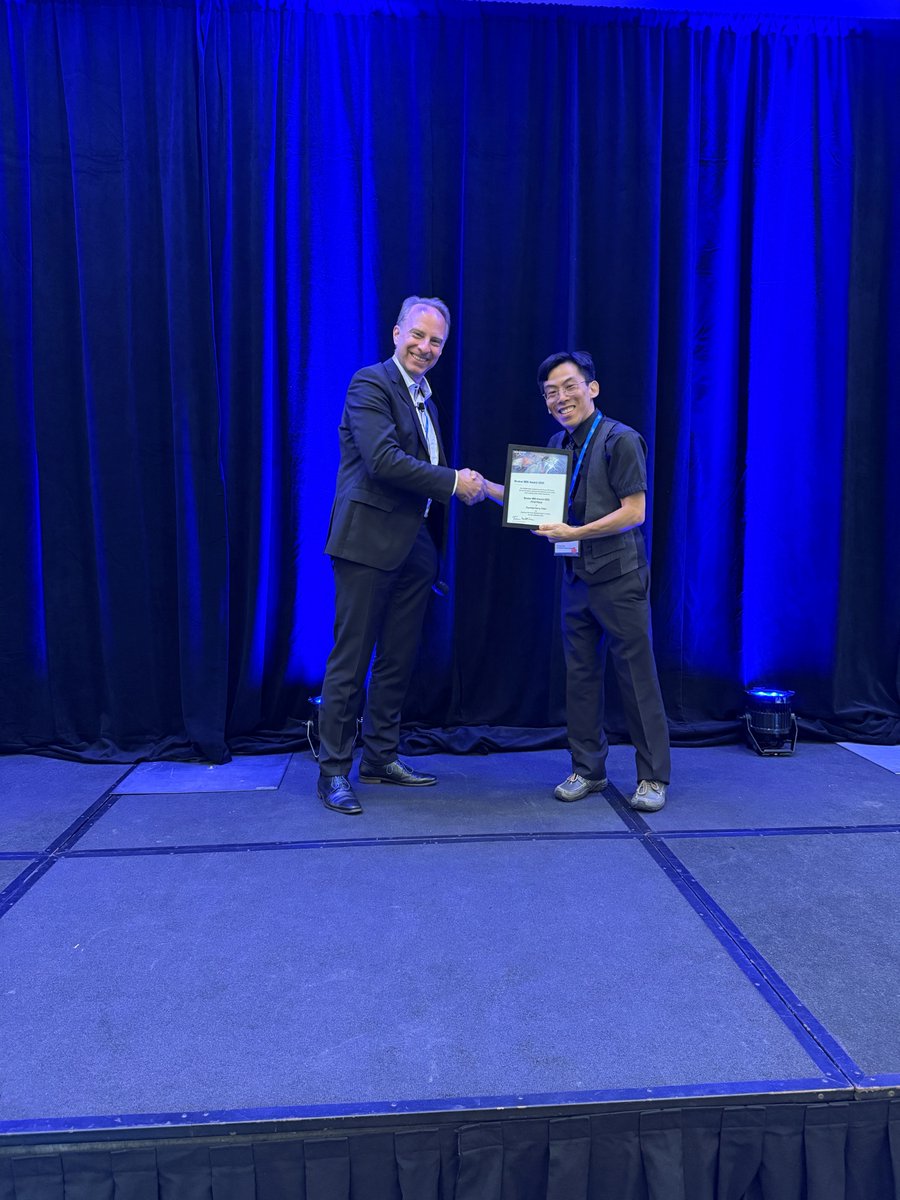
Congrats to this year's Bruker MRI Award Winners, presented at the @ISMRM. 1st place was awarded to Tzu-Hao Harry Chao @UNC for "Mapping Inter-Brain synchronization in Awake, Socially Interacting Mice, SORDINO Sequence for Hyperscanning". 👉goto.bruker.com/440KyKb #BrukerMRIAward
Bruker tweet mediaBruker tweet media
English
0
4
8
742
Pew-Thian Yap retweetledi
Ian Shih
Ian Shih@ShihYYI·
1/ Six years in the making! Our preprint on SORDINO fMRI is out. We're sharing the raw data and sequence to facilitate brain-wide mapping in awake, behaving rodents. If this could be useful to your colleagues and friends, please help spread the word! biorxiv.org/content/10.110…
Ian Shih tweet media
English
8
49
143
13.9K
Pew-Thian Yap retweetledi
UNC Radiology
UNC Radiology@UNCRadiology·
Yueh Lee, MD, PhD, named Inaugural Member of National Academy of Inventors Chapter. Lee is part of the first cohort of the UNC at Chapel Hill’s National Academy of Inventors (NAI) chapter, which supports and celebrates the achievements of inventors within the UNC community.
UNC Radiology tweet media
English
1
1
13
751
Pew-Thian Yap
Pew-Thian Yap@pt_yap·
Will your algorithm stand up to over 150,000 MRI contrasts? @UNCRadiology @BRIC_UNC
Dan Ma@MRI_Dan

Exciting work led by @RheaAdams_MRI in collaboration with @pt_yap on UltimateSynth, a pan-contrast MRI synthesis framework powered by MR physics that generates realistic MR images across the full contrast spectrum, independent of sequence, scan, vendor, or contrast type. UltimateSynth transforms AI training with customizable contrast for annotation, lifespan segmentation, and benchmarking! biorxiv.org/content/10.110…

English
0
3
5
1.3K
Pew-Thian Yap
Pew-Thian Yap@pt_yap·
Surprised to be recognized as a Highly Ranked Scholar by ScholarGPS in Image Analysis, currently at #9! #9" target="_blank" rel="nofollow noopener">scholargps.com/highly-ranked-… @UNCRadiology @BRIC_UNC
English
1
1
10
744