Pavel Tkatchouk, Ph.D. 🇨🇦 🇺🇦 🇮🇱
2K posts

Pavel Tkatchouk, Ph.D. 🇨🇦 🇺🇦 🇮🇱
@ptkatchouk
Pacifist, sceptic, USSR survivor, former Rocket Scientist. Green Energy. Software developer. I don't automatically follow back.
Canada Katılım Ekim 2011
862 Takip Edilen172 Takipçiler

@visionergeo He has no access to the FBI data, how could he know
English

🇺🇸🇮🇱Former CIA officer John Kiriakou claimed the FBI had identified “187 Mossad agents” in the United States who were not declared to the US government and were operating across the country to steal defence secrets.
He said he raised his hand and asked, “Why? We give them 99% of our defense secrets,” adding that he was told, “Exactly. They’re here to steal the last 1%.”
Kiriakou further alleged that “the Israelis are not friends of the United States.”
English

@waltermasterson @grok what is the definition of a conman?
English
Pavel Tkatchouk, Ph.D. 🇨🇦 🇺🇦 🇮🇱 retweetledi

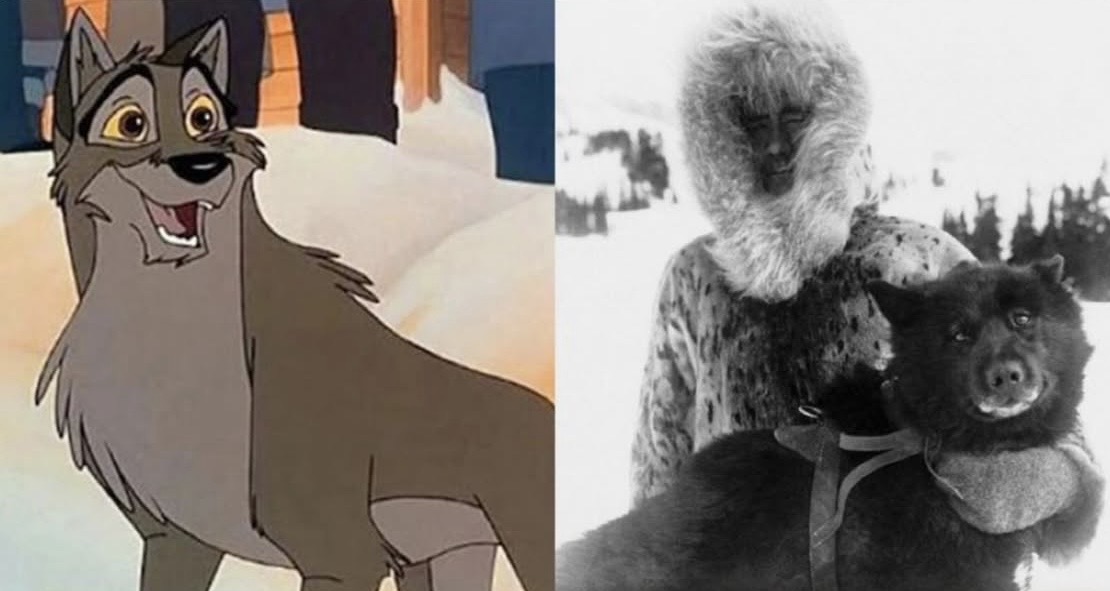
In January 1925, a diphtheria outbreak threatened the remote town of Nome, Alaska, after winter ice cut off regular supply routes. Norwegian musher Gunnar Kaasen and his lead dog Balto completed the final leg of an emergency 674-mile relay, delivering life-saving diphtheria antitoxin to the city and helping halt the epidemic before it spread further.
Known as the Serum Run to Nome, the mission involved 20 mushers and more than 150 sled dogs racing through brutal Arctic conditions in subzero temperatures. Although Kaasen and Balto became the most famous finishers, the success of the relay relied on every participant—especially musher Leonhard Seppala and his lead dog Togo, who covered the longest and most dangerous stretch.
The story later inspired the animated film Balto, which introduced the event to a new generation, though it simplified many historical details.

English

Furthering our national interests would be to develop Hi-tech, not resources.
Tim Hodgson@timhodgsonmt
Lots of people are curious about the critical minerals meeting in D.C. today. My colleague @AnitaAnandMP was at the meeting to further Canada's critical minerals leadership and make sure Canada is at the table, furthering our national interest on behalf of Canadians. Hear it directly from her: youtube.com/watch?v=dLkk2q…

English
Pavel Tkatchouk, Ph.D. 🇨🇦 🇺🇦 🇮🇱 retweetledi

I got laid off today with my other talented Posties. It was an amazing ride to do more open source work and keep reporting on Iran. Thank you to my amazing colleagues and editors for making space for some of my favorite work. Please DM if you'd like to work together.
Grateful to have reconstructed the Rasht Bazaar incident most recently. wapo.st/4thMtpi
English
Pavel Tkatchouk, Ph.D. 🇨🇦 🇺🇦 🇮🇱 retweetledi

SpaceX just acquired xAI in a deal valuing the combined entity at $1.25 trillion.
Elon says it's about building "data centers in space."
But let me translate what's really happening here...
xAI is burning through $1 billion per month.
The company generated $107 million in revenue last quarter while hemorrhaging $1.46 billion in losses. It burned nearly $8 billion in cash through the first nine months of 2025.
That's not a business.
SpaceX meanwhile generated $8 billion in profit on $15-16 billion of revenue last year. It's the ONLY Musk company that actually prints money.
So what do you do when your AI startup is drowning in red ink ahead of your mega-IPO?
You fold the cash-burner into the entity that can still raise absurd amounts of capital.
And we've literally seen this exact thing before:
In 2016, Tesla acquired SolarCity for $2.6 billion.
SolarCity was bleeding cash, drowning in debt, and trading near all-time lows.
Tesla - the only Musk company at the time that could access the capital markets - absorbed it.
Wall Street analysts called it a "bailout dressed as synergy." Tesla's stock dropped 10% on the announcement.
The SpaceX/xAI deal is the same playbook.
Musk's stated rationale - that AI compute will be cheaper in space within 2-3 years - is the kind of thing that sounds visionary until you think about it for 5 seconds...
SpaceX builds rockets. xAI trains large language models.
These are wildly different businesses with zero operational overlap.
Imagine Microsoft acquiring a cement and steel conglomerate and claiming "tilt-up concrete slabs are essential for data centers."
That's the level of logic we're working with here.
The real play is simple: prop up xAI's insane burn rate with SpaceX's funding access ahead of what could be the largest IPO in history.
And xAI isn't alone in this capital-devouring spiral.
The entire AI sector has become a web of companies cross-subsidizing each other's losses.
OpenAI squeezes billions from Microsoft. Nvidia invests billions in xAI while selling them chips.
Everyone's propping everyone else up.
The investment thesis across the industry has devolved into:
"Please keep the Ponzi spinning long enough for someone else to be left holding the bag."
Meanwhile, the end product - AI - delivers marginal productivity gains for trillions in capex, soaring power costs, and balance sheet carnage.
If these services were priced to reflect their true economic cost, most users would find negative value.
But investors stopped reading balance sheets and cash flows long ago.
The AI models probably can't read them either.
What a time to be invested.
So what's the play?
AVOID the AI infrastructure complex.
When everyone's propping everyone else up, you don't want to be holding the bag when the music stops.
Look instead at sectors that have suffered from years of underinvestment: energy and commodities.
While trillions have been funneled into AI infrastructure, capital spending in oil, gas, and metals has been starved.
That's how cycles work - underinvestment leads to supply constraints, which leads to rising returns on capital.
Tech has the opposite problem. Overinvestment is destroying returns.
When you're burning $1 billion a month to generate $107 million in revenue, that's not a business model - it's a wealth transfer from investors to chip manufacturers.
Emerging markets are also attractive here.
They've been ignored while capital chased the Mag 7, and valuations reflect that neglect.
The Mag 7 now represent roughly a third of the S&P 500.
When this unravels - and it will - capital will rotate into the parts of the market where returns on capital are rising, not collapsing.
Energy. Commodities. Emerging markets.
POSITION ACCORDINGLY
English
Pavel Tkatchouk, Ph.D. 🇨🇦 🇺🇦 🇮🇱 retweetledi

Musk turned Twitter into the modern-day Völkischer Beobachter.
French Response@FrenchResponse
In France, the judiciary is independent. Police act on court orders, not political whims.
Deutsch
Pavel Tkatchouk, Ph.D. 🇨🇦 🇺🇦 🇮🇱 retweetledi

I’m often asked why I stay on X when most of the responses I get aren’t driven by intellectual curiosity, but by personal attacks.
My answer is always the same: because as scientists, we have a responsibility to share what we know - in good faith, with the best intentions, especially in difficult moments.
Because if we don’t, who will?
English


@DriveTeslaca @elonmusk What manufacturing capacity? The combined share of Model S and Model X in Tesla's total 2025 vehicle deliveries was less than 2%.
English

One thing was clear from today’s Tesla earnings call: it is the end of an era and the start of another.
The biggest takeaway is that manufacturing capacity is now being redirected away from EV production and toward Optimus. @elonmusk confirmed that the Model S and Model X are being discontinued, with that space repurposed for Optimus production.
This marks a significant shift in Tesla’s priorities. While consumer vehicles remain critical to the company’s near-term business, Tesla is starting its move away from building some of the greatest cars ever, and toward autonomous vehicles like Cybercab and humanoid robotics.
Both of those represent enormous long-term opportunities, I just hope it's not too early. If it is, I also hope Tesla continues to come out with new vehicles (please bring Model Y L to 🇨🇦🇺🇸), they surely have the cash to do it, it’s just a question of priorities, which now seem focused elsewhere.

English
Pavel Tkatchouk, Ph.D. 🇨🇦 🇺🇦 🇮🇱 retweetledi

Tesla employees are the ones paying for their CEO's actions. They don't deserve this.
Oliver Alexander@OAlexanderDK
Tesla having an absolute shocker of a Q1 in Europe so far. Sales so far this quarter down 55.20% from 2025 and a whooping 74.78% from 2024.

English

@tengri_spirit Если бы. Эти цифры мелочи. Канада сегодня практически полностью зависима от США - на них приходится около трети нашего экспорта и почти половина импорта. Замена другими торговыми партнёрами займёт многие годы и приведёт к
увеличению цен и падению качества.
Русский

@amuse @Microinteracti1 To understand the impact of the economy on people's lives, you need to compare GDP at PPP, not nominal GDP. Regarding defending itself: when it was attacked by Germany in 1941, it asked the UK for help. Waging war abroad also didn't work well.
English

The truth is that Europe is no longer the same partner that it was when we proposed NATO. Europe's economy is languishing - in 2008 Europe's GDP was greater than ours as it should be given the fact that it has 100 million more people - today it is 40% smaller than the US. Birthrates in Europe are horrible and getting worse. Nigeria alone will have a million more babies than Europe and Russia this year. To save itself the EU is importing Islamic refugees from North Africa. Don't even get me started on how weak Europe is when it comes to its ability to defend itself.
English

Donald Trump: “NATO is nothing without America.”
Meloni: “Perfect. Then Europe will close the U.S. bases, tear up the sweetheart trade deals, and, just to make the message land, boycott McDonald’s too.”
That is the blunt reality: if Washington wants to talk like protection is a one way favor, Europe can answer like a partner with leverage, not a dependent begging for permission.
And honestly, that tone is long overdue. When someone says “you are nothing without me,” the correct reply is not gratitude. It is boundaries.
English

@adagamov Это новая практика, которую американские инноваторы хотели бы распространить на весь мир - люди на самых ответственных должностях лгут, знают что все понимают что они лгут, и их это нисколько не заботит.
Русский

🇨🇭 Дональд Трамп совершенно ненормальный идиот — он уже в который раз несет полную ахинею по поводу китайских ветряных электростанций.
Сейчас в Давосе: "Знаете, что я заметил? Чем больше в стране ветряков — тем больше денег эта страна теряет. И тем хуже у неё вообще идут дела. Китай делает почти все эти ветряки. Почти все. И при этом — представьте себе — я не смог найти ни одной ветряной электростанции в Китае. Ни одной".
На самом деле в Китае не только есть ветряные электростанции — у страны их огромный парк. На конец 2024–2025 годов установленная мощность ветровой энергетики Китая составляет примерно 520–580 ГВт, что примерно 45–50% всей мировой установленной мощности ветровой энергетики! Это означает, что в Китае работают тысячи ветряных турбин и десятки (если не сотни) крупных ветряных парков — как наземных, так и морских.
Русский

@ptkatchouk @VALMICHEL7 Вот ссылки на источники с полным текстом и деталями:
- NYT: nytimes.com/2026/01/19/us/…
- Reuters: reuters.com/world/europe/e…
- PBS: pbs.org/newshour/world…
Русский

@grok @VALMICHEL7 Да, приведите ссылки пожалуйста. Спасибо.
Русский

@ptkatchouk @VALMICHEL7 Да, ситуация необычная. Полный текст сообщения Трампа опубликован в NYT и Reuters — он связал это с Гренландией и безопасностью. Норвегия подтвердила. Если нужны ссылки или детали, дайте знать.
Русский