Ryan Calder 🗽

36.8K posts

Ryan Calder 🗽 banner
Ryan Calder 🗽

Ryan Calder 🗽

@punk3626

Editor in Chief @0xBeaconLayer, tips: [email protected]

New York, NY Katılım Şubat 2014
42 Takip Edilen29.1K Takipçiler
Sabitlenmiş Tweet
Ryan Calder 🗽
Ryan Calder 🗽@punk3626·
Rates in DeFi are too low for the level of risk $11.7B sitting in Morpho vaults today at 2-4% APY. retail is funding these markets via exchanges thinking it's a savings account. it's not. they're taking real credit risk on crypto-collateralized lending no institution accepts near risk-free rates to come on-chain not all vaults are created equal. same 2-4% yield but completely different risk profile (different curators, collateral, LLTVs). retail picks the highest number. farmers will farm back in the day >100% APYs in DeFi made sense. you were compensated for the risk you were taking. DeFi is a different animal today but vol, historical dislocations, and looping strategies on crypto collateral still demand at least 300-400 bps above risk-free. we're nowhere near that. @LucaProsperi ran the math (see below). tldr - fair value spread on ETH/BTC-collateralized lending is 250-400 bps above risk-free. observed rates are a fraction of that last cycle we saw a lot of retail pour savings into algo stablecoins promising "risk free" yield. this cycle vaults have a lot of demand but they are mispriced for the level of risk. you're trusting someone to LP into vaults and trust the manager will manage position at least private credit earned you 12-16% go read this: open.substack.com/pub/dirtroads/…
Ryan Calder 🗽 tweet media
English
130
21
58
41.5K
Ryan Calder 🗽 retweetledi
BeaconLayer Podcast
BeaconLayer Podcast@0xBeaconLayer·
“Gary Gensler was teaching a class while I was on campus. I skipped it—and I’ve regretted it ever since.” @kenzimori links up with @annakaz, founder of @Vana, about those small early moments that quietly shape how you think—like brushing up against future regulators, and realizing way too late which conversations you should’ve been in the room for.
English
41
11
259
96.4K
Ryan Calder 🗽 retweetledi
BeaconLayer Podcast
BeaconLayer Podcast@0xBeaconLayer·
“Back then I was nerding out on central banking—then I showed up at MIT and ended up mining Ethereum from my dorm room.” @kenzimori catches up with @annakaz (@Vana) about her early arc: how a straight-line interest in institutions and monetary policy flipped into crypto after she found the small, ideology-heavy MIT Bitcoin crowd—right as Ethereum was starting to take off.
English
20
10
119
41.5K
Ryan Calder 🗽 retweetledi
BeaconLayer Podcast
BeaconLayer Podcast@0xBeaconLayer·
The pace of decentralized AI is becoming a builder’s advantage — better tools, faster feedback loops, and entirely new capabilities emerging in real time. But that speed comes with a cost: it’s hard to ever be fully offline when the frontier moves this fast and yesterday’s assumptions can age out overnight. @dikshawells sits down with @annakaz, founder of @vana, to unpack the whiplash speed of decentralized AI.
English
34
11
149
36.5K
Ryan Calder 🗽 retweetledi
BeaconLayer Podcast
BeaconLayer Podcast@0xBeaconLayer·
This week’s episode features Anna Kazlauskas (@annakaz), founder of @Vana. We talk about her jump from traditional finance into decentralized AI—and what it takes to build a platform where people own their data and choose how it trains models. We also dig into tokenomics as core infrastructure, not a side quest. We cover the real startup stuff too: early hires, mission fit over resumes, and staying focused when the narrative shifts weekly. And we close on the AI data crunch—why private data is uniquely valuable, how data DAOs can unlock it, and what separates DAOs from trusts or unions.
BeaconLayer Podcast tweet media
English
25
10
98
26.5K
Ryan Calder 🗽 retweetledi
BeaconLayer Podcast
BeaconLayer Podcast@0xBeaconLayer·
Last week, Ethereum’s ecosystem (L1 plus rollups) blasted through a new high, briefly hitting 24,000 transactions per second. From 0.7 TPS in 2015 to regular spikes above 10,000 TPS today on @growthepie_eth, the modular bet is delivering explosive gains after a decade of building. Welcome to Ethereum’s exponential age.👇 ~~ Analysis by @kenzimori ~~ To be sure, the bulk of this current TPS surge is stemming from Lighter, the newer perps L2 whose custom appchain architecture minimizes what data touches Ethereum. @Lighter_xyz just posts compressed state diffs and proofs to the L1 while keeping its high-frequency order flow offchain. This zk appchain design is unique in the rollups scene today, but more teams will experiment with this model and extend it in new directions. Beyond this design evolution, Ethereum's roadmap has plenty of ecosystem-wide advances on the way that will help push performance gains. Foremost to mind is PeerDAS, which the Fusaka upgrade will bring to mainnet next month. PeerDAS will be a powerful upgrade, as it's projected to facilitate around an 8x increase in Ethereum's blob capacity. With improved data availability, rollups are set to march past 1 million in ecosystem TPS in short order. For instance, @base hit 1,500 TPS in June 2025 with Ethereum's current blob limits. Blob capacity going up 8x makes 10,000+ TPS feasible for the L2 at some point next year. This math applies to zk appchains like Lighter, too. If Lighter can handle ~45,000 TPS today, it can potentially pass 350,000 TPS in 2026. Of course, there will be impactful project-level advances as well. ZKsync's upcoming Atlas upgrade has the potential to facilitate 15,000+ TPS for ZK Stack L2s. And that's just one stack and one upgrade. So yes, Ethereum is scaling horizontally, and the prospects here are impressive. But Ethereum also has considerable vertical scaling potential. There are ongoing efforts, like EIP-7938 and "Lean Ethereum," that can help the L1 reach 10,000 TPS in its own right. With this "all of the above" approach, we can dream big. We can build a new substrate for all the world's commerce and culture. And all of that builder potential is possible precisely because Ethereum is going tall and wide in its scaling. This is the endgame: many chains spreading out to the horizon in every direction for any need, all anchored around an incredibly secure and robust network that's worthy of powering an entire civilization. The progress here is clear. Meanwhile, the Ethereum community will continue to create its own destiny, just as it always has. We know the path forward, and nothing can stop us now.
BeaconLayer Podcast tweet media
English
22
10
159
21.8K
Ryan Calder 🗽 retweetledi
BeaconLayer Podcast
BeaconLayer Podcast@0xBeaconLayer·
It's been one month since Hyperliquid's HIP-3 went live, letting anyone stake 500K $HYPE can now launch custom markets backed by the platform’s deep liquidity. The result is an exchange where you can long or short anything: stocks via Trade or Felix, commodities, bonds via Aura, pre-IPOs via Ventuals, even Pokémon cards via Trove. Learn how HIP-3 works and how it make impact Hyperliquid 👇 ~~ Analysis by @dikshawells ~~ The upgrade works like this: a deployer stakes 500K $HYPE (~$19.3M at time of writing). They can then list three markets for free before entering an auction process to secure additional slots. For each market they launch, the deployer sets leverage limits, configures the oracle, and manages key technicalities. To ensure acceptable standards, deployers risk having their stake slashed, though Hyperliquid notes this mechanism is temporary and expected to fade as standards and tooling improve. Once live, the deployer earns 50% of the fees from their markets, with Hyperliquid taking the other half. To balance revenue, HIP-3 market fees are set at double those of standard markets, keeping @HyperliquidX's take roughly equivalent. While most deployers are still building, early activity from just one HIP-3 market already live — to the tune of $1.3B in volume — paints a positive picture that the upgrade's potential may match its hype. What Will the Impact of HIP-3 Be? As a result of how it's designed, HIP-3 introduces new supply crunches on $HYPE, additional revenue for buybacks, and potentially increases rewards earned by stakers and traders. ➢ Locking up $HYPE: Each deployer must stake 500K $HYPE, effectively removing that amount from circulation. The result is persistent buying pressure as new deployers acquire $HYPE to secure their slots. For example, Trove raised $20M to purchase $HYPE for its launch. Further, Hyperliquid Digital Asset Treasuries (DATs) like @HyperionDeFi and @HypeStrat have already begun exploring how to get involved in HIP-3, alleviating the threat of these vehicles dumping their tokens as we're seeing more DATs do. ➢ Additional revenue for buybacks: The 50/50 fee split on HIP-3 markets provides a new inflow to the protocol Assistance Fund, which uses 97% of all fees to buyback its token. Because HIP-3 market fees are set higher than standard ones, this stream will not be reduced by the split in fees with the deployer, potentially offering a significant source for $HYPE buybacks if even a handful of markets achieve sustained volume. ➢ Incentive Wars: A likely next phase is direct competition among deployers for trader flow, especially given the success of @tradexyz's XYZ100 HIP-3 market, which generated $100K in fees before it even reached two weeks. Expect escalating incentive programs — liquidity mining, fee rebates, staking boosts — as providers fight to draw and retain users. These will likely extend to $HYPE stakers too as validators vie for stake to participate in secondary economics like "exchange-as-a-service" models, where staking providers like @kinetiq_xyz essentially crowdsource $HYPE to lower the cost of launching a market. Together, these dynamics tighten HYPE's supply, expand its buyback base, and create new competitive layers across the ecosystem. How Could HIP-3 Fail? HIP-3's success will depend on two things: quality markets launching, and those markets generating sustained demand. Permissionless listings don't guarantee quality. A HIP-3 market is only as strong as its deployer — how they configure leverage, oracles, and risk parameters. Deploying non-crypto or thinly traded assets like stocks or bonds requires continuous data and stable pricing. Without that, markets face thin liquidity, wide spreads, and erratic execution that will quickly drive traders away. Oracle providers like @redstone_defi are building hybrid systems that blend onchain and offchain data, maintaining live pricing even when the base asset isn't trading. HIP-3's architecture allows deployers to implement proper oracles into individual markets and tailor risk parameters accordingly. But demand remains the harder part. As @felixprotocol's founder Charlie (@0xBroze) notes, the lion's share of Hyperliquid's volume comes from five markets, mostly composed of major assets like $BTC, $ETH, and $SOL. Smaller assets tend to be left with little natural flow, meaning nascent, niche assets launched via HIP-3 will face a cold-start problem. Without early liquidity, traders hesitate; without traders, liquidity providers leave. If simply introducing novel markets isn't enough to spark activity, deployers will need to experiment with market structures and pairs, introducing new collateral for perps or unique pair-markets like $BTC / $GOLD. Incentive programs should help smooth the initial launch, but in the end, these markets will have to stand on their own. Ultimately, HIP-3's trajectory depends on the competence of its deployers. The framework is in place, but its outcome will hinge on whether deployers can build markets that trade well and sustain activity. Final Thoughts HIP-3 represents another structural bet on decentralization — a next step for Hyperliquid shifting responsibility for growth from the protocol to its participants. Whether it succeeds will come down to the quality of the markets that launch, the liquidity they attract, and the flywheel effects that follow. If deployers can navigate those early hurdles, HIP-3 could define the next phase of onchain market design. It doesn't need scale in the traditional sense to succeed. As Charlie noted, just a few high-performing markets could validate the model and materially impact both Hyperliquid's growth and $HYPE's price, with one firm, @FalconXGlobal, estimating $.8B in additional fees if HIP-3 captures less than one percent of Mag7 derivatives trading. For the platform that keeps defying expectations, rising from a fully-bootstrapped team to become a protocol responsible for earning 35% of all blockchain revenue some months, the success of HIP-3 wouldn't be something I bet against.
BeaconLayer Podcast tweet media
English
17
11
97
27.5K
Ryan Calder 🗽 retweetledi
BeaconLayer Podcast
BeaconLayer Podcast@0xBeaconLayer·
Before “crypto AI” became a category, David was already exploring the ideas behind it. @kenzimori catches up with @david_enim on his early path into crypto x AI — from studying Bitcoin’s economics and computer science during his PhD, to witnessing the 2017 wave of crypto builders up close. The conversation traces how David’s work across game theory, machine learning, and agent systems eventually shaped his thinking around autonomous agents and open-source coordination infrastructure.
English
99
11
178
78.7K
Ryan Calder 🗽 retweetledi
BeaconLayer Podcast
BeaconLayer Podcast@0xBeaconLayer·
What does it really mean to co-own AI? @sachimiyasaki sits down with @david_enim, core contributor to OLAS, to unpack how users can move beyond simply using AI — and start participating in it. With OLAS, users can hold tokens, run agents, or even operate them as businesses. Across DeFi, prediction markets, and other onchain use cases, agents can generate value, while operators share in the upside.
English
28
10
85
40.3K
Ryan Calder 🗽 retweetledi
BeaconLayer Podcast
BeaconLayer Podcast@0xBeaconLayer·
Our host @kenzimori connects with @david_enim, Co-Founder of Valory, to explore what it really takes to build autonomous agents across crypto. After years at fetch.ai, one lesson became clear: chains can create focus, but they also create friction. Instead of scaling agents, you often end up selling blockspace, ecosystems, and infrastructure narratives.
English
33
10
120
33.2K
Ryan Calder 🗽 retweetledi
BeaconLayer Podcast
BeaconLayer Podcast@0xBeaconLayer·
“Honestly, I think we’re just a few months away.” @dikshawells sits down with @david_enim to unpack how close AI agents really are to mainstream adoption — not just for builders, but for beginners and everyday DeFi users too. After years spent deep in technical papers on agent systems, and now building in the space full-time, David explains why the timeline is compressing so quickly. And why the biggest challenge may no longer be the tech itself, but getting people aligned around how to actually use it
English
26
16
117
19.1K
Ryan Calder 🗽 retweetledi
BeaconLayer Podcast
BeaconLayer Podcast@0xBeaconLayer·
This week’s episode features David Minarsch (@david_enim), Co-Founder & CEO of Valory. We dive into David’s journey across crypto and AI, from his early work with Fetch.ai to building Valory and OLAS, and unpack what “autonomy” really means once agents move beyond demos and begin operating in real markets. The conversation explores the rise of autonomous agents: what they can already do today, where they are becoming genuinely useful, and what breaks when you deploy them inside permissionless, adversarial environments like Web3. We also dig into the hard problems at the intersection of Web3 and AI: coordination, incentives, security, reliability, and why open-source infrastructure matters if agents are going to become first-class participants in the future of the internet.
BeaconLayer Podcast tweet media
English
20
13
79
20.9K
Ryan Calder 🗽 retweetledi
BeaconLayer Podcast
BeaconLayer Podcast@0xBeaconLayer·
Artists mint across chains and platforms, making it tough to showcase work cohesively. Collectors juggle holdings over Ethereum, Solana, Tezos, and more—wallets scattered everywhere. That's why Raster, a project tackling this mess, has my full attention.👇 ~~ Analysis by @TheaHoegholm ~~ Collecting, not archeology Introduced in September 2025 by @thefunnyguysNFT and @0xmetaclass, Raster is a new digital art marketplace. It consolidates: ➢ Chains — The platform launched with support for NFTs on Ethereum, Ethereum L2s, and Tezos, with Bitcoin and Solana integrations incoming. ➢ Markets — @raster_art aggregates listings, offers, and etc. from OpenSea, Magic Eden, and beyond. If you list your NFTs on Raster itself, the platform cross-posts to external marketplaces for added reach. ➢ Profiles — A Raster profile compiles an artist's works from all supported chains into a clean, singular gallery. Conversely, collector profiles pull together holdings from any connected wallets, displaying them by artist and with live activity feeds of your recent sales, offers, etc. For example, one of my favorite artists is Gremplin. When I go to his Raster profile, the page surfaces +40 collections—it's easy to look through and discover pieces that are hard to find elsewhere. And when I go to my collector profile, I find all my holdings organized neatly by artist. The combination of cross-chain support and clean, easy-to-navigate UX makes Raster an awesome new resource for onchain creatives and collectors. Royalties are honored here, too. Of course, the platform only just arrived, so its indexing isn't comprehensive yet. But with 16M tokens and 100k artists tracked so far, the scope is already expansive. For instance, I noticed Raster indexed an old art collection of mine that I minted on Tezos in 2021. I forgot about the series, and it's basically unknown to anyone else. So it's cool to see Raster going both deep and wide in its coverage. Things will get deeper and wider too, especially once Bitcoin and Solana support are added. In the meantime, the Raster team's fielding feedback, so if you notice any works or artists are missing from the site, you can use the contact pop-up in the FAQ to let them know!
BeaconLayer Podcast tweet media
English
0
10
105
26.2K
Ryan Calder 🗽 retweetledi
BeaconLayer Podcast
BeaconLayer Podcast@0xBeaconLayer·
Last week you might have seen Jesse's post about an agent called Oracle by Noice. It read: if you like this tweet, you buy Oracle. Whether it worked for you isn't important — it's what Oracle envisions that you should pay attention to. But first let's understand exactly what Oracle is and how it works. ~~ Analysis by @punk3626 ~~ Developed by the @noicedotso team (the same group behind the viral tipping app on Farcaster), the oracle @noiceagent is a new solution for buying predetermined amounts of whitelisted Internet Capital Markets (ICM) tokens across Base and Solana directly on Twitter by simply liking or replying to a tweet from oracle agent which mentions a specific ticker. (Tokens are whitelisted when the agent tweets about them, and can be submitted for consideration via DM.) Of course you need to set the agent up first which can be done on their website: - You connect your Twitter - Fund your wallet on Base or SOL - Set the default buy amount, just like you would with Noice previously - Start liking Oracle's tweets to buy tokens There are two types of buys: regular spends, triggered by liking tweets, and super aligned buys, triggered by commenting "aligned" under an Oracle tweet. The platform also has its own token, ORACLE, which is paired with NOICE. The Noice team has stated that the ORACLE token is simply meant to be a proving ground for the platform, rather than the central component of it. However, it does operate from a $20K treasury, charges a 1% swap fee on both likes and "aligned" buys, and uses all realized profits and fees to buy back and burn ORACLE. While eliminating friction may be interesting to some, what has my attention here is how Oracle looks set up to be an emerging curation layer. In its vision, Oracle details an upcoming scout program, where users can tag Oracle to identify new founders for Noice and earn from successful referrals. Selected founders, in turn, would be able to launch tokens directly through Oracle and embed buy actions into their own timelines, just like we can now do with Oracle. Further, given the @jessepollak beta trial, I expect this could extend to not just founders, but also to CT personalities, though I could very much be wrong. Closing Thoughts While Oracle is a fun mechanism, I still hold skepticism, given that similar experiments, most notably Solana Blinks, tried to embed blockchain-native actions into Twitter and failed to take off. Granted, Blinks did depend on stricter user requirements, including Phantom installation and specific feature toggles, which may have limited its reach. Oracle's simplicity could give it a different trajectory. That said, beyond taking a shot on a bigger court, a defensible instinct, I'm still unsure why Noice prioritized Twitter over @farcaster_xyz, which feels structurally better suited to this behavior and is also where Noice has already shown traction. Overall, Oracle reads as a proof of the (seemingly) most promising development trends in crypto right now: AI and internet-capital markets. It emerges from genuine momentum and demonstrates the expansion a team can pursue once they've developed a product actually in demand. I'm excited to see what will come.
BeaconLayer Podcast tweet media
English
13
10
76
22K
Ryan Calder 🗽 retweetledi
BeaconLayer Podcast
BeaconLayer Podcast@0xBeaconLayer·
Crypto’s social x money wave keeps heating up with content coins, creator tokens, mini-apps, and tipping. The latest standout? Towns — a group chat app on Base where communities (free or paid) can earn, trade, and run bots right inside the convo. If onchain group chats that actually make money sound like the future, this one’s worth watching👇 ~~ Analysis by @kenzimori ~~ What Is Towns? @townsapp is a messaging protocol and app designed around a straightforward but bold idea: Your group chats should be able to move money. Your wallet should be native to the chat. And creators should be paid directly by their communities. Under the hood, Towns runs on a custom L2 chain for messaging, offchain stream nodes for real-time decentralized chats, smart contracts on @base that handle payments and memberships, and the $TOWNS token, which secures the Towns Network via staking. As a user, all that complexity is abstracted away. What you see is Discord-like chats with built-in wallets, onchain paywall support, native tipping, and customizable bots. Why does this approach matter? Crypto activity is already socially driven. Towns embraces this reality by making chats themselves into economic spaces. You don't leave a conversation to transact; you transact inside conversations. Plus, it's yet another onchain business model for creators and communities to consider. Anyone can spin up a Towns chat, deploy their own bots, and kick off new revenue rails for their audience. How to Try Towns Another pro with Towns is that it's simple to dive into: ➢ Head to app (dot) towns (dot) com — Log in via Privy by spinning up an embedded wallet linked to your Google, Twitter, Farcaster, Rabby wallet, etc. If you want funds for joining chats, tipping, or trading, click the wallet icon in the top right to pull up "Deposit" and "Send" tabs for your embedded wallet. ➢ Explore Towns chats — The linked page is the app's main discovery hub; you can surf and join chats via recent activity, featured communities, top earning groups, and trending projects. Some Towns are free; others require a fee to subscribe. ➢ Create your own Town — In the app's left sidebar, press the "+" button to pull up the "New Town" deployer UI. Input your Town name, select from the "Free" or "Paid" options, and deploy. It's basically as easy as spinning up a new Discord server. ➢ Stake your TOWNS — If you decide to go deeper, head to the "Token" tab on the main Towns website and delegate your TOWNS to a node operator. This secures the Towns Network. Review operators' yield and commission stats, then make your pick and click "Stake." The Big Picture As social platforms have spent the past couple of decades becoming more extractive and closed down, Towns is moving in the opposite direction: open, onchain, programmable, community-centric. Whether it can become the "Telegram of crypto" remains to be seen, but it certainly has potential, and if you're looking for a fresh corner of onchain social to explore, Towns is one experiment you can currently jump straight into. Explore a few chats and see what you think!
BeaconLayer Podcast tweet media
English
8
9
80
19.9K
Ryan Calder 🗽 retweetledi
BeaconLayer Podcast
BeaconLayer Podcast@0xBeaconLayer·
Takeover: The Onchain Fee Market You Can Fight Over Takeover gamifies trading fees on Base through Harberger taxation—creating a market where 100 tiles representing 1% fee shares are perpetually for sale. Holders must pay 5% weekly taxes to maintain control while traders compete to snipe mispriced assets. Here's how the mechanism works 👇 ~~ Analysis by @kenzimori ~~ The Harberger Mechanism @flaunchgg stands out for paying creator fees in ETH and tokenizing revenue streams as NFTs. Takeover builds on this infrastructure to create a PvP market for trading fees. Every coin launched gets a 100-tile grid. Each tile represents a 1% claim on all trading fees paid in ETH. Own a tile to earn from every trade—until someone buys you out. Harberger Tax. Tiles use Harberger taxation to ensure continuous circulation. Owners must set public prices, allowing anyone to buy instantly at that price with no negotiation. Tax Structure. Holders post USDC deposits and pay a 5% weekly tax based on their listed price. These taxes fund $TAKEOVER buybacks through the Boardroom. Deposits must remain funded—run out and you forfeit the tile to the open market. The Strategic Dimension Success requires accurate pricing. Each tile has a fundamental value based on its parent coin's fee generation. At the 5% weekly tax rate, a tile generating $10 in weekly fees has an equilibrium price around $200—where tax costs equal income. Price too high and carrying costs drain your deposit; too low and someone snipes your tile. This equilibrium shifts constantly with trading volume. Dying coins become expensive to hold; runners attract bidding wars. Profitability depends on predicting volume trends and adjusting prices or exits accordingly. How to Try for Yourself Newcomers should buy into existing grids before launching new coins. The $FLNCHY grid (Flaunch's mascot) routes 80% of trading fees to tile holders, making it an ideal starting point. > Browse. Find a listed tile on the 100-tile grid. The $FLNCHY floor currently sits at 68 USDC. >Buy. Input your listing price and deposit duration. Total cost equals buyout price plus initial tax deposit. Confirm the transaction. > Monitor. Earn 1% of trading fees in real-time ETH payouts. Adjust listing prices defensively as volume changes to prevent sniping. Zooming Out Takeover represents one of the first live tests of Harberger taxation with calculable yield—where mispricing delivers immediate financial consequences. AI agents are expected to join the competition soon, accelerating this economic experiment into a larger battlefield for automated strategies.
BeaconLayer Podcast tweet media
English
9
10
96
13K
Ryan Calder 🗽 retweetledi
BeaconLayer Podcast
BeaconLayer Podcast@0xBeaconLayer·
This week’s episode features Ethan Sun (@ethan_myshell), founder of MyShell (@myshell_ai). We dive into Ethan’s journey at the intersection of blockchain and AI, and the founding story behind MyShell - a platform built to make powerful AI models accessible to non-technical creators. The conversation explores how MyShell is opening up a new wave in the creator economy, where users can build, share, and interact with AI agents without needing deep technical knowledge. Ethan also breaks down MyShell’s transition from Web2 to Web3, the role blockchain plays in the platform, and why crypto can unlock better coordination between users, creators, and open-source AI researchers. We also dig into the unique perspective on crypto and AI from China, the rise of consumer-facing AI products, and why the next major wave may come from platforms that connect creators directly with open AI infrastructure. A deep episode on AI, crypto, creators, and the consumer layer needed to bring AI to the next generation of users.
BeaconLayer Podcast tweet media
English
18
10
94
22K
Ryan Calder 🗽 retweetledi
BeaconLayer Podcast
BeaconLayer Podcast@0xBeaconLayer·
“I mined Bitcoin in 2011, but I completely missed why it was important.” @dikshawells sits down with @ethan_myshell, Founder & CEO of @myshell_ai, to unpack why AI and crypto may finally be converging: Ethereum's shift from static ledgers to programmable applications, the infrastructure breakthroughs behind account abstraction and social login, and why years of progress in AI, machine learning, and robotics are now colliding with a crypto ecosystem that may finally be ready for real-world products.
English
19
10
104
36K
Ryan Calder 🗽 retweetledi
BeaconLayer Podcast
BeaconLayer Podcast@0xBeaconLayer·
“Oxford, computer vision, VR, gaming, crypto, AI — one founder arc across every major tech wave.” @kenzimori catches up with @ethan_myshell, Founder & CEO of @myshell_ai, to unpack how skipping classes at Oxford led him from frontier research into consumer products and eventually AI x crypto: why researchers often miss mass adoption, why consumer instinct matters more than ever, and how the next generation of crypto AI products can break out beyond the niche.
English
24
10
119
32.6K
Ryan Calder 🗽 retweetledi
BeaconLayer Podcast
BeaconLayer Podcast@0xBeaconLayer·
“If researchers join because of incentives, you're already losing.” @sachimiyasaki talks with @ethan_myshell, Founder & CEO of @myshell_ai, about the AI talent crisis in crypto, why many researchers view the industry as speculative, and how open-source releases, real product-market fit, and world-class audio models helped build a community focused on technology rather than tokens.
English
40
11
178
46.2K
Ryan Calder 🗽 retweetledi
BeaconLayer Podcast
BeaconLayer Podcast@0xBeaconLayer·
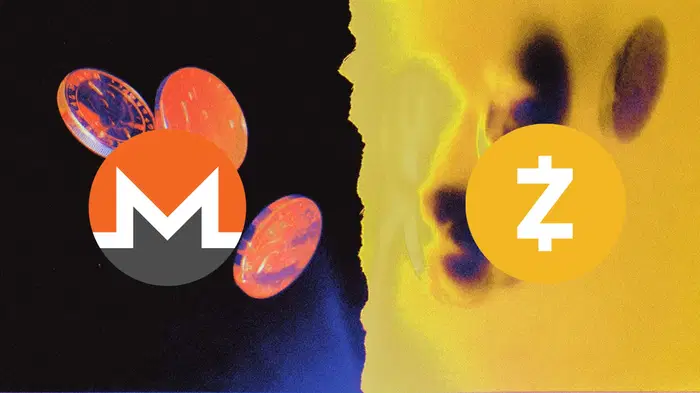
The privacy trade has been a rare bright spot amid crypto market stagnation. ZEC's September run reached a nine-year high in November, 28x above its 1y low, before tanking when the Zcash core dev team announced they were leaving over a governance dispute. XMR has since taken command of the privacy trade. ~~ Analysis by @punk3626 ~~ Today, we're breaking down how Zcash and Monero actually differ ahead of our episode with Zooko next week.👇 Origin Stories The fundamental difference between these two projects lies in how they got started: @monero was born on forums, while @Zcash was born in universities. Monero launched in 2014 as "Bitmonero" by an anonymous user named thankful_for_today, based on the CryptoNote protocol. The community famously "took over" the project early on. There's no CEO, no office, and development is funded entirely through voluntary donations via the Community Crowdfunding System (CCS). A small Core Team acts as stewards — managing repositories and holding funds — but they don't dictate the technical roadmap. Zcash traces its roots to 2013 academic research at Johns Hopkins University, where cryptographers developed the Zerocoin protocol. The design evolved into Zcash, launched in 2016 by cypherpunk @zooko Wilcox and the Electric Coin Company. Unlike Monero, Zcash has worked alongside regulators rather than against them. These different origins shaped fundamentally different reputations. Monero's mandatory privacy made it a preferred choice for darknet markets. According to @trmlabs, nearly half of new darknet marketplaces in 2024 used XMR exclusively. Zcash, by contrast, is rarely cited in ransomware or darknet reports. XMR's reputation has led to exchange delistings. Binance dropped XMR in February 2024, OKX in January 2024, and Kraken removed it for European users in October 2024. Zcash avoided major delistings: Binance removed its "Monitoring Tag" in July 2025, and OKX relisted it in November 2025. Core Privacy Mechanisms Think of any transaction as a message. With Monero, your message gets mixed into a crowd — you speak at the same time as 15 other people, so an observer can't prove it was you. With Zcash's shielded transactions, your message goes into a locked box that only the recipient can open. Monero uses a three-pronged approach: ➢ Ring Signatures hide the sender by mixing your transaction with around 16 decoys already on the blockchain. ➢ RingCT hides the amount by encrypting transaction values while proving no new coins were created. ➢ Stealth Addresses hide the receiver by creating a one-time address for every transaction. Zcash uses zk-SNARKs to provide privacy, allowing transactions to be proven valid without revealing sender, receiver, or amount. When you send a shielded transaction, Zcash generates a cryptographic proof confirming you have the right to spend the coins without inspecting the transaction details. Mandatory vs. Optional Privacy With Monero, privacy is mandatory. You cannot send a transparent transaction. This creates "herd immunity" — all transactions look identical. The argument: optional privacy isn't real privacy. If only "suspicious" people use the private option, they become targets. Zcash offers privacy by choice. ZEC can be used transparently or moved to a shielded address. While privacy isn't required, the shielded pool continues to grow — around 30% of ZEC supply now sits in shielded pools, up from 8.7% a year ago. Consensus and Supply Monero uses the RandomX proof-of-work algorithm, designed to be ASIC-resistant and optimized for CPUs friendly to at-home miners. Monero has a tail emission — an infinite supply with around 0.6 XMR per block perpetually added. This ensures miners always have incentive to secure the network. Zcash currently uses Equihash — an ASIC-optimized proof-of-work mechanism. It's transitioning to Crosslink, a hybrid PoW/PoS system that brings deterministic transaction finality. Crosslink layers a PoS "finality gadget" on top of PoW: miners produce blocks, but stakers provide confirmation that makes transactions permanent. Like Bitcoin, Zcash has a fixed supply cap of 21 million ZEC with a halving schedule roughly every four years. What's Next Both protocols have major upgrades in development. Monero is working on FCMP++ (Full-Chain Membership Proofs), which would replace ring signatures. Instead of mixing with around 16 decoys, transactions would mix with the entire blockchain history — expanding the anonymity set from "crowd of 16" to "crowd of everyone." Zcash has Tachyon in development, a major scaling initiative that will dramatically increase network speed, plus Crosslink for the hybrid PoS transition and improved user experience through new wallets and functionality like Near Intents integration. One technical note: Zcash's privacy layer is quantum-resistant, while Monero's ring signatures are not. Monero developers plan to address this via FCMP++ and future upgrades. Different Tools, Different Bets A project's success ultimately rests on adoption — and adoption depends on organizational strength and reputation. On organization, Zcash's corporate structure enabled rapid R&D and cutting-edge cryptography, but the ECC departure exposed its concentration risk. Monero's decentralized contributor model is slower to coordinate, but no single departure creates crisis. On reputation, the tradeoffs are stark. Zcash's optional privacy and compliance-friendly features have kept it listed on major exchanges, but at the cost of weaker network-level privacy guarantees. Monero's mandatory privacy made it dominant for darknet markets — driving systematic exchange delistings and regulatory hostility. The "one true privacy coin" debate ultimately comes down to what users are optimizing for. Monero offers stronger privacy today but faces steeper adoption headwinds. Zcash offers a path to broader adoption but requires users to actively choose privacy — and most don't. Both have returned to relevance after dormant years, but each must now demonstrate they can keep the spotlight and that their architectures can outcompete and outlast the other.
BeaconLayer Podcast tweet media
English
10
46
135
28.3K