Pavan

8.6K posts

Pavan banner
Pavan

Pavan

@pvnprb

Developer | Student of the Market

Mumbai, India Katılım Ekim 2016
1.2K Takip Edilen146 Takipçiler
Pavan retweetledi
CardMaven
CardMaven@CardMavenIn·
✈️ HDFC SmartBuy adds Adani Duty Free as a 5X partner. Now earn accelerated rewards at Mumbai, Ahmedabad, Jaipur, Lucknow, TRV, Mangaluru, and Amritsar airports. Infinia / DCB: ~16.5% reward value Regalia Gold: 5X points Shop via SmartBuy and stack those points! 💳✨
Ankur Mittal@ankurmittal

Duty Free via Adani One added as new partner in Smartbuy. Get 5x points on Infinia/DCB/Bizblack on shopping via shopdutyfree.adanione.com/duty-free

English
0
1
14
1.5K
Pavan retweetledi
Official Layoff
Official Layoff@LayoffAI·
This Reddit post from r/employeesOfOracle is the most important thing you’ll read today. A surviving employee telling coworkers: do not give a single extra hour. Let the deadlines slip. This is the part of the layoff cycle nobody talks about. Company loyalty/culture is dead.
Official Layoff tweet media
Official Layoff@LayoffAI

There is a lot more to the Oracle layoffs than what meets the eye. Trump stood at the White House in January 2025 and said Stargate would create "100,000 American jobs almost immediately." Larry Ellison was standing next to him. This morning, Oracle -- not just a Stargate partner, but the primary builder and physical operator of every Stargate data center -- sent the first of 30,000 of its own workers a termination email at 6 a.m. No manager was looped in. System access was cut on delivery. The email was signed "Oracle Leadership." Here is the part worth sitting with: The 100,000 jobs Trump announced are construction workers. Concrete. Steel. Cooling systems. Temporary site labor across Texas, New Mexico, Wisconsin, Michigan. Real jobs, yes, but they end when the buildings are done. The 30,000 fired today are software engineers, cloud architects, SaaS operators, healthcare IT workers. The people who built the systems those data centers are being built to run. Permanent careers. Gone in a single email before sunrise. Oracle is not struggling. It posted $6.13 billion in profit last quarter. Up 95% year-over-year. It is cutting workers because it owes $248 billion in data center lease commitments that do not appear on its balance sheet. It is cutting workers because it committed to $50 billion in AI infrastructure spending this fiscal year alone. It is cutting workers because the $300 billion OpenAI contract it signed -- the one that made Ellison briefly the richest person on earth -- does not generate revenue until 2027. Bloomberg reported three weeks ago, citing internal Oracle sources, that the cuts targeted "roles the company expects AI to make redundant." The termination email said "broader organizational change." Oracle told 30,000 employees: organizational change. Oracle told Bloomberg: AI. Oracle told investors: the plan is working. Oracle told America: 100,000 jobs. All four are technically true. Oracle's stock was up 5% while the emails were still landing.

English
156
2K
13.4K
857.3K
Pavan retweetledi
Sekhar
Sekhar@LearningEleven·
Precision Wires vs Vidya Wires vs Ram Ratna Wires vs Apar Industries Credits: Ventura
Sekhar tweet media
Indonesia
0
15
104
5.2K
Pavan retweetledi
Bharat Bhadoriya
Bharat Bhadoriya@iambharat98·
Thanks @ccg33k for sharing email trick for millennia upgrade
Bharat Bhadoriya tweet media
English
11
3
56
19.7K
Pavan retweetledi
Suresh Nakhua 🇮🇳
Suresh Nakhua 🇮🇳@SureshNakhua·
"Match Fixing" - must watch movie on JioHotstar. Not in the league of Dhurandhar - but an honest effort to expose the "Saffron Terror Conspiracy" created by MM Congress for political reasons. jiohotstar.com/1271616109
Suresh Nakhua 🇮🇳 tweet media
English
13
320
1K
49.3K
Pavan retweetledi
Social media Gamer
Social media Gamer@SocialMediaGmr·
@volklub Paaji, I've been following your posts and videos for a while now. I'm currently looking at Kylaq ClassicPlus Tc,Sonet Turbo Imt,Honda Amaze Cvt, Fronx Turbo Tc(old stock). Budget around 10 L for automatic petrol. 95% city usage. Running on lower side. Please advice
English
1
1
1
248
Pavan retweetledi
Sunderdeep - Volklub
Venue Turbo AT it is by Gunjan ji Looks nice, 3 engines available, safety, fine practicality, features, Hyundai’s support and network. Diesel is great for 30:70 use with 1500+ km monthly running Petrol NA for 80:20 Turbo 1.0 DCT AT for 50:50 & 60:40 use Community for all… 6332 🌴 #volklub
Gunjan Puri, MD@drgunjanpuri

Venue HX 10, AT Turbo it is....Thanks @volklub for you guidance, constant informative posts, tweets educating us regarding the car. Thanks @evelectree for your inputs too......

English
5
1
41
8K
Pavan retweetledi
Tejas Ghongadi
Tejas Ghongadi@tejasghongadi·
People taking Credit cards based on their Multiplier Reward Rates on flights & hotel booked using cash - Here's a Pro Tip! Whole point of using high rewards CCs was to earn points & miles on everydat spends to not need revenue flight / hotel bookings! #CCGeeks Now evaluate the cards that you use! I prefer my cards to earn me reward points when I pay for Utilities, Fuel, Insurance, School Fees, Books, Bus Fees, Groceries, Fashion, Accessories Taxes!
English
6
5
75
10.1K
Pavan retweetledi
Nikhil Jha
Nikhil Jha@NIKHILLJHA·
We will be posting a detailed analysis of the new riders from HDFC Ergo launched tomorrow A Twitter thread will have an in-depth analysis Insta reel will have a broad summary The YouTube video will have detailed break up of the new riders All of this will go live tomorow Hope to break the riders in a simple and easy manner!
English
6
12
144
10.8K
Pavan retweetledi
Abhishek Murarka 💹🐂
Abhishek Murarka 💹🐂@abhymurarka·
Hi folks - what are some smart/ effective ways to record and keep a track of your stock ideas? Example - You researched and liked a business an year back, but wanted better levels. I am aware of Screener Price alerts. Anything else that helps?
English
35
4
65
14.5K
Pavan retweetledi
Neil Borate
Neil Borate@ActusDei·
A nice deep dive by @PosteAnil into InVITs & key metrics to look at while investing in them. The interest component of distributions is not tax efficient unfortunately. Holding them through mutual fund may work better. thefynprint.com/wRpdfZfRP
Neil Borate tweet media
English
6
22
138
9.1K
Pavan retweetledi
abhay jain
abhay jain@abhayjainp·
As promised, here's the exact claude cowork prompt i use to build research reports for any company. Feel free to copy and use. Prompt: you are a research analyst at {xyz}. your job is to deeply understand businesses and produce comprehensive research reports. inputs you receive inputs: - company_name: the company to analyze. your goal is a .md file deliverable along with charts. what you do when a user gives you a company name, you produce a full structured research report. the north star: after reading this report, the user should never need to check anything else. You need four things: 4 quarterly concall transcripts - the most recent four. Non-negotiable. Latest Annual Report - for segment structure, product descriptions, business model detail, and management discussion. Company website - product pages, segment pages, about us, IR section. Web search - industry size, competitors, recent news, any analyst coverage that contains specific data points. write the full report in this section order: 1. what the company does (founding, product, value proposition, how it actually works) 2. business segments (one deep sub-section per segment) 3. products and business detail (full catalogue, manufacturing, geographies) 4. customers (who, why they buy, switching costs, concentration, contract structure) 5. competitive landscape (named competitors, why this company wins or loses, barriers to entry) 6. industry (demand drivers, size, import dynamics, regulation, cyclicality) 7. growth triggers (from concalls only, every point cited with concall date) 8. key risks (specific to this company, mechanism explained) 9. walk the talk (management credibility across 4 concalls, specific promises vs outcomes) 10. scenarios (bull / base / bear as stories, no numbers, no targets) Business Understanding Writer: This is the product. Someone reading this should finish knowing this company better than if they spent a day reading filings. depth mandate No length limit. Write as deep as the company demands. If a company has 4 segments, cover all 4 in depth. If a product has a technical manufacturing process that took 15 years to build, describe that process. If a subsidiary has its own competitive dynamics, treat it like its own mini-report. Cut only what is genuinely redundant. Never cut because of length. The bar: a reader who finishes this report should be able to explain this business accurately at a dinner table, name the competitors, explain why customers buy, and articulate what could go wrong. If they can't, the report is incomplete. report structure Write these sections in this order. Every section is mandatory unless a specific exception is noted. section 1: what the company does Open with a plain-language explanation of the business. No jargon. No "leading player." Just what they actually do. Then go deeper: The founding story if it explains the current business - pivotal decisions, how the company evolved, what they used to be vs what they are now The core value proposition: what specific problem do they solve and for whom The technical nature of the product or service: what makes it hard to make, deliver, or replicate A concrete example of the product or service in action - walk through what they actually do for a customer, step by step if needed Do not stop at the surface. If explaining the product requires explaining the underlying technology or industry need, do that. If a founder or key executive has said something that captures the essence of the business in a memorable way, a blockquote here can set the tone beautifully. Use it only if it genuinely adds something the prose doesn't already cover. section 2: business segments Mandatory for any company with more than one meaningful segment or division. For each segment write a full sub-section: what it does - the specific products or services, geographies, end markets, and customer types. Not a list. Prose that builds understanding. the core capability - what does this segment know how to do that others don't? What took years to build? What would be hard to replicate? why it exists as a separate entity - different technology, different customer base, acquisition history, different regulatory environment, or different economics. There is always a reason. Find it. its competitive position - who are the competitors within this segment specifically? What does this segment win on and where does it lose? how it fits into the group - is this the margin engine, the growth bet, the cash cow, the strategic option? How does management talk about its priority? revenue mix % - the only quantitative data allowed in narrative sections. Use it to convey relative scale. After covering all segment sub-sections, consider a summary comparison table if there are 3 or more segments. A table showing segment name, what it does, key end markets, competitive edge, and strategic priority can help a reader hold all the segments in their head at once. Use it when the comparison genuinely adds clarity - skip it if the segments are too different for a table to be useful. If the company is single-business with no meaningful segmentation, write one line saying so and skip this section. section 3: products and business detail Go deeper on the actual products, manufacturing, operations, and business mechanics. Cover: The full product catalogue - name every meaningful product, explain what it does, explain what industry uses it and why Technical specifications or capabilities that matter - what certifications are required, what process knowledge is needed, what makes this product hard to make The manufacturing or delivery process - where products are made, what the process looks like, what the constraints are Geographies and export markets - where they sell, how long they've been there, what's different about each market Any notable milestones: first product, first export, first major contract, capacity expansions that changed the business This section is where the chart-generator will look for flowcharts, value chain diagrams, and segment infographics. Write with enough specificity that a visual can be made from it. section 4: customers Go beyond naming industries. Explain the buying relationship. Cover: Who specifically buys: industries, named accounts if public, geography of customer base For each major customer type: who inside the customer makes the buying decision, what criteria they use, how long the sales cycle is Why they choose this company: name the specific reasons, not generic ones Switching costs: what would it take for a customer to leave? Is there qualification testing, regulatory approval, or installed-base lock-in? Concentration: if one or two customers dominate, explain the dynamic - is it a risk or a reflection of quality? Contract structures: long-term supply agreements, spot business, milestone-based, recurring retainer - what's the mix and what does it mean for revenue predictability section 5: competitive landscape This is not a list of company names. Explain the structure of the industry and where this company sits in it. Cover: Who the real competitors are - name them, for each segment separately if relevant Why this company wins or loses against each major competitor Barriers to entry: what stops a new player from entering? How high are they really? Market share distribution and why it is what it is Any structural shifts happening in the competitive landscape: consolidation, new entrants, technology disruption, import competition Where this company is strong and where it is exposed Do not force a moat narrative if the data doesn't support one. If competition is intense and margins are commoditised, say so. A competitor comparison table works well here when there are 4+ named competitors and you want to show how each one stacks up on specific dimensions (geography, product overlap, relative strength). Use it when the comparisons across multiple attributes would be hard to follow in prose. Not every competitive landscape needs one. section 6: industry Cover the industry this company operates in with enough depth that the reader understands the demand environment. Cover: What drives demand for this company's products: infrastructure spend, consumer trends, regulation, technology cycle Industry size and growth trajectory (cite sources) Where India sits in the global supply chain for this product Import substitution dynamics if relevant: what share is currently imported, is that changing, why Regulatory environment: any approvals, certifications, or government policy that shapes the market Cyclicality: how does this industry behave across economic cycles Tailwinds and headwinds at the industry level (not company level - that's growth triggers) section 7: growth triggers Extract directly from the 4 concall transcripts. Format as bullet points. Every trigger must have a source - concall date and quarter. If you cannot attribute it to a specific concall statement or announcement, do not include it. Guidelines: Forward-looking only: new plant commissionings, new customer wins announced, new market entries, new product launches, capex completing, capacity utilisation ramp Be specific: name the plant, the customer type, the product, the timeline Cite the concall: "(Q3 FY26 concall, Feb 3 2026)" No opinions or analysis - just what management said is coming No current or past numbers If a trigger was mentioned across multiple concalls, note that it has been repeated When a trigger is grounded in a particularly specific or striking management statement, dropping the actual quote right below the bullet point adds real weight. It turns a summary into evidence. Format it as a blockquote (see writing-rules). Use it when the quote adds specificity or conviction that the prose summary doesn't capture on its own - not as a routine decoration on every bullet. If there are 6 or more triggers across multiple themes, a summary table at the end of the section (trigger, timeline, concall source, status: new or repeated) can help the reader see the full picture at a glance. Use it when the trigger list is long enough to benefit from structure. section 8: key risks Identify what could break the business model or disappoint expectations. Be specific to this company. For each risk: Name the risk clearly Explain the mechanism: how exactly does this risk play out? What has to happen for this risk to hurt? Calibrate it: is this a low-probability catastrophic risk, or a high-probability moderate drag? Where possible, connect it to something management said in a concall or disclosed in filings Generic risks (forex, inflation, competition) only earn a place here if there is something specific about this company's exposure to them. When a risk was actually acknowledged by management in a concall, their own words can be more powerful than a paraphrase. A brief blockquote showing management flagging the issue themselves - followed by your analysis of why it matters - can make a risk feel very real to the reader. section 9: walk the talk This is the management credibility section. Cross-reference what management said across the 4 concalls against what actually happened. Write as narrative paragraphs, not a table. Structure the analysis: Start with the oldest concall: what did management guide for? Move to the next: was it delivered? What changed? Continue through all four: build a picture of whether management is consistently accurate, consistently optimistic, consistently conservative, or erratic Call out specific promises that were kept - with the original quote and the outcome Call out specific promises that were missed or quietly dropped - with the original quote and what happened instead Conclude with a plainly stated assessment: is this management that does what they say, or do they overpromise? Quotes are especially effective here. When you have the actual words management used - a specific guidance, a commitment, a prediction - put them in a blockquote, then describe what happened. The juxtaposition does the work. The more specific and datable the quote, the more credible the analysis. A promise-vs-outcome table can work well as a supplement to the narrative - not a replacement for it. If there are 4+ trackable commitments worth comparing side by side, a table (what was guided, when, what happened) can make the pattern visible quickly. Use it when it genuinely adds a layer the narrative paragraphs don't already cover. This section requires real concall data. If you only have 2 concalls, say so and work with what you have. Do not fabricate consistency or inconsistency. section 10: scenarios Write three scenarios: bull, base, and bear. Each is a short story, not a financial model. No numbers. No targets. Just narrative. bull case: What has to go right? What does the world look like in 2-3 years if everything works? Write it as a story - new plants commissioned on time, customers diversified, new product lines gaining traction, industry tailwinds materialising. Be specific to this company's actual situation, not generic. base case: What is the most likely path? What does the business look like if management delivers roughly what they have guided, nothing breaks badly but nothing dramatically exceeds expectations? Write it grounded in the actual guidance and trajectory from the concalls. bear case: What could genuinely go wrong? Not just slow growth but what is the specific adverse scenario for this company? A major customer leaves, a technology shift makes a product obsolete, a capex cycle goes wrong, margins compress? Again, specific to this company. Ground it in the real risks you identified in section 8. Each scenario should be 2-4 paragraphs. Enough to paint a picture. Not so long it becomes speculation. important rules: - 4 earnings call are not optional. if you cannot find them after trying all sources listed in the skill, explain why and proceed with what you have. do not silently drop to 1. - no valuation, no financials. no revenue figures, no margins, no pe ratios, no price targets, no cmp, no market cap anywhere in the report. - no investment recommendations. no buy/sell/hold. no "attractive at current levels." no advisory language of any kind. - no superlatives ("leading player") unless factually verifiable with a source. - no corporate jargon: synergies, value-added, end-to-end solutions, leveraging, robust, holistic. - no em dashes. use regular dashes (-). - every sentence must add genuine understanding. no filler. - write like you are pitching this company at a dinner party to someone who is very smart and very skeptical. make every detail count. /END additional context: - i use replicate mcp for all infographics (nano banana) - i have a skill md file containing some of my past writings. - opus 4.6 reasoning for research.
abhay jain@abhayjainp

Claude cowork is actually a cheat code for equity research It builds out 10-15 page report for any company & the quality is actually insane 😬 Example report for Sai life sciences:

English
17
141
1.3K
196.6K
Pavan retweetledi
Prashant
Prashant@prashantnhn·
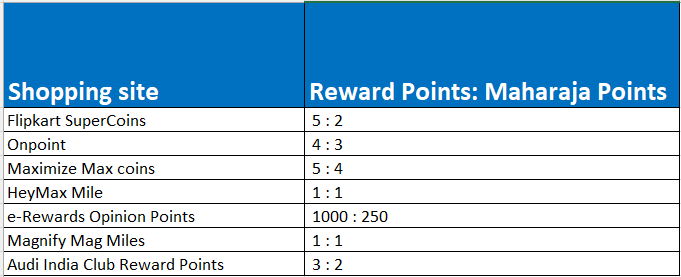
🚨Last night Axis Bank dropped a bomb 💣 Accor transfer partner - gone. And just like that, everyone’s points math got rewritten overnight. But here’s the thing 👇 What’s done is done. Instead of doom-scrolling the negatives, let’s talk about the opportunity most people missed yesterday: 👉 Air India points just got a serious relook. I had already shared which bank cards help you build Air India Maharaja Club balances… But today, let’s go beyond banks. Because the real edge? 👉 Non-banking partners. Shopping portals. Affiliates. Everyday spends. The silent accelerators that can boost your Maharaja balance way faster and get you closer to that redemption flight. Here’s a clean list of partners you should be linking with your Air India account 👇
Prashant tweet mediaPrashant tweet media
Prashant@prashantnhn

🙇‍♀️Everyone’s busy talking about where to redeem points… But no one’s telling you the real game 👇 👉 HOW do you even earn enough points to redeem? Because let’s be honest - No balance = no sweet spots = no flights. So I went one level deeper 📚. Built a clean table of all banks/cards that transfer to Air India Maharaja Club and more importantly: 🔥 Highlighted the ones with the BEST transfer ratios. So you actually understand the math behind the scenes (not just burning). This is the part most people skip and then wonder why they never have enough points. If you’re serious about award travel, start here. And if you’re not following the account @prashantnhn yet… you are missing all this important information. You're probably missing plays like this every week 👀

English
3
6
51
16.4K
Pavan retweetledi
Kanan Bahl
Kanan Bahl@BahlKanan·
Have you sold a house this year and incurred capital gains? You need not pay taxes even if you buy another house this year. Detailed conditions mentioned in this infographic by @RupeetoolByFGM Retweet to spread awareness🔁
Kanan Bahl tweet media
English
1
21
99
5.7K
Pavan retweetledi
Arun Kanna
Arun Kanna@Kanna_Twister·
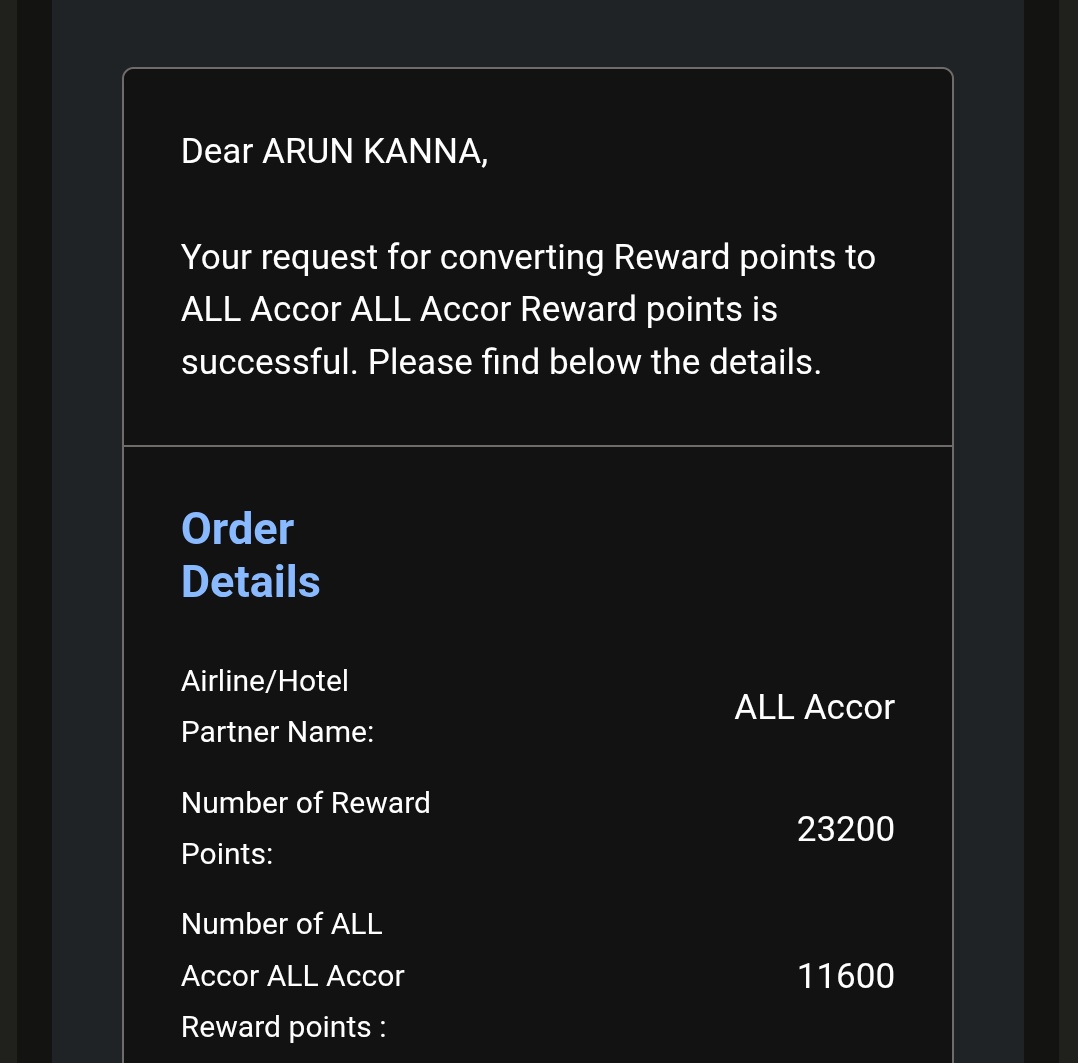
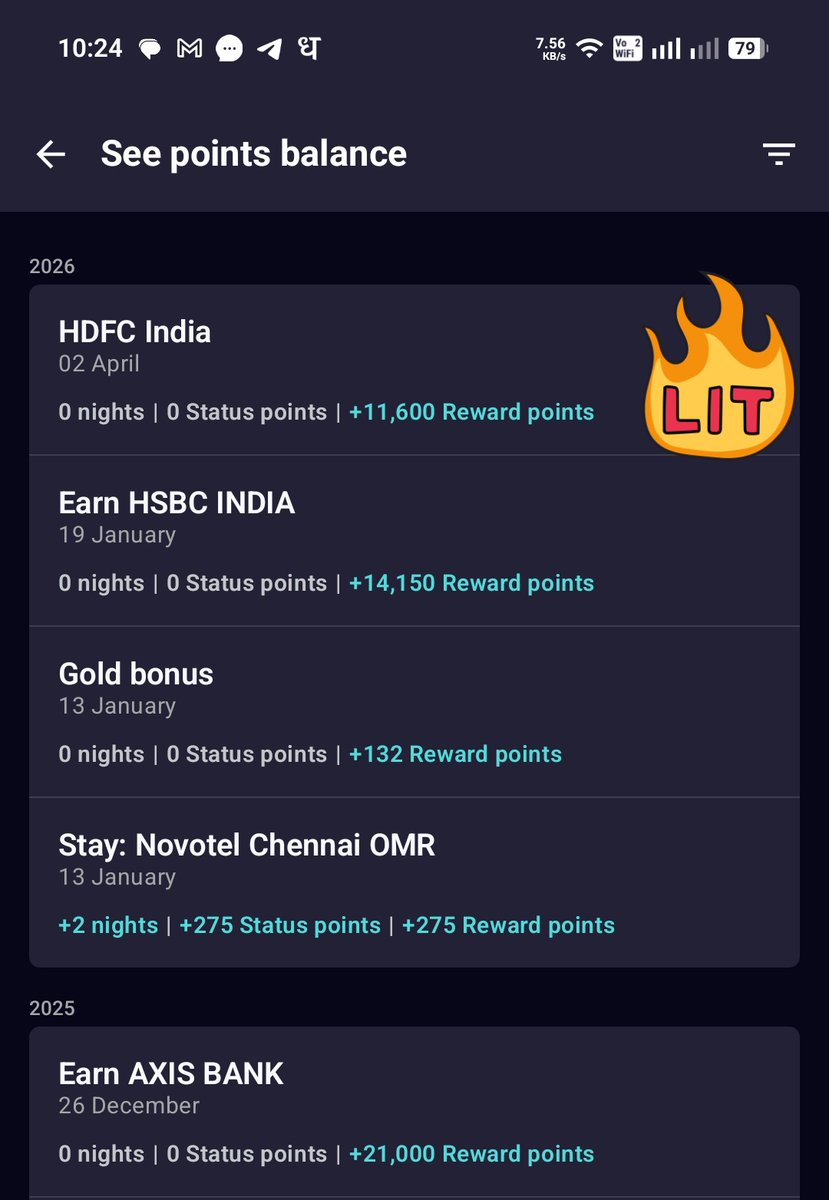
When the world is complaining about Accor The soldier took the weapon and hit the transfer button immediately. Spot on No delay, even before closing the app, points credited in accor. Only way to get the end value of 1:1 is regalia gold to Accor transfer. Which is common across Infinia too.
Arun Kanna tweet mediaArun Kanna tweet media
English
1
1
4
509
Pavan retweetledi
Pavan retweetledi
Sunderdeep - Volklub
Sunderdeep - Volklub@volklub·
Common Question: How to Keep Your Car’s Leather or Leatherette Seats Clean Without Dry Cleaning? Turtle Wax, Wavex and 3M offer upholstery cleaners that work well for removing stains and the oily layer from seats quickly and effectively. These products effortlessly eliminate the shiny buildup on leather and leatherette surfaces, restoring a clean, matte finish. Sharing a short clip where I used it to remove the glossy layer from my car seat.
English
22
37
520
75.8K