

qecez
3.6K posts

Bluetooth is a disaster, like USB.
DON'T USE HARDWARE WALLETS WITH BLUETOOH.
Owen Brake@OwenBrakes
The RF world is insane. Researchers recovered AES-128 keys from a Bluetooth chip by listening to its own antenna from 10 meters away. Crypto-engine switching noise couples into the RF chain, rides the 2.4 GHz carrier, and leaks out as radio.
English

🔥DeepSeek Input Cache Price Drop!
Effective immediately, the price for input cache hits across the ENTIRE DeepSeek API series is reduced to just 1/10th of the original price! Build more efficiently for less.
📌Reminder: The DeepSeek-V4-Pro 75% OFF promotion is still active until May 5th, 2026, 15:59 (UTC Time).

English

Under Economic Fury, @USTreasury will continue to systematically degrade Tehran’s ability to generate, move, and repatriate funds.
Treasury’s Office of Foreign Assets Control is sanctioning multiple wallets tied to Iran — resulting in the freeze of $344 million in cryptocurrency.
We will follow the money that Tehran is desperately attempting to move outside of the country and target all financial lifelines tied to the regime.
English
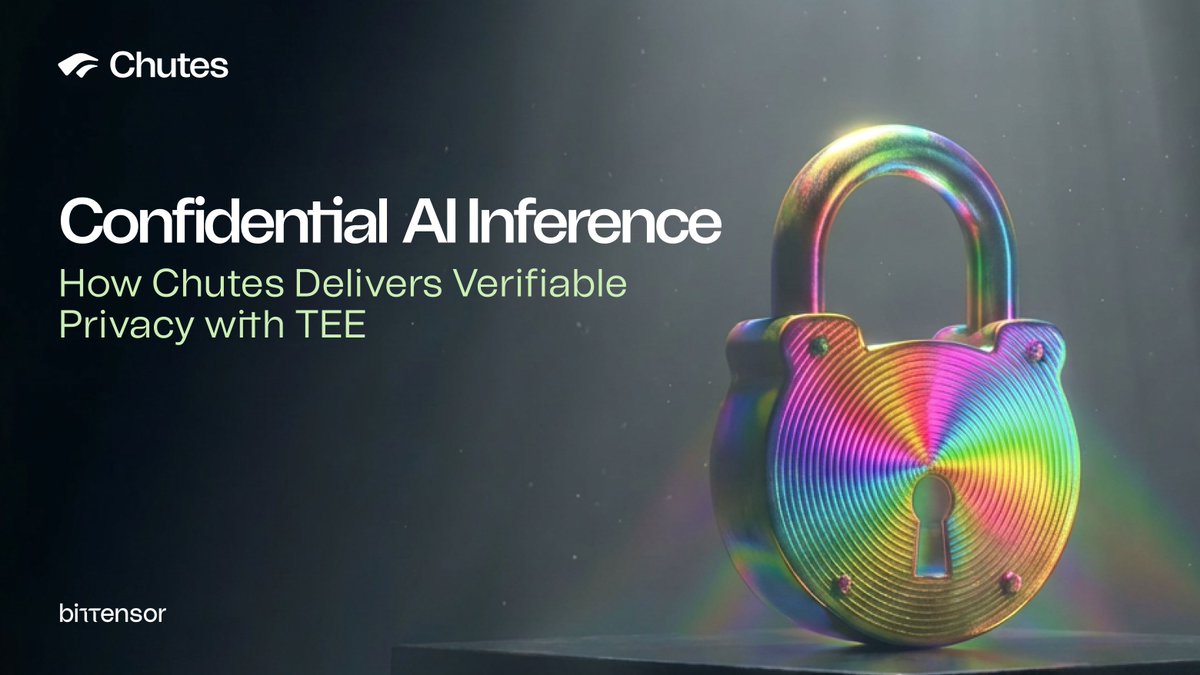
@chutes_ai Since your SDK marks TDX attestation as optional, where should a client fetch the expected golden measurements (MRTD) out-of-band to build a strict, zero-trust pre-flight enclave check?
English

qecez retweetledi

Blocks 944643 and 944644 were built by two different miners on the same pool.
Back-to-Back DATUM blocks.
Back-to-Back sovereign mining.
With other pools, the pool builds the block and the miners hash on it. Meaning the blocks mined by a large share of the hashrate is controlled by a few individuals at the largest mining pools. This makes a 51% more likely and the Bitcoin network less secure.
With OCEAN this isn't the case.
Miners using DATUM can build their own blocks, decentralizing block template construction while sharing in the benefits of pooled mining.
Eliminate the middle men.
Decentralize mining.
Earn more Bitcoins.
Only on OCEAN
🌊

English
qecez retweetledi

qecez retweetledi

The illusion a stablecoin provides disappears when you can see the price of goods rise in real time.
GB News@GBNEWS
Supermarkets set to introduce 'dynamic pricing' as Bank of England warns of food surges gbnews.com/money/supermar…
English

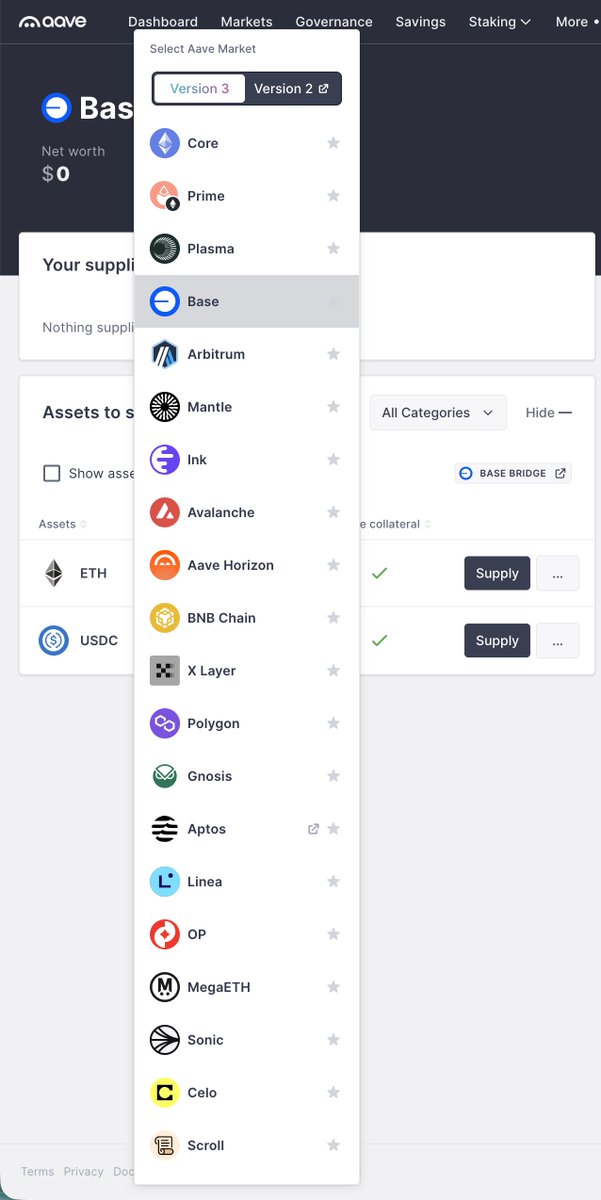
what is this ugly shit
i wanna kill myself everytime i touch traditional crypto product
English

@LukeGromen I won’t touch it again until quantum resistance is complete.
English

I've been surprised by the resilience of BTC over the last month.
Initially I thought it might be being bid by flight capital out of the Mideast, but when I look at BTC v. software (IGV), it looks more like BTC held up well in March because it got crushed so badly in February.

English


We shipped a lil something today: USDT Swaps ⚡💵
Lightning ↔ USDT. No custody. No accounts. No KYC.
Move from sats to stablecoins in seconds, across a growing number of networks.
👉 beta.boltz.exchange 👈
Read the full announcement: blog.boltz.exchange/p/introducing-…
English
@arshbot @peterktodd It's chicken and egg. If the kyc mania wasn't as idiotic and strict as it is right now, perhaps people wouldn't search for loopholes?
English

The enterprise card provision loophole how you're able to get a card (typically credit) through services like ramp without ever performing kyc for each employee.
Because it's considered an enterprise and not generally retail facing product, the rules here are a lot flimsier.
So what these guys did is set up a ramp like competitor, except instead of provisioning cards only to organizations, they're provisioning them to retail by calling each end user an employee.
This is the kind of abuse results in hard kyc across the board
English
This epidemic of no-kyc cards is going to upend the industry soon.
Blatantly advertising support for Iran, using the enterprise card provision loopholes…

English


It may be obvious in hindsight that we actually built crypto for the machines
English

maturing is realizing that FTX was one of the best investors in crypto industry:
> $500M in Anthropic would now be worth roughly $30.4B
> $1B in Solana would now be worth roughly $5.1B
> $648M in Robinhood would be $5.7B
> $100M in Sui would be $1.2B
> $1.15B in Genesis Digital Assets would be $3.5B
> $700M in SpaceX via K5 would be $3B
did some estimates and their total portfolio would be up from $4.7B to $52.5B which is a $47.8B in rise
absolutely nuts
English

Footage of the most beautiful interception from this war so far.
English
qecez retweetledi


Normies have had access to permissionless digital cash for almost two decades and have done SHIT ALL with it
Lukas (computer) 🔺@SCHIZO_FREQ
I find it very hard to believe AI radically reinvents society in 3 months If you gave normies a teleporter it would take them at least 3 years to realize it can be used to go to work faster They wouldn’t even notice it replaces Uber Eats until like 2039
English
qecez retweetledi



@qecez @techno0ptimist we implemented this with a confidential re-write in chat.openanonymity.ai; try tab-tab on the query!
English
Can we build a blind, *unlinkable inference* layer where ChatGPT/Claude/Gemini can't tell which call came from which users, like a “VPN for AI inference”?
Yes! Blog post below + we built it into open source infra/chat app and served >15k prompts at Stanford so far. How it helps with AI user privacy:
# The AI user privacy problem
If you ask AI to analyze your ChatGPT history today, it’s surprisingly easy to infer your demographics, health, immigration status, and political beliefs. Every prompt we send accumulates into an (identity-linked) profile that the AI lab controls completely and indefinitely. At a minimum this is a goldmine for ads (as we know now). A bigger issue is the concentration of power: AI labs can easily become (or asked to become) a Cambridge Analytica, whistleblow your immigration status, or work with health insurance to adjust your premium if they so choose.
This is a uniquely worse problem than search engines because your average query is now more revealing (not just keywords), interactive, and intelligence is now cheap. Despite this, most of us still want these remote models; they’re just too good and convenient! (this is aka the "privacy paradox".)
# Unlinkable inference as a user privacy architecture
The idea of unlinkable inference is to add privacy while preserving access to the remote models controlled by someone else. A “privacy wrapper” or “VPN for AI inference”, so to speak.
Concretely, it’s a blind inference middle layer that:
(1) consists of decentralized proxies that anyone can operate;
(2) blindly authenticates requests (via blind signatures / RFC9474,9578) so requests are provably sandboxed from each other and from user identity;
(3) relays prompts over randomly chosen proxies that don’t see or log traffic (via client-side ephemeral keys or hosting in TEEs); and
(4) the provider simply sees a mixed pool of anonymous prompts from the proxies. No state, pseudonyms, or linkable metadata.
If you squint, an unlinkable inference layer is essentially a vendor for per-request, anonymous, ephemeral AI access credentials (for users or agents alike). It partitions your context so that user tracking is drastically harder.
Obviously, unlinkability isn’t a silver bullet: the prompt itself still goes to the remote model and can leak privacy (so don't use our chat app for a therapy session!). It aims to combat *longitudinal tracking* as a major threat to user privacy, and its statistical power increases quickly by mixing more users and requests.
Unlinkability can be applied at any granularity. For an AI chat app, you can unlinkably request a fresh ephemeral key for every session so tracking is virtually impossible.
# The Open Anonymity Project
We started this project with the belief that intelligence should be a truly public utility. Like water and electricity, providers should be compensated by usage, not who you are or what you do with it. We think unlinkable inference is a first step towards this “intelligence neutrality”.
# Try it out! It’s quite practical
- Chat app “oa-chat”: chat.openanonymity.ai
(<20 seconds to get going)
- Blog post that should be a fun read: openanonymity.ai/blog/unlinkabl…
- Project page: openanonymity.ai
- GitHub: github.com/OpenAnonymity

English