Quant Beckman

3.5K posts

Quant Beckman banner
Quant Beckman

Quant Beckman

@quantbeckman

Quantitative Researcher & Dev. | Financial Data Scientist | Machine Learning Engineer | Mathematical Research | Algorithmic Trading Systems

Fresh takes on Quant Research Katılım Temmuz 2019
0 Takip Edilen12K Takipçiler
Sabitlenmiş Tweet
Quant Beckman
Quant Beckman@quantbeckman·
Hey guys! I’ve just released a refined, compact edition of one of my newsletter series on the foundations of quantitative trading. It is a theoretical introduction designed for aspiring quants who are beginning to explore the field. The focus is on first principles, method, and the conceptual framework behind quantitative trading. Link in the comments. I hope you enjoy it.

Quant Beckman tweet media
English
10
46
484
22.9K
Quant Beckman
Quant Beckman@quantbeckman·
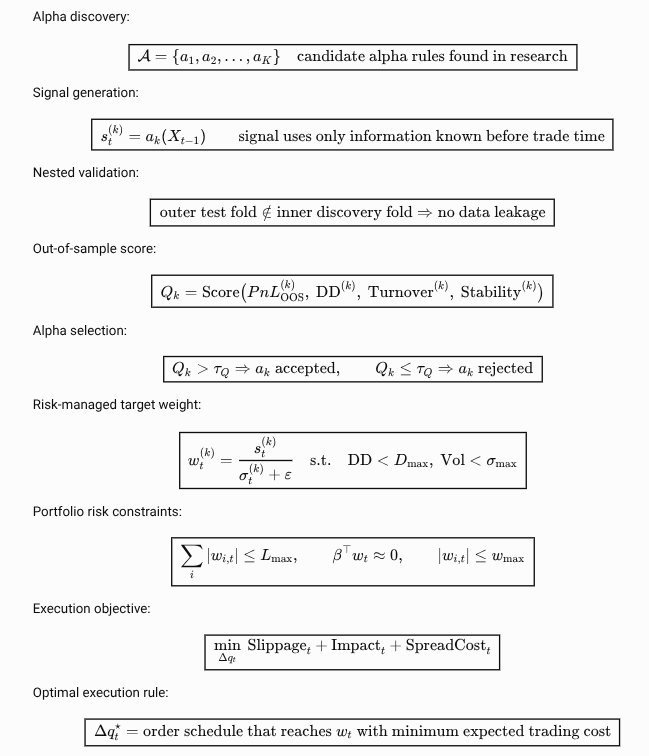
ETF creations and redemptions can create temporary buying or selling pressure in the underlying constituents. Infer that pressure from ETF flow proxies, basket weights, volume imbalance, and constituent-level moves. The signal looks for dislocations caused by forced basket activity rather than firm-specific information.
Quant Beckman tweet media
English
0
1
12
503
Quant Beckman
Quant Beckman@quantbeckman·
The paper correctly identifies overfitting, but the solution still overfits 😅 the paper shows that selecting PC 28 by highest in-sample Sharpe produces a great training result, then collapses out-of-sample with a Sharpe of -0.56. The ensemble approach improves this, but it is still selected by ranking eigen-portfolios using in-sample Sharpe and then choosing the best ensemble size N = 4 from the training curve.
Quant Beckman tweet mediaQuant Beckman tweet media
English
2
3
19
1.5K
Doggo breaking news
Doggo breaking news@datphamtha91354·
@quantbeckman Interesting approach. How do you determine the bandwidth for the kernel regression in practice?
English
1
0
0
20
Quant Beckman
Quant Beckman@quantbeckman·
Linear cointegration assumes the relationship between two assets is a straight-line hedge ratio. Kernel methods allow the hedge relationship to be nonlinear while still producing a residual that can mean-revert. Fit one asset as a nonlinear function of the other using kernel regression, then trade deviations from that fitted equilibrium curve. This can uncover pairs where the spread reverts around a curved relationship instead of a fixed linear beta.
Quant Beckman tweet media
English
3
6
21
1K
Quant Beckman
Quant Beckman@quantbeckman·
Emotional attachment to the trading idea ends in this🫤👇
Quant Beckman tweet media
English
1
1
10
611
Quant Beckman
Quant Beckman@quantbeckman·
@BruzWJ It can be broken from the very first trade and still go straight to the moon. In backtests, we’re all millionaires.
English
1
0
0
16
BruzWJ
BruzWJ@BruzWJ·
@quantbeckman wild claim tbh, but does it hold if you cherrypick which side of the 10k backtests where the curve looks good actually broke what kind of break really proves the assumption was wrong?
English
1
0
1
10
Quant Beckman
Quant Beckman@quantbeckman·
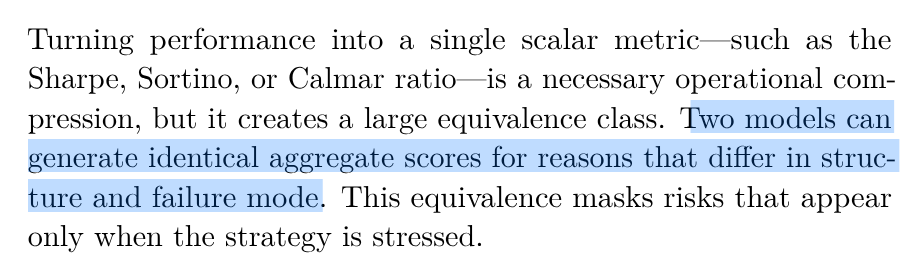
A single backtest where the strategy fails is infinitely better and more useful than 10k backtests where the curve looks good.
Quant Beckman tweet media
English
4
3
16
767
Alqama
Alqama@alqamadotml·
@quantbeckman interesting, will try to implement this in my ongoing backtest
English
1
0
1
30
Doggo breaking news
Doggo breaking news@datphamtha91354·
@quantbeckman True, simplifying assumptions can miss key market microstructure realities. What's your preferred model for capturing those effects?
English
1
0
0
66
Quant Beckman
Quant Beckman@quantbeckman·
The asset price follows Brownian motion with drift, fixed volatility, and a Markov structure where only the current price matters for the next step. That removes many things that dominate market making: clustered volatility, jumps, queue dynamics, hidden liquidity, toxic flow, news shocks, latency, spread regime shifts, and intraday seasonality
Quant Beckman tweet mediaQuant Beckman tweet media
English
4
6
37
2.3K
Doggo breaking news
Doggo breaking news@datphamtha91354·
@quantbeckman Love the SINDy approach for interpretable models. Have you tried it on real outbreak data yet?
English
1
0
0
13
Quant Beckman
Quant Beckman@quantbeckman·
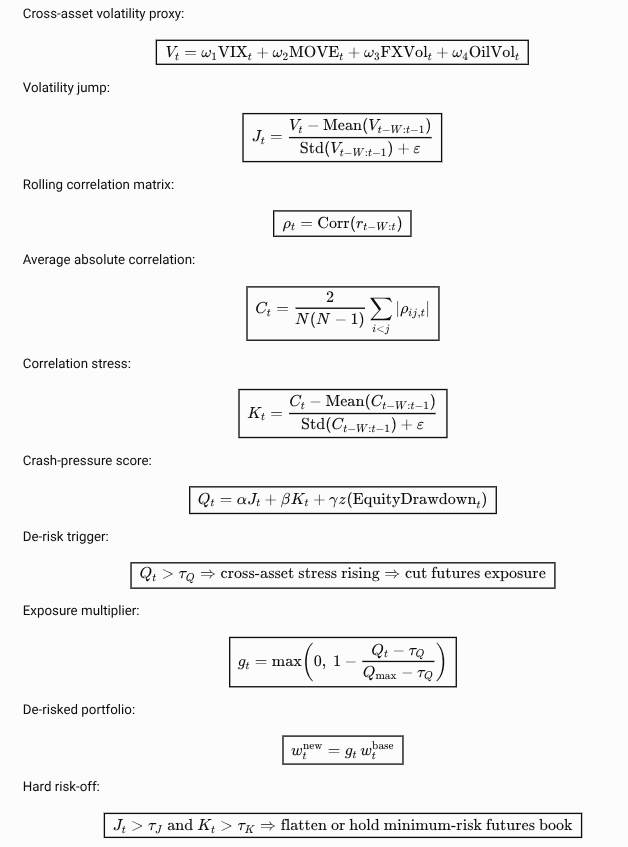
Model the spread dynamics with a small set of nonlinear terms instead of a black-box forecast. SINDy searches a library of candidate functions and keeps only the terms that explain the spread movement.
Quant Beckman tweet media
English
4
6
18
1.1K
SectorX
SectorX@SectorX_AI·
@quantbeckman Think bigger... LARGE sets of fit candidates grounded by some contributing correlation. You need something to elevate beyond just the fit, which buries the critics ha.
English
1
0
0
31
Quant Beckman
Quant Beckman@quantbeckman·
Several formulas are basic combinations of momentum, moving averages, sentiment, volume, RSI, MACD, Bollinger bands, and index levels. Some are almost trivial. One major issue is duplication: alpha25_t = BB_Upper - BB_Lower and alpha39_t = BB_Upper - BB_Lower are the same formula. Other formulas combine raw price levels, index levels, volume, and sentiment without clear normalization logic, which can create scale artifacts rather than genuine predictive structure.
Quant Beckman tweet mediaQuant Beckman tweet media
English
3
5
38
2.5K
Quant Beckman
Quant Beckman@quantbeckman·
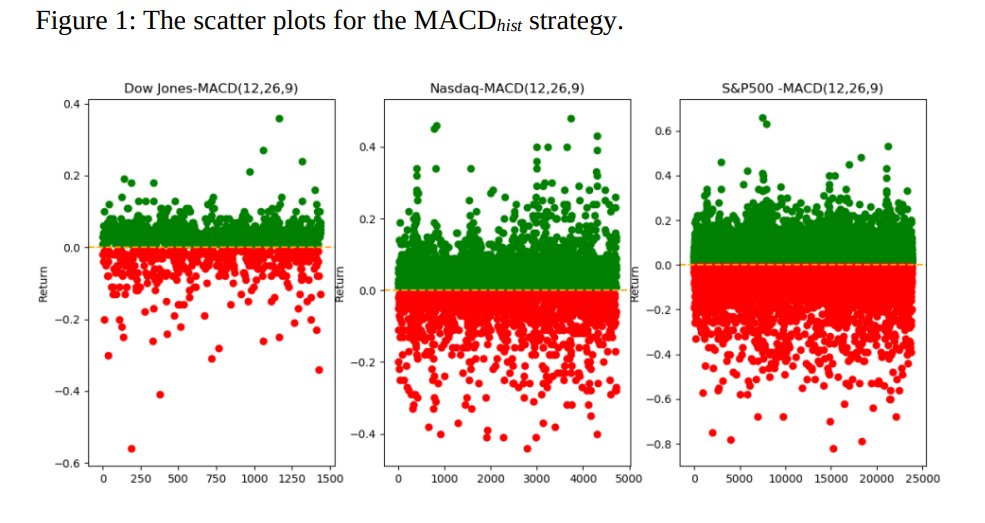
This seasonal analysis is pretty cool, dont you agree?
Quant Beckman tweet media
English
2
2
22
1.7K
SectorX
SectorX@SectorX_AI·
@quantbeckman You bring great value here QB, day after day. SSA seems especially good for my peer-demeaned ETFs where the shared passive/factor structure is all that remains for harvest.
English
1
0
1
35
Quant Beckman
Quant Beckman@quantbeckman·
Treat the spread as a time series made of structured components plus transient noise. SSA embeds the spread into a trajectory matrix, decomposes it into singular components, and reconstructs only the components that look persistent. This gives a denoised spread for entry logic while keeping the raw spread for execution and risk.
Quant Beckman tweet media
English
2
3
14
787