@nikitabier @DataRepublican I really enjoy reading @tanvi_ratna’s longer form content, hope you can also consider her for this! =)
English
quarkstar
520 posts




Helium is the only element that escapes Earth’s atmosphere permanently. Once released, it rises through the troposphere, passes the stratosphere, and leaves the planet. It cannot be manufactured. It cannot be synthesised at industrial scale. It accumulates over billions of years in the same geological reservoirs as natural gas. And one third of the world’s supply just went offline because Iran hit the facility that extracts it. Qatar produced roughly 63 million cubic metres of helium in 2025, accounting for 30 to 36 percent of global supply from a total of approximately 190 million cubic metres. QatarEnergy’s three large helium purification plants at Ras Laffan form the world’s biggest helium production base. When LNG production stopped after Iranian drone strikes on March 2 and the subsequent missile damage on March 19, helium extraction stopped automatically because helium is recovered during natural gas liquefaction. You cannot produce helium without producing LNG. The byproduct dies with the primary product. Spot helium prices have roughly doubled since the crisis began. Industry consultants warn that prolonged disruption could push contract prices toward $2,000 per thousand cubic feet. A major industrial gas supplier has already begun assessing customers a helium surcharge. Phil Kornbluth, the most cited helium market consultant, stated the assessment directly: the world cannot compensate for the loss of a third of its helium supply. South Korea imports 64.7 percent of its helium from Qatar. SK Hynix and Samsung operate high-volume fabs producing the DRAM and high-bandwidth memory that power every AI accelerator, every data centre GPU, and every cloud computing cluster on Earth. Helium cools silicon wafers during fabrication. It serves as a carrier gas in deposition and etching tools. It enables leak detection in vacuum systems. Modern extreme ultraviolet lithography requires helium-cooled environments for precise temperature control. Without helium, the fabrication process degrades or stops. SK Hynix and Samsung hold two to three months of helium inventory. Two to three months is not a buffer. It is a countdown. If Ras Laffan remains offline beyond that window, South Korean memory production faces rationing. TSMC in Taiwan is somewhat more diversified but still uses Qatar-linked supply chains. The entire AI hardware supply chain, from HBM3E memory stacks to advanced logic chips, sits inside helium-dependent ecosystems. Beyond semiconductors, helium cools the superconducting magnets in more than 14,000 MRI machines operating worldwide. It pressurises rocket fuel tanks and purges propulsion systems in aerospace. CERN’s Large Hadron Collider depends on helium cryogenic systems. There is no substitute for helium in any of these applications at industrial scale. The United States and Qatar together account for more than 70 percent of global production. The US federal helium reserve and private suppliers offer partial relief, but global prices and spot availability are still governed by Qatar’s market share. Japan’s Iwatani has drawn on US reserves. Canada and the Rockies are seeing renewed investor interest. None of this replaces 63 million cubic metres in weeks. The war hit uranium first. Then oil. Then nitrogen. Then water. Then plastic. Then medicine. Then sulfur. Now helium. Eight layers. Each one deeper. Each one closer to the infrastructure that sustains modern civilisation. The chip that processes your data, the magnet that scans your body, and the rocket that launches your satellite all depend on an atom that leaves the planet when you lose it. open.substack.com/pub/shanakaans…

Today the HHS DOGE team open sourced the largest Medicaid dataset in department history. This dataset contains aggregated, provider-level claims data for a specific billing code over time. For example, using this dataset, it would have been possible to easily detect the large-scale autism diagnosis fraud seen in Minnesota. Download the data yourself: opendata.hhs.gov


BREAKING: Elon Musk has announced that @Tesla is discontinuing the Model S and Model X in Q2 2026. "We are going to convert that production space to an Optimus factory. It's part of our overall shift to an autonomous future."


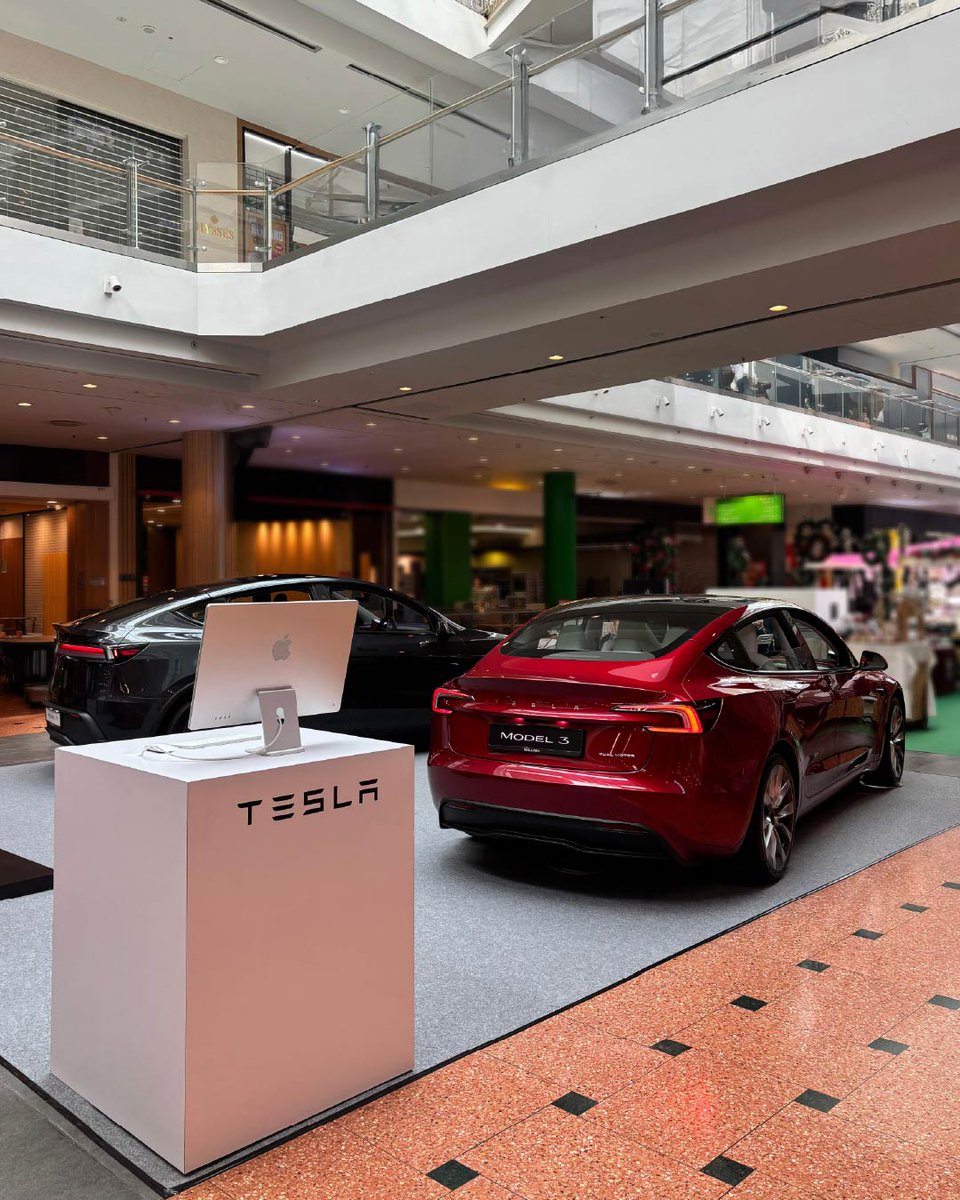




Here's how to vote in @Tesla's shareholder meeting: For $TSLA shareholders who use Fidelity: • To cast your vote online, you’ll need to search for a specific email in your inbox, which may be in your spam folder (same email address that is associated with your broker account). The email may come from one of several different addresses. Search for an email received in 2025 using the following keywords: “Tesla”, “Fidelity.Investments.email@shareholderdocs.fidelity.com”, “e-notification@edocs.mybrokerageinfo.com”, or “id@proxyvote.com”. Open the email and follow described instructions to vote. Robinhood: • To cast your vote online, you’ll need to search for a specific email in your inbox, which may be in your spam folder (same email address that is associated with your broker account). Search for an email received in 2025 using the following keywords: “noreply@robinhood.com Tesla”. Open the email and click VOTE. Interactive Brokers: • To cast your vote online, you’ll need to search for a specific email in your inbox, which may be in your spam folder (same email address that is associated with your broker account). Search for an email received in 2025 using the following keywords: “interactivebrokers@proxydocs.com Tesla”. Open the email and follow described instructions. Charles Schwab: • To cast your vote online, you’ll need to search for a specific email in your inbox, which may be in your spam folder (same email address that is associated with your broker account). Search for an email received in 2025 using the following keywords: “id@proxyvote.com Tesla”. Additionally, you can log into your brokerage account, use the keywords ‘proxy events’ in the search bar and navigate to proxy events. Alternatively, search for a 16-digit control number in your postal mail. Visit proxyvote.com and submit your 16-digit control number to vote. Morgan Stanley/E*Trade: • To cast your vote online, you’ll need to search for a specific email in your inbox, which may be in your spam folder (same email address that is associated with your broker account). Search for an email received in 2025 using the following keywords: “id@proxyvote.com Tesla”. Open the email and follow described instructions. Merrill Lynch: • To cast your vote online, you’ll need to search for a specific email in your inbox, which may be in your spam folder (same email address that is associated with your broker account). Search for an email received in 2025 using the following keywords: “id@proxyvote.com Tesla”. The email may come from one of several different addresses so please search your inbox for “Tesla” as well. Open the email and follow described instructions. Vanguard Brokerage: • To cast your vote online, you’ll need to search for a specific email in your inbox, which may be in your spam folder (same email address that is associated with your broker account). Search for an email received in 2025 using the following keywords: “id@proxyvote.com Tesla”. Open the email and follow described instructions. J.P. Morgan: • To cast your vote online, you’ll need to search for a specific email in your inbox, which may be in your spam folder (same email address that is associated with your broker account). Search for an email received in 2025 using the following keywords: "id@proxyvote.com Tesla" Open the email and follow described instructions. If you cannot locate this email, contact JPM support at 888-938-4409 to learn how to vote. All Other Brokerages: • To cast your vote online, you’ll need to search for a specific email in your inbox, which may be in your spam folder (same email address that is associated with your broker account). Try searching for each of these three terms to see if you can locate an email from your broker sent in 2025: “id@proxyvote.com Tesla” “@proxydocs.com Tesla” “@saytechnologies.com Tesla” If you find an email, open it and follow described instructions. International $TSLA holders: Some brokers outside of the U.S. don’t allow retail shareholders to vote. If you have not received any voting instructions, please contact your broker to confirm if they provide for proxy voting and, if so, to request such instructions. If you have any additional questions regarding how to vote, please contact Tesla's proxy solicitor, Innisfree M&A Incorporated, at (877) 717-3936 (from the United States or Canada) or +1 (412) 232-3651 (from other locations). Sometimes, when you don't participate in proxy voting, brokers may exercise their discretion to cast votes on your behalf, so be proactive! General info: If you cannot locate any emails, try voting by mail, phone or QR code. If you have not received any instructions whether via email or by mail, contact your broker as soon as possible to request such instructions. More info here: • Vote by phone: votetesla.com/how-to-vote/vo… • Vote by QR code: votetesla.com/how-to-vote/vo… • Vote by mail: votetesla.com/how-to-vote/vo… Every vote counts, whether you own one share or many. Make your voices heard. It only takes a few minutes. Reminder: You must have been a Tesla shareholder as of the September 15th record date to be able to vote. Tesla's shareholder meeting will take place on November 6, 2025 in Austin, Texas. Voting is now open, so go vote!

Could the BMW iX3 be a Tesla Model Y killer? With up to 400 miles of range, charging speeds up to 400 kW, tons of tech, a stunning design inside and out, and a starting price around $60,000, it might just have what it takes.