

Bogdan Kwiatek
1.2K posts

Bogdan Kwiatek
@quiatech
cogito ergo hestia... myśle wiec jeżdzę! :) ///Edit: jeździłem! :/ edit2: znów jeżdżę! :)
Małopolskie, Polska Katılım Eylül 2012
396 Takip Edilen64 Takipçiler


@Lunaria_40 6 of those visible x 2 ( both sides)
Head, body, 2 arms
Total 16
English

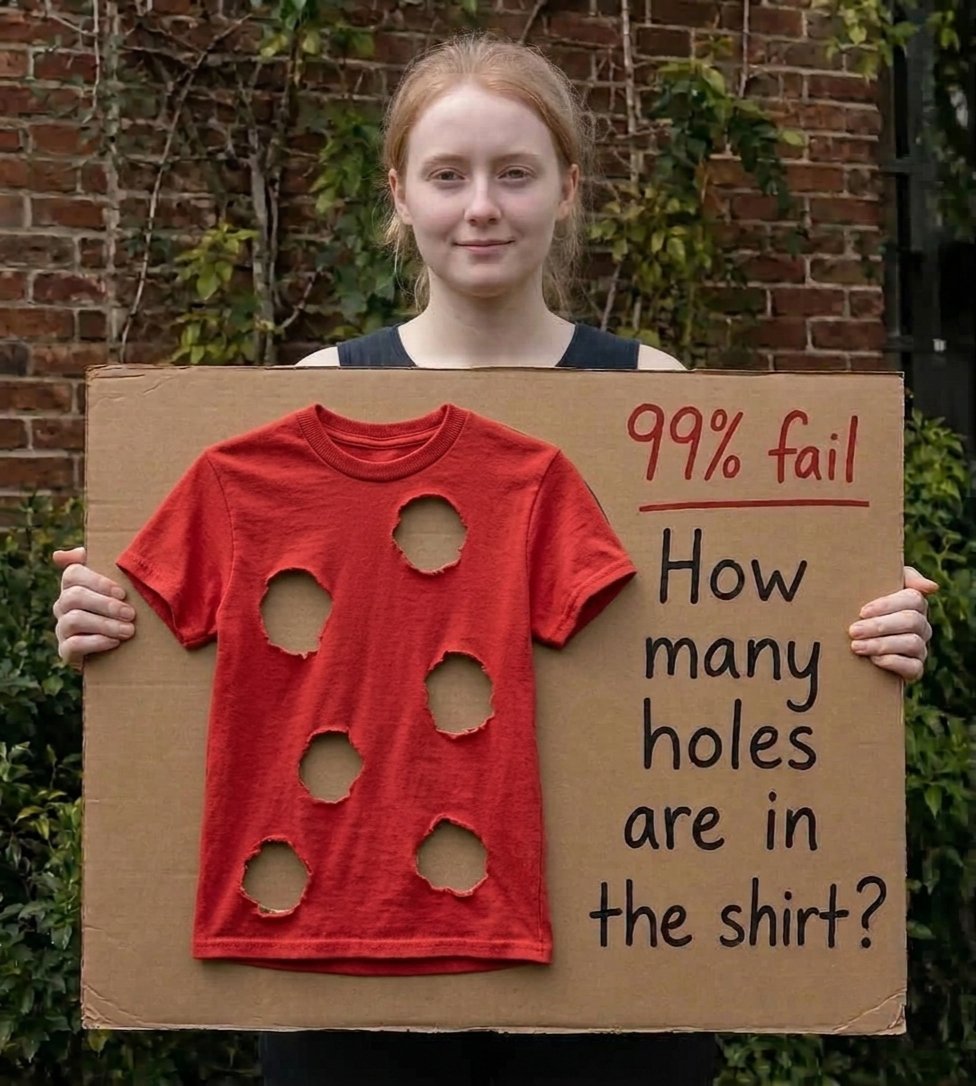


@hussain786_fkh @W20000Anonymous Ask your math teacher
Basically 12/3=4
English
If you solve this, you are truly genius 😎

English
Bogdan Kwiatek retweetledi

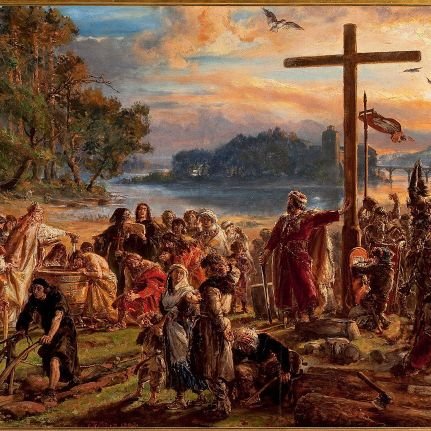
July 15, 1410 – The Battle of Grunwald Begins
On this day in 1410, as the summer sun rose over the fields near the villages of Grunwald, Stębark, and Łodwigowo, tens of thousands of soldiers prepared for a battle that would shape the future of Europe. Before the day was over, one of the most powerful military orders of the medieval world, the Teutonic Order would suffer a devastating defeat at the hands of the allied forces of the Kingdom of Poland and the Grand Duchy of Lithuania.
The armies were led by two remarkable rulers: King Władysław Jagiełło of Poland and Grand Duke Vytautas of Lithuania. Together they commanded a diverse coalition of Poles, Lithuanians, Ruthenians, Tatars, Czechs, and others, united against an enemy that had dominated the Baltic region for generations.
According to tradition, as the armies stood facing one another, the Teutonic Knights sent two swords to Jagiełło and Vytautas. Intended as an insult, suggesting that the allied army lacked the courage to attack - the gesture instead became one of history’s great ironies. The “Grunwald Swords” would later become enduring symbols of resolve rather than intimidation.
When the fighting began, it quickly descended into a brutal struggle unlike anything Europe had witnessed in decades. Cavalry charges thundered across the fields, infantry clashed hand-to-hand, and banners disappeared into clouds of dust and smoke. For hours the outcome remained uncertain. At one point, sections of the Lithuanian forces withdrew, leading many to believe the battle was turning in favor of the Teutonic Order. Yet the allied army regrouped, counterattacked, and steadily gained the upper hand.
The battle ended in catastrophe for the Teutonic Knights. Grand Master Ulrich von Jungingen was killed, much of the Order’s leadership perished, and its military prestige was shattered. Although the Order survived politically for a time, it never fully recovered its former power. Grunwald marked the beginning of its long decline and signaled the rise of Poland and Lithuania as one of Europe’s great political and military partnerships.
More than six centuries later, Grunwald remains far more than a military victory. It symbolizes unity in the face of overwhelming odds, the importance of cooperation between nations, and the determination to defend independence against aggression. The battlefield has become a place of remembrance, where thousands gather each year to honor those who fought and to reflect on a day that changed the course of European history.
History is often remembered through its kings and generals, but Grunwald also belongs to the countless ordinary men who marched onto that field not knowing whether they would ever return home. Their courage, sacrifice, and conviction transformed a single July day into one of the defining chapters of Polish history, one whose legacy continues to inspire over six hundred years later.
The Battle of Grunwald (1410), oil on canvas painting by Jan Matejko, 1878.
National Museum, Warsaw.
This painting is widely regarded as the greatest painting in Polish historical art.

English
Bogdan Kwiatek retweetledi
Nie potrzebował karabinu.
Uzbrojony w ołówek
i matematyczny geniusz skrócił II
wojnę światową o lata.
Jego papierowe płachty zniszczyły
największą tajemnicę Hitlera
i ocaliły miliony ludzkich istnień.
W nagrodę umierał na obczyźnie
w zapomnieniu, zepchnięty na
margines historii, a Brytyjczycy nie
uznali jego dyplomu ukończenia
studiów matematycznych.
Pogromca Enigmy.
15 VII 1908 przyszedł na świat
HENRYK ZYGALSKI.
Cześć Jego pamięci!

Polski
Bogdan Kwiatek retweetledi

The Battle of Grunwald was one of the greatest battles of the Middle Ages and remains one of the most important symbols of Polish identity.
English


@ReidEdwardII Hmm
My Father was born on Feb 24th 1941. A day later.
I’ll remember Edmund.
RIP.
English
Bogdan Kwiatek retweetledi
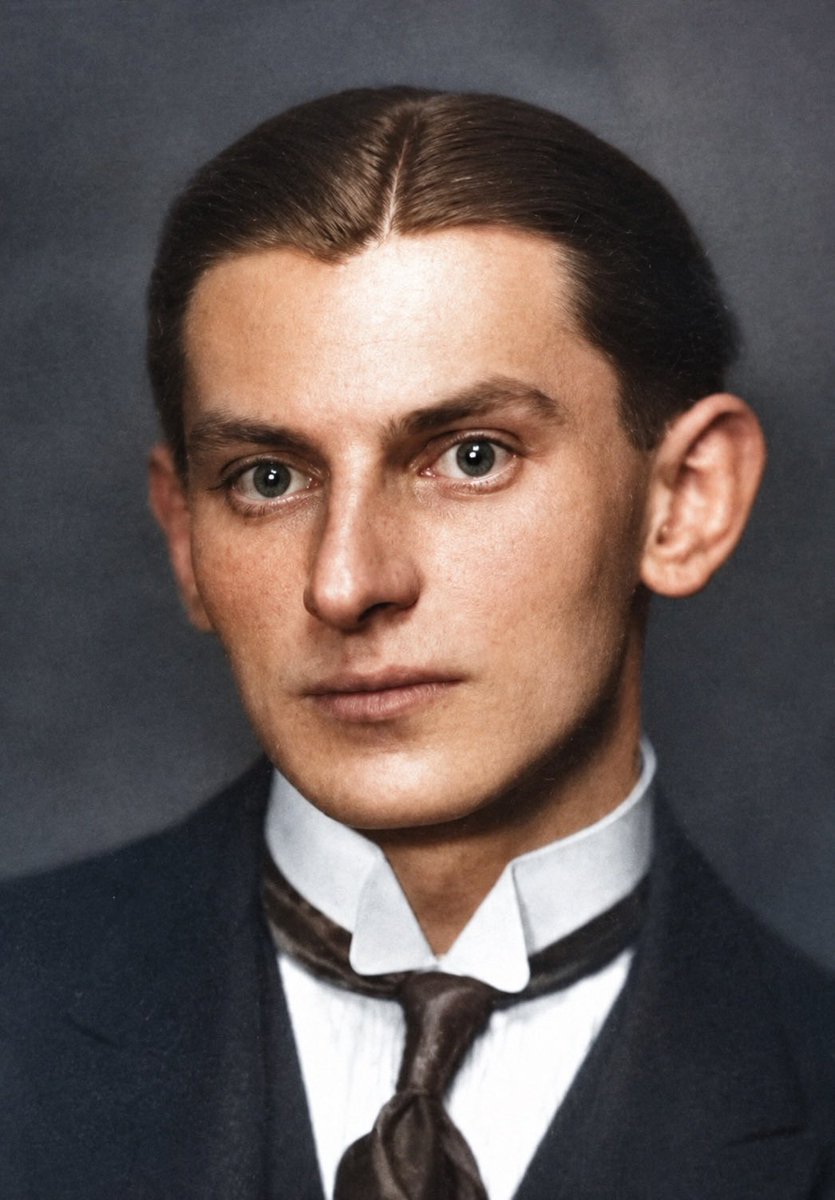
Edmund Wojciechowski’s story is one of the lesser-known examples of how the German occupation targeted Poland’s legal profession as part of its broader campaign to destroy the country’s intellectual and civic leadership.
On July 13, 1940, Edmund Wojciechowski, a lawyer and the son of former Polish President Stanisław Wojciechowski, was arrested by the Gestapo after refusing to comply with German orders to expel Jewish lawyers from the Warsaw Bar Association. His refusal was not merely an act of professional defiance, it was a moral stand against racial persecution at a time when such resistance could cost one’s life.
Edmund was not alone. The Germans sought to purge Jewish lawyers from the legal profession and force Polish bar associations to enforce discriminatory policies. Many Polish lawyers refused to cooperate or resisted German control in other ways. As a result, numerous attorneys, judges, and legal scholars were arrested and deported to Auschwitz and other concentration camps. These arrests formed part of the broader the German campaign to eliminate Poland’s intellectual and professional elite.
Edmund arrived at Auschwitz in August 1940. While imprisoned, the Germans offered to release him if his father would sign a declaration recognizing the German occupation and rejecting the Polish Government-in-Exile.
Edmund died in Auschwitz on February 23, 1941.
His story represents the courage of many Polish lawyers who refused to betray their principles. At a time when the Germans sought to destroy both the rule of law and those who upheld it, these men chose integrity over collaboration, often paying with their freedom… and their lives.
English


Bogdan Kwiatek retweetledi
On this day, July 13, 2000, Jan Karski passed away.
Some people live long lives and leave little behind and others carry the weight of history on their shoulders. Jan Karski was one of them…
As a courier for the Polish Underground State, he willingly entered a world of terror so that he could bear witness to what was happening in occupied Poland. He secretly entered the Warsaw Ghetto and a German transit camp, then crossed occupied Europe to tell the free world what he had seen. He understood that truth carries a responsibility: if you have seen evil, you must speak of it. Karski later reflected simply:
“I was a messenger. My task was to tell.”
His words raise an uncomfortable question that reaches beyond history. What would we do? Would we risk our freedom, our comfort, even our lives, to carry the truth to a world that might not believe us? Would we continue speaking if we knew our warnings would likely be ignored?
It is easy to admire courage from the safety of history. It is much harder to imagine possessing it ourselves.
Jan Karski did not choose an easy life. He chose duty over fear and conscience over silence. That is why, more than two decades after his passing, his example continues to challenge us.
May his memory be eternal.

English
Bogdan Kwiatek retweetledi
I have written about Bloody Sunday and the genocide of the Polish population in Volhynia, but it is impossible to tell this story in a single article.
Maria Wola is one of countless places that was brutalized.
Mrs. Zofia stands in silent remembrance where the Polish village of Maria Wola once stood. Until July 12, 1943, it was a thriving community. Today, little remains but memory.
During the coordinated UPA attacks known as “Bloody Sunday,” the village was annihilated. Two hundred twenty-eight Polish men, women, and children were murdered. The victims were killed with firearms, axes, pitchforks, clubs, and other crude weapons. Many were burned alive in their homes. Others who survived the initial assault but were wounded were thrown into a well, where stones were cast upon them until they died.
Maria Wola was one of hundreds of Polish villages destroyed during the Volhynia massacres of 1943–1944. Behind every statistic was a family, a home, and a community that vanished forever.
We honor the victims not by allowing them to fade into history, but by remembering their names, telling their stories, and ensuring that the truth is preserved for future generations. The dead deserve remembrance, and history deserves honesty.

English


@ZelenskyyUa @NawrockiKn The stupidest thing is to alienate people who are kind to you. I suggest you reconsider.
English
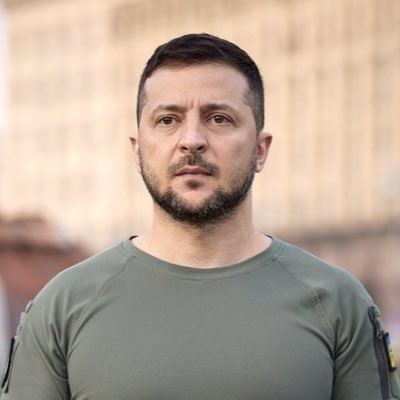
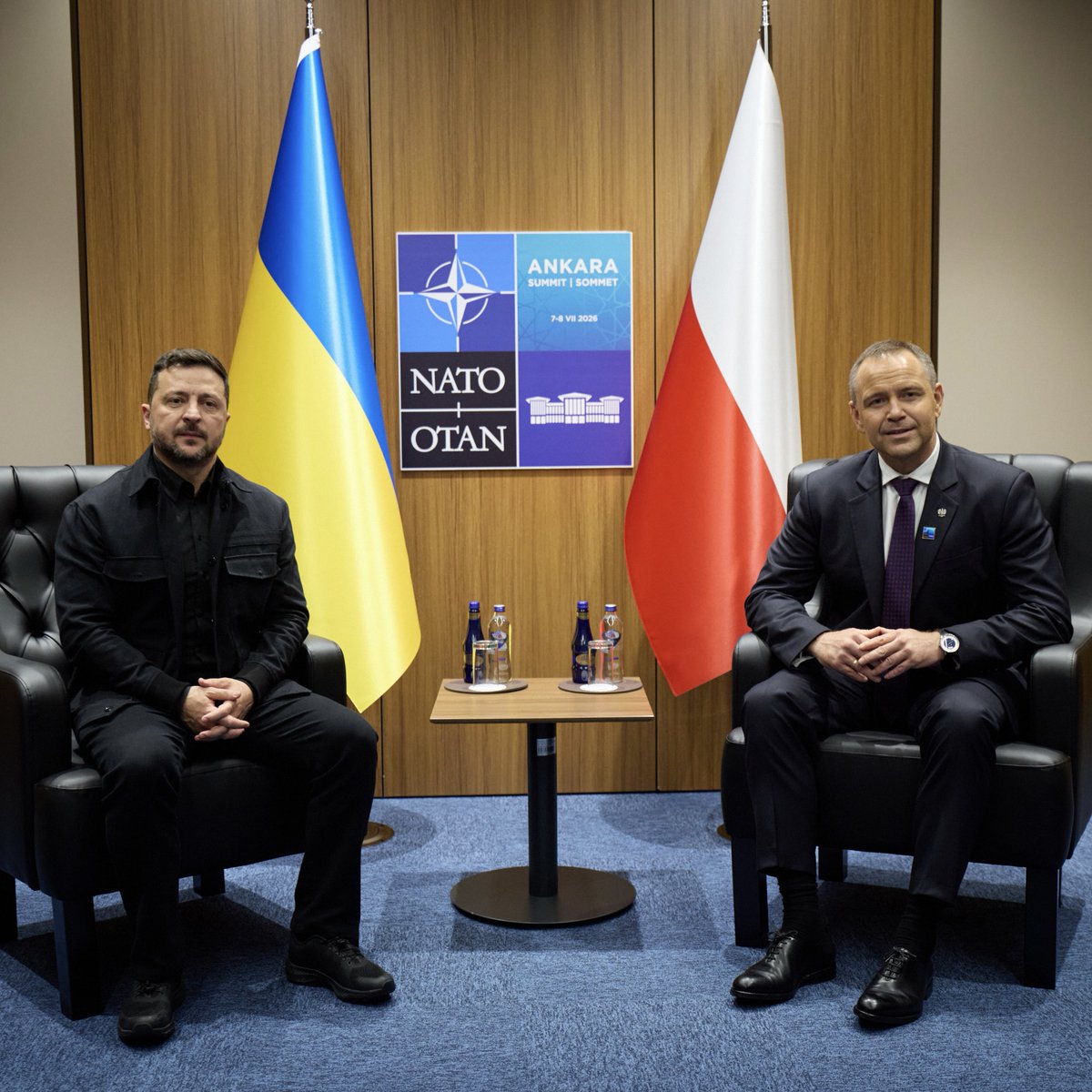
I met with President of Poland Karol Nawrocki @NawrockiKn. It was an important and necessary conversation. We spoke for more than an hour.
We face one common threat – Russia. And it is critical to maintain mutual understanding, support, and unity of action. Our countries need only strong relations. We agreed to continue our dialogue.
English

