Rachit Singh Chauhan

1.7K posts

Rachit Singh Chauhan banner
Rachit Singh Chauhan

Rachit Singh Chauhan

@rachit4499

PhD at KAUST KCC @rueping_lab || IIT BOMBAY MS-THESIS @dm_lab (2023-25) || IISER BHOPAL BS-MS (2019-2024) @chm_iiserb

KAUST Katılım Kasım 2022
1.5K Takip Edilen244 Takipçiler
Rachit Singh Chauhan retweetledi
Vignesh Palani
Vignesh Palani@Palani_IISc·
Excited to share our group’s first work, now available as a preprint online! Huge congrats to Lohitha, Devagi, and Jayasish. Check it out at doi.org/10.26434/chemr…
Vignesh Palani tweet media
English
17
13
154
4.2K
Rachit Singh Chauhan retweetledi
Thomas Kipf
Thomas Kipf@tkipf·
Confession: I never had a single work-related sleepless night or ever pulled an all-nighter during my career incl. PhD. Don’t sacrifice your health. Sleep is a superpower — your brain on 8hrs of sleep is a lot smarter than your brain on sleep deprivation. Don’t listen to people who tell you to chronically sacrifice sleep for work. Sacrificing sleep for your kids/family is a different story.
Sarvesh Gharat@SarveshGharat12

@npparikh I doubt all those things are really possible. Infact I believe, you are not doing a good PhD unless you have sleepless nights. Definitely just working on your thesis is possible if you follow a 9-6 schedule, but a good PhD which involves exploring, colabs, etc needs extra hours

English
30
71
1.1K
98.3K
Rachit Singh Chauhan retweetledi
Ohmiya Lab
Ohmiya Lab@OhmiyaLab·
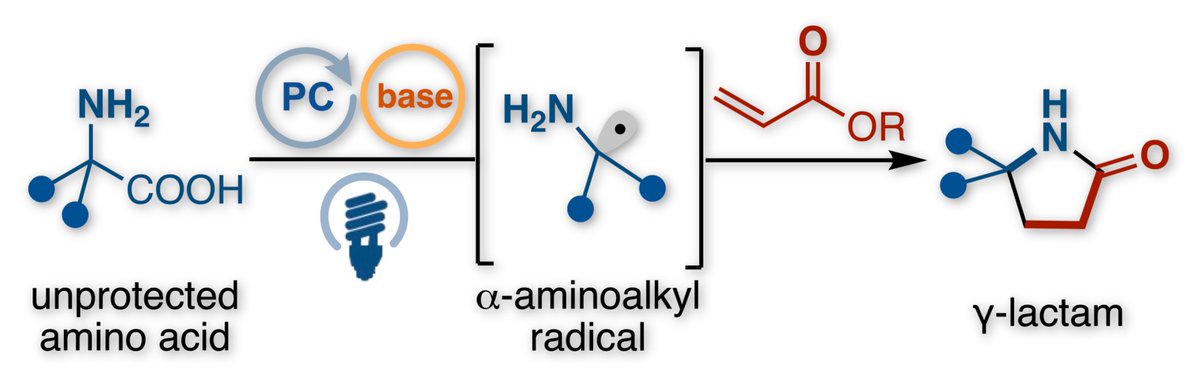
Direct decarboxylative Giese addition of unprotected amino acids: a cascade access to γ-lactams. Congrats Tomotoki!
Ohmiya Lab tweet media
English
2
12
134
6.1K
Rachit Singh Chauhan retweetledi
Lives in Chemistry
Lives in Chemistry@livesinchem·
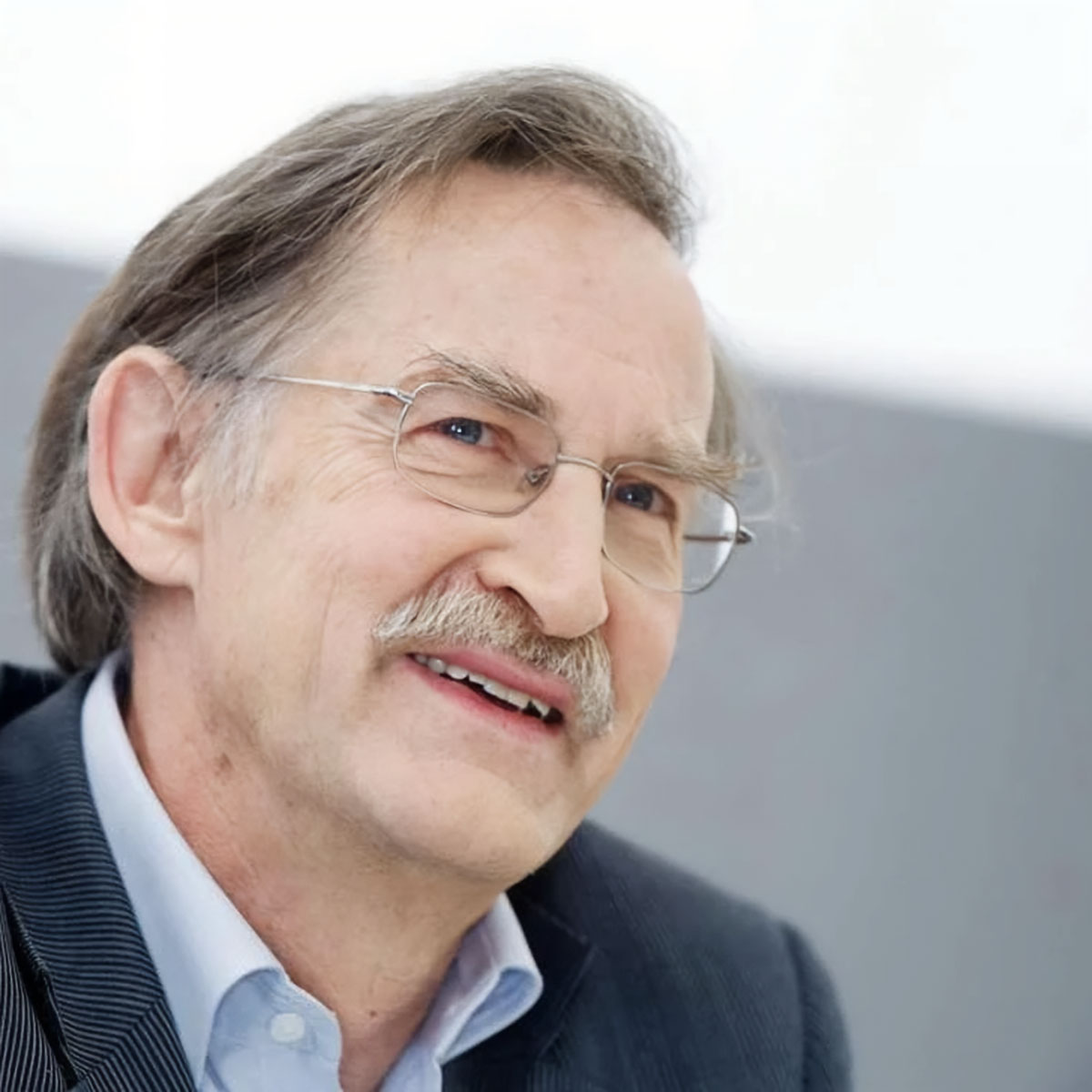
🌻Manfred T. Reetz, an organic chemist of the highest caliber, died of cancer on April 23, 2026. He was born on August 13, 1943, in Lower Silesia, now Poland, and emigrated to the U.S. in 1952. Reetz studied chemistry at University of Washington @UW and at the University of Michigan in Ann Arbor @UMich, where he received his master’s degree in 1967. He then returned to Germany and completed his PhD at the University of Göttingen @uniGoettingen in 1969 under Ulrich Schöllkopf, a student of Nobel laureate Georg Wittig. He subsequently moved to the University of Marburg to work with Reinhard W. Hoffmann, a former postdoc with Georg Wittig. Reetz habilitated in Marburg in 1974 and stayed there until 1991, interrupted by a short stint at the University of Bonn from 1978 to 1980. From 1991 to 2011, Reetz was a Director at the Max Planck Institute for Coal Research in Mülheim an der Ruhr. As Managing Director, he also helped reshape the institute’s organizational structure. After his retirement, he continued his research, first at the University of Marburg and later both in Mülheim and at the Tianjin Institute of Industrial Biotechnology of the Chinese Academy of Sciences. At the beginning of his independent career, Reetz developed dyotropic and other rearrangements as tools in #OrganicSynthesis; later his group made innumerable contributions to the use of #organometallic chemistry in organic synthesis, with titanium as a central element. Starting in the 1990s, the final major chapter of his efforts was devoted to #biocatalysis. Manfred Reetz pioneered biological methods—directed evolution—as a tool to improve the performance of enzymes in stereoselective organic synthesis. He trained an army of excellent students and postdocs who went on to make their own careers. He received numerous awards, including the Karl Ziegler Prize of the GDCh @GDCh_aktuell, the Otto Hahn Prize, considered the highest award for chemists and physicists in Germany, and most recently in 2025, the Ryoji Noyori Award. Reetz was a member of a number of esteemed academies and he served the scientific community in manifold ways, not the least as a member of the GDCh Board. Manfred Reetz, a giant of organic chemistry, will be dearly missed by his former students and colleagues as well as by the wider scientific community.
Lives in Chemistry tweet media
English
0
13
45
2.8K
Rachit Singh Chauhan retweetledi
J. Am. Chem. Soc.
J. Am. Chem. Soc.@J_A_C_S·
Enantioselective Iridium-Catalyzed Intramolecular Hydroarylation of (Hetero)Arene-Tethered Prochiral Diketones | Journal of the American Chemical Society pubs.acs.org/doi/10.1021/ja…
English
0
7
56
3.7K
Rachit Singh Chauhan retweetledi
Science Magazine
Science Magazine@ScienceMagazine·
Streamlining the synthesis of valuable amines, researchers in Science present a new method that can selectively insert nitrogen into specific carbon–hydrogen bonds. According to the study, the approach could simplify drug development by enabling more efficient, scalable, and late-stage construction of carbon–nitrogen bonds from common chemical feedstocks. 📄: scim.ag/4ugghT8 #SciencePerspective: scim.ag/49g1785
Science Magazine tweet media
English
1
24
129
20.7K
Rachit Singh Chauhan retweetledi
Yulab
Yulab@YulabJin·
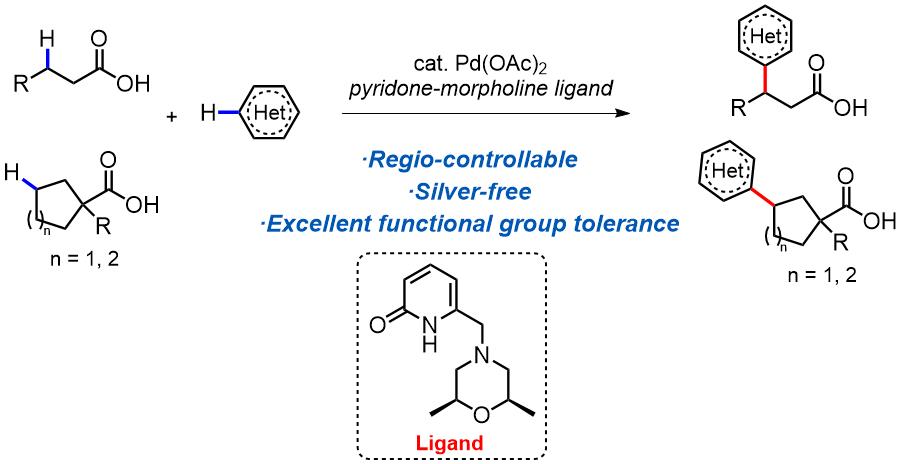
Methylene CH can now be coupled with Aryl CH. The scope is limited, but what new ligand can do is always a pleasant surprise: pubs.acs.org/articlesonrequ…
Yulab tweet media
English
0
13
137
5.2K
Rachit Singh Chauhan retweetledi
犬自慢ニキ
犬自慢ニキ@tmitsui1007·
インドール環の骨格編集に関する論文。インドール環3位のトリプトアミン側鎖に目的の官能基をアミド化させておいて、光環化反応を起こすとインドール環の開環と閉環を伴うLoading, Unlocking, Removing, Cyclizingからなる4段階の分子内反応が自律的に進行(⇩続く) science.org/doi/10.1126/sc…
日本語
1
2
36
3.1K
Rachit Singh Chauhan retweetledi
Yang Yang
Yang Yang@yang2biocat·
In @NatureCatalysis we report the integration of photoredox radical generation and metal-carbenoid chemistry to achieve a formal metal carbenoid-radical coupling with enzymatic stereocontrol: nature.com/articles/s4192…
English
0
10
101
2.9K