
Sundar Ramakrishnan retweetledi
Sundar Ramakrishnan
23K posts

Sundar Ramakrishnan
@radnus0
Technology, business, leadership, politics, Indian history, travel, photography ... Interests aplenty, skills too few.
Katılım Nisan 2009
129 Takip Edilen1.1K Takipçiler

@sridharkswamy @Ananth_IRAS But Dr. Kalam would have none of that. He insisted we join him, saying “Don’t worry, I won’t eat you! You are also going to the mess, no? We can all have good food there.” 4/4
English
@sridharkswamy @Ananth_IRAS The drivers of these cars are trained to ignore us hitchhikers and drive on. But this car stopped. We assumed the car was unoccupied. Only to open the door and find Dr. Kalam indeed was inside. We stepped back instinctively and politely waved the driver on. 3/n
English

There's a small story I heard about a shirt that he needed to buy to be worn for the function where he was to be awarded the Bharat Ratna. Not someone who shopped for his own clothes, I believe he deputed Dr Anil Kakodkar to purchase a shirt for him.
A few hours later, he was heard shouting at Dr Kakodkar who had bought him a shirt from a reputed brand which cost about ₹1000 in 1997. Dr Kalam was hoping for a ₹300-400 shirt and he was livid that such an expensive shirt was bought for him. But Dr Kakodkar managed to convince him. Such was the simplicity of the great soul. #DrKalam #memories
Kalam Center@KalamCenter
When Dr. A. P. J. Abdul Kalam passed away in Shillong, the whole world wept. But what happened the next day in Delhi was something that shook people even more. Some rushed to unlock his room… curious, almost restless. They wanted to see what a man of such greatness had left behind — a scientist who served the nation for over 40 years, who lived for 5 years in the grandeur of Rashtrapati Bhavan… surely, there must be immense wealth, possessions, luxury. But when the door opened… there was silence. Not a single locker. No luxury car keys. No foreign bank accounts. Just a small wooden box in the corner. And inside it… 6 worn-out shirts and 4 simple trousers — the kind he washed himself. 3 old suits — one stitched when he became President, the same one he wore for years. A simple wristwatch — one that respected time, but never chased attention. An old laptop. A veena. And the most valuable treasure of all… 2,500 books. That’s it. This was the entire wealth of the man who helped make India a nuclear power. And here’s what will break your heart… He quietly donated his entire salary and pension to an organization called PURA. A man whose signature could move billions… never bought even a single piece of land for himself. Today, we wear branded shoes and expensive glasses and call ourselves “rich.” But that man… without any brand, owned the respect of the entire world. In his final moments, he left us with a mirror — A reminder that a person is not measured by what they own… but by what they leave behind in hearts and minds. If you have a roof over your head and clothes to wear, you may already be richer than the President he once was. But the real question is… Do you have a heart like his? Some lives don’t just end… they echo forever. For a man like him… a simple “salute” will never be enough. 🇮🇳 #DrAPJAbdulKalam #KalamSir #MissileManOfIndia #PeoplesPresident #TrueLegend #RealHero #Simplicity #HumbleLife #Inspiration #LifeLessons #Respect #IndianPride #LegacyLivesOn #SaluteToKalam #HeartTouching #EmotionalPost #MotivationDaily #ValuesMatter #Greatness #BeLikeKalam #IndiaInspires #UnsungHero #PureSoul #NationFirst #IncredibleIndia 🇮🇳
English
Next up, India has to focus on T&D. State-run DISCOMs are dinosaurs, and personal fiefs of politicians. Even if no more generation capacity is added, solving this alone will give a massive boost.
Chenthil@jcrajan00
India's peak power demand hit 260 GW yesterday. New all-time record. During a heatwave with 47°C temperatures across North India. The grid held. No blackouts. That sentence alone is an engineering achievement most people will not appreciate. Five years ago India had chronic power deficits. Load shedding was normal. In 2023, peak demand hit 243 GW and several states struggled. In April 2026, the grid delivered 260 GW without a single major failure. What changed: 26.5 GW of new capacity added in FY26 — largest annual addition in a decade. Solar alone contributed 18 GW. New HVDC transmission corridors connecting surplus regions to deficit ones. Battery storage deployments cushioning peak load. But the margin is razor thin. India's grid is designed for about 270 GW. We just touched 260 GW. That is 96% utilisation during peak hours. One more heatwave spike or an unexpected plant outage and the buffer disappears. This is why every power stock hit 52-week highs. The market sees what the headlines miss — India needs $150 billion in power infrastructure investment over five years just to keep up. Data centres, EVs, semiconductor fabs, industrial expansion — all need reliable 24/7 power. The grid is the bottleneck holding everything else together.
English
Sundar Ramakrishnan retweetledi

Today is the 40th anniversary of the greatest technological disaster of the 20th century - the explosion at Chornobyl Nuclear Power Plant.
This catastrophe could have had still much more disastrous global impact had it not been a sacrifice of the first responders.
At 1:23 a.m., in 1986, two explosions destroyed the fourth power unit of the station. The reactor was left exposed, and flames, smoke, and radioactive materials were released into the atmosphere. At that moment, no one yet understood the full scale of the tragedy.
Within minutes, the first firefighting crews from Prypyat and Chornobyl arrived at the plant, led by Lieutenants Vladimir Pravik and Viktor Kibenok. Later, the chief of the unit, Leonid Telyatnikov, joined the firefighting efforts.
They faced a task the significance of which would only become clear later: to prevent the fire from spreading to the adjacent third power unit. Had the fire spread further, the consequences for Ukraine and the whole of Europe could have been incomparably worse.
The firefighters had no special radiation suits and no accurate data on radiation levels among the scorching fragments of graphite and metal. All they had were canvas uniforms, helmets, and water hoses.
The firefighters worked almost blindly. They climbed external ladders to the roof, laid out hoses, sprayed water, and extinguished dozens of fire hotspots.
These hours would later be called a feat of heroism. For them, however, it was simply a job that had to be done at any cost. They did not know they were already receiving lethal doses of radiation.
By morning, the fire was contained. Those few hours were decisive. They provided the opportunity to begin the further cleanup of the accident and to prevent a much more catastrophic scenario.
In the first hours after the accident, 28 firefighters fought the reactor that night. Six of them: Pravik, Kibenok, Ignatenko, Vashchuk, Tishura, and Titenok - received doses incompatible with life. They were buried in sealed zinc coffins under concrete slabs.
Following them, thousands of liquidators arrived in Chornobyl - engineers, military personnel, medics, and miners. They cleared the contaminated territory, dropped sand and boron from helicopters, and built a sarcophagus over the destroyed reactor. But it was those very first hours that determined whether the world would have time for that struggle.
On the 10th anniversary of the tragedy, a monument titled "To Those Who Saved the World" was installed in Chornobyl in honor of the accident's liquidators. This is no exaggeration. Were it not for their heroism, the radioactive cloud that spread to the west and northwest could have been thousands of times denser.
The consequences were felt even in the United States, but a catastrophe of planetary scale was avoided only thanks to the self-sacrifice of those first liquidators.
Forty years later, Chornobyl remains a reminder of the price of technological errors and human responsibility - but also a reminder of the people who were the first to face the fire at the nuclear plant and who did everything in their power to ensure the disaster did not become even worse.
English
Dr. Natarajan was also instrumental getting the Pinaka MBRS accepted by the IA. Today, we see videos of the Pinaka launching a barrage and be in awe today. We see steady export requests. But the behind-the-scenes work needed to get this here was humongous.
English
It was a loooong battle with the fickle IA and MoD mandarins to get the Arjun to production. Thanks to the then RM George Fernandes who put his foot down and pushed it through.
English
Sundar Ramakrishnan retweetledi

There was relentless speculation in 🇺🇸 media and among American analysts and academics on whether India lost fighter jets during Operation Sindoor.
In contrast, the American media has been purring like Pentagon's pet cat, refusing to ask even basic questions on the losses suffered by the US during the war with Iran, even though the Pentagon has made some questionable claims over the losses of jets and damage to aircraft carrier.
NBC News has finally done some due diligence and what is shocking isn't the level of damage suffered by the US, but the way Pentagon has been trying to suppress the facts.
Brian Allen@allenanalysis
Take a close look at this. NBC News published a major investigation this afternoon. Six reporters. Six named sources inside the US government. The story breaks open something the Trump administration has been hiding for two months. The damage Iran did to American military bases in the opening phase of the war is far worse than the Pentagon has admitted. Repairs will cost billions of dollars. Here is what NBC found.
English
Sundar Ramakrishnan retweetledi

The same satellite tech can track a convoy through dense cloud cover at night, flag a sinkhole weeks before it opens, catch a village built on a collapsing slope, and even map the inside of a pyramid from orbit.
It's called Synthetic Aperture Radar (SAR), and a lot of the data is free.
In this video I cover the physics, the commercial arms race, and the defense constellation that will track every moving vehicle on Earth by the 2030s.
0:00 - A convoy no camera can see
0:56 - What is Synthetic Aperture Radar?
2:02 - InSAR: sub-millimeter change detection
3:07 - They scanned inside a pyramid from space
4:20 - These cities are sinking faster than sea levels rise
5:00 - North American bridges are the worst on Earth
6:09 - An AI caught a village built on a landslide
7:50 - The commercial SAR arms race
9:01 - GMTI: tracking convoys in the dark
11:26 - NISAR: the billion-dollar SAR satellite
12:45 - The other side of this all
Full video on YT on Bilawal Sidhu channel. Enjoy.
English
Sundar Ramakrishnan retweetledi

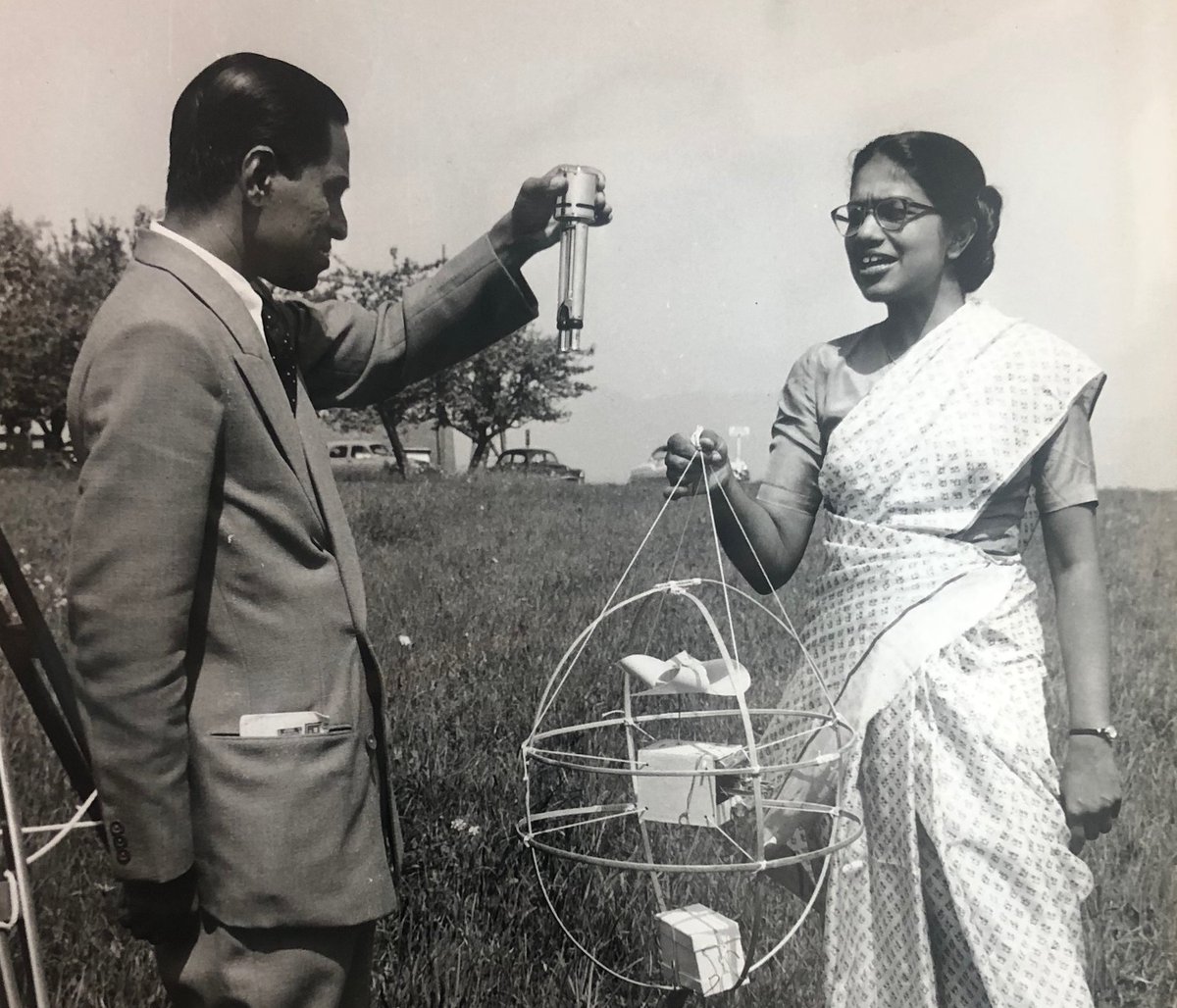
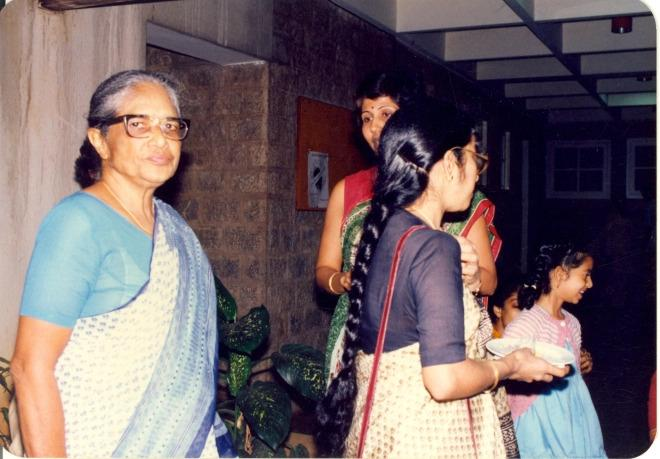
Next in who after the Bibha Series? While we check our 5G weather apps today, we are using the legacy of a woman who built India’s 1st weather instruments from scratch in a dusty Pune workshop. She is the ghost who told us when it would rain, & where the sun would shine. If Bibha represents the struggle of Indian women in cosmic physics, Anna Mani (1918-2001) is the 1 who took the Silo of elite research & turned it into a national infra.
Born in 1918 in Peermade, Travancore (present-day Keralam), Anna was born into a world where girls were groomed for marriage. On her 8th birthday, she famously refused her family's gift of diamond earrings. Instead, she demanded a set of Encyclopaedia Britannica. By age 12, she had read every single book in her local library. In 1940, she joined the lab of Nobel Laureate C.V. Raman.
She was a powerhouse, publishing 5 single-authored papers on the luminescence & optical properties of diamonds & rubies b/w 1942 & 1945. She submitted her PhD thesis to Madras University, but they denied her the degree on a bureaucratic technicality (she did not have a Master’s degree, despite her world-class research). She never got her PhD, but she did not care. She used the scholarship to go to London & master Meteorological Instrumentation exactly what independent India needed.
When Anna returned to India in 1948, the country was 100% dependent on British weather instruments. She joined the India Meteorological Department (IMD) in Pune. She did not just measure weather; she manufactured it. She standardized drawings for ~100 different weather instruments & built them in India.
Long before the Ozone Hole was global news, Anna Mani was building Ozonesondes (balloons to measure ozone) & setting up monitoring stations across India. When Vikram Sarabhai wanted to launch India's 1st rocket from Thumba, he called Anna. With almost no budget & zero time, she managed to convince the Overseas Communication Service to dismantle a 200 foot radio tower in Pune & ship it to Kerala. She had that massive tower re-installed at the launch site just 2 days before the rocket went up. W/o that stolen tower, India's space journey might have started with a crash.
Her books, The Handbook of Solar Radiation Data for India, are still the Gita for engineers building solar plants today. She wore only Khadi & lived a life of monastic simplicity. She never married, stating that her instruments were her children. By 1953, she was leading a division of 121 men. In a deeply patriarchal era, she commanded respect through sheer technical superiority.
Despite being the "Weather Woman of India," her name is missing from school textbooks. Most Indians think our weather tech was bought from the West, unaware it was built by a woman in a workshop in Pune. She served as a high-level consultant for the World Meteorological Organization, helping Egypt & other nations set up their radiation labs.
On her 104th birthday (2022), a Google Doodle finally brought her name to the digital generation, but she remains a Ghost in our cultural memory. Anna Mani is the bridge b/w the Pure Physics of Raman & the Applied Engineering of modern India. She showed that a woman w/o a PhD could still be the Master of the Indian Sky. #WhoAfterBibha
English
It’s easy to adopt the pessimistic view of the slow-moving Indian bureaucracy in its endeavour to work out a trade deal with the USA. But maybe there’s something afoot from the painstaking process, after all.
Chenthil@jcrajan00
India-US trade deal is 'almost finalised' according to Commerce Minister Goyal. 12 Indian officials in Washington this week. Three days of talks ending today. Here is what most people are missing about this deal. India offered to cut tariffs on ALL US industrial goods. That is a massive card. In return, India wants preferential market access — not just equal, but better terms than competitors like Vietnam and Bangladesh get. The framework agreement from February already covers agriculture and dairy protections. This round is about industrial goods, tech transfer, and defence procurement corridors. India-US bilateral trade is at $190 billion. India's total trade deal pipeline now covers the US, UK (signed), EU (concluded), Oman (June 1), New Zealand (April 27), and Australia (upgraded). Six major economies in 18 months. The old line was 'India does not do trade deals.' In 2026, India is doing more trade deals simultaneously than any other major economy. The skeptics have not updated their talking points.
English
Sundar Ramakrishnan retweetledi

McKinsey just confirmed what the numbers have been screaming: India now supplies 40% of US smartphone demand. Replaced China.
Five years ago India made zero smartphones for the US market. Zero. Today four out of every ten smartphones Americans buy come from Indian factories.
Apple alone shifted $20 billion in exports to India. Foxconn Sriperumbudur. Tata Hosur. Pegatron Chennai. These are not assembly units anymore — PCB manufacturing, camera module assembly, and precision machining all happening domestically.
But here is the part McKinsey buried in the footnotes: India is not just replacing China in phones. Indian factories now export $2.5 billion in components TO China. The supply chain has reversed.
The 'screwdriver assembly' crowd has been saying this for five years. Meanwhile India's electronics exports crossed $30 billion, component localisation hit 23%, and the PLI pipeline has $6.2 lakh crore in committed investment.
At some point the skeptics need to update their 2019 talking points. The data moved on.
English
$1T valuation on $50B revenue. The new normal or tulips all over again?
The Kobeissi Letter@KobeissiLetter
BREAKING: OpenAI's pre-IPO valuation has officially hit a record $1 trillion. Pre-IPO instruments trading onchain, backed 1:1 by SPV exposure on Jupiter, are providing a real-time proxy for the company’s implied IPO valuation. OpenAI’s implied valuation is now up +163% since October 2025, when rumors first emerged of a potential $1+ trillion IPO. This comes as Anthropic is also nearing a potential $1+ trillion IPO and SpaceX is reportedly targeting $1.7+ trillion. The world has never had this many trillion-dollar private companies. AI is accelerating.
English
Sundar Ramakrishnan retweetledi

Two global companies, one with $690B market cap and the other with a $470B market cap, are rapidly losing relevance in the world's most innovative Fintech market. 1B users. That is what is at stake.
Rajan Anandan@RajanAnandan
Kaboom!!
English
@saranstm Not to forget that large parts of Samarkand itself were built using Timur’s loot from India, and using Indian artisans whom he took to Uzbekistan.
English

All these claims that Mughals brought Civilization to India remind me of my conversation with a guard at the Ulug Beg observatory in Samarkand, Uzbekistan who was talking about Advaita vs Dwaita. Ulug Beg is an ancestor of Babur.
English
@saranstm Sadly, a long, tortuous period ahead for the people. And the world as a whole.
English
@radnus0 Trump miscalculated the regime will collapse when the leaders were rid of. But I feel it is a matter of time the regime will collapse as its revenue is choked due to US Naval blockade in the Guf of Oman.
English
@saranstm No doubt Iran since the revolution has been led by bigoted rogues. And nothing about the history of the regime it replaced will justify what happened since.
But the point for now is who is in control? Whom to negotiate with? How to trust a process to be put in place now?
English
I have a different view about Iran unlike Libya/Iraq which i felt was very wrong to disturb the status quo. Iran regime was always a rogue one since it took over Iran in 1979. It not only openly declared, "Death to America" and Israel too, it was acting on it with its tentacles- Hezbollah, Hamas etc disturbing the peace in Middle-East. And it is not good for its own people too. The regime need to go. The time US should acted was in 1983 when the Beirut bombings by Hezbollah and Iran-linked militants killed 299 US and French peacekeeping soldiers.
English