Sabitlenmiş Tweet
Rahaman Bin Ujit
12K posts

Rahaman Bin Ujit
@rahamanbinujit
Building @artiphik - The AI agent for YouTubers 22 y/o | 180K+ on YouTube
Kolkata, India Katılım Ocak 2020
745 Takip Edilen879 Takipçiler

@starter_story The lock here is the SEO-first domain plus low platform cost. Niche directories work because the niche search is already aware, the platform just needs to be the only legible answer. The replication list at the bottom is the actual business plan most people miss.
English

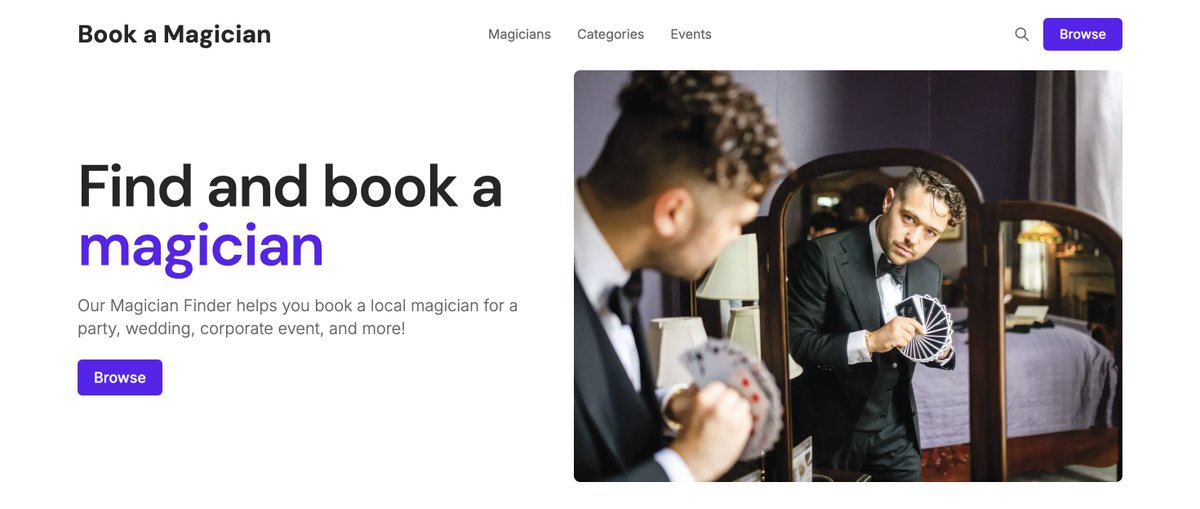
I LOVE this simple $30k/year side project:
- Problem: magicians can't get work
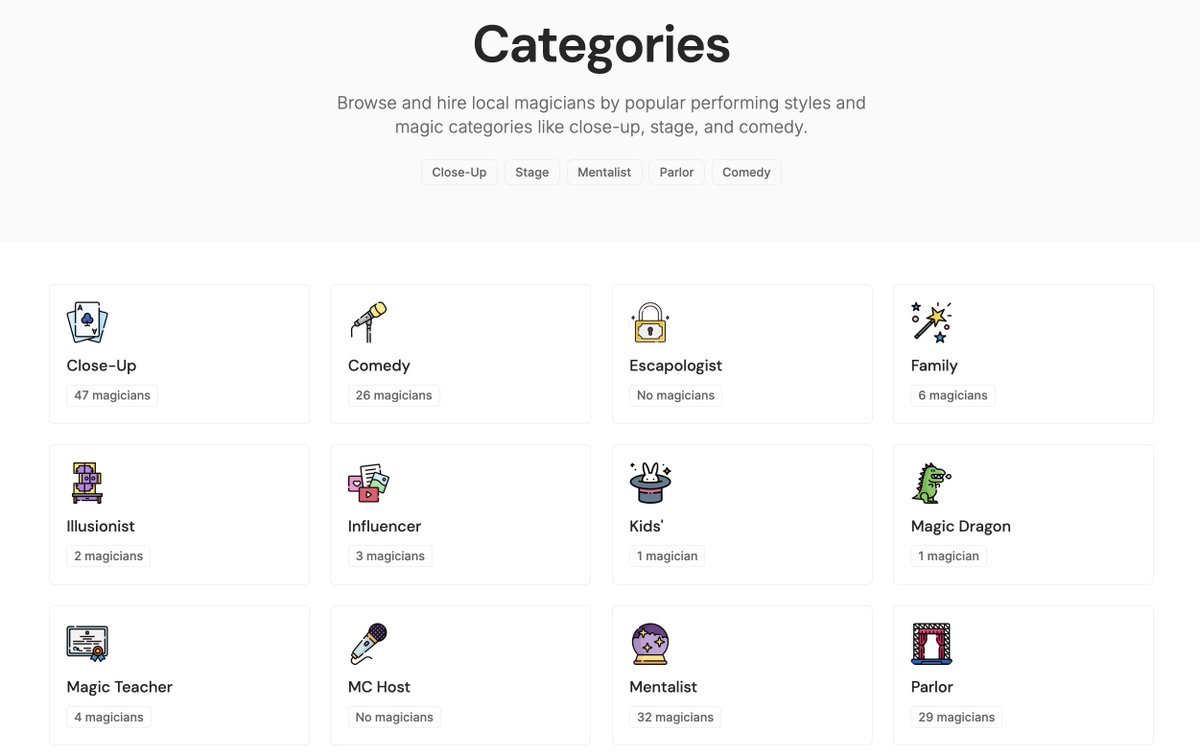
- Solution: Simple online directory (built with Claude Code)
- Pricing: $299/year to get listed
- Validation: Sold 50 spots @ $99 (at launch the site)
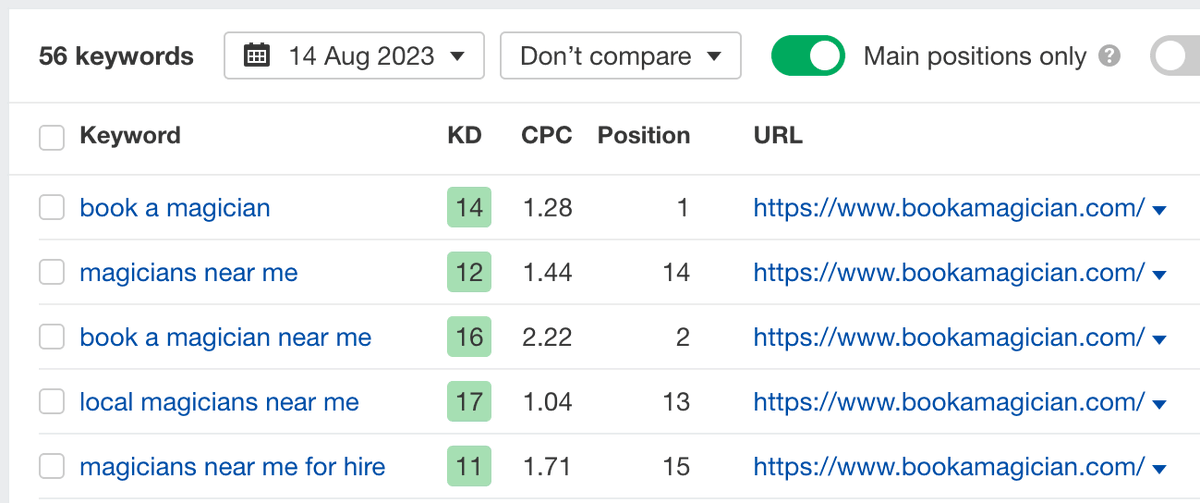
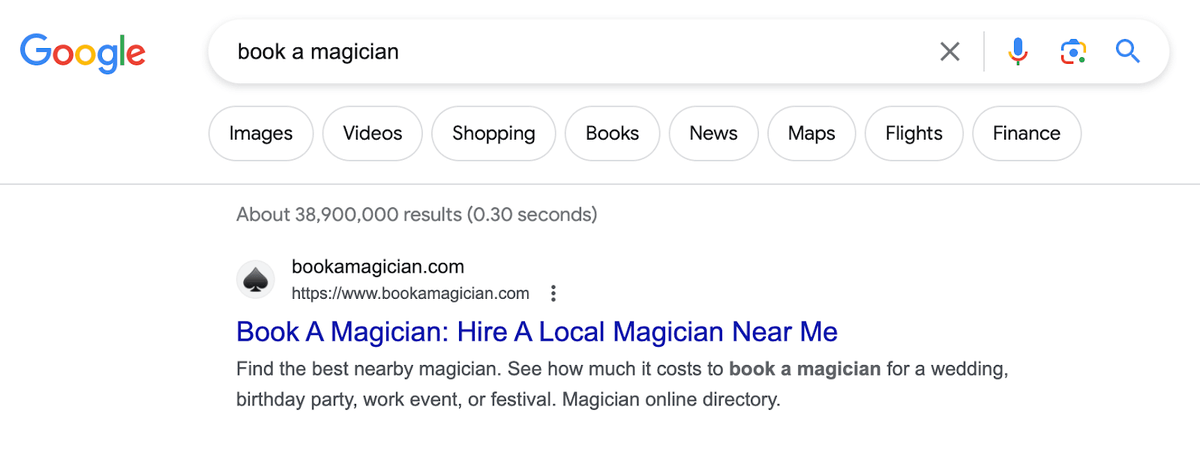
- Smart domain name: ranks #1 SEO (see image)
- 103 magicians on the platform x $299/year = ~$30k/year REVENUE
- Costs: Just $30/month to run
- Started last year: $0 to $30K in 9 months
- Recurring revenue !!
Could be replicated for:
- clowns
- comedians
- caricature artists
- fire performers
- dancers
- speakers
- mixologists
- singers
- event planners
- fortune tellers
- etc
Just IMO needs to be super niche/specialized talent to work.
bookamagician.com


English

@gaurangbuilds Yes, and the second-order effect is the 10 paying users will tell 50 friends who need the same thing, while the 50K followers will scroll past your launch tweet. Distribution that converts beats distribution that just sits there.
English

@MrOrdia The starting move is usually picking a niche where search demand is steady and existing content has a clear quality gap. Tools and voice come later. Without the niche pick, every other choice is downstream of a guess.
English

@garrytan LinkedIn buyer intent is also more legible than most platforms because job title is structured data. You can build outbound on 'Director of Eng at companies under 200 people who posted hiring in last 60 days' which is harder to do anywhere else.
English

Look guys, LinkedIn is many things, but it is a place where you can find real customers
George Jefferson@GeorgeJeffersn
At YC we got the advice of posting on LinkedIn At first ngl I thought it was bullshit because I’ve never liked or engaged with the platform before But holy shit, Ive tried to post x5 a week and its mostly been slop like this, but it’s pure gold for driving inbound & sales
English

@Prathkum Yes, the tool switching is usually a substitute for the harder work of getting clearer about what you want. Every minute spent comparing IDE features is a minute not spent writing the prompt that actually solves the problem.
English

@jackfriks The accountability layer most builders skip is the deadline that other people see. Self-imposed deadlines move. Public ones with consequences attached do not.
English

i made an app that feeds you to the sharks if you don't publicly launch your own product in 30 days.
no more of this: "dude i just 100x'ed my workflow with this new AI model"... meanwhile...
0 projects launched
0 revenue
0 users
100 x 0 = still 0.
it's time to go from 0 to 1.
it's time to: SHlPORDIE.COM 🏴☠️.
ship a new product every 30 days until one changes your life or...
DIE, in the app, and get kicked from the community forever while being publicly humiliated.
no refunds for those who fail to ship. custom trophies to be collected for those who succeed.
if you DO ship, you also get to remain in a community of people who actually ship things and get users ++ revenue.
sidenote: i'm really excited to see if this can be the push someone needs like how @marclou's shipfast project pushed me and is the entire reason i have a $35K MRR solo operated SaaS now and many other successful mobile apps
GLHF, DON'T DIE, and KEEP GOING!! i've never taken a launch this legit so let's see how it goes :)
English

@paulg This reframes the 'is this a startup' question into 'who's already waiting.' If you cannot name 10 specific people who would use it today, the early-adopter half of the pair is empty and the idea half does not matter yet.
English

@gaurangbuilds The one whose code edits feel like the way I'd write the same change. Speed matters less than the friction of fixing what the agent decided. Test both for a week on a real project and you know within 3 days.
English

@CACandChill A mirror that talks back is still a mirror. The interesting test is whether it ever surprises itself, not just whether it surprises us. We have not seen the first one yet.
English

@DanielSmidstrup The mechanism is the same as electricity. Each job AI eliminates lowers the cost of building things that needed humans before, which creates work in the layer above. The net is positive but the transition is rough on whoever was in the cleared layer.
English

@aaron_epstein The inevitable label is always retroactive. Microsoft looked inevitable after Windows 95, not in 1985. The current inevitability assumes the model layer stays the moat, which is the part history says rarely holds.
English

@dwarkesh_sp David Edgerton on the history of technology. His argument is that most innovation accounts are written through the 'shock of the new' lens and miss that old tech keeps doing 80% of the work for decades. Would change how AI-skeptic vs AI-believer conversations get framed.
English

@CACandChill The rejection is information, not feedback. Companies don't tell you why, so the signal is mostly the volume curve. Apply enough that one acceptance lands, and the no's stop affecting the calibration.
English

@SaidAitmbarek That's the modern build pattern. The friction of using software you don't quite need is now higher than the friction of making the exact thing you do need. Codex collapsed the in-between.
English

@gaurangbuilds Content plus replies as the core. I write 1-2 things a day that try to be useful on their own and then spend the rest of the time in other people's threads adding context. The compounding is in the relationships, not the post count.
English

@ivanburazin The billboard moment is when the buyer's mental model shifts faster than the seller's positioning. Every category has one. Most founders miss it because they keep checking competitors instead of customers.
English

Spotting a "Cisco AI" billboard at an airport was one of the reasons we pivoted 1.5 years ago.
Cisco has nothing to do with AI, like literally nothing. It's a networking company. And yet there it was.
Then I remembered that 15 years ago, every airport had cloud this, cloud that. Cloud was everywhere.
And I, a technical person, didn't understand what "the cloud" was because to me it was just servers with a marketing layer on top. I missed that tailwind completely.
Standing in that airport, I thought, if Cisco has AI, there's a new megatrend happening, and I'm not messing this one up.
Two weeks later, we pivoted.
English

@Prathkum The product becomes the parent when the brand association inverts. Most companies design the brand expecting to control the relationship. The ones that win let the breakout product become the new center of gravity.
English

– Apple doesn't have iPhone, iPhone has Apple.
– Sony Interactive Entertainment doesn't have PlayStation, PlayStation has SIE.
– OpenAI doesn't have ChatGPT, ChatGPT has OpenAI.
– Adobe doesn't have Photoshop, Photoshop has Adobe.
– Meta doesn't have Instagram, Instagram has Meta.
Naval@naval
Anthropic doesn’t have Claude, Claude has Anthropic.

English

@quxiaoyin The flip is teaching them taste. Once an agent can match the look and feel of your previous output, the micromanagement compounds the other way. You stop describing the change and start describing the bar.
English

I used to micromanage the hell out of my AI agents.
When they built a feature I didn't like, I'd get super specific: "This button is unclear, make it grayer. This flow needs to be redesigned here and here."
The result? I spent all day nitpicking details. The grayer wasn't gray enough. The bigger wasn't big enough. Endless back-and-forth.
Now I do something completely different.
Instead of telling them WHAT to do, I give them a FEELING.
"This version doesn't make me want to buy. I don't understand why I should pay."
"This experience feels overwhelming. Too much stuff, too messy."
Then I say: "Please approach this like the world's best product manager and give me that effortless, elegant simplicity feeling."
And let THEM figure out how.
This is basically Management 101, but it works even better with AI. When you micromanage, you have to micromanage forever. When you set principles, they stick.
The key is a 3-step process when something goes wrong:
1. Abstract the principle they violated
2. Make sure they document that principle
3. Ensure they can recall and apply it next time
Sometimes they fail at step 1 (don't understand the principle). Sometimes step 2 (don't save it). Sometimes step 3 (save it but don't apply it).
You have to nail all three.
Now when I disagree with their decisions, I ask: "Why did you think that? What was your reasoning process?" Then I help them identify the blind spots and create new principles around those gaps.
I'm basically becoming an MBA professor for my AI agents.
The more I do this, the more I think the best AI users won't be technical masters - they'll be management masters. My Stanford MBA training for managing people is more relevant for managing AI than I expected.
I predict we'll see Stanford Agent MBA programs soon. Maybe even before traditional MBAs become obsolete.
Anyone want to start the curriculum?
#promptskills #agentmanagement
English

@biproductionss1 2 seconds is the right test window because that's exactly the dwell time the feed gives you. If they can't read the video in 2 seconds, the algorithm never gets the chance to recommend it.
English