Madhavan Rajeevan

4K posts

Madhavan Rajeevan banner
Madhavan Rajeevan

Madhavan Rajeevan

@rajeevan61

Former Secretary, MoES. Vice Chancellor, Atria University Interest in Monsoon Research Tweeting in my personal capacity. Re-tweets or Likes not endorsements

New Delhi, India Katılım Nisan 2016
940 Takip Edilen16.8K Takipçiler
Madhavan Rajeevan
Madhavan Rajeevan@rajeevan61·
Delighted to share my opinion article written for Moneycontrol on the critical role of climate change and extreme weather as a silent driver of inflation in India. The article can be found here: moneycontrol.com/news/opinion/t… India’s agriculture remains highly sensitive to weather variability and extreme climatic events. Nearly 65 per cent of the country’s cropped area is still rain-fed, making agricultural production particularly vulnerable to fluctuations in rainfall. However, the impact of extreme weather extends well beyond crop production. Disruptions caused by extreme weather create bottlenecks across the food supply chain—affecting harvesting, transportation, storage, and distribution. These disruptions increase wastage, reduce market arrivals, and exert upward pressure on prices. A growing body of economic research now confirms a strong link between climate variability and food inflation. At the same time, India’s food distribution system continues to face structural constraints. It is estimated that only about 4 per cent of fresh produce is currently handled through cold-chain infrastructure, leaving a substantial share exposed to spoilage during transit and storage. Consequently, weather-related shocks often widen the gap between farm output and consumer availability. Climate resilience is emerging as a central pillar for ensuring food system stability and managing inflation. In a country where food carries nearly half the weight in the Consumer Price Index (CPI), strengthening resilience is not merely an agricultural concern—it is a macroeconomic imperative. India’s food system is entering a new phase, where weather risks must be systematically integrated into economic planning and policy making. Enhanced forecasting capabilities, resilient infrastructure, and adaptive agricultural practices will play a decisive role in stabilizing food prices in the years ahead. @moneycontrolcom @atriauniversity
English
0
5
6
336
Madhavan Rajeevan
Madhavan Rajeevan@rajeevan61·
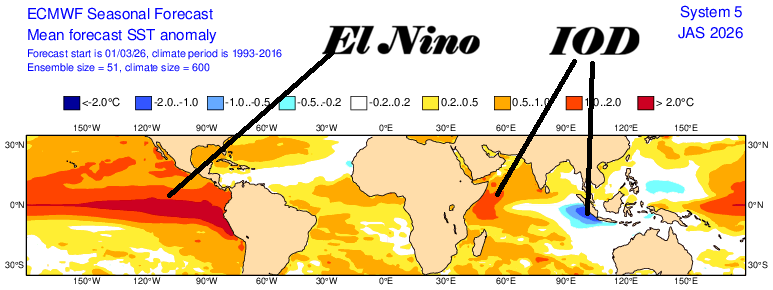
Monsoon 2026 Update In view of emerging indications of a possible El Niño event over the Pacific and the concerns regarding the prospects for the 2026 monsoon season, I would like to highlight the following key points: There is a high probability that an El Niño event will develop over the equatorial Pacific during the 2026 monsoon season. Seasonal forecasts from ECMWF and NCEP (USA) suggest that it could evolve into a strong El Niño event. These models also indicate the possible development of a positive Indian Ocean Dipole (IOD) during the monsoon season. While a strong El Niño is typically associated with deficient monsoon rainfall over India, a positive IOD generally tends to support normal or above-normal rainfall, partly offsetting the El Niño influence. However, forecasts made at this time of the year carry significant uncertainty due to the so-called “spring predictability barrier.” Historically, the simultaneous occurrence of a strong El Niño and a positive IOD has been observed in 1972, 1982, 1997, 2015, and 2023. Among these years, the Indian monsoon was normal in 1997 (100% of LPA) and near normal in 2023 (95% of LPA). The remaining years—1972, 1982, and 2015—experienced deficient monsoons. Therefore, there is reason for cautious concern regarding the potential development of a strong El Niño event during the coming monsoon season. Given the current uncertainties, clearer signals are likely to emerge by May 2026, when the evolution of El Niño and IOD conditions can be assessed with greater confidence. At present, there is no reason for alarm. However, the government and relevant agencies should closely monitor the evolution of these climate drivers and begin considering strategic response measures that can be implemented once more reliable forecasts become available. It is also important to consider the possible delayed impacts of this year’s El Niño, particularly on heat waves in 2027. There is a possibility of more frequent and intense heat waves next year, with an earlier onset potentially beginning as early as March. India has strong scientific expertise and forecasting capability, and these strengths should be effectively leveraged to anticipate and manage the potential impacts on the monsoon and related climate extremes. Summary: At this stage, the message is not to panic, but to remain vigilant and begin thinking proactively about strategies to manage possible impacts. I will continue to update this assessment as new information becomes available. Please note that this is not an official seasonal forecast of the Indian monsoon. For the authoritative monsoon forecast, please refer to the India Meteorological Department (IMD). @Indiametdept @PMOIndia @atriauniversity
Madhavan Rajeevan tweet mediaMadhavan Rajeevan tweet media
English
14
85
316
39.5K
Madhavan Rajeevan
Madhavan Rajeevan@rajeevan61·
Why we should do such an experiment @agrawalmanindra if we know theoretically cloud seeding in winter with shallower or high clouds (with little cloud droplets) will not yield rains? What this kind of experiment will provide you additional information? You may like to refer the IITM/MoES White paper on cloud seeding for technical details. tropmet.res.in/~lip/Publicati…
English
2
0
3
436
Manindra Agrawal
Manindra Agrawal@agrawalmanindra·
@Jairam_Ramesh This is hugely misleading. First, total funds *sanctioned* by Delhi Govt is Rs 3.4 Cr. Of this, amount spent is less than Rs 1 Cr so far. Second, while there is skepticism in some quarters about seeding, there has been no study for NCR region during winter. 1/2
English
2
14
72
4.5K
Jairam Ramesh
Jairam Ramesh@Jairam_Ramesh·
The Delhi Govt has spent Rs 34 crore on a winter cloud seeding experiment in order to improve air quality. On Dec 5, 2024, the Union Minister of State of Environment, Forests, and Climate Change had answered a question in the Rajya Sabha saying that 3 specialised agencies - the Commission for Air Quality Management in NCT, the Central Pollution Control Board, and the Indian Meteorological Department - had clearly advised AGAINST winter cloud seeding to improve air quality in Delhi. Then on Oct 31, 2025 - that is just day before yesterday - the well-known and prestigious Centre for Atmospheric Sciences at IIT Delhi issued a detailed report on the subject which makes it clear that winter cloud seeding will not help improve the atrocious air quality in Delhi in any significant manner. Winter cloud seeding certainly looks very dramatic and gives the impression that something is demonstrably being done by the Govt. But when the overwhelming scientific consensus raises so many doubts and serious questions on its efficacy, is it wise to lay so much store by it except as a headline-grabbing measure? Getting 'slight improvement in a limited area for a day or two' as is now being claimed is really a cruel joke. owncloud.iitd.ac.in/nextcloud/inde… sansad.in/getFile/annex/…
Jairam Ramesh tweet mediaJairam Ramesh tweet mediaJairam Ramesh tweet media
English
29
358
1K
44.7K
Madhavan Rajeevan
Madhavan Rajeevan@rajeevan61·
Asian College of Journalism, in association with Mongabay India, is organizing a hybrid training workshop for journalists on Climate Change Reporting on Saturday, 11 October 2025, from 9:30 AM to 1:00 PM. I will be conducting a session on “Impacts of Climate Change on the Indian Monsoon and Extreme Weather.” The other two sessions will focus on “Climate Change and Health” and “Getting the Climate Facts Right.” This workshop will be an excellent opportunity for journalists and media professionals to gain deeper insights into the multifaceted impacts of climate change and to strengthen their ability to communicate these critical issues with clarity and accuracy. Kindly register using the link below. @atriauniversity
Madhavan Rajeevan tweet mediaMadhavan Rajeevan tweet media
English
0
1
1
664
Madhavan Rajeevan
Madhavan Rajeevan@rajeevan61·
Air Pollution in Indian Cities As winter approaches, North India once again braces for a season of deteriorating air quality. The region experiences dangerously high levels of air pollution, which not only threatens public health but also claims countless lives every year. Human activities remain the primary drivers behind this alarming rise in pollution levels. To address this pressing issue, Atria University is organizing a Webinar on 16th October to deliberate on critical challenges surrounding air pollution and air quality in Indian cities. The event will feature a distinguished panel of experts from leading institutions in India and abroad, including scientists from NASA laboratories. They will share insights on: 1) Air pollution observations from multiple platforms, including satellites 2) Advanced modeling and prediction using state-of-the-art mathematical tools 3) Policy frameworks and strategies for mitigating air pollution Registration is Free. Please register here: docs.google.com/forms/d/e/1FAI… @atriauniversity @moesgoi @moefcc @CPCB_OFFICIAL
Madhavan Rajeevan tweet mediaMadhavan Rajeevan tweet media
English
0
2
3
539
Vimal Mishra
Vimal Mishra@vmishraiit·
Truly humbled to receive INSA fellowship from @insa_academy! Extremely grateful to @iitgn, all the past and current students of the water and climate lab, mentors, and my beloved family 🙏
IIT Gandhinagar@iitgn

We are proud to share that Prof Vimal Mishra, Vikram Sarabhai Chair Professor, Civil Engineering (with Earth Sciences) #IITGN, has been elected Fellow of #INSA This honour (effective Jan 1, 2026) recognises his outstanding research & scholarship #IITGN #FacultyAchievement

English
13
2
61
2.2K
Madhavan Rajeevan
Madhavan Rajeevan@rajeevan61·
A well written article @jayashreenandi on global warming throws monsoon patterns out of gear. The global warming causes more frequent weather extremes in the Himalayas leading to more frequent devastating flash floods. We need to be well prepared.
Jayashree Nandi@jayashreenandi

IMP: #ClimateCrisis is altering #southwestmonsoon. Imp to pay careful attention to science #disasterresilience, a plan for #Himalayan regions. #Monsoon circulation weakening bt excess moisture triggering extreme spells, heat wl lead to spike in vector diseases especially dengue

English
3
8
17
1.3K
Madhavan Rajeevan
Madhavan Rajeevan@rajeevan61·
@JamwalNidhi Well said Nidhi. Nature cannot appreciate our business as usual attitude. We need to act now.
English
0
0
1
49
Nidhi Jamwal
Nidhi Jamwal@JamwalNidhi·
Both Jammu-Kashmir and Himachal are facing extremely disastrous flood conditions! Let us hope that after this difficult period is over, our governments and planning agencies do not go ahead with business-as-usual approach and learn to build with Nature and not try to tame it.
Nikhil saini@iNikhilsaini

After 48 hrs of continuous rains, water is being released from Pandoh dam and the intensity is massive. Several roads across Himachal are blocked, Chandigarh Manali highway is completely shut. Weather still rough, stay safe and avoid travel.

English
4
12
38
2.3K
Dr. Manabendra Saharia
Dr. Manabendra Saharia@m_saharia·
We get lots of applications for a position. So I fed all the CVs to LLM and asked it to select top 5 applicants with the best match with our requirements doc and rank them. Then, I did usual manual shortlisting. My hand picks had 100% match with AI picks for past 3 hirings.
English
3
0
24
2K
Madhavan Rajeevan
Madhavan Rajeevan@rajeevan61·
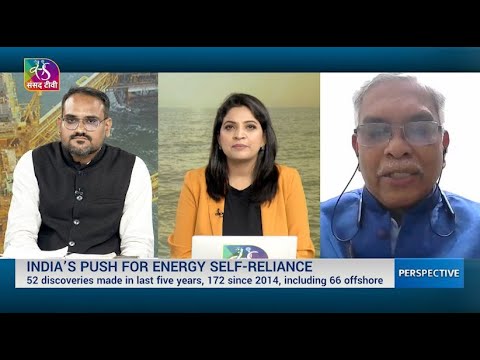
I was delighted to participate in a panel discussion on Sansad TV on the Deep Ocean Mission, launched by the Ministry of Earth Sciences Government of India in June 2021. It is a matter of immense pride and privilege for me to have steered the launch of this Mission, with an overall outlay of more than ₹4000 crores, during my tenure as Secretary, @moesgoi The panel discussion is available at this link: youtube.com/watch?v=75kxre… In the discussion, I emphasized why deep ocean exploration is vital for India’s future and self-reliance. Just as space became a strategic frontier five decades ago, today the ocean is emerging as the next. These technologies are highly complex, and no country is willing to share them—making indigenous capability essential. I am thrilled to see the remarkable progress made by our scientists and engineers at @moesgoi , who are now close to completing both the deep-sea mining system and the manned submersible, which can carry three people to a depth of 6000 meters. Back in 2018, I had written a guest editorial in Current Science highlighting why India must invest in deep-sea research. That article laid the foundation for preparations that eventually culminated in the launch of this Mission. currentscience.ac.in/Volumes/115/05… This achievement would not have been possible without the dedication of MoES scientists and engineers, the support of our stakeholders, and above all, the vision and trust of the Government of India, under the leadership of Hon’ble Prime Minister Shri Narendra Modi ji. The Deep Ocean Mission will help India emerge as a global leader in deep-sea research and exploration—a true leap into the blue frontier. @atriauniversity @moesgoi @sansad_tv
YouTube video
YouTube
English
0
2
22
658
Madhavan Rajeevan
Madhavan Rajeevan@rajeevan61·
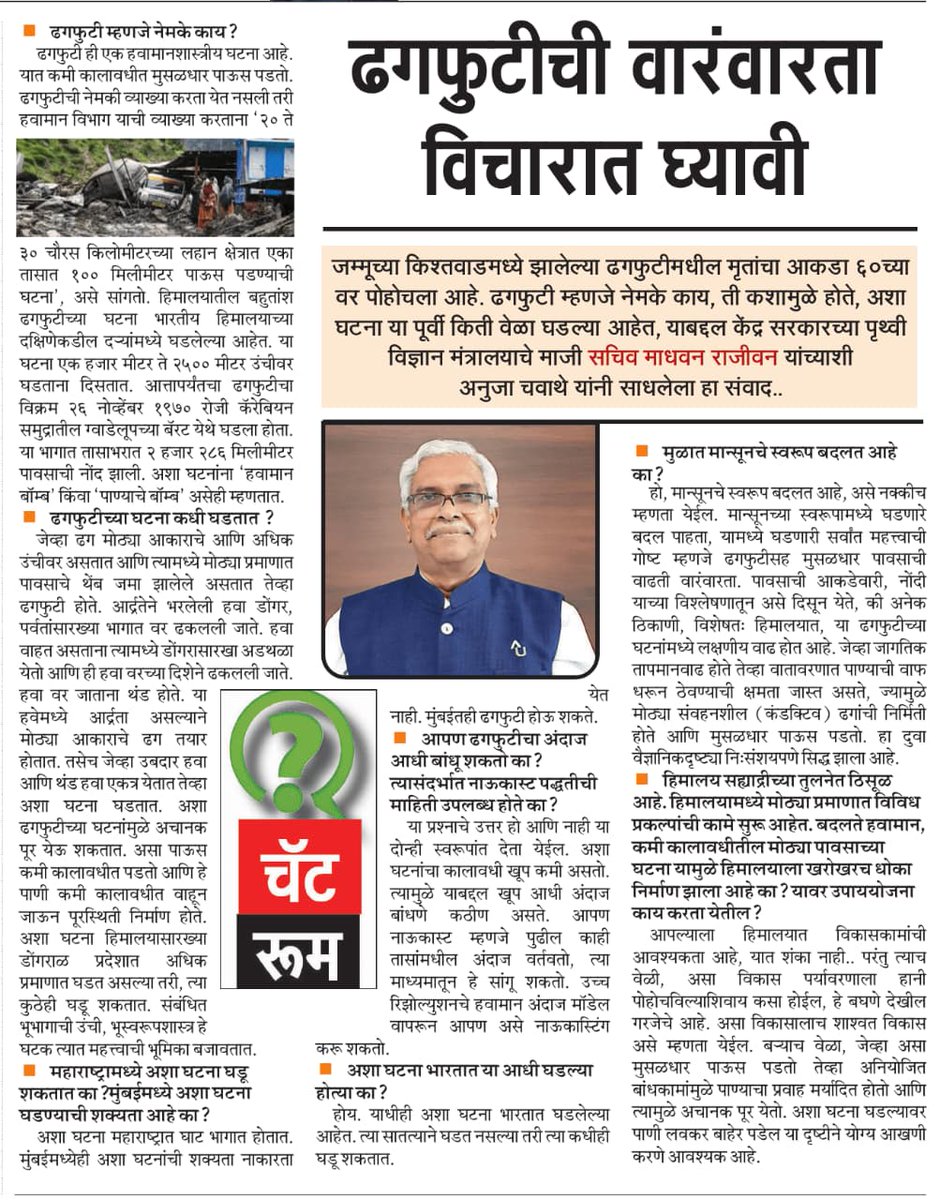
My interview with Maharashtra Times (Mumbai Edition) on the recent cloudburst incidents in the Himalayas has been published, with an English version. In the discussion, I addressed key questions: What are cloudbursts and how do they occur? Is their frequency increasing? Can they be predicted? Are they linked to climate change? What role does unchecked developmental activity in the Himalayas play? I emphasized that cloudbursts are deadly phenomena that can cause immense destruction and loss of precious lives. To reduce risks, we urgently need stronger early warning systems, effective communication protocols, and deeper community-level engagement. In many ways, we are dealing with “weather bombs” in the fragile Himalayan ecosystem. @atriauniversity @moesgoi @ndmaindia
Madhavan Rajeevan tweet mediaMadhavan Rajeevan tweet mediaMadhavan Rajeevan tweet media
English
1
12
46
2.5K
Madhavan Rajeevan retweetledi
Nidhi Jamwal
Nidhi Jamwal@JamwalNidhi·
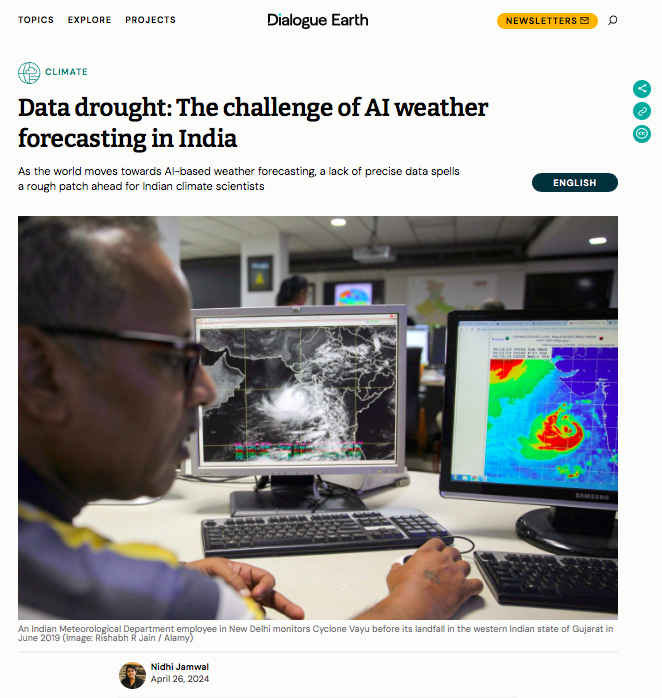
“In India, we have good data sets on rainfall, temperature, humidity, wind speed, which are the basic meteorological parameters. However, we don’t have adequate data over the Himalayas and hardly any data to work on GLOFs.” Dr @rajeevan61 told me last year for this story👇
Nidhi Jamwal tweet media
English
1
1
8
301
Madhavan Rajeevan
Madhavan Rajeevan@rajeevan61·
Uttarkashi Flash Flood Exposes Glaring Gaps. NDTV story on the event. With global warming, the frequency and intensity of flash floods are only expected to rise. This underscores the urgent need for robust nowcasting systems for cloudburst events, leveraging radar and satellite data enhanced by AI algorithms. Equally critical is the establishment of region-specific flash flood warning systems tailored for the Himalayan terrain. We must also ensure that development does not come at the cost of disturbing this fragile ecosystem. There is growing concern that the Himalayas may be inching towards a tipping point in terms of natural hazards. A comprehensive, multi-hazard early warning system—coordinated across all key stakeholders including IMD, CWC, GSI and state governments —is urgently essential to minimize future loss of life and property. @moesgoi @ndtv @ndmaindia @PMOIndia
NDTV@ndtv

Uttarkashi Flash Flood Exposes Glaring Gaps in Himalayan Early Warning System @ShreyaG9401 ndtv.com/india-news/utt…

English
13
21
40
4.9K
Madhavan Rajeevan
Madhavan Rajeevan@rajeevan61·
With humility and gratitude, I’m delighted to share that my research contributions have crossed a significant milestone — over 20,000 citations. For any researcher, reaching this number is deeply satisfying and exciting. But for me, it’s never been about the numbers. This milestone reflects the guidance, support, and brilliance of many individuals — my teachers, mentors, exceptional collaborators, and students, some of whom continue to work with me. I am truly grateful to each one of them. What makes this journey unique is that research was never my formal responsibility. Throughout my career, I have primarily been engaged in operational work and scientific administration. I never received dedicated research grants. Research was, and still is, a personal passion I pursued alongside my official duties. Even during my tenure as Secretary, Ministry of Earth Sciences, I continued to guide Ph.D. students and publish research papers. While citation counts and h-indexes are often seen as academic achievements, the true measure of research lies in its real-world impact — in better policies, improved systems, and societal benefit. I don’t claim to have made any groundbreaking discoveries, but I do take pride in doing meaningful, useful research that has contributed in tangible ways. I remain committed to research and to mentoring young scholars. I hope to continue this journey with the same passion and purpose. Wish me good luck.
Madhavan Rajeevan tweet media
English
22
13
114
7.6K