Sabitlenmiş Tweet

We're looking for a new Postdoctoral Fellow to use the neat 🛠️tools we've spent the last few years developing!
🧬RT SVP🧬| ramdya-lab.epfl.ch |
English
Pavan Ramdya
4.3K posts

@ramdya
Professor of Neuroscience & Bioengineering, EPFL @EPFL_en, reverse-engineering flies to build better robots, previously @Harvard, @UNIL, @Caltech @ramdya.bsky.s







The Miller Institute is proud to announce the awards for Visiting Miller Professorship terms during the 2025-2026 Academic Year. The Visiting Miller Professors join faculty hosts on the Berkeley campus for collaborative research interactions. bit.ly/48IWy3V #science

🚨 Save the Date! 🚨 Join us for the BMI Symposium: Neuromics in Development & Disease at EPFL, June 24-25, 2025! 🌟 🧠 Explore cutting-edge neuroscience with world-class speakers! 📍 Details: tinyurl.com/5n7v54x2 #Neuroscience #BMI2025 #SaveTheDate

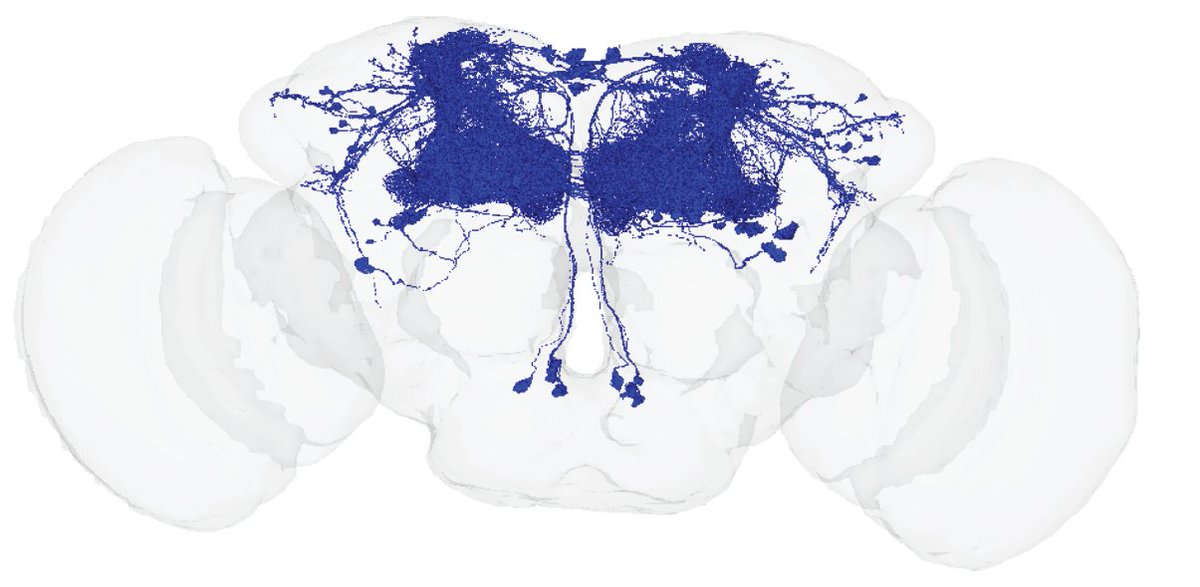
We recorded the activity of neurons within this network during 2 hours of social interactions. Interestingly, as the animals became more sociable the baseline and locomotor-related activity greatly diminished in MBONs previously implicated in aversive learning.
However, single-housed animals can learn to be sociable after spending several hours with other flies, or more specifically, smelling other flies. Importantly, this shift in behavior seems to be tuned to conspecifics since flies never stop evading beetles, for example.
We found that if we isolate flies before they eclose, and keep them living alone, they’ll display a constellation of fearful reactions the first time they encounter other flies. Contrary to the sociable behaviors shown by flies housed in a group.
I'm thrilled to share this story! Flies tend to aggregate, as I’m sure you have experienced in your kitchen. They lay eggs around the same places and form clusters even in the absence of food. But, what happens when they meet other flies for the first time? ...