ranjan_raj

2.5K posts

ranjan_raj banner
ranjan_raj

ranjan_raj

@ranjan_vittal

Entrepreneur

Katılım Mayıs 2014
538 Takip Edilen114 Takipçiler
ranjan_raj
ranjan_raj@ranjan_vittal·
@eagleseyeinc While all that is true, it is better to think in that direction. A 22 year old thinking about how to build a startup will end up building at the age of 30. You don't start the thought at 30 to build at 30.
English
0
0
0
29
𝕾𝖎𝖗 𝕮𝖍𝖗𝖎𝖘
pay solid attention; an average millionaire is 40 not 23 an average billionaire is 55 not 35 the average age to buy a house is 35 not 25 most men hit their peak confidence at 32 not in their 20s it takes the average person 66 days to build a habit not 7 the average ceo is 57 not 30 most people meet their life partner after 27 not 18 the average successful business takes 5-7 years not 6 months most people don’t know what they want until they’re 30 not at graduation stop letting social media brainwash you. you are not behind, you’re on your own track. live it ❤️
Hoops@Hoopss

hit me with the harshest reality truth

English
292
8.1K
48.4K
2M
ranjan_raj
ranjan_raj@ranjan_vittal·
@PhilipJohnston I agree for angels. I do not agree for institutional fundraise. Your raise number also competes with their ownership percentage. If you need 3M and ask for 1M you are getting into a negotiation nightmare, because the investor might want it at 5M post money valuation.
English
0
0
1
30
Philip Johnston
Philip Johnston@PhilipJohnston·
Actually tbh, this pretty much applies for fundraising at all stages
English
1
0
42
4.1K
Philip Johnston
Philip Johnston@PhilipJohnston·
Pro tip for founders raising an angel round: When an angel gives a range of potential investment amount like “I can do $10-20k” or “$1-2m”, no matter the range or progress of your round, always ask for the lower number. Here’s what “$100-200k” translates to: 1. “I can do $100k without asking anyone else’s opinion and if you lose it, it’s not the end of the world for me.” 2. “If you lose me $200k it will be kinda annoying and I should probably check with my partner.” Also, as nice bi-product, investors like it when you don’t need them, and if you ask for the top of the range, they get suspicious that you are desperate. Asking for the bottom signals demand. But, I hear you cry, what if you actually 𝗻𝗲𝗲𝗱 the money?? Still ask the bottom. It’s much easier to close two checks at the bottom of the range than one at the top.
English
52
13
675
63.1K
ranjan_raj retweetledi
Suyash Singh
Suyash Singh@thesuyashsingh·
Countdown begins! Stay tuned for the Mission Drishti Launch. May 3rd, 2026 12:29 pm IST galaxeye.space
Suyash Singh tweet media
English
27
56
339
18.1K
ranjan_raj retweetledi
Rosemary He
Rosemary He@rosemary0680·
AI agents that handle your clinical admin work end-to-end, so the work is about your patients, not the charts. Out of stealth today. Forbes story below👇
Rosemary He tweet media
English
7
8
25
1K
ranjan_raj retweetledi
Varuni Sarwal
Varuni Sarwal@sarwal_varuni·
Introducing TriFetch, your clinic's first AI employee. Give AI the gruntwork, and do the work only humans can.
Varuni Sarwal tweet media
English
18
12
88
9.8K
ranjan_raj retweetledi
Ihtesham Ali
Ihtesham Ali@ihtesham2005·
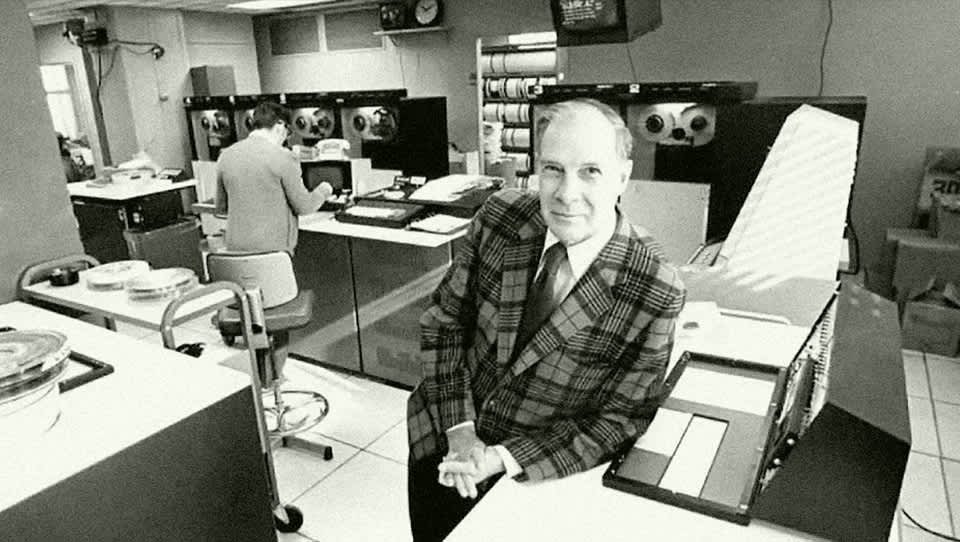
A mathematician who shared an office with Claude Shannon at Bell Labs gave one lecture in 1986 that explains why some people win Nobel Prizes and other equally smart people spend their whole lives doing forgettable work. His name was Richard Hamming. He won the Turing Award. He invented error-correcting codes that made modern computing possible. And he spent 30 years at Bell Labs sitting in a cafeteria at lunch watching which scientists became legendary and which ones faded into nothing. In March 1986, he walked into a Bellcore auditorium in front of 200 researchers and told them exactly what he had seen. Here's the framework that has been quoted by every serious scientist for the last 40 years. His opening line landed like a punch. He said most scientists he worked with at Bell Labs were just as smart as the Nobel Prize winners. Just as hardworking. Just as credentialed. And yet at the end of a 40-year career, one group had changed entire fields and the other group was forgotten by the time they retired. He wanted to know what the difference actually was. And he said it wasn't luck. It wasn't IQ. It was a specific set of habits that almost nobody is willing to follow. The first habit was the one that hurts the most to hear. He said most scientists deliberately avoid the most important problem in their field because the odds of failure are too high. They pick a safe adjacent problem, solve it cleanly, publish it, and move on. And because they never swing at the hard problem, they never hit it. He said if you do not work on an important problem, it is unlikely you will do important work. That is not a motivational line. That is a logical one. The second habit was about doors. Literal doors. He noticed that the scientists at Bell Labs who kept their office doors closed got more done in the short term because they had no interruptions. But the scientists who kept their doors open got more done over a career. The open-door scientists were interrupted constantly. They also absorbed every new idea passing through the hallway. Ten years in, they were working on problems the closed-door scientists did not even know existed. The third habit was inversion. When Bell Labs refused to give him the team of programmers he wanted, Hamming sat with the rejection for weeks. Then he flipped the question. Instead of asking for programmers to write the programs, he asked why machines could not write the programs themselves. That single inversion pushed him into the frontier of computer science. He said the pattern repeats everywhere. What looks like a defect, if you flip it correctly, becomes the exact thing that pushes you ahead of everyone else. The fourth habit was the one that hit me the hardest. He said knowledge and productivity compound like interest. Someone who works 10 percent harder than you does not produce 10 percent more over a career. They produce twice as much. The gap doesn't add. It multiplies. And it compounds silently for years before anyone notices. He finished the lecture with a line I have never been able to shake. He said Pasteur's famous quote is right. Luck favors the prepared mind. But he meant it literally. You don't hope for luck. You engineer the conditions where luck can land on you. Open doors. Important problems. Inverted questions. Compounded hours. Those are not traits. Those are choices you make every single day. The transcript has been sitting on the University of Virginia's computer science website for almost 30 years. The video is free on YouTube. Stripe Press reprinted the full lectures as a book in 2020 and Bret Victor wrote the foreword. Hamming died in 1998. He gave his final lecture a few weeks before. He was 82. The lecture that explains why some careers become legendary and others disappear is still free. Most people who could benefit from it will never open it.
Ihtesham Ali tweet media
English
147
1.9K
8.2K
1.1M
@jason
@jason@Jason·
We started an AI founder twitter group... reply with "I'm in" if you're a founder and want to be added
English
10.9K
136
4.6K
900.6K
ranjan_raj
ranjan_raj@ranjan_vittal·
The human is in the loop due to a lack of trust. Systems that automate trust can take us to stars faster than systems that automate generation. AI today is a very smart monkey. We aim to make it into a trustable entity to remove the final human in the loop: the verifier.
Sathya@sathyanellore

x.com/i/article/2045…

English
1
0
2
73
ranjan_raj retweetledi
Guillermo Flor
Guillermo Flor@guilleflorvs·
Sequoia's thesis that the next $1T company will sell work, not software, is the most important reframe in AI right now. The argument: if you sell a copilot, you're competing with every new model release. But if you sell the outcome — books closed, contracts reviewed, claims handled — every AI improvement makes your margins better, not your product obsolete. The key insight most people miss: for every $1 spent on software, ~$6 is spent on services. The entire SaaS playbook was about capturing the software dollar. The AI playbook is about capturing the services dollar — at software margins. Not "AI for accountants." The AI accounting firm. Not "AI for lawyers." The AI law firm. The companies that figure this out won't look like SaaS companies. They'll look like services firms rebuilt on software infrastructure. That's a fundamentally different company to build, fund, and scale. And most founders are still building copilots.
Guillermo Flor tweet media
English
227
542
5.6K
2.1M
ranjan_raj retweetledi
Aalok Thakkar
Aalok Thakkar@AalokDThakkar·
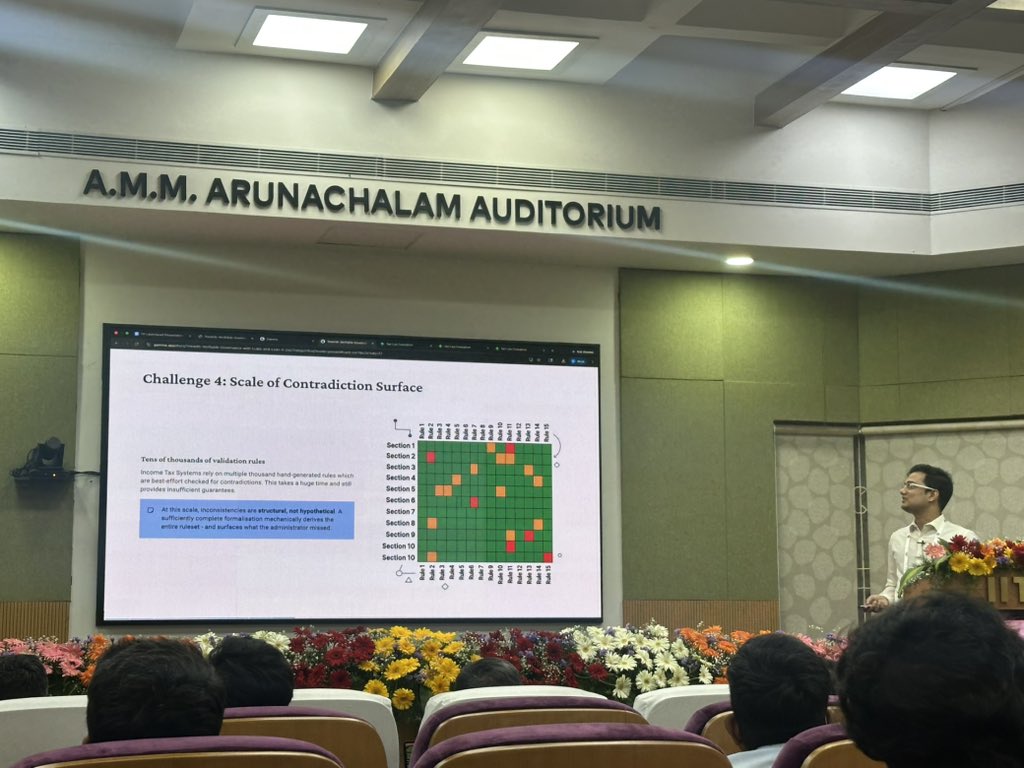
Using Lean 4 to identify contradictions in laws. Very exciting work by Pramaana Labs pramaanalabs.ai. They have build a DSL called LegalLean to formalise US tax codes.
Aalok Thakkar tweet media
English
17
63
496
30.7K
ranjan_raj retweetledi
Lenny Rachitsky
Lenny Rachitsky@lennysan·
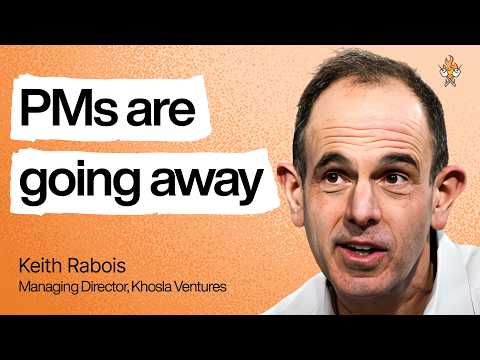
My biggest takeaways from @rabois: 1. The team you build is the company you build. Founders get distracted by markets, customers, and technology. If you have the right people, those problems get easier. If you have the wrong people, none of those things save you. 2. Build your company on undiscovered talent. The only way to scale an organization against incumbents with infinite budgets is to find talent that large companies’ hiring machines will misprocess. In practice, this often means skewing younger—not because young people are inherently better but because they have fewer data points, which means typical evaluation systems can’t categorize them accurately. This is where the alpha often is. 3. Hire more “barrels,” not “ammunition.” A “barrel” is someone who can take an idea from zero to outcome without hand-holding. Most companies have only a handful of these people. Hiring more people without expanding the number of barrels doesn’t increase output; it increases coordination tax and creates drag. The ratio of barrels to ammunition is what determines the number of important things a company can pursue simultaneously. 4. CMOs are becoming the #1 consumer of AI tokens. At a few of Keith’s top portfolio companies, the heaviest user of AI is the chief marketing officer. These CMOs are running analytics, shipping campaigns, and generating insights that previously required entire teams of deputies. 5. The three signs a company will win: operating tempo, internal talent development, and “the relentless application of force” from the top. Keith identifies a consistent pattern across his best portfolio companies. First, operating tempo: Ramp shipped physical cards in three months when the industry standard was 9 to 12. Second, talent development through internal promotion rather than senior external hires; the CMO at one of his top companies was the previous chief of staff. Third, the CEO’s willingness to push harder as things improve, not less. Mike Moritz told a friend of Keith’s that the most common trait of the best CEOs is “the relentless application of force.” Complacency is the natural by-product of success, and the CEO’s job is to offset it. 6. For consumer products, talking to customers is not just unhelpful; it’s actively harmful. Keith refuses to let companies he advises conduct consumer research. His argument: Consumer decisions are subconscious. Ask any Porsche owner why they bought the car, and 99% will cite every reason except the real one. Once misleading customer feedback enters the organization, it locks into people’s brains and distorts every subsequent decision. 7. Keith believes the PM role may not survive the AI era. Taking customer inputs, building a sequential year-long roadmap, and coordinating between teams are structurally incoherent when AI capabilities change weekly. The skill that matters now across all three roles—PM, designer, engineer—is business acumen: understanding the company’s equation and knowing what to build next. 8. Great hiring comes from great referencing. Run at least 20 references, and keep going until you hit negative feedback. Ask specific, forward-looking questions (e.g. “Would you start a company with them?”). If every reference is positive, you haven’t gone deep enough. 9. Use a 30-day feedback loop to sharpen your hiring instinct. Thirty days after every hire, ask: would I hire this person again? This is as predictive as waiting years, and dramatically faster for improving your judgment. Make this a habit, and your hiring quality will compound. 10. Criticize in public, not private—it optimizes for the system. Keith endorses a management practice that most people find confrontational: delivering negative feedback in front of the team, not behind closed doors. Private criticism optimizes for the individual, but the rest of the company doesn’t know the issue is being addressed, which breeds anxiety and suspicion. Public criticism lets colleagues see that leadership is aware, creates opportunities for others to volunteer help, and turns feedback into a team-building exercise. Full conversation: youtube.com/watch?v=xCd9yk…
YouTube video
YouTube
Lenny Rachitsky@lennysan

"High performance machines don't have psychological safety. They're about winning." Keith Rabois (@rabois) was COO of Square, part of the PayPal Mafia, an early investor in Stripe, Palantir, Airbnb, DoorDash, and Ramp, and a 2x founder. He's spent 25 years obsessing over how to build world-class teams. In our in-depth conversation, we discuss: 🔸 How to identify undiscovered talent 🔸 Keith's barrels vs. ammunition hiring framework 🔸 The three traits of the best-performing companies right now 🔸 Why talking to customers is actively harmful for consumer products 🔸 Why the PM role is dying 🔸 The specific interview question he asks every senior candidate 🔸 Why CMOs (not engineers) are becoming the #1 consumer of AI tokens Watch now 👇 youtu.be/xCd9ykretlg

English
40
89
770
465.8K
ranjan_raj retweetledi
Aravind
Aravind@aravind·
India has now attained criticality in a commercial, 500MW power producing, fast breeder nuclear reactor. (We had experimental one before, but this is a big commercial one that can produce power.) Criticality means reactor is running by itself without needing to keep re-igniting it. Breeder means it makes more fissile fuel than it uses. Nobody wanted to give India such tech. Because these reactors can create nuclear fissile material. So India created the tech itself in spite of sanctions. Only Russia has this tech (true commerical fast breeder reactor) running. US, UK, France say they have given up on this. China has one prototype based on Russian tech but it is not yet commercial. India has refused to put its Fast Breeder Reactor program under international scrutiny. It is a big, big, no HUGE thing for India's energy independence. But, as usual, most Indians won't know how big as we don't play up our achievements. I was recently amused seeing some posts by Gen-Z advising Indian govt to go for Thorium cycle etc in some condescending tone. Because India has been on it quietly for sometime. And this reactor going critical now and commercial soon means it can sustain itself for infinity. This cuts India's imports of Uranium. And paves the way for Thorium based reactors as well. (Stage 3 of India's nuclear program, we just passed Stage 2 with PM's post). Also, what PM didn't say is, this reactor can help generate some 100+kg of weapons grade Plutonium -with which India can make many warheads and expand nuclear stockpile if it wishes so. But India will never do that, you know, as India is a very peaceful nation promoting world wide nuclear disarmament ;)
Sensei Kraken Zero@YearOfTheKraken

Someone explain this to me like I am 15 year old

English
228
2.7K
13.1K
557.1K
ranjan_raj
ranjan_raj@ranjan_vittal·
The future belongs to entrepreneurs. While this was always true, it is stressed in the AI world. Entrepreneurship is the highest form of job safety, disguised as risk. Human needs are infinite and humans can look at identifying them with AI trying to solve it.
English
0
0
0
9
ranjan_raj retweetledi
Tanay Kothari
Tanay Kothari@tankots·
i asked my co-founder to argue with me in front of our whole team. that one moment changed our entire company culture. early on at wispr, i'd give presentations and nobody would push back. they'd nod. take notes. say "sounds good." but i knew some of those ideas were half-baked. and i needed someone to tell me. so i asked my co-founder to disagree with me during a presentation. just to show the team it was okay. he did. i took it well. made some quick fixes based on his feedback. no big speech about "radical candor." just one public example. next meeting, someone disagreed with me. then someone else. now it's normal. if people are afraid to tell you when something's broken, you won't hear about problems until it's too late. the best founders aren't the smartest people in the room. they're the ones who've built a culture where the smartest idea wins, even if it's not theirs.
English
46
31
665
36.4K
ranjan_raj
ranjan_raj@ranjan_vittal·
@Grimezsz In 1940s someone was quoted as saying: "You seek to build a nuclear reactor yet deny it's existence". I actually like the way you try to promote god. I just like logic a little better.
English
0
0
0
10