
Dr. Robert Rohde

21.4K posts

Dr. Robert Rohde banner
Dr. Robert Rohde

Dr. Robert Rohde

@RARohde

Chief Scientist @BerkeleyEarth. Physics PhD & data nerd. Usually focused on climate change, fossil fuels, & air quality issues.

Zurich, Switzerland Katılım Ocak 2017
882 Takip Edilen60.5K Takipçiler
Sabitlenmiş Tweet
Dr. Robert Rohde
Dr. Robert Rohde@RARohde·
It's a hard time for everyone. I work for a small non-profit, @BerkeleyEarth, and we need your help. We fund our work with grants & donations. If you like our work on climate change, and have a bit spare, perhaps consider making a donation. Thank you. donate.berkeleyearth.org
English
162
399
931
0
Dr. Robert Rohde
Dr. Robert Rohde@RARohde·
@aaronshem @PaulRoundy1 The Dust Bowl deviations were actually numerically smaller in most cases. But, in large part, that's because the Dust Bowl heatwaves tended to be more impactful in summer, and temperature swings are generally smaller in summer. Related short thread: x.com/RARohde/status…
Dr. Robert Rohde@RARohde

The March heatwave in the USA set many impressive records. 21 weather stations recorded daily temperatures at least 40 °F (22 °C) above normal. For example, Centerville, South Dakota reached 93 °F (34 °C) on a day when the normal high would be 49 °F (9.4 °C).

English
0
0
1
14
aaronshem
aaronshem@aaronshem·
@PaulRoundy1 @RARohde The 1930s events were much more extreme because you were starting from a much lower average. The deviation was much larger.
English
2
0
0
42
Dr. Robert Rohde
Dr. Robert Rohde@RARohde·
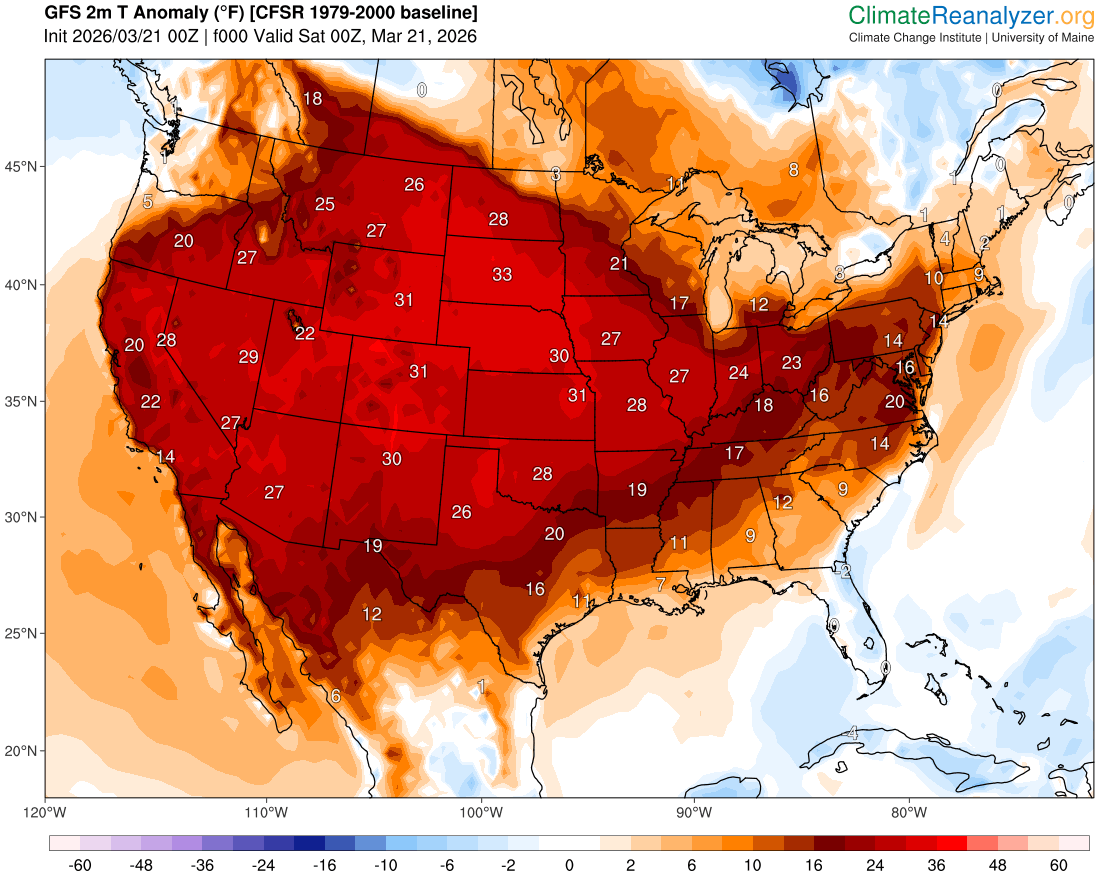
We need to talk a bit about how utterly absurd the March heatwave was in the USA. This heatwave would have been impossible without a boost from climate change, but even with climate change it remains a deeply unlikely event. A thread looking at some of the numbers. 🧵
Dr. Robert Rohde tweet media
English
98
607
1.8K
147.2K
Dr. Robert Rohde
Dr. Robert Rohde@RARohde·
In general, that's because it is physically easier to have large temperature swings in colder months. How impactful a heatwave is depends strongly on context. Large swings are more common in cold months, but smaller swings in the warmest months can have greater consequences.
English
1
0
6
552
Dr. Robert Rohde
Dr. Robert Rohde@RARohde·
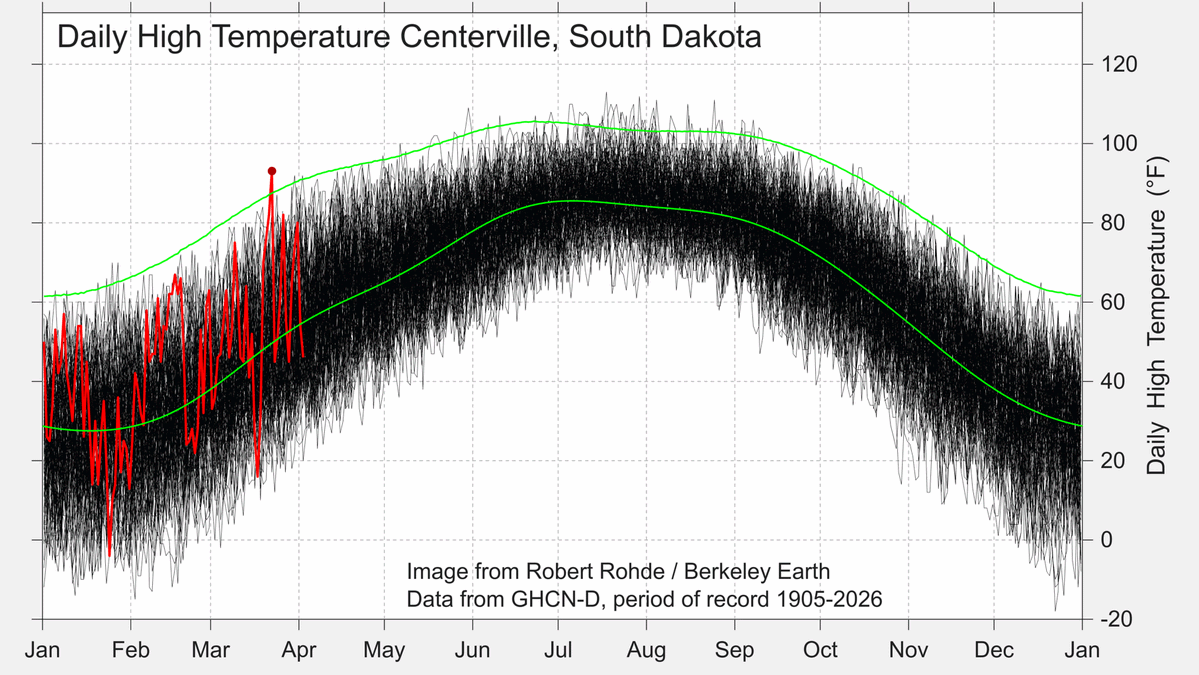
The March heatwave in the USA set many impressive records. 21 weather stations recorded daily temperatures at least 40 °F (22 °C) above normal. For example, Centerville, South Dakota reached 93 °F (34 °C) on a day when the normal high would be 49 °F (9.4 °C).
Dr. Robert Rohde tweet media
English
5
22
86
4K
Dr. Robert Rohde
Dr. Robert Rohde@RARohde·
@a_vesiculosa ERA5 Reanalysis is generally very good, but it has some regional issues with long-term drift, likely due to changes in its inputs, especially prior to the satellite era. Actually, we will be releasing some new tools to do that kind of comparison in the near future.
English
1
0
1
30
aldrovanda vesiculosa
aldrovanda vesiculosa@a_vesiculosa·
@RARohde The comparison with ERA5 data is particularly interesting. Is there any other way to easily compare spatially and temporally higher-resolution measurement data with ERA5 data?
English
1
0
0
27
Dr. Robert Rohde retweetledi
Prof. Ryan Katz-Rosene
Prof. Ryan Katz-Rosene@ryankatzrosene·
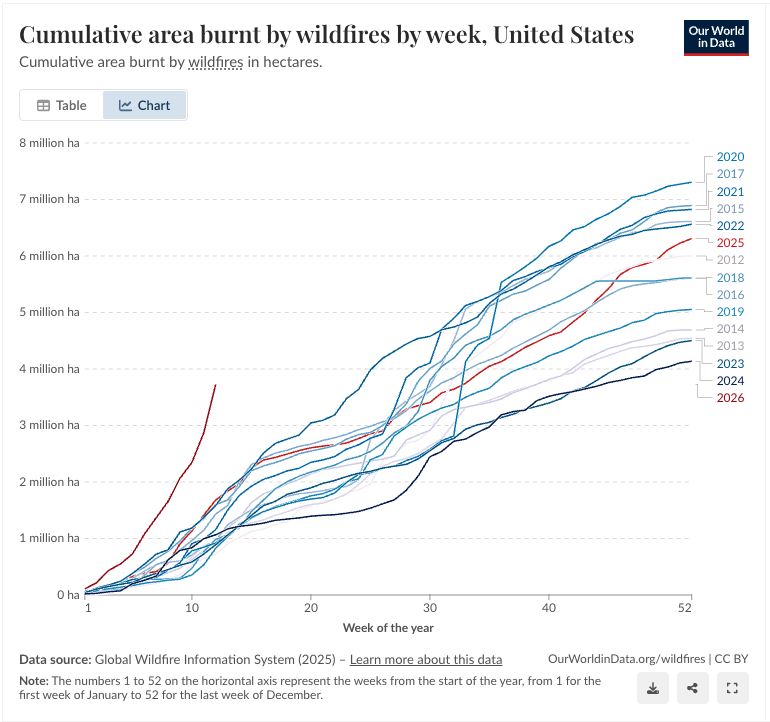
Holy smokes! An incredible start to the 'Wildfire Season' in the US this year - owing to an abnormally hot and snowless winter in some parts of the country.
Prof. Ryan Katz-Rosene tweet media
English
44
411
1.1K
66.1K
Jim Steele
Jim Steele@JimSteeleSkepti·
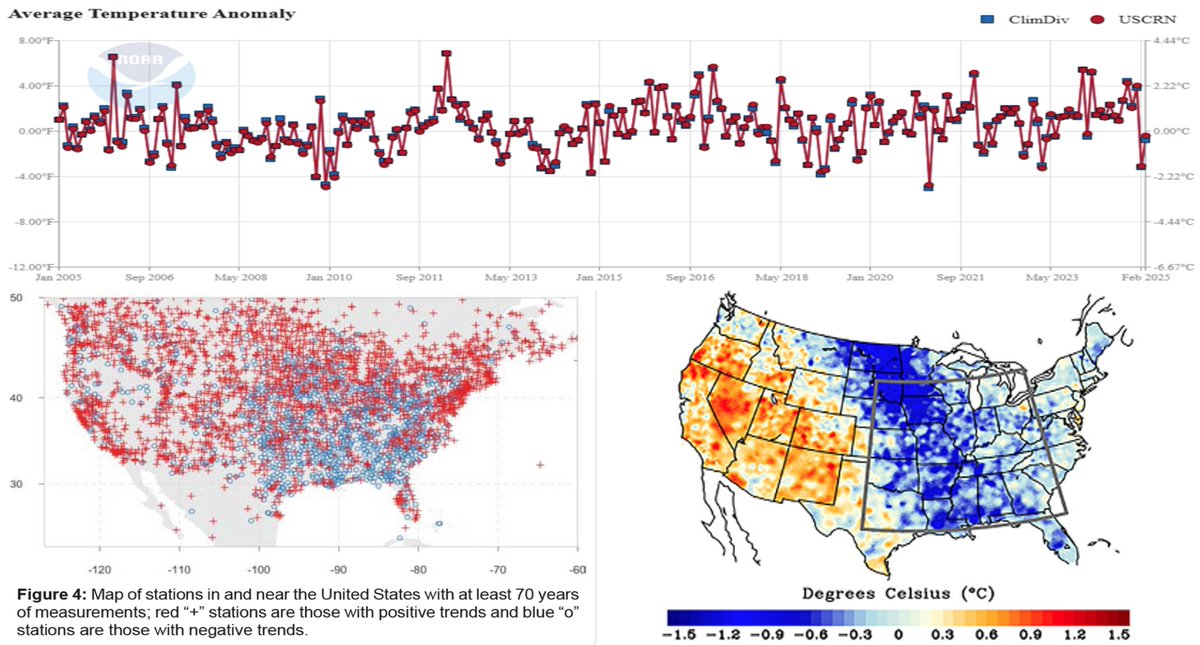
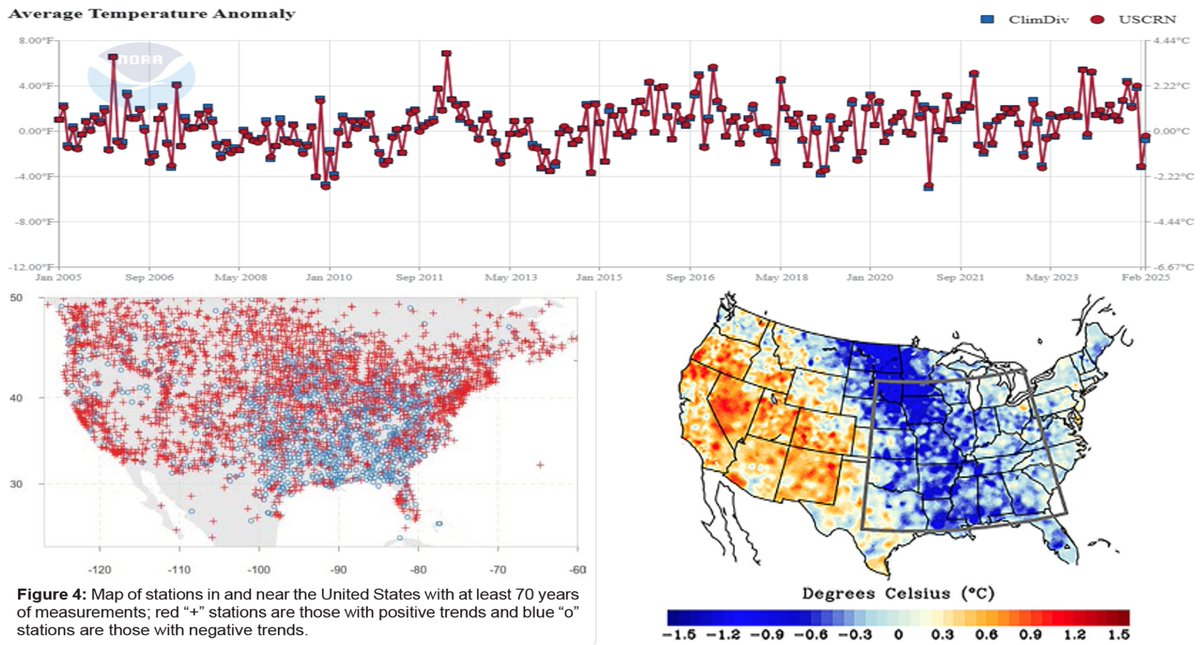
All the alarmist hype the US's March heatwave because more meaningful data reveals almost half the USA has been cooling. The USCRN, with all its weather stations that scientists placed away from urban influences, reveal high temperatures are not increasing
Jim Steele tweet media
English
6
20
47
2.7K
Dr. Robert Rohde
Dr. Robert Rohde@RARohde·
@climatecal Honestly, the current comments on this thread are still fairly tame by the standards that I'm used to. I'll be reposting the whole thread on bluesky (same user name) when I get a chance, perhaps tonight.
English
2
0
19
551
ClimateCal
ClimateCal@climatecal·
@RARohde From the comments I can see, sadly, why there was a migration to bluesky.
English
2
0
6
581
Steven Rose
Steven Rose@StevenR20265527·
@RARohde It is definitely a religion! Climate is not measured in a month, weather is. The U.S. represents roughly 2 percent of the global surface. Where is the data from the other ninety eight percent?
English
1
0
4
779
Jim Steele
Jim Steele@JimSteeleSkepti·
@RARohde All the alarmist hype the US's March heatwave because more meaningful data reveals almost half the USA has been cooling. The USCRN, with all its weather stations that scientists placed away from urban influences, reveal high temperatures are not increasing
Jim Steele tweet media
English
1
3
16
1.1K
Dr. Robert Rohde
Dr. Robert Rohde@RARohde·
Not the main point of the thread, but the Berkeley Earth to ERA5 comparison is interesting for another reason. ERA5 Reanalysis is generally very good, but it has some regional issues with long-term drift, likely due to changes in its inputs, especially prior to satellites.
Dr. Robert Rohde@RARohde

To begin, let's look at monthly mean temperature. The March average temperature across the Western USA was about +11.6 °F (+6.4 °C) warmer than the mid-20th century average. That's an absurd 3.6 °F (2.0 °C) higher than the previous record. 2/

English
1
4
24
5.5K
Jeff Berardelli
Jeff Berardelli@WeatherProf·
@RARohde Not to minimize the Dust Bowl… it was uncanny… but is it accurate to say that since the period of record was much shorter, it was easier to achieve that % of record breaking stations? (I do realize many of those records still stand)
English
1
0
1
137
Dr. Robert Rohde
Dr. Robert Rohde@RARohde·
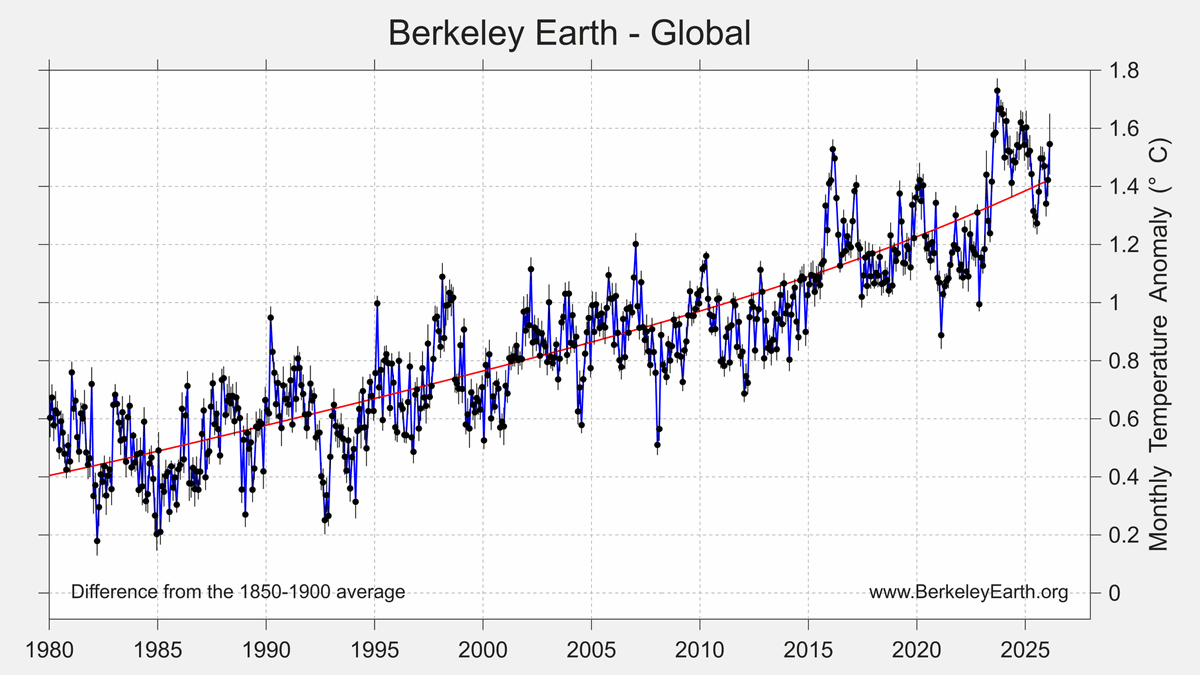
@KHayhoe A chart like this, with its suggestion towards increased variability, is the kind of thing that can keep climate scientists up at night. Complex & unexpected shifts in dynamics can be deeply troubling, if they give rise to extreme events beyond what anyone anticipated. 28/28
Dr. Robert Rohde tweet media
English
6
22
120
5.2K
Dr. Robert Rohde
Dr. Robert Rohde@RARohde·
@KHayhoe Is the March heatwave simply an extreme fluctuation from trend? The kind of event that, though rare, will naturally occur by chance every few hundred years. Or is it hinting that fluctuations of this magnitude will be more common in a warmer world? 27/
English
1
5
75
2.5K