

Ssemakadde
18.2K posts

@nbstv @francis_isano Is that atransformer inside the fence, what production happens there
English

PHOTOS: Scenes from the residence of former Speaker Rt Hon Anita Among in Mutungo–Kigo as CID-led security operatives secure access to the house to conduct a search following a corruption probe linked to alleged illicit enrichment and money laundering.
📸: @francis_isano
#NBSUpdates


English
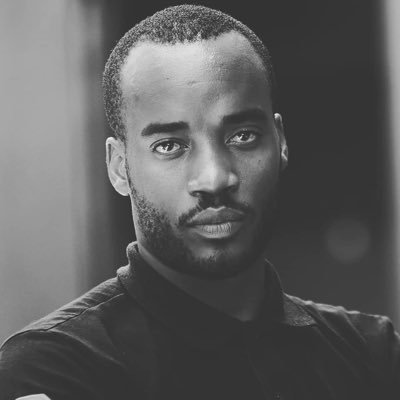
This is Aber Lillian from Kitgum. She was V/Guild Pres @Makerere and state minister for disaster.
To the news outlets that discredit Tabz, you can do that as you work on templates about her. You’ll need them sooner than later!
Thank you for your attention to this matter!
English
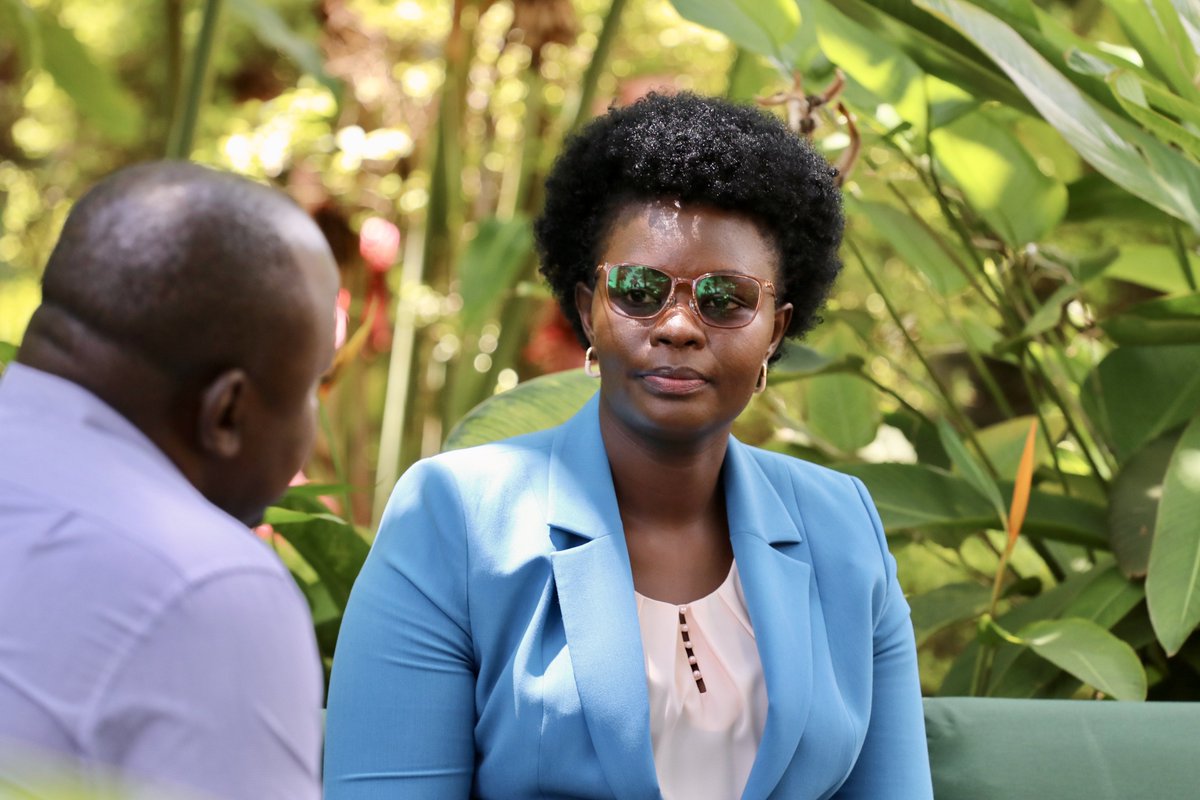
I know you already know but just to remind you that Vincent Ssempijja the minister that ate the money for locusts and locusts themselves is the biological father of Justin Nameere!
It had to be a Masaka chap given that locusts and grasshoppers are in the same WhatsApp group!
English
Oh how the mighty fall!
You may change that to 'are fallen by the mightier'!
Oh Uganda... 🙄
English

Not long ago @Parliament_Ug banned the NMG group from covering it's proceedings. Today, as many of their staff and associates find themselves in "mix" they are going to need voices to advocate for their rights not to be abused and the observance of due process.
English
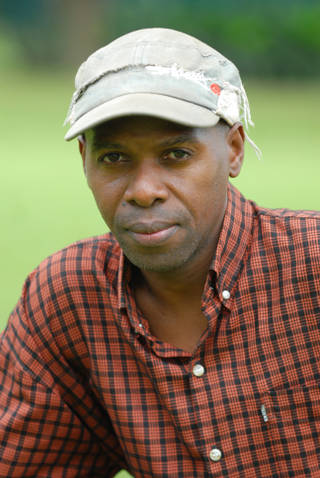
@aliza_pearl Yes. I used Budo and Gayaza in a figurative sense to describe old-school values of honour and self-effacing service.
It could be anyone from Namagunga, Kigezi High, Nabumali, Teso College Aloyet, and so on.
English
It's not even about the schools but rather how for anyone not properly raised and grounded politics will bring out their inner demons. No restraint.
The only profession where shamelessness seems to open more and more doors.
Timothy Kalyegira@TimKalyegira
You can see why Budonians, Gayaza girls, and other such avoid elective politics. Politics requires a certain degree of personality disorder, psychopathy, or mental illness. You must have an empty, restless soul and lack any sense of shame, awkwardness, or introspection.
English
@KavumaJessy @PyeparFaisal @MunahLucky @PoliceUg Indeed we await the tracking of that 'digito' plate ⏳️
English


English
I just got mugged. Picked a BODA from kololo mosque, they followed me (3 Boda’s) & attacked in that bend from Ntinda to kiwatule (just before mosque). They took my bag (laptop) but Allhamdulilah I am safe. I ran, tried screaming but people just looked on, guys sped off (9:02 PM). This is one of their plate numbers

English
Ssemakadde retweetledi

Practice the virtues you extolled Bwana @ODPPUGANDA
1. Have you implemented Kabaziguruka decision 470 days on?
2. How can you charge @MaleMabiriziHKK with fake news after Obbo/Mwenda/Karamagi/Alternative Digitalk decisions?
I challenge you to give the 🇺🇬 chitijens an answer.
ODPPUGANDA@ODPPUGANDA
JUSTICE EGONDA-NTENDE AND THE CONSTITUTIONAL TRANSFORMATION OF CRIMINAL JUSTICE IN UGANDA Today, 14th May 2026, the Court of Appeal and Constitutional Court convened a special sitting at the Court of Appeal Building in Kampala to honour the retirement of Hon. Justice Fredrick M. S. Egonda-Ntende, one of Uganda’s most distinguished constitutional jurists and transformative judicial minds. The occasion attracted judicial officers of all ranks, prosecutors, defence counsel, senior members of the Bar, legal scholars, civil society actors, and retired judicial officers. This diverse attendance reflected the immense respect Justice Egonda-Ntende commands across Uganda’s legal and constitutional order. In a deeply reflective address, the Director of Public Prosecutions, Lino Anguzu, described Justice Egonda-Ntende as a fearless defender of liberty, an uncompromising guardian of legality, and a jurist whose jurisprudence fundamentally reshaped constitutional governance and criminal justice administration in Uganda. The DPP observed that throughout his judicial career, Justice Egonda-Ntende consistently demonstrated that the Constitution is not a symbolic political document, but a living charter of liberty demanding active judicial protection through courage, independence, and fidelity to justice. The address particularly highlighted Justice Egonda-Ntende’s transformative influence on prosecutorial practice and constitutional criminal jurisprudence. His decisions established enduring principles against oppressive delay in criminal trials, reinforced the constitutional obligation to prevent abuse of court process, strengthened safeguards against torture and unlawful investigative methods, and deepened judicial insistence on fairness, proportionality, and legality within prosecution and sentencing. The DPP acknowledged that his jurisprudence fundamentally altered prosecutorial consciousness by reminding prosecutors that justice is not measured merely by convictions secured, but by the integrity, fairness, and constitutional legitimacy with which prosecutions are conducted. The DPP further noted that Justice Egonda-Ntende profoundly influenced Uganda’s bail jurisprudence by consistently defending the constitutional presumption of innocence and cautioning against mechanical remand practices and unjustified hostility toward bail rights. At the same time, his criminal jurisprudence maintained a careful balance between liberty and accountability, firmly upholding convictions and severe punishment in deserving cases while ensuring that sentencing remained proportionate, lawful, and constitutionally grounded. Perhaps the most enduring theme emerging from the special sitting was the recognition that Uganda’s criminal justice system is substantially stronger because of Justice Egonda-Ntende’s jurisprudential legacy. His decisions elevated prosecutorial standards, strengthened constitutional accountability, reinforced human rights compliance, and deepened institutional commitment to fairness, legality, and the rule of law. As the DPP concluded, great judges do more than decide cases. They shape national conscience, redefine institutional culture, and leave behind principles that outlive generations. By that measure, the DPP noted that Hon. Justice Fredrick M. S. Egonda-Ntende stands among the great constitutional jurists in Uganda’s legal history. #ODPPUPDATES #ODPPUGANDA
English

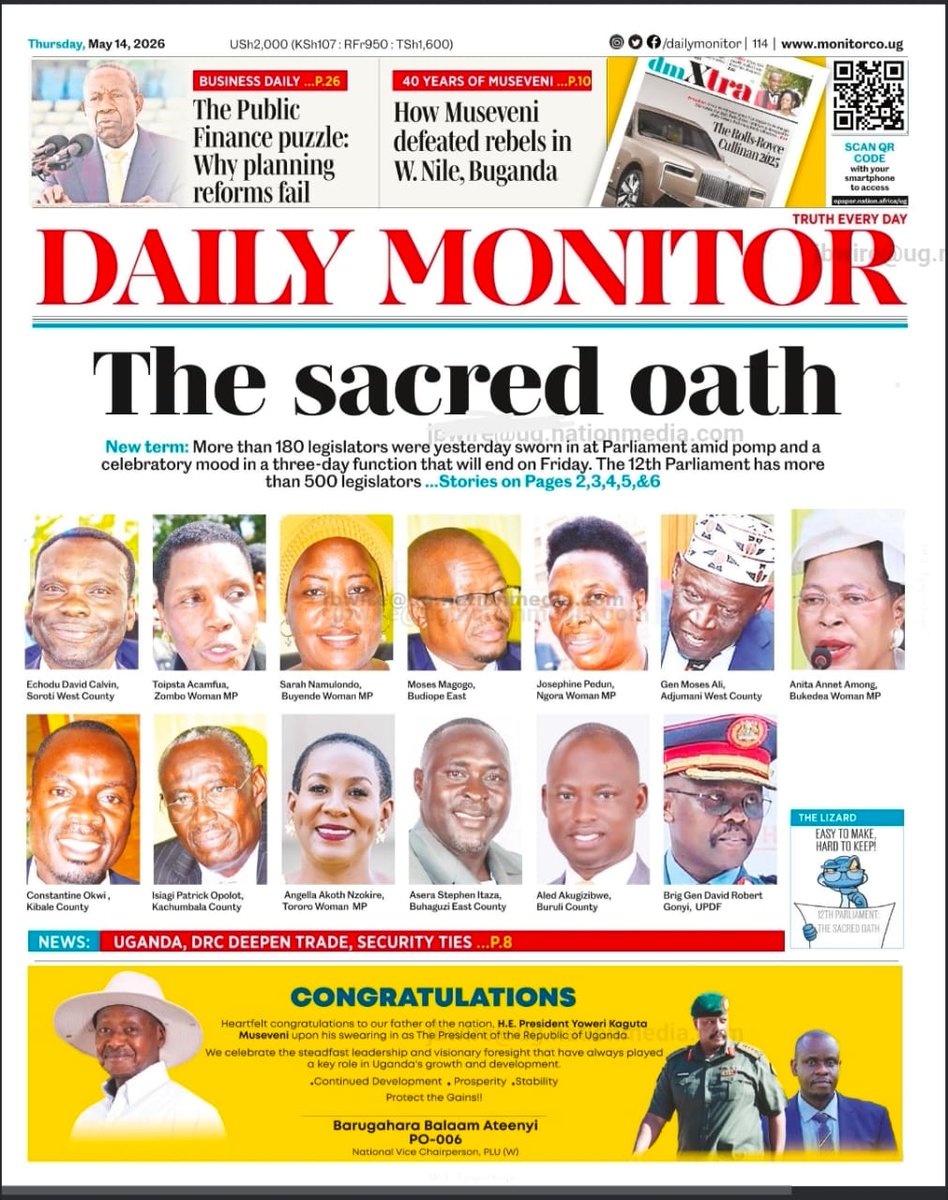
@TonyNatif Ennamusa etuuse ku nyooge (The greeting has reached the maximum)!! 😬
Eesti
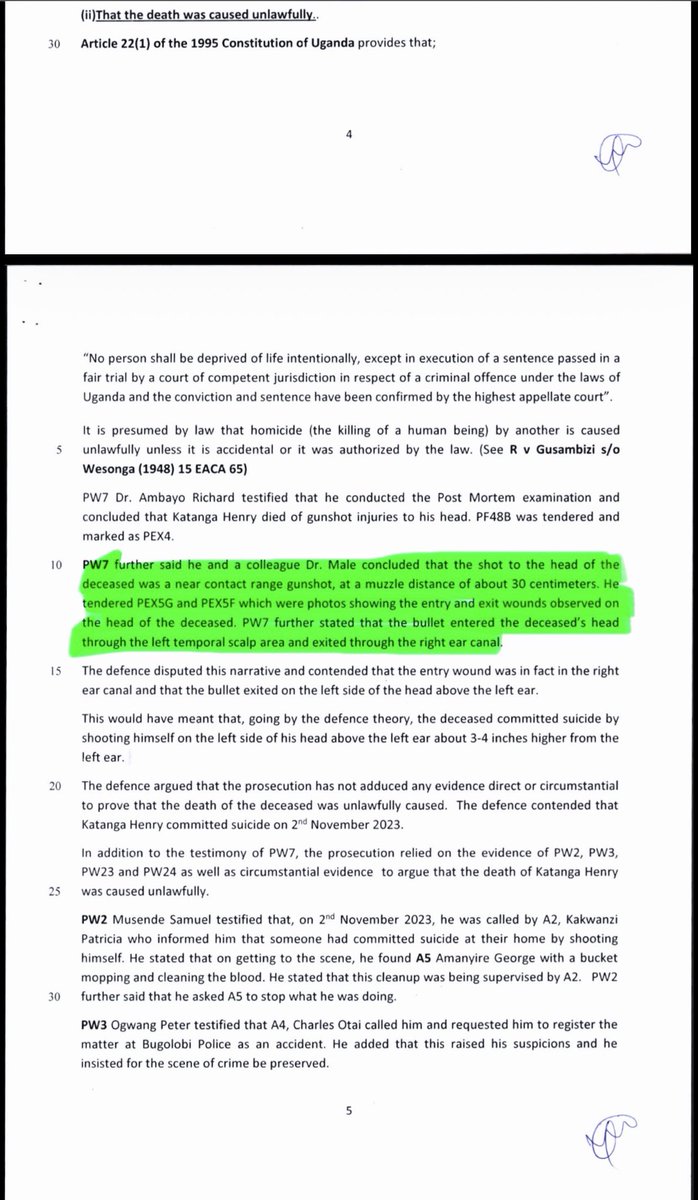
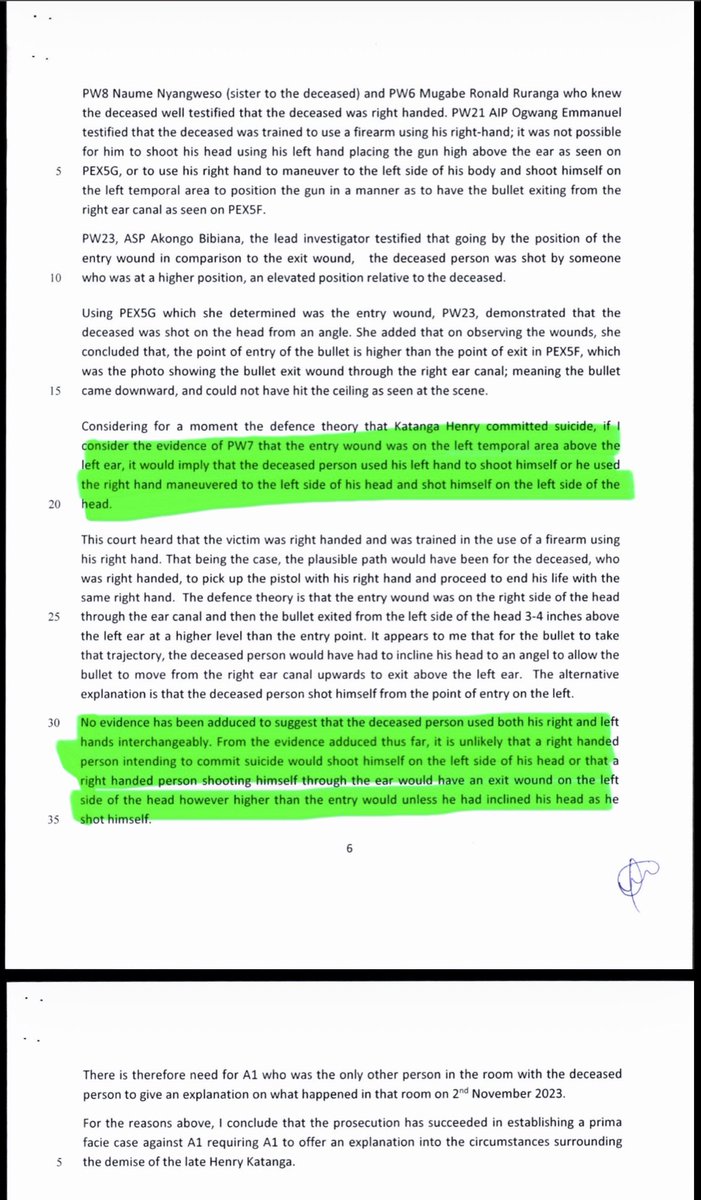
Here’s Justice Rosette Comfort Kania’s reasoning in her decision to put Mrs Molly Katanga to her defense.
She relied on the prosecution’s evidence that Mr Katanga was shot on the left side of his head, above the ear and the bullet went out through the right ear.
The argument by the state was that being right handed, it was highly unlikely that Mr Katanga could have shot himself with his left hand.
Yesterday, a Senior Forensic Pathology expert sued that the postmortem the prosecution used to convince Justice Kania could not possibly have been peer reviewed because if it had been, it wouldn’t have passed.
He said all the evidence pointed to the reverse direction of the bullet trajectory.
He said the bullet went through the right ear and out from the left side above the ear. He pointed to all known features of a close range bullet wound and compared them to the postmortem images of both sides of the late Katanga’s head.
He concluded that there’s no scientific proof to remotely back up the state’s claim. He added that the fact that the bullet left a mark on the ceiling further proves that indeed it went upwards because had the state’s claim been true, the bullet mark would have been found on the floor.
This was the only ground the learned trial Judge had found to prove a major ingredient of murder; that the death of Mr Henry Katanga was caused unlawfully.
During cross examination that started yesterday and will continue tomorrow, the state has yet to challenge the scientific basis of Dr Onzivua’s evidence.
#UgandaVsMollyKatanga
Anthony Natif@TonyNatif
Continuation of De Sylvester Onzivua’s testimony in UgandaVsMollyKatanga before Her Lordship Rosette Comfort Kania: “A comparison of the right and left ear shows blackening on the right and none on the left. On the contrary, the external features of the wound on the right side are those of an entry gunshot wound and these are:” -Laceration (tearing) of the right ear due to the blast effects of the gases. He compared it to the gases that shoot out when a vehicle tyre bursts. He said the force they have can tear skin to pieces and while using an image of the late Henry Katanga’s right ear, he showed the star-shape tearing effect when the bullet was discharged into his right ear. -Blackening of the right ear due to the soot. He said: when you look at this ear (the right) closely and compare it to the left, you will see there’s blackening; there are areas of blackening on the right side and there’s a small true entry wound inside there that my colleagues did not document. -A small true entry wound that the pathologists did not document. Mr Karuhanga: so that small hole is the entry wound? Dr Onzivua: that is the entry wound, my Lord Mr Karuhanga: outside are the tears? Dr Onzivua: this is right, my Lord Mr Karuhanga: and then there’s blackening Dr Onzivua: there’s blackening. Mr Karuhanga: okay, so please go to the next slide The slide has two images of either side of Mr Katanga’s head; showing the right and left ears. It’s titled: comparing the right and left ear. Dr Onzivua then points to the right ear and says; “when you see blackening, you know you’re dealing with an entry wound” Mr Karuhanga: okay. That’s (the blackening) because the gunpowder will deposit at the entry? Mr Muwaganya: my Lord, will he stop putting words in this witness’ mouth? Dr Onzivua continues his comparison of the two ears, clearly pointing out that the right ear has blackening which the left ear doesn’t and then concludes that it is indeed the entry point, contrary to the prosecution’s assertions. He then buttressed the scientific evidence he just presented with findings in the crime scene report. He said: “the bullet mark through the mosquito net and on the ceiling (because there’s a picture of a bullet (mark) on the ceiling) indicates that the bullet travelled upwards after being fired. The wound on the left side of the head is higher than that on the right side and this confirms that the bullet travelled from right to left.” He concluded: “To me, the possibility that this case is a homicide is extremely slim and highly unlikely. The postmortem forensic evidence in this case points to suicide unless proven otherwise. The blood splatter pattern is consistent with the facts that the deceased battered the victim then sat on the bed and shot himself”
English
𝗿𝗮𝗸𝗲’𝘀 𝗽𝗿𝗼𝗴𝗿𝗲𝘀𝘀
MEANING:
noun: A steady decline, especially one brought on by dissipation, folly, or vice.
Uganda
English
Neither genius, fame, nor love show the greatness of the soul. Only kindness can do that. - Jean Baptiste Henri Lacordaire, preacher, journalist, and activist (12 May 1802-1861) 👂
Uganda
English
@KCCAUG @MoWT_Uganda well done (😔)
On this issue of humping every new road, and many old ones to boot, why can't we emulate the humps of Nairobi? They are huge enough to stop any vehicle size, yet smooth enough to not kill the suspension/mountings/shock absorbers, etc. Uganda 😪
English
Ssemakadde retweetledi
Ugandans were busy tracking mysterious flying objects long before the release of the UFO files. This article appeared in the Uganda Argus on the eve of Independence. @TheAtlantic @NewsHour @CNNAfrica @BBCAfrica @DailyMonitor @newvisionwire @observerug @CBSNews
Jonathon L. Earle@JonathonLEarle
In 1962, UFO—or "mystery light"—sightings were made in Hoima and Mbale. It seems that all eyes were indeed on Uganda as the country neared Independence. 🛸
English
Ssemakadde retweetledi

Video shows the moment French President Emmanuel Macron pauses a speaker mid-presentation at Nairobi University to demand silence from a noisy audience.
Macron is in Kenya for the ‘Africa Forward’ summit.
English
The difference between false memories and true ones is the same as for jewels: it is always the false ones that look the most real, the most brilliant. - Salvador Dali, painter (11 May 1904-1989)
Uganda
English
.@kazbuk
Math 10:28 And fear not them which kill the body, but are not able to kill the soul: but rather fear him which is able to destroy both soul and body in hell.
##MonitorUpdates @@DailyMonitor
monitor.co.ug/uganda/oped/co…
English