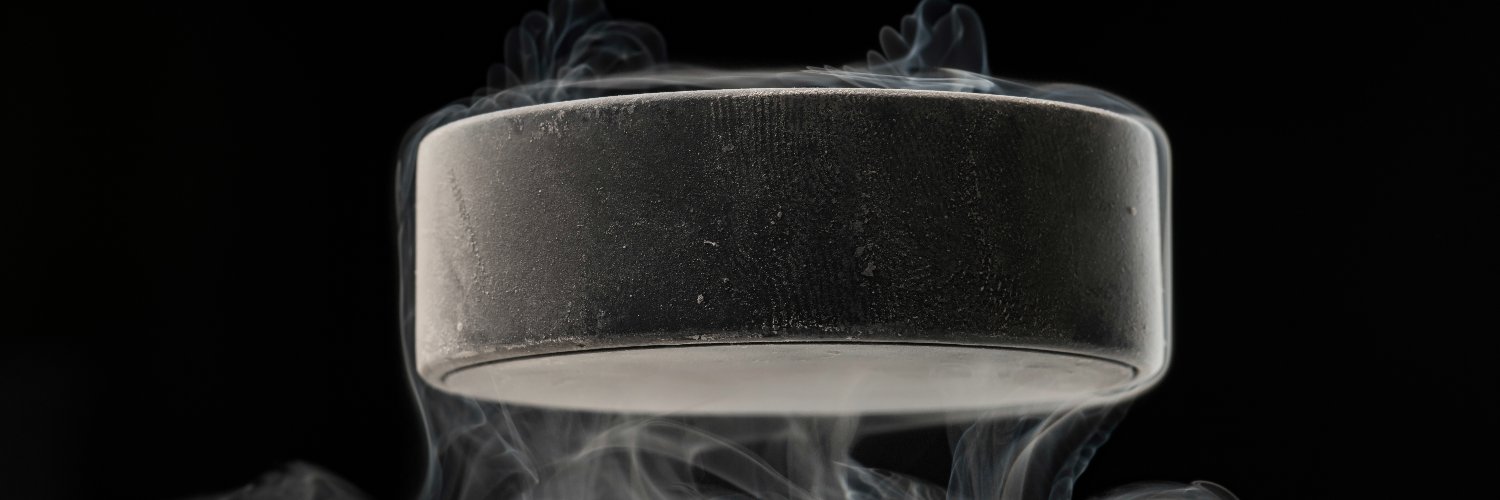
Ranga Dias Lab @Rochester

209 posts

Ranga Dias Lab @Rochester banner
Ranga Dias Lab @Rochester

Ranga Dias Lab @Rochester

@rdias495

Laboratory for Quantum Materials
Katılım Ocak 2017
68 Takip Edilen686 Takipçiler
Ranga Dias Lab @Rochester retweetledi
Helion
Helion@Helion_Energy·
Polaris has made history as the first privately developed fusion energy machine to demonstrate measurable deuterium-tritium fusion and achieve plasma temperatures of 150 million degrees Celsius (MºC).
English
41
101
488
67.1K
Ranga Dias Lab @Rochester retweetledi
j.lee
j.lee@shades28·
@Seahawks Redemption
j.lee tweet media
English
1
7
91
10K
Ranga Dias Lab @Rochester
Ranga Dias Lab @Rochester@rdias495·
Rematch of Super Bowl XLIX — the one we should have won. Let’s get it done this time. 💪🏈
Ranga Dias Lab @Rochester tweet media
English
0
0
0
260
Ranga Dias Lab @Rochester
Ranga Dias Lab @Rochester@rdias495·
The sad truth is that, whether we like it or not, the traditional university system as we’ve known it is no longer sustainable, it will gradually fade away, replaced by companies like this. These new R&D companies recruit exceptional researchers across disciplines, free them from outdated institutional constraints, and focus on high-impact work. That’s a strong signal of how the academic paradigm is shifting. The university with its bureaucratic hierarchies, tenure models, grant systems, review processes, and entrenched politics is becoming an artifact of the past. When funding, talent, and real impact are no longer tethered to the old structure, everything built on top of that structure becomes vulnerable: slow decision-making, rigid internal politics, and limited incentives. We are already witnessing, through new labs, startups, and virtual networks, the emergence of more dynamic and effective alternatives. For those of us building in materials science and advanced R&D, this is a moment of opportunity — a time to align ourselves with what’s coming rather than what’s fading away.
Louis Andre@louisnandre

Today, we're announcing @episteme, a new type of R&D company that recruits exceptional scientists to pursue high-impact ideas. Science isn’t bottlenecked by the availability of talent, but by places where they can do their best work. Scientific progress has driven human flourishing: extending lifespans, lifting billions from poverty, and expanding our understanding of the universe. But history is littered with transformational ideas that were overlooked in their time. That problem is still acute today: too much promising talent remains uncultivated, and remarkable ideas die in the lab or are filtered out by misaligned incentives. Today, scientists face suboptimal paths for translating their research into impact: academia is famously risk-averse and incentivizes publications and winning grants vs. translational research. Industry is too often focused on short‑term incentives. And startups lack the substantial capital, expertise, and complex infrastructure needed to deliver long-term scientific progress. On top of that, recent funding cuts in the US mean the overall supply of ideas is decreasing. Put together, the global scientific production system is operating at a fraction of its capacity. How Episteme operates is different: we identify great scientists who can meaningfully benefit humanity, but who aren’t supported efficiently within traditional institutions today. Researcher by researcher, we work with them to determine the bespoke resources, operational support, and environmental conditions to execute on their research. We bring them together in-house, and provide those resources to ensure that their breakthroughs are deployed for real-world impact. We’ve already assembled an amazing team of operators, ranging from the Gates Foundation, DeepMind, ARPAs, DoE – just to name a few – and researchers who are pursuing important problems across physics, biology, computing, and energy. Our team has spoken to hundreds of researchers across disciplines and geographies to understand the limitations they’re facing and what can be done better, and designed Episteme for them. We’re backed by individuals like @sama, Masayoshi Son, and other long-term partners who share our mission of enabling ambitious science for tangible human impact. About me: I started working as a researcher 9 years ago, on problems ranging from AI-driven drug discovery to developing brain-machine interfaces. It was that experience that led me to realize that so many scientists with great potential to change the world don’t have access to opportunities equal to their capacities. @sama and I believe that much better science should happen for humanity, and that a new engine is needed to support that. We decided to cofound Episteme together, and I am incredibly grateful for Sam’s unwavering support as a thought partner and founding investor. Our conviction is that by supporting the right people with the right incentives, we're set to generate breakthrough discoveries to benefit humanity. We cannot rely on the course of history to shape scientific progress; we need to proactively shape the system by supporting the most talented people with the right resources and incentives.

English
3
0
1
749
Ranga Dias Lab @Rochester
Ranga Dias Lab @Rochester@rdias495·
While this development has been presented as promising, I find it somewhat discouraging. The use of AI in this context seems to reflect a search for direction, rather than a sign of imminent progress. If a research group understands where they stand and what specific challenges remain, AI should serve to optimize existing pathways—not compensate for uncertainty. This partnership may indicate that CFS still lacks a clear timeline and strategy for achieving viable fusion energy. That said, fusion remains the most promising long-term solution for clean and abundant energy.
Google DeepMind@GoogleDeepMind

We’re announcing a research collaboration with @CFS_energy, one of the world’s leading nuclear fusion companies. Together, we’re helping speed up the development of clean, safe, limitless fusion power with AI. ⚛️
English
0
5
33
56.3K
Ranga Dias Lab @Rochester
Ranga Dias Lab @Rochester@rdias495·
Unearthly Materials, Inc. is an innovative deep-tech materials company at the frontier of superconducting technology—poised to revolutionize energy, transportation, medicine, and microelectronics.
English
0
1
3
620
Ranga Dias Lab @Rochester retweetledi
The Nobel Prize
The Nobel Prize@NobelPrize·
BREAKING NEWS The Royal Swedish Academy of Sciences has decided to award the 2025 #NobelPrize in Chemistry to Susumu Kitagawa, Richard Robson and Omar M. Yaghi “for the development of metal–organic frameworks.”
The Nobel Prize tweet media
English
479
8.7K
18.8K
6.1M
Ranga Dias Lab @Rochester
@chamath Superconductivity has received five Nobel Prizes to date as well—pretty solid proof of its impact on science and tech.
English
0
0
0
405
Chamath Palihapitiya
Chamath Palihapitiya@chamath·
Google, a private for-profit software company, has had five Nobel Laureates work for them. Most universities have had none.
English
268
428
7.9K
501.5K
Ranga Dias Lab @Rochester
Here are the five superconductivity Nobel Prizes in Physics 1. 1972 — John Bardeen, Leon N. Cooper, & John R. Schrieffer for the BCS theory of superconductivity. 2. 1973 — Brian D. Josephson, Leo Esaki & Ivar Giaever for the theoretical prediction of supercurrent tunneling through a barrier (the Josephson effect), foundational to Josephson junctions. 3. 1987 — J. Georg Bednorz, K. Alex Müller for the discovery of high-temperature superconductivity in ceramic oxides. 4. 2003 — Alexei A. Abrikosov, Vitaly L. Ginzburg, Anthony J. Leggett for pioneering contributions to the theoryof superconductors and superfluids. 5. 2025 — John Clarke, Michel H. Devoret, John M. Martinis for experiments showing macroscopic quantum behavior in superconducting circuitswith Josephson junctions—key to today’s superconducting qubits.
English
0
0
0
445
Ranga Dias Lab @Rochester
Superconductivity has earned five Nobel Prizes to date—a testament to its central role in advancing technology.
English
1
1
2
640
Ranga Dias Lab @Rochester
nobelprize.org The 2025 Nobel Prize in Physics was awarded for experiments demonstrating macroscopic quantum tunneling in electrical circuits—especially superconducting Josephson-junction circuits—the foundation of today’s superconducting qubits and quantum technologies. These results were achieved in superconducting circuits, where electrons flow without resistance and behave coherently as a single quantum state, the regime in which tunneling and discrete energy levels can be observed and harnessed for quantum computing. This is the fifth Nobel prize recognizing superconductivity, highlighting how crucial superconductors are in advancing technology. Here are the five superconductivity Nobel Prizes in Physics 1. 1972 — John Bardeen, Leon N. Cooper, & John R. Schrieffer For the BCS theory of superconductivity. 2. 1973 — Brian D. Josephson, Leo Esaki & Ivar Giaever For the theoretical prediction of supercurrent tunneling through a barrier (the Josephson effect), foundational to Josephson junctions. 3. 1987 — J. Georg Bednorz, K. Alex Müller For the discovery of high-temperature superconductivity in ceramic oxides. 4. 2003 — Alexei A. Abrikosov, Vitaly L. Ginzburg, Anthony J. Leggett For pioneering contributions to the theoryof superconductors and superfluids. 5. 2025 — John Clarke, Michel H. Devoret, John M. Martinis For experiments showing macroscopic quantum behavior in superconducting circuitswith Josephson junctions—key to today’s superconducting qubits.
English
0
1
0
529