Ricardo Diaz-Rincon

14.5K posts

Ricardo Diaz-Rincon banner
Ricardo Diaz-Rincon

Ricardo Diaz-Rincon

@rdiazrincon

PhD Candidate @UFNeuroscience leveraging AI for Parkinson’s disease | Prev: @fly_crimson_lab & @UnivalleCol | Afrolatino 🇨🇴

Gainesville, FL Katılım Haziran 2012
4.6K Takip Edilen1.7K Takipçiler
Sabitlenmiş Tweet
Ricardo Diaz-Rincon
Ricardo Diaz-Rincon@rdiazrincon·
Excited to present our new work: Uncertainty-Aware Prediction of Parkinson's Disease Medication Needs using Two-Stage Conformal Prediction, at MLHC 2025 this week! 🎉 (1/4)
English
1
1
9
551
Ricardo Diaz-Rincon retweetledi
Lenny Rachitsky
Lenny Rachitsky@lennysan·
"Using coding agents well is taking every inch of my 25 years of experience as a software engineer, and it is mentally exhausting. I can fire up four agents in parallel and have them work on four different problems, and by 11am I am wiped out for the day. There is a limit on human cognition. Even if you're not reviewing everything they're doing, how much you can hold in your head at one time. There's a sort of personal skill that we have to learn, which is finding our new limits. What is a responsible way for us to not burn out, and for us to use the time that we have?" @simonw
Lenny Rachitsky@lennysan

"Using coding agents well is taking every inch of my 25 years of experience as a software engineer." Simon Willison (@simonw) is one of the most prolific independent software engineers and most trusted voices on how AI is changing the craft of building software. He co-created Django, coined the term "prompt injection," and popularized the terms "agentic engineering" and "AI slop." In our in-depth conversation, we discuss: 🔸 Why November 2025 was an inflection point 🔸 The "dark factory" pattern 🔸 Why mid-career engineers (not juniors) are the most at risk right now 🔸 Three agentic engineering patterns he uses daily: red/green TDD, thin templates, hoarding 🔸 Why he writes 95% of his code from his phone while walking the dog 🔸 Why he thinks we're headed for an AI Challenger disaster 🔸 How a pelican riding a bicycle became the unofficial benchmark for AI model quality Listen now 👇 youtu.be/wc8FBhQtdsA

English
509
636
6.3K
1.6M
Ricardo Diaz-Rincon retweetledi
Jane Manchun Wong
Jane Manchun Wong@wongmjane·
My silly prompt injection in my LinkedIn bio actually worked
Jane Manchun Wong tweet media
English
101
546
13.3K
830.4K
Ricardo Diaz-Rincon retweetledi
Jürgen Schmidhuber
Jürgen Schmidhuber@SchmidhuberAI·
Dr. LeCun's heavily promoted Joint Embedding Predictive Architecture (JEPA, 2022) [5] is the heart of his new company. However, the core ideas are not original to LeCun. Instead, JEPA is essentially identical to our 1992 Predictability Maximization system (PMAX) [1][14]. Details in reference [19] which contains many additional references. Motivation of PMAX [1][14]. Since details of inputs are often unpredictable from related inputs, two non-generative artificial neural networks interact as follows: one net tries to create a non-trivial, informative, latent representation of its own input that is predictable from the latent representation of the other net’s input. PMAX [1][14] is actually a whole family of methods. Consider the simplest instance in Sec. 2.2 of [1]: an auto encoder net sees an input and represents it in its hidden units (its latent space). The other net sees a different but related input and learns to predict (from its own latent space) the auto encoder's latent representation, which in turn tries to become more predictable, without giving up too much information about its own input, to prevent what's now called “collapse." See illustration 5.2 in Sec. 5.5 of [14] on the "extraction of predictable concepts." The 1992 PMAX paper [1] discusses not only auto encoders but also other techniques for encoding data. The experiments were conducted by my student Daniel Prelinger. The non-generative PMAX outperformed the generative IMAX [2] on a stereo vision task. The 2020 BYOL [10] is also closely related to PMAX. In 2026, @misovalko, leader of the BYOL team, praised PMAX, and listed numerous similarities to much later work [19]. Note that the self-created “predictable classifications” in the title of [1] (and the so-called “outputs” of the entire system [1]) are typically INTERNAL "distributed representations” (like in the title of Sec. 4.2 of [1]). The 1992 PMAX paper [1] considers both symmetric and asymmetric nets. In the symmetric case, both nets are constrained to emit "equal (and therefore mutually predictable)" representations [1]. Sec. 4.2 on “finding predictable distributed representations” has an experiment with 2 weight-sharing auto encoders which learn to represent in their latent space what their inputs have in common (see the cover image of this post). Of course, back then compute was was a million times more expensive, but the fundamental insights of "JEPA" were present, and LeCun has simply repackaged old ideas without citing them [5,6,19]. This is hardly the first time LeCun (or others writing about him) have exaggerated LeCun's own significance by downplaying earlier work. He did NOT "co-invent deep learning" (as some know-nothing "AI influencers" have claimed) [11,13], and he did NOT invent convolutional neural nets (CNNs) [12,6,13], NOR was he even the first to combine CNNs with backpropagation [12,13]. While he got awards for the inventions of other researchers whom he did not cite [6], he did not invent ANY of the key algorithms that underpin modern AI [5,6,19]. LeCun's recent pitch: 1. LLMs such as ChatGPT are insufficient for AGI (which has been obvious to experts in AI & decision making, and is something he once derided @GaryMarcus for pointing out [17]). 2. Neural AIs need what I baptized a neural "world model" in 1990 [8][15] (earlier, less general neural nets of this kind, such as those by Paul Werbos (1987) and others [8], weren't called "world models," although the basic concept itself is ancient [8]). 3. The world model should learn to predict (in non-generative "JEPA" fashion [5]) higher-level predictable abstractions instead of raw pixels: that's the essence of our 1992 PMAX [1][14]. Astonishingly, PMAX or "JEPA" seems to be the unique selling proposition of LeCun's 2026 company on world model-based AI in the physical world, which is apparently based on what we published over 3 decades ago [1,5,6,7,8,13,14], and modeled after our 2014 company on world model-based AGI in the physical world [8]. In short, little if anything in JEPA is new [19]. But then the fact that LeCun would repackage old ideas and present them as his own clearly isn't new either [5,6,18,19]. FOOTNOTES 1. Note that PMAX is NOT the 1991 adversarial Predictability MINimization (PMIN) [3,4]. However, PMAX may use PMIN as a submodule to create informative latent representations [1](Sec. 2.4), and to prevent what's now called “collapse." See the illustration on page 9 of [1]. 2. Note that the 1991 PMIN [3] also predicts parts of latent space from other parts. However, PMIN's goal is to REMOVE mutual predictability, to obtain maximally disentangled latent representations called factorial codes. PMIN by itself may use the auto encoder principle in addition to its latent space predictor [3]. 3. Neither PMAX nor PMIN was my first non-generative method for predicting latent space, which was published in 1991 in the context of neural net distillation [9]. See also [5-8]. 4. While the cognoscenti agree that LLMs are insufficient for AGI, JEPA is so, too. We should know: we have had it for over 3 decades under the name PMAX! Additional techniques are required to achieve AGI, e.g., meta learning, artificial curiosity and creativity, efficient planning with world models, and others [16]. REFERENCES (easy to find on the web): [1] J. Schmidhuber (JS) & D. Prelinger (1993). Discovering predictable classifications. Neural Computation, 5(4):625-635. Based on TR CU-CS-626-92 (1992): people.idsia.ch/~juergen/predm… [2] S. Becker, G. E. Hinton (1989). Spatial coherence as an internal teacher for a neural network. TR CRG-TR-89-7, Dept. of CS, U. Toronto. [3] JS (1992). Learning factorial codes by predictability minimization. Neural Computation, 4(6):863-879. Based on TR CU-CS-565-91, 1991. [4] JS, M. Eldracher, B. Foltin (1996). Semilinear predictability minimization produces well-known feature detectors. Neural Computation, 8(4):773-786. [5] JS (2022-23). LeCun's 2022 paper on autonomous machine intelligence rehashes but does not cite essential work of 1990-2015. [6] JS (2023-25). How 3 Turing awardees republished key methods and ideas whose creators they failed to credit. Technical Report IDSIA-23-23. [7] JS (2026). Simple but powerful ways of using world models and their latent space. Opening keynote for the World Modeling Workshop, 4-6 Feb, 2026, Mila - Quebec AI Institute. [8] JS (2026). The Neural World Model Boom. Technical Note IDSIA-2-26. [9] JS (1991). Neural sequence chunkers. TR FKI-148-91, TUM, April 1991. (See also Technical Note IDSIA-12-25: who invented knowledge distillation with artificial neural networks?) [10] J. Grill et al (2020). Bootstrap your own latent: A "new" approach to self-supervised Learning. arXiv:2006.07733 [11] JS (2025). Who invented deep learning? Technical Note IDSIA-16-25. [12] JS (2025). Who invented convolutional neural networks? Technical Note IDSIA-17-25. [13] JS (2022-25). Annotated History of Modern AI and Deep Learning. Technical Report IDSIA-22-22, arXiv:2212.11279 [14] JS (1993). Network architectures, objective functions, and chain rule. Habilitation Thesis, TUM. See Sec. 5.5 on "Vorhersagbarkeitsmaximierung" (Predictability Maximization). [15] JS (1990). Making the world differentiable: On using fully recurrent self-supervised neural networks for dynamic reinforcement learning and planning in non-stationary environments. Technical Report FKI-126-90, TUM. [16] JS (1990-2026). AI Blog. [17] @GaryMarcus. Open letter responding to @ylecun. A memo for future intellectual historians. Substack, June 2024. [18] G. Marcus. The False Glorification of @ylecun. Don’t believe everything you read. Substack, Nov 2025. [19] J. Schmidhuber. Who invented JEPA? Technical Note IDSIA-3-22, IDSIA, Switzerland, March 2026. people.idsia.ch/~juergen/who-i…
Jürgen Schmidhuber tweet media
English
80
165
1.6K
395.4K
Ricardo Diaz-Rincon retweetledi
David Pfau
David Pfau@pfau·
Oh god are we really doing this? Jeff Dean trained an n-gram model on the entire internet in 2007. Jelinek coined the term "language model" in the '70s. It's called "Claude" because Claude Shannon was estimating the entropy rate of the English language in 1951!
Aran Komatsuzaki@arankomatsuzaki

While Alec is one of the best ML researchers of all time, LLM started way before. Here's one from 2013 for non-neural architecture and one from 2016, which is afaik the first neural LLM if we define LLM as LM w/ >1B params.

English
34
84
1.4K
468.5K
Ricardo Diaz-Rincon retweetledi
David J Phillips
"Make no mistakes DO NOT HALLUCINATE. YOU ARE AN EXPERT SOFTWARE ENGINEER"
English
192
2.1K
24.4K
1.3M
Ricardo Diaz-Rincon retweetledi
ABC News
ABC News@ABC·
Shay Taylor-Allen learned last week that she had matched with her first-choice residency pick, Yale School of Medicine — the very same hospital where she was born and later worked as a janitor. ABC News' Danny New has the story. abcnews.link/ZmFKePd
English
434
1.6K
10.1K
595.1K
Ricardo Diaz-Rincon
Ricardo Diaz-Rincon@rdiazrincon·
Papers written by AI, reviewed by AI and replied to by AI.
English
1
0
1
132
Ricardo Diaz-Rincon retweetledi
Daniel Hnyk
Daniel Hnyk@hnykda·
LiteLLM HAS BEEN COMPROMISED, DO NOT UPDATE. We just discovered that LiteLLM pypi release 1.82.8. It has been compromised, it contains litellm_init.pth with base64 encoded instructions to send all the credentials it can find to remote server + self-replicate. link below
English
309
2.3K
9.4K
5.7M
Ricardo Diaz-Rincon retweetledi
Pixar
Pixar@Pixar·
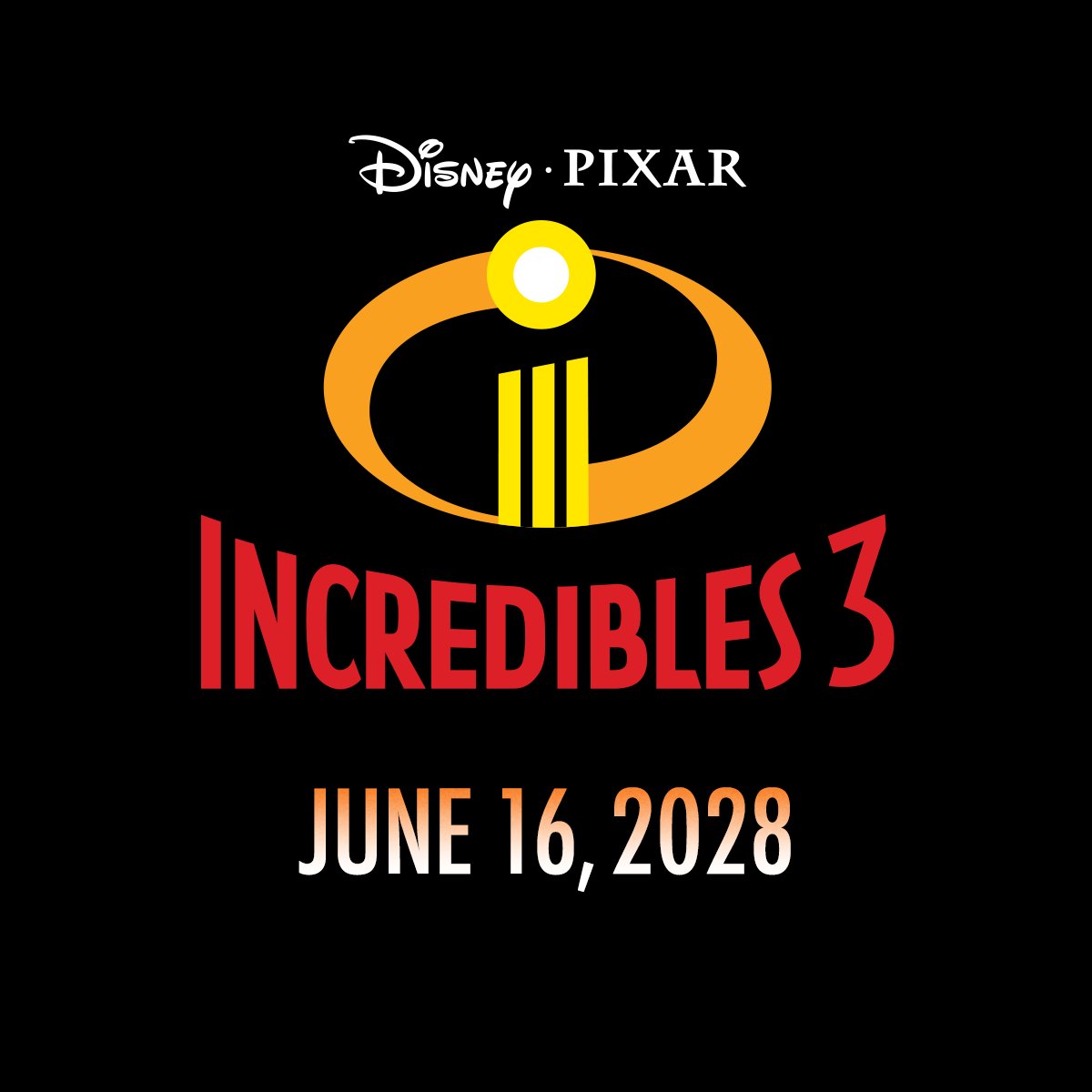
Showtime❗️ #Incredibles3 is coming to theaters June 16, 2028
Pixar tweet media
English
2.1K
25.1K
205.5K
6.5M
Ricardo Diaz-Rincon retweetledi
Hadas Weiss
Hadas Weiss@weiss_hadas·
universities as soon as you enter a phd program

English
4
186
10.1K
108.6K
Ricardo Diaz-Rincon retweetledi
𝒵𝒾𝓀✯
𝒵𝒾𝓀✯@_Gottalovezik·
POV: How it feels returning to ur seat after giving the worst presentation known to man (the pressure is gone)
English
229
17.6K
275.2K
3.6M
Ricardo Diaz-Rincon retweetledi
Absurda Melancolía
Absurda Melancolía@absurdamela·
Absurda Melancolía tweet media
ZXX
7
3.1K
16.3K
203.5K