

realism
2.4K posts


realism retweetledi

Here's an idea.
Rich people own stocks.
Voters own bitcoin, eth, sol, alts, crypto.
Trump knows voters will determine the elections in November.
BTC 160k is only a double.
English
realism retweetledi

If retail knew how to take profits and hold onto them they'd be the most lethal traders. The issue is they get overconfident in periods of euphoria, get blinded to the fact that conditions will change, and then emotional trading resurfaces and they give it all back.
English
realism retweetledi
Shocking that portfolio of 25/25/25/25 is having its best year since 1933!
What in the world ever hits a 97 year high?
Allocation to gold is a mind blowing 0.4% STILL TODAY.
Adoption never happened for gold. It must be coming.
If early for gold it hasn't started for BTC.🚀

English
realism retweetledi

realism retweetledi
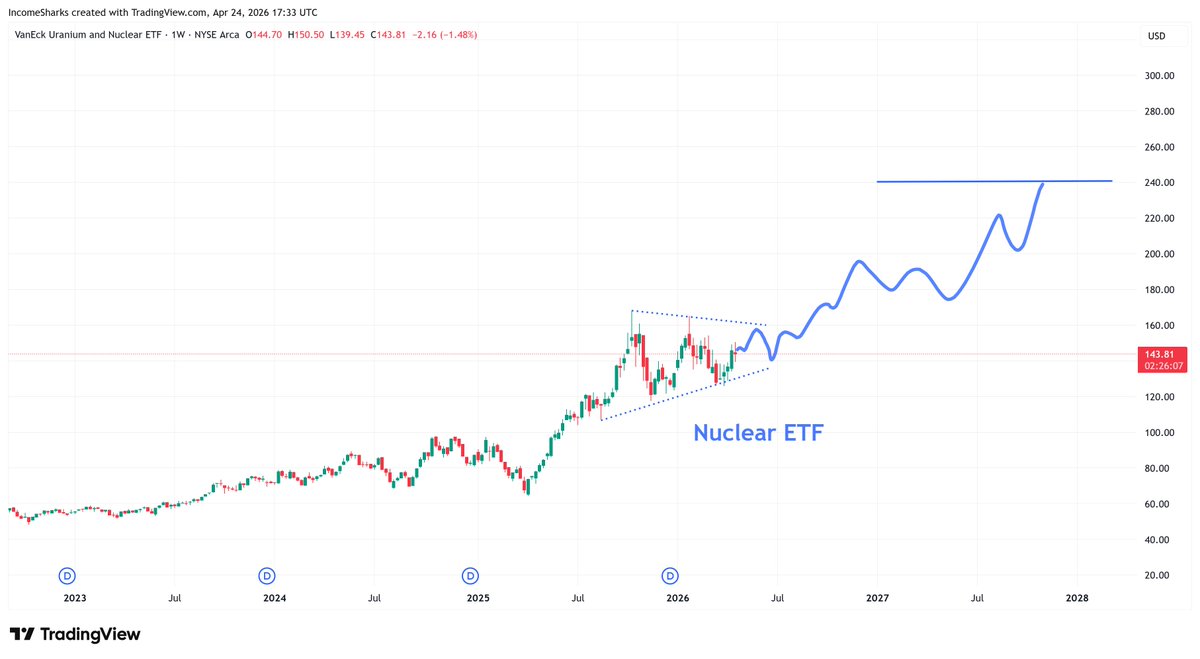
A lot don't have patience for Nuclear but it's something I'd make sure I'd have exposure in before 2030.
English
realism retweetledi


realism retweetledi

Last time we hit a local sentiment low on $TSLA like right now, it was 3 weeks ago at $350 and next thing you know we were back at $400.
I expect the same now, only faster.
This earnings call was a baller with the only exception of Elon messing the vibes up.
I never understood why people sell on low energy vibes. It's a gift - strong numbers, low vibes is goldilocks.
English
realism retweetledi

Tesla Robotaxi not expanding at a high rate in the near term to solve for edge cases and 'safetymaxxing'...
But did anyone have Optimus SOP (start of production) in 90 days (July) ? I didn't... 🔥
English
realism retweetledi
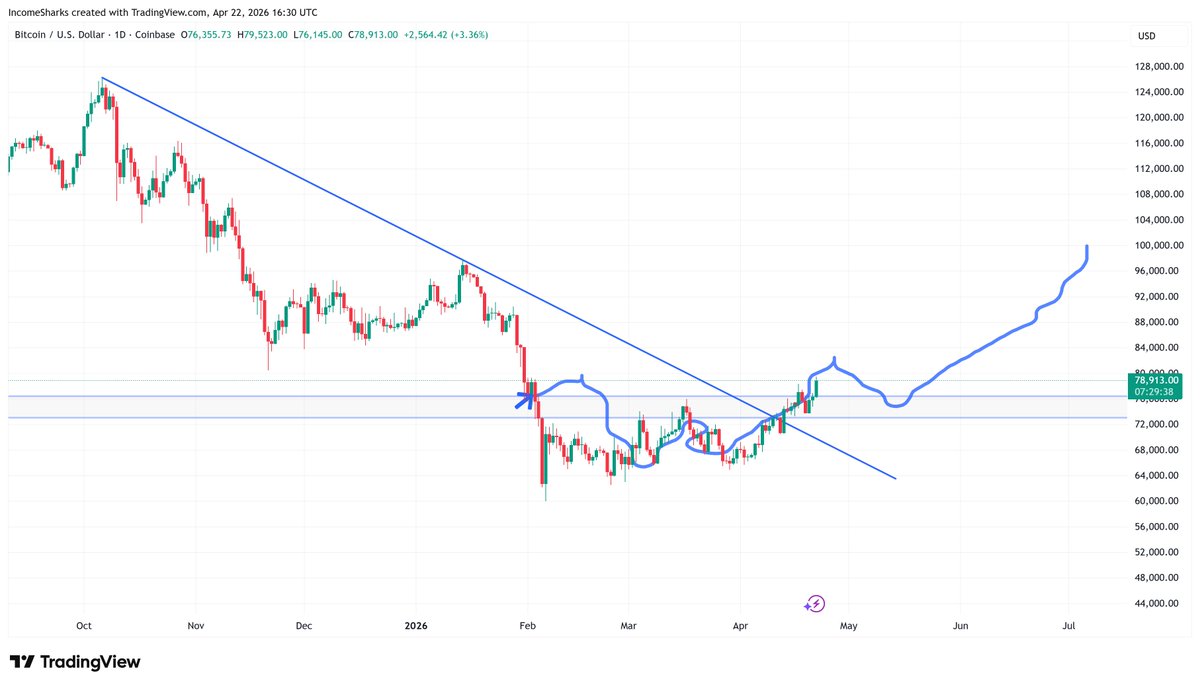
Bitcoin squiggles still playing out from February. Next target is the $83k range before a pullback.
English
@cryptoleon Hi mein lieber, wir kennen uns von Mike Hager. Du hast damals 2022 mit viel Herzblut die Board Ape Ländereien vorgestellt 😀👍🏻
Deutsch

Ich möchte mich mit mehr deutschen connecten im Space.
Wenn du deutsch sprichst kommentier einfach und ich folge dir brudi
Deutsch
realism retweetledi

⚡️The US has a serious debt problem and also the debt problem is structurally different from what most people think it is and the combination of those two things is what actually matters.
The number is real. $39 trillion is a lot of money. 164% increase in fifteen years is a lot of growth. The trajectory doesn’t slow from here. It accelerates. Entitlement spending on Social Security and Medicare is baked in and growing. Interest payments on existing debt are now over $1 trillion per year, larger than the defense budget. The deficit runs at roughly $2 trillion per year with no political coalition available to reduce it. Neither party has any intention of addressing this seriously. Republicans cut taxes. Democrats expand programs. Both produce more debt. The system is locked into the trajectory.
That’s the part that’s real and should be taken seriously.
The part that’s different from what most people assume is what this debt actually is and who holds it and what the consequences of it are. The US debt is denominated in US dollars. The US controls the printing of US dollars. The US has never in its history defaulted on dollar denominated debt and structurally cannot be forced to default on it. Unlike every other country in history with a debt crisis, the US owes money in its own currency that it can produce at will. That’s not the same situation as Argentina or Greece or Venezuela or any of the historical examples people reach for when they panic about American debt.
What happens instead is not default. It’s inflation and currency debasement. The debt doesn’t get paid back in the same purchasing power it was borrowed in. It gets paid back in dollars that are worth less. That’s the actual mechanism and it’s been running quietly for fifty years. The question is not whether the US defaults. The question is how fast the dollar loses purchasing power as the debt grows.
The answer to that question is “faster than most Americans want to acknowledge but slower than the panic narratives suggest.” The dollar is still the world reserve currency. Global demand for dollars is enormous. Every country that needs to do cross border business still needs dollars. That demand is a permanent subsidy on American debt issuance. As long as the world uses dollars, the US can print them at scale without immediate collapse. When the world stops needing dollars at the same rate, the game changes.
That transition is what’s actually happening. Slowly. The BRICS settlement agreements. Central bank gold accumulation. Sovereign Bitcoin positioning. Bilateral currency deals. Iran demanding BTC for Hormuz tolls. Each of these is small. Cumulatively they represent a gradual reduction in the world’s need for dollars. The reduction isn’t fast enough to produce immediate crisis but it’s real enough that the debt trajectory becomes more dangerous over time rather than less.
The thing nobody in mainstream commentary will say clearly is that the US debt is not going to be paid back in any meaningful sense. It’s going to be inflated away, restructured through maturity extension, and eventually partially repudiated through currency debasement that makes the real burden much smaller than the nominal number suggests. The $39 trillion in 2026 dollars becomes maybe $15 trillion in real purchasing power terms by 2050 through sustained inflation.
That’s the actual plan even though no politician will ever articulate it that way.
This has massive implications for asset allocation that most Americans don’t grasp. Holding cash is losing. Holding bonds long term is losing.
Holding productive assets is winning.
Holding scarce assets that can’t be printed is winning hard.
Watcher.Guru@WatcherGuru
🇺🇸 US National Debt: 2011: $14.79T 2012: $16.06T 2013: $16.73T 2014: $17.82T 2015: $18.15T 2016: $19.57T 2017: $20.24T 2018: $21.51T 2019: $22.71T 2020: $26.94T 2021: $28.42T 2022: $30.92T 2023: $33.20T 2024: $36.06T 2025: $38.50T 2026: $39.07T (so far) That's an increase of 164% since 2011.
English
realism retweetledi

You studied the charts.
Watched the interviews.
Read the whitepapers.
Did everything a "responsible trader" is supposed to do.
And you still got REKT.
Nothing went wrong.
The game worked exactly as it was designed to.
90-95% of retail traders lose money.
The industry counts on it.
Your losses are their revenue.
The only way to escape is to learn the Mechanical Rules and stop playing their games.
English
realism retweetledi

Full Self Drive is like Claude Opus
My Porsche 911 is, sadly, Chat GPT 3.
English
realism retweetledi
Bitcoin being able to hold SuperTrend support through all of this is honestly pretty impressive.

English
realism retweetledi
In the past decade the S&P 500 has only had two red years (both midterm years). Retail never complains at the insane and abnormal gains year after year but we will see a lot quit or capitulate this year because the emotions of losing are twice as powerful as winning.

English
realism retweetledi
realism retweetledi
Think about how many old people have stayed middle class their whole life but own a large supply of gold that they'll die with and never touch instead of trusting the US stock market and compounding gains and dividends and retiring with millions. Fear is one hell of a drug.
English
PSA: Bitcoin ready for the next big leg down 🚨🚨🚨
Big BIG MASSIVE surprise ahead
Sadly in the bear direction
Not sadly if you know mechanical rules and can short
THE GOOD NEWS IS THAT WE WILL BOTTOM LATER IN 2026!
English
Why do u never see Lambos outside of a school but you always see them outside the casino
English