Reasoned Islam retweetledi

Reasoned Islam
541 posts


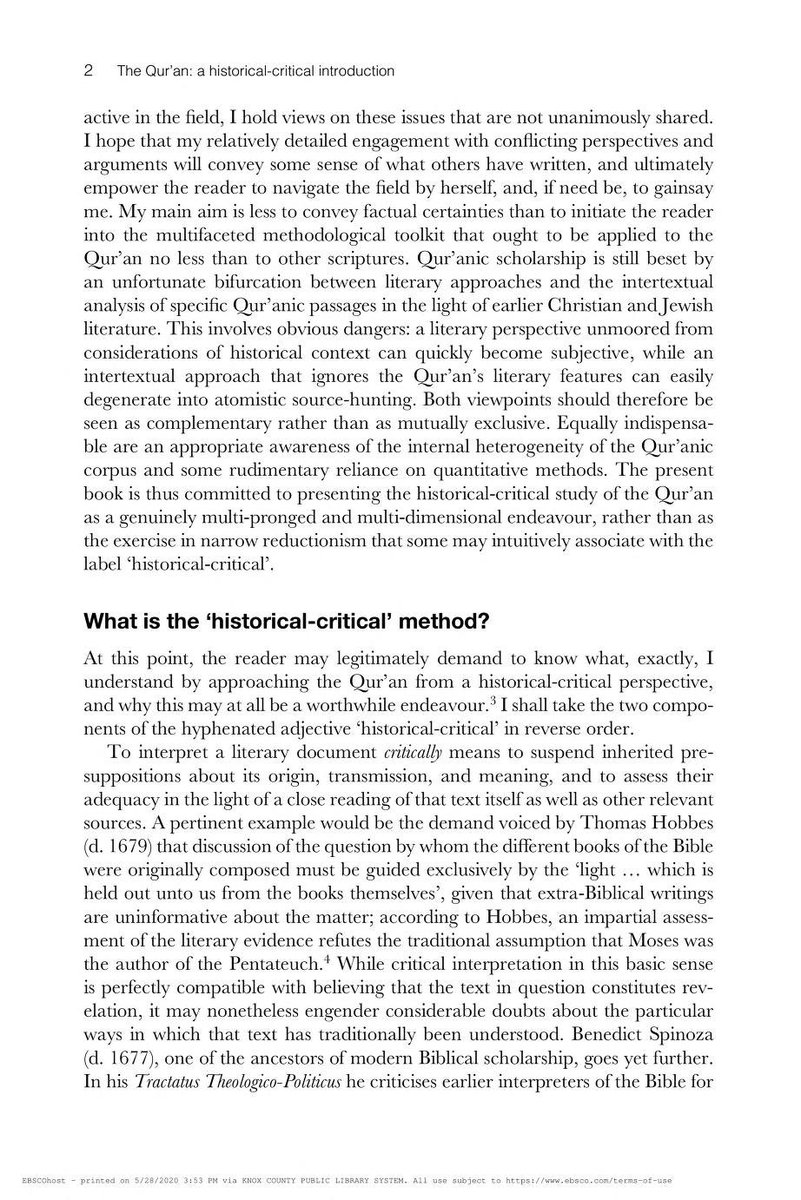
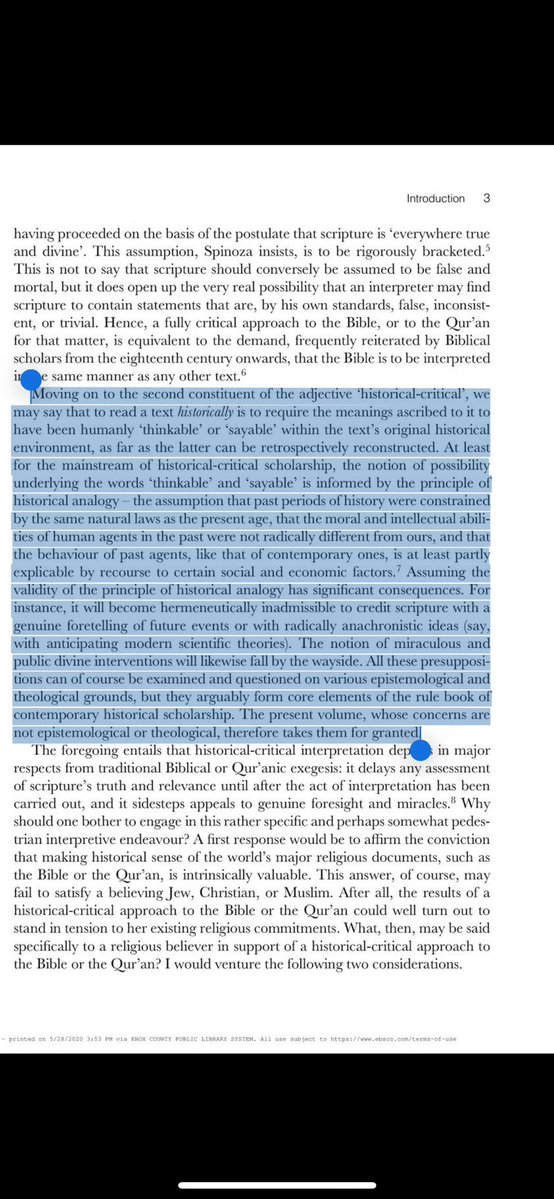
Unlike many Christian apologists, I represent mainstream scholarship accurately. Much more on this topic in my book coming soon, in shaa Allah. Christian apologists' fan favorite scholar, Larry Hurtado, writes, "In light of the sorts of proposals I have been reviewing I must emphasize that in considering whether there are precedents for the worship of Jesus it is not enough to point to literary scenes where this or that figure is given obeisance. The early Christian innovation I have alleged was not to write texts in which Jesus was pictured in some imaginary scene receiving obeisance. The innovation was in modifying more characteristic Jewish cultic practice by accommodating Jesus into their devotional pattern, joining him with God as a recipient of their cultic devotion. What we require is another group of devout adherents to the Jewish biblical tradition in the second temple period who freely and programmatically incorporated a second figure along with God as recipient of their cultic devotion comparable to what early Christian groups did with Jesus. In the ten years since I gave my judgment that we have no evidence of such a group and that the early Christian “binitarian” pattern of devotion seems to be a novel innovation in Roman-era Jewish religious practice, no one has in fact been able to show this judgment to have been incorrect." People like William Lane Craig who are aware of Hurtado's work are just as surprised as I am in the way that Christian apologists appeal to the two powers in heaven literature. Craig writes, "I am astonished that Branson considers Jewish “Binitarianism” or the theology of “two powers in heaven” to be “the ground out of which Trinitarianism sprang” and the Theophanies Problem to be “the most central motivation for both the Jewish and the Christian versions of this theology…Jewish belief in intermediate figures, like exalted patriarchs and principal angels, or in personifications of divine attributes, like Wisdom, were part of what Larry Hurtado calls the “forces and factors” contributing to the background of the worship of Jesus in the early Church, but do not suffice to explain it. As a result of his extensive research, Hurtado concluded, “Although there were conceptual resources in ancient Jewish tradition that were likely drawn upon by earliest believers, there was not really a full analogy or precedent for the intensity and nature of the cultic expressions of devotion to Jesus.” In particular, the Jewish theology of two powers in heaven is a later development of rabbinic Judaism, which may even have reference to the beliefs of Jewish Christians. “None of the various ‘chief agent’ figures in second-temple Jewish texts gives us a full precedent or analogy for the more thoroughgoing way that the exalted Jesus was linked with God in early Christian devotion, and neither individually nor collectively do they represent a major mutation in ancient Jewish monotheism comparable to the cultic veneration of the exalted Jesus.”…He explains, “Moreover, the high status of Jesus in earliest beliefs and devotional practice seems to represent a novel development in the Jewish religious matrix in which it first appeared. Although (as I contend) early notions of Jesus’ status vis-à-vis God drew upon traditions about various ‘chief agent’ figures in ancient Jewish tradition, nevertheless, the Jesus-devotion reflected already in Paul’s letters comprises a significant further development, a novel ‘mutation.’…Indeed, as Jewish monotheism itself bears witness, one need not arm a plurality of divine persons at all in order to resolve the Theophanies Problem. One might appeal to a principal angel or another ersatz figure for God who appears to people in such experiences…" youtube.com/live/PxA-j2NwK…













The existence of extraterrestrial life would be expected if the universe was fine-tuned for life. This would not debunk Christianity.





@AEnjoyer447201 Bart Ehrman's differentiation between Jesus & the Son of Man is hardly "sloppy." Rather, it represents a prominent view in New Testament studies. Just because you & some other scholars disagree with it does not make it sloppy. 3/