Redbeard

3.1K posts

Redbeard

Redbeard

@redbeard_ice

Katılım Mart 2021
607 Takip Edilen231 Takipçiler
Sabitlenmiş Tweet
Redbeard
Redbeard@redbeard_ice·
Interested in the quest for the holy grail of a crypto-native stable currency (i.e., not fiat-based)? Read about the latest groundbreaking developments from the icewater team here: medium.com/icewatermoney/…
English
0
1
4
1.9K
Redbeard
Redbeard@redbeard_ice·
@Volty @deanwball Do I understand this correctly that it proposes a strict ban on training runs over 10^24 flops?
English
0
0
0
25
David Abecassis
David Abecassis@Volty·
Speaking on behalf of MIRI TGT (not necessarily MIRI overall) We share many of the same concerns, which is why we structured our model agreement (below) the way we did. It invites broad participation, but also features mechanisms to address states which insist on operating outside of the agreement, while prioritizing the national security requirements of the US and China. So to address question 5 upfront, “should [this] be a global agreement?”: Yes! We think the US and China would be a sufficient seed to get broad participation via their network of allies, superpower status, and AI dominance. Now going point by point: “1. Assuming we achieve the desired policy goal through a bilateral US/China agreement, what would be the specific metric or objective we would say needs to be satisfied in advance? Who decides whether we have satisfied them? What if one party believes we have satisfied them but the other does not?” There are two interpretations of this question. Interpretation (1): what metric is used to determine whether the desired policy goal is being achieved? Interpretation (2): what metric is used to determine when a halt is to terminate? I’ve tried to address both below: The policy goal is to forestall the development of superintelligence long enough for other, better solutions to be realized. It is hard to say what these solutions will be in advance, as humanity is nowhere near being able to align a superintelligence. The field doesn’t have a clear path to solving that technical problem. Furthermore, solving alignment isn’t sufficient on its own, and the other thorny problems (such as concentration of power) require similar focused effort which we aren’t seeing on current timelines. The key metric we use to know if that goal is accomplished is the confidence within the leadership of the US and China that no one is advancing the frontier of AI general intelligence capabilities anywhere. This confidence is reflected by the continued willingness of these actors to participate in the agreement, and springs from a combination of restrictions/controls, transparency, verification, and intelligence gathering. It would be great if we can attain this confidence without much constraint on the beneficial uses of AI we already see today, and our agreement aims to preserve these! The agreement is not accomplishing its aims if only one of these key parties has such confidence. We have tried to accommodate the requirements we think that the USG and CCP would have, but also expect that many details would need to be ironed out through an actual negotiation and implementation effort. “2. If the goal is achieved through a bilateral US/China agreement, would we need capital controls to ensure that U.S. investors cannot fund semiconductor fabs, data centers, or AI research labs in countries other than the U.S. and China?” Yes, just like how the U.S. makes it hard for you to fund terrorists or give money to the North Korean military. “3. Would we need to revoke the passports of U.S.-based AI researchers and semiconductor engineers to prevent them leaving America to join AI-related ventures elsewhere? How else would the U.S. and China keep researchers within their borders?” There will be no shortage of technical work for talented researchers under our proposed agreement, and the best approach is for states to modify their incentives (i.e. pay them well) to act in our collective interest, in the style of efforts like the International Science and Technology Center. In 1994, the ISTC kept former Soviet nuclear researchers employed in peaceful work so that they wouldn’t sell their expertise to proliferators. We anticipate that some researchers will emigrate to non-signatories and pursue covert work, in spite of any efforts. The agreement aims to provide the US and China with sufficient confidence that these efforts will fail through a combination of compute denial, detection, and enforcement. The framing of this question seems to imply that some agreements may only aim to address AI development within the US and China, and that such development must not leave those jurisdictions. We agree that is not viable. We cover this in Article XII. “4. How should we grapple with the fact that (2) and (3) are common features of autocratic regimes? “ It doesn’t look like it takes qualitatively different “autocracy” than was required to prevent the proliferation of nuclear weapons. Limiting the development and deployment of extraordinarily dangerous technology is a feature of our American system of government which prioritizes the defense of individual life, freedom, and property. Preventing you from refining uranium in your basement and assembling a nuke in your garage is an impingement upon your freedom, but that doesn’t mean society should let you do it, and it doesn’t mean the government needs to become an autocracy to prevent it. So too with superintelligence. We charge our military and Intelligence Community with ensuring the safety and freedom of Americans against all threats. Through careful institutional design and adherence to our constitution we can avoid abuse of the power granted by our agreement. As an aside, we believe that the potential for abuse of our agreement is less than the potential for abuse of AI systems developed and employed by the government without constraint, or the potential for abuse in arrangements where the government is allowed to gatekeep access to powerful AI. Read More: An International Agreement to Prevent the Premature Creation of Artificial Superintelligence techgov.intelligence.org/research/an-in…
English
2
9
96
10.1K
Dean W. Ball
Dean W. Ball@deanwball·
Here are some questions I wish "Pause" and "Stop" advocates would address: 1. Assuming we achieve the desired policy goal through a bilateral US/China agreement, what would be the specific metric or objective we would say needs to be satisfied in advance? Who decides whether we have satisfied them? What if one one party believes we have satisfied them but the other does not? 2. If the goal is achieved through a bilateral US/China agreement, would we need capital controls to ensure that U.S. investors cannot fund semiconductor fabs, data centers, or AI research labs in countries other than the U.S. and China? 3. Would we need to revoke the passports of U.S.-based AI researchers and semiconductor engineers to prevent them leaving America to join AI-related ventures elsewhere? How else would the U.S. and China keep researchers within their borders? 4. How should we grapple with the fact that (2) and (3) are common features of autocratic regimes? 5. Do the above questions mean that this really should be a global agreement, signed by all countries on Earth, or at least those with the theoretical ability to host large-scale data centers (probably Vanuatu doesn't need to be on board)?
Dean W. Ball@deanwball

Pause AI rhetoric is predicated on the notion that the AI companies are recklessly racing toward dangerous tech and that a government controlled pause button is therefore necessary, but this seems really hard to reconcile with the fact that government is attempting to destroy an AI company because *the government* is racing toward plausibly dangerous AI uses (Sec. Hegseth has stated in official directives that he wants to deploy AI into critical systems regardless of whether it is aligned, for example) and *the company* is pushing back. The roles are totally reversed from the logic that Pause AI and frankly other AI safety advocates confidently assumed for years. It is *industry* that is in favor of alignment and at least somewhat measured deployment risks, and government whose actions seem much closer to reckless. I predicted this for years. I said, in particular, that pauses and bans and licensing regimes gave government a dangerously high degree of control over AI, and that the incentives of government are much more dangerous than those of private industry with competitive market incentives. I believe the events of the last month are good evidence in favor of my view. At this point if you are an AI safety advocate whose policy proposals do not wrestle seriously with the brutal political economic reality of the state and AI, I don’t take you seriously. It gives me no pleasure to have been right about this, by the way. The state has an incredibly strong structural incentive to centralize power using AI, and we are, all of us, not so empowered to stop it. I am quite concerned about this.

English
25
20
184
52.7K
Evan Applegate
Evan Applegate@youwillmakemaps·
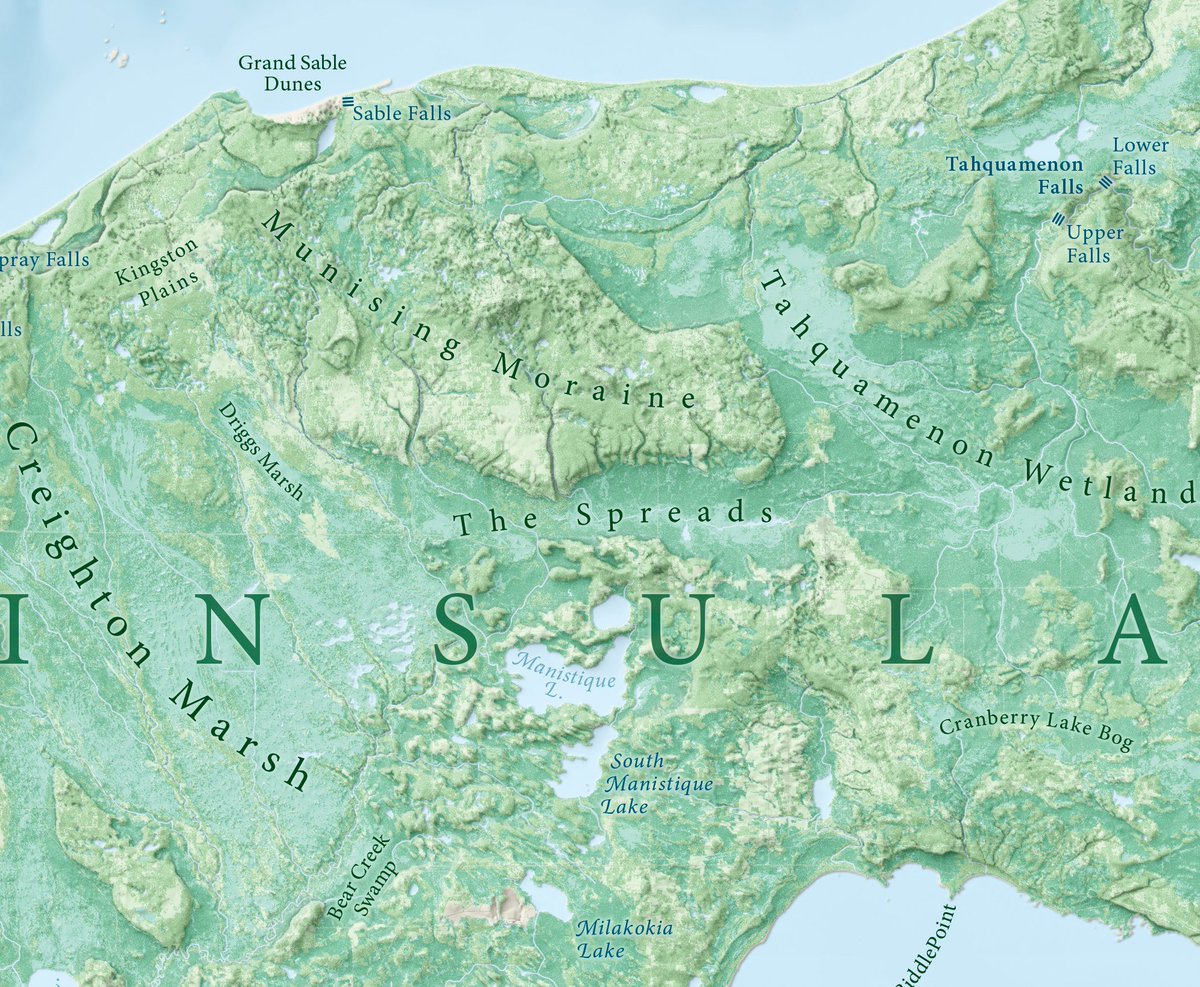
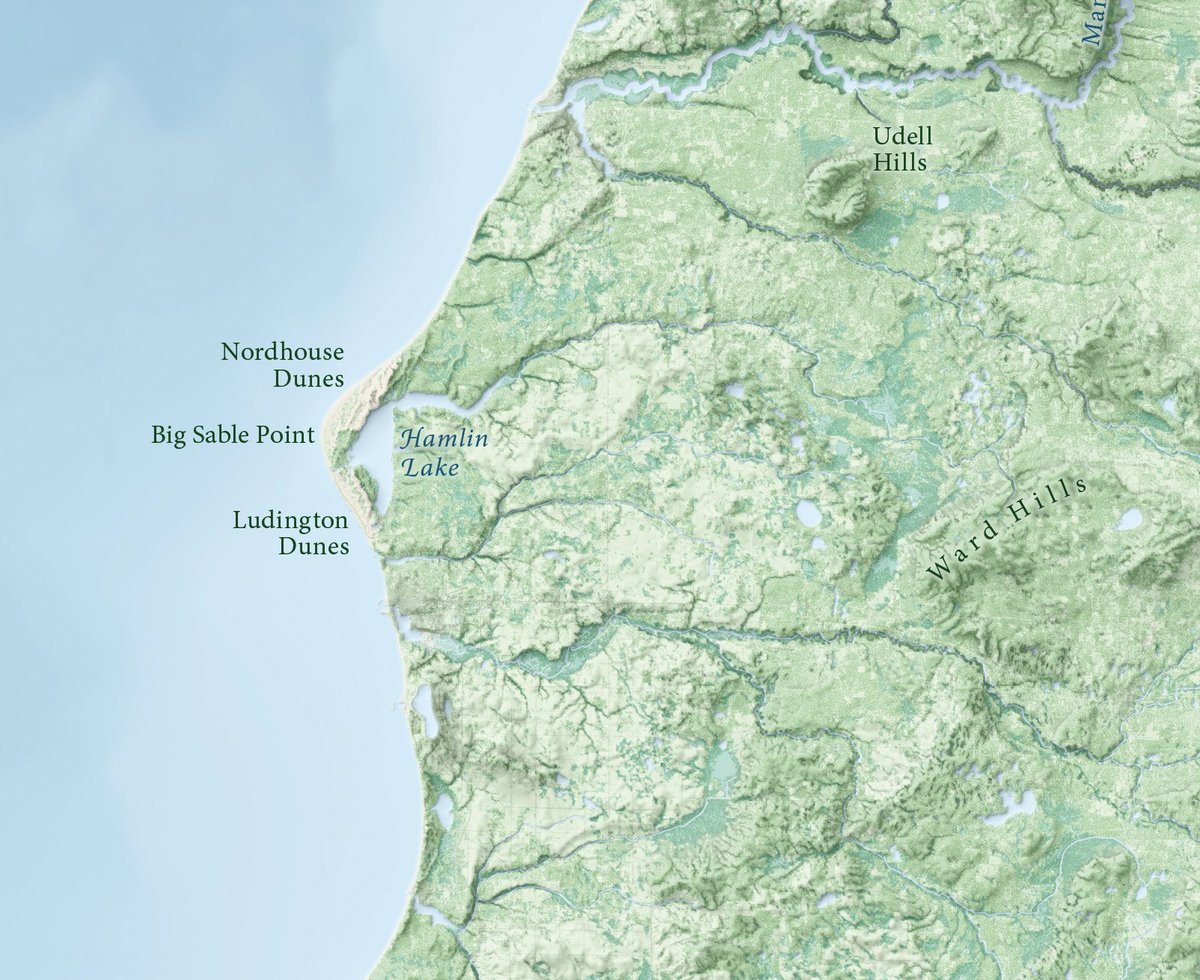
Reminds me of one of my favorite relief maps: Daniel Huffman’s 2020 "Landforms of Michigan," a portrait of his homeland Huffman was a chemist in Kalamazoo before teaching himself cartography, and now he's one of the best living mapmakers
Evan Applegate tweet mediaEvan Applegate tweet mediaEvan Applegate tweet mediaEvan Applegate tweet media
verygoodmaps@verygoodmaps

Todays hobby map is Upper Peninsula, Michigan. I wonder how many people around Hancock/Houghton can still speak Finnish. Tools: QGIS, Blender, Photoshop, Affinity. #Michigan #USA #GIS

English
15
145
1.9K
89.6K
Dan Davis
Dan Davis@DanDavisWrites·
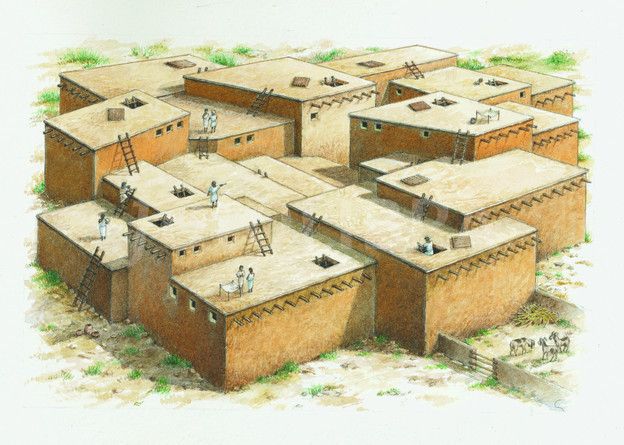
The early Neolithic site of Çatalhöyük in Anatolia is always shown in reconstructions with houses abutted. In fact, each house usually had it's own four walls and there was usually a gap of a few centimetres between them. Not enough to walk down but they were there. Some animals like cats seem to have gotten stuck and died in these narrow gaps between houses.
Dan Davis tweet media
harrison (///)@harrisondubay

Why are Anglos obsessed with houses that don’t touch. What is the anorexia alley achieving

English
3
20
215
14K
Redbeard
Redbeard@redbeard_ice·
@eshear @skdh This reminds me of how Rutherford discovered that atoms are mostly empty space. Perhaps it is better to think of atoms being mostly "empty" in the temporal dimension as well -- they only appear as point-like atoms in certain interaction scenarios.
English
0
0
1
51
Emmett Shear
Emmett Shear@eshear·
@skdh Of course that’s not weird at all, really. Of course you can add states, you can have a thing that’s partially this way and also partially that way at the same time. But it kind of blows your mind if you’re expecting a level where there are “real particles” — non-linearities.
English
2
0
11
995
Sabine Hossenfelder
Sabine Hossenfelder@skdh·
The double slit experiment is the probably most misunderstood experiment ever. I have no idea who created the myth that if you 'look' at one of the slits, then the particles (photons/electrons) stop behaving as waves. It's wrong! They of course STILL behave as waves! Because particles are also waves, always. Photons and electrons make a self-interference EVEN ON A SINGLE slit. Don't believe it? Below an actual measurement from a laser diffracting on a single/double slit from Wikipedia. What happens if you measure which slit the particle goes through is that you get no interference between BOTH slits. And no, you don't need a conscious observer for this. Believe it or not, there have actually been experiments where they had people literally look at a double slit to see if that makes any difference and the answer is no, it does not. The entire mystery of the double slit is in the path of the particle TO the double slit. Because it seems that the particle must "know" whether it WILL be measured at one of the slits before it even gets there. It must "know" whether to go through both or just pick one. Seems like the future influences the past? Not really, it just means you have a consistency condition on the time evolution.
Sabine Hossenfelder tweet media
English
310
168
1.6K
137.8K
Danny Limanseta
Danny Limanseta@DannyLimanseta·
I used Cursor to vibe code a simple fishing game prototype on the Unity Engine. Here's my learnings: - I did not use any Unity MCP for this. The game was built entirely by Cursor models (Sonnet 4.6 for execution and Opus 4.6 for planning) - The model was able to set up the game, getting the basic game mechanics working fairly quickly - I had to use the Unity Game Editor UI to attach components to the in-game objects manually, but it was quite easy to follow the instructions given by the Cursor model - Unity Editor is huge and slow! Compared to Godot, I find the UI really clunky I feel tired looking at it - Unity Assets Marketplace is amazing, there are so many amazing art assets there (like the ones I am using for this game). This is probably the biggest strength of Unity. - I had some issues with restoring checkpoints, probably because of how Unity Game Editor UI being really clunky and I had to manually adjust things in the Editor, which the model doesnt have knowledge of Overall, the results turn out pretty decent, but it was a rather frustrating experience, especially when I had to debug issues or rollback changes. I'll explore more vibe coding on Unity but for now, I think I prefer Godot as a game engine. I just wish there is a Godot Asset Marketplace!
English
93
56
1.3K
178.3K
Redbeard
Redbeard@redbeard_ice·
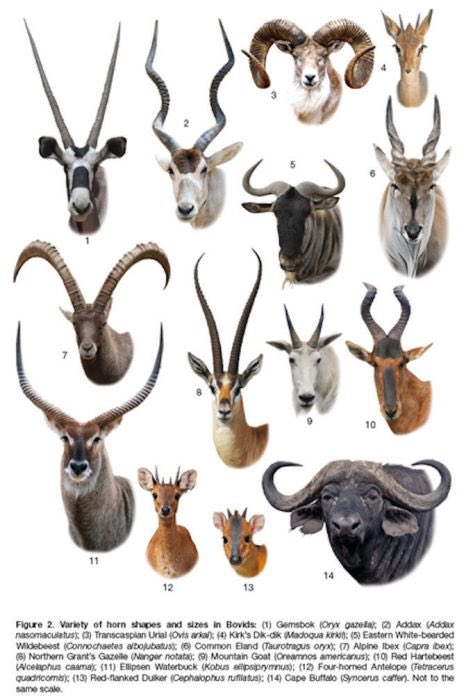
@RodeoProfessor giraffe horns are also distinct from traditional horns and antlers.
English
0
0
1
57
RodeoProfessor
RodeoProfessor@RodeoProfessor·
We talked about this in class yesterday and there was a lot of interest so I thought I’d share it here. What’s the difference between horns and antlers on ungulates (hoofed mammals)? Horns are what cattle, bighorn, mountain goats, and many antelope have. They’re a permanent bony core (part of the skull itself) covered by a hard sheath of keratin. True horns never shed and they usually don’t form branching shapes (so they’re straight or curled but never forked). Males and females have horns. Antlers on the other hand are made entirely of bone. They’re the fastest growing mammalian tissue on record. They grow from bony stubs each year called pedicles. In early stages they’re covered in velvet (blood rich skin that super charges the growth rate). When they are fully grown, they rub off the velvet, and the shape they take usually will have branches and tines (points). After mating season (rut) the antlers are shed and the grow back next year. Only males grow antlers (except for reindeer and caribou). Pronghorn antelope don’t fit into horns or antlers boxes. They have the bone/keratin sheath like horns, but they are branched and shed every year like antlers. Their headgear is one of a kind, and they’re only here in America.
RodeoProfessor tweet mediaRodeoProfessor tweet media
English
11
21
165
4.1K
Ray Harvey
Ray Harvey@rharvey0523·
@SandyofCthulhu I highly recommend that you read this book. very eye opening as to what they were actually doing.
Ray Harvey tweet media
English
2
1
34
6.5K
Sandy Petersen 🪔
Sandy Petersen 🪔@SandyofCthulhu·
WW1 is always one of my top picks for pointless wars. What did we get out of it? Hitler & Stalin. And what would’ve happened if the Central Powers had won? Part of Belgium and Trieste would have been annexed. Hardly worth the lives lost and my grandpa wounded and spending over 2 years as a German POW.
Defiant L’s@DefiantLs

British veteran: "Rows and rows of white tombs for what? So many of my friends died. A country of today? No, I'm sorry. The sacrifice wasn't worth the result."

English
149
108
2.6K
210.4K
Redbeard
Redbeard@redbeard_ice·
@tairanu @FortressLugh K, but the context of the post is that he is refuting a previous post saying "these people were ANATOLIAN and NOT GREEK". The response post is saying they spoke Greek and thought of themselves as Greek, so they were Greek. Seems like your definition supports that.
English
1
0
0
4
Taylan
Taylan@tairanu·
@redbeard_ice @FortressLugh Jonathan M. Hall argues in Hellenicity (2002), Greek identity in antiquity was primarily constructed through shared language, cult practice, mythic genealogy, and participation in Panhellenic institutions — not through biological . ^^^
English
2
0
1
25
Kevin MacLean (Fortress of Lugh)
Kevin MacLean (Fortress of Lugh)@FortressLugh·
"People like Herodotus, Pythagoras, Diogenes, Strabo, Thales – NONE OF THEM ARE GREEK." - They have Greek names - They wrote in Greek - They lived in places that are historically know to have identified as Greek or had significant Greek settlement. - their writing is done from a position of being Greek (calling non Greeks barbarians, holding Greek stereotypes against other non-Greek groups, talking about Greek perspectives from the position of a Greek, and sometimes even saying "we" when referring to Greeks. If they are not Greek in nearly every meaningful way, I will eat my hat. The easy and honest solution to this would be to admit that many Turks have at least some Greek (Or Roman - if you prefer) ancestry. This "Homer wasn't Greek" cope just makes you look silly.
ALF@AlfTheShumway

As Turks, we don't call Homer a Turk, or Thales, Anaximander, or any of the others TURKISH. You can barely find even one person who calls them Turkish. What we defend is that these people were ANATOLIAN and NOT GREEK – and that's the correct thing. None of these guys are GREEK like the propaganda you spread everywhere. You're just thieves. Since the Anatolian peoples and states no longer exist today, you're stealing your neighbors' successful people. People like Herodotus, Pythagoras, Diogenes, Strabo, Thales – NONE OF THEM ARE GREEK. They just wrote in Greek because it was the lingua franca of the time, and they went to the most advanced universities in Athens. For example, as a Turk today, if I write my scientific papers in English and become a professor at Oxford, calling me English would be just as ridiculous. These people are neither ethnically nor genetically Greek; they just wrote and spoke that language. Strabo was from Amasya, born in Pontus, his family was close to the Pontic royalty – he had ZERO connection to the Greeks. He lived under a state that was a Persian vassal, and 40 years later the Romans/Latins would come and conquer it. Herodotus was Carian, born under Persian rule in some part of Anatolia – ZERO connection to the Greeks. Pythagoras was the son of a Phoenician merchant – ZERO connection to Greek ethnicity. Thales was Phoenician and born in Sham (Damascus), MEANING THIS GUY WAS LEVANTINE Semitic, lived in what is today's Syria – ZERO connection to the Greeks. The founder of Stoicism, Zeno of Citium, was Cypriot and the son of a Phoenician family – ZERO connection to the Greeks. I could list 80 more like this. Of the people you know as Greek philosophers, only 23% are ethnically Greek; the rest are NOT GREEK AT ALL. That's why the statues found of these people don't even look like today's pitch-black Greeks. WE TURKS WANT THIS THEFT TO STOP. We don't call these people TURKISH – we're just telling the truth: they were ANATOLIAN. Just because their states don't exist today doesn't make them bastards. By stealing everything, they're trying to present themselves as the foundation stone of the West. You're neither the West nor the foundation – you're straight-up THIEVES. The so-called ANCIENT GREEKS you talk about ARE NOT GREEK. The Latins' biggest achievement was ROME, but you promote it like it's Greek, making profile pictures of all their leaders and LARPing. No, you're just subjects of Rome – you had NO importance in Rome. They show Alexander as Greek. NO, Alexander was MACEDONIAN. Among Alexander's Diadochi, there isn't a single Greek – they're all Macedonians. You were just the subjects he conquered – you don't own shit.

English
91
91
1.2K
61.4K
Redbeard
Redbeard@redbeard_ice·
@tairanu @FortressLugh Assuming you are right that there is a difference between cultural and national identity, what gave you the impression he was talking about the modern concept?
English
1
0
0
16
Taylan
Taylan@tairanu·
@FortressLugh You’re applying a 19th-century nation-state concept to the ancient world. Writing in Greek doesn’t equal modern Greek ethnicity. Latin was used across the Roman Empire — that doesn’t make every Latin author “Italian.”In antiquity, identity was civic and cultural, not national.
English
1
0
5
252
Redbeard
Redbeard@redbeard_ice·
@BiankaB12 Orthodox thinks religious practice is too performative
Redbeard tweet media
English
1
0
1
55
Бианка
Бианка@BiankaB12·
I’m Orthodox, so I don’t know that much about Catholic traditions. The first time I saw this was when Marco Rubio was giving an interview and I genuinely thought the image was manipulated or something. I asked some of my Catholic friends (Italians and Poles). They said they use subtle ash. Apparently, it is a thing among Catholics, but it differs. Personally, I find it way too performative - faith is very personal and intimate thing. To each is own, I guess 🤷‍♀️
Bricktop_NAFO@Bricktop_NAFO

I dont mock religeons, i dont question peoples beliefs. I think people having faith in inherently good. I just don't know why you would think God would want you walking around with this on you head though. Looks like a cult.

English
54
5
134
10.6K
YIMBYLAND
YIMBYLAND@YIMBYLAND·
In a post-labor AGI world, who decides who gets to live on Central Park, Pacific Heights, or Beverly Hills? There is a fixed supply of the nicest neighborhoods and locations. How does a supposedly post-scarcity world where nobody earns an income deal with this?
English
857
66
2.5K
441.4K
Maptism
Maptism@maptismcontact·
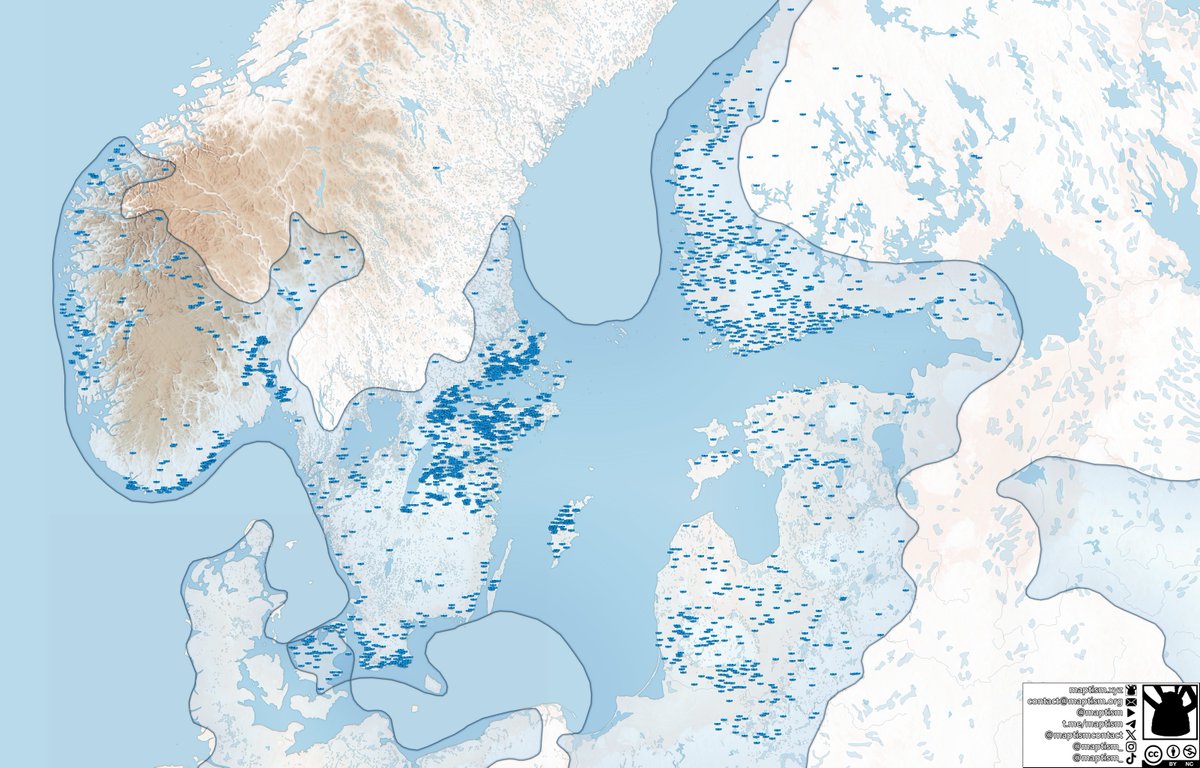
Map of Corded Ware "Boat Axes" in the Baltic Sea
Maptism tweet media
English
5
27
450
21.9K
Redbeard retweetledi
Milos Makes Maps
Milos Makes Maps@milosmakesmaps·
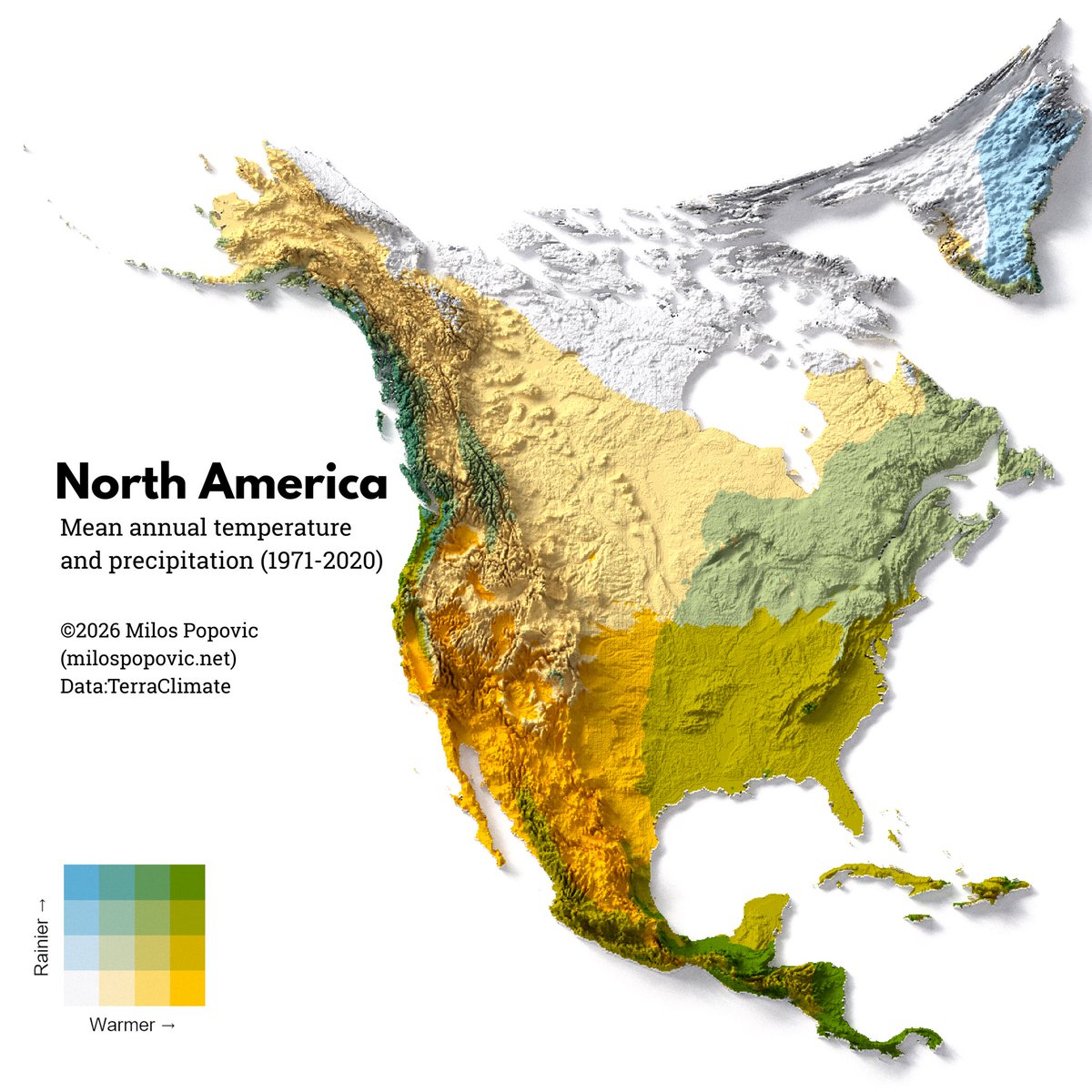
North America, colored by climate. 50 years of average temperature and precipitation draped over terrain. The greens got lucky. The golds got sun. The whites got winter. 😁 Where would you live on this map?
Milos Makes Maps tweet media
English
7
12
48
6.5K
Giga Based Dad
Giga Based Dad@GigaBasedDad·
Which have you chosen?
Giga Based Dad tweet media
English
195
70
1.3K
76.6K
Creepy.org
Creepy.org@creepydotorg·
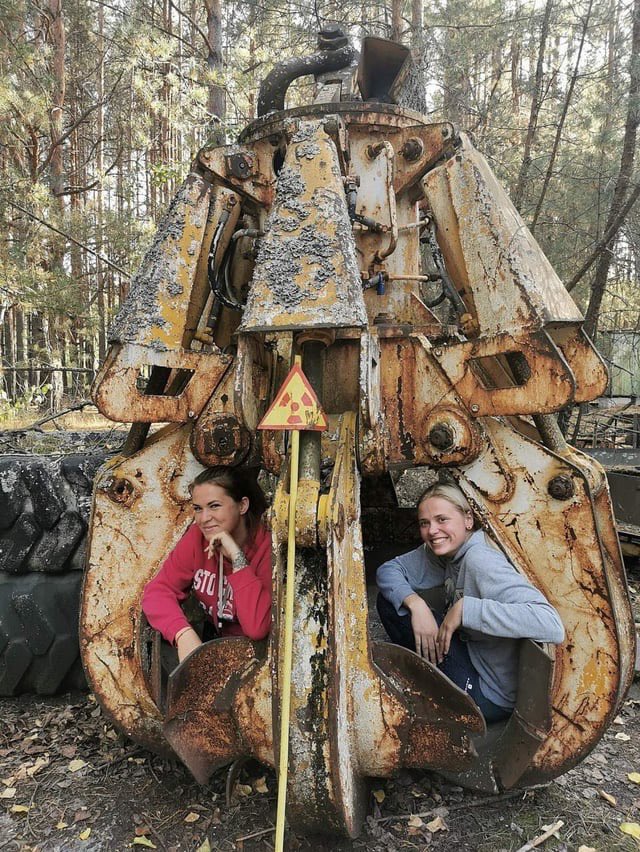
Two girls casually sitting inside the radioactive crane claw that once moved lethal debris from the 1986 Chernobyl disaster.
Creepy.org tweet media
English
161
132
2.8K
202.3K
Redbeard
Redbeard@redbeard_ice·
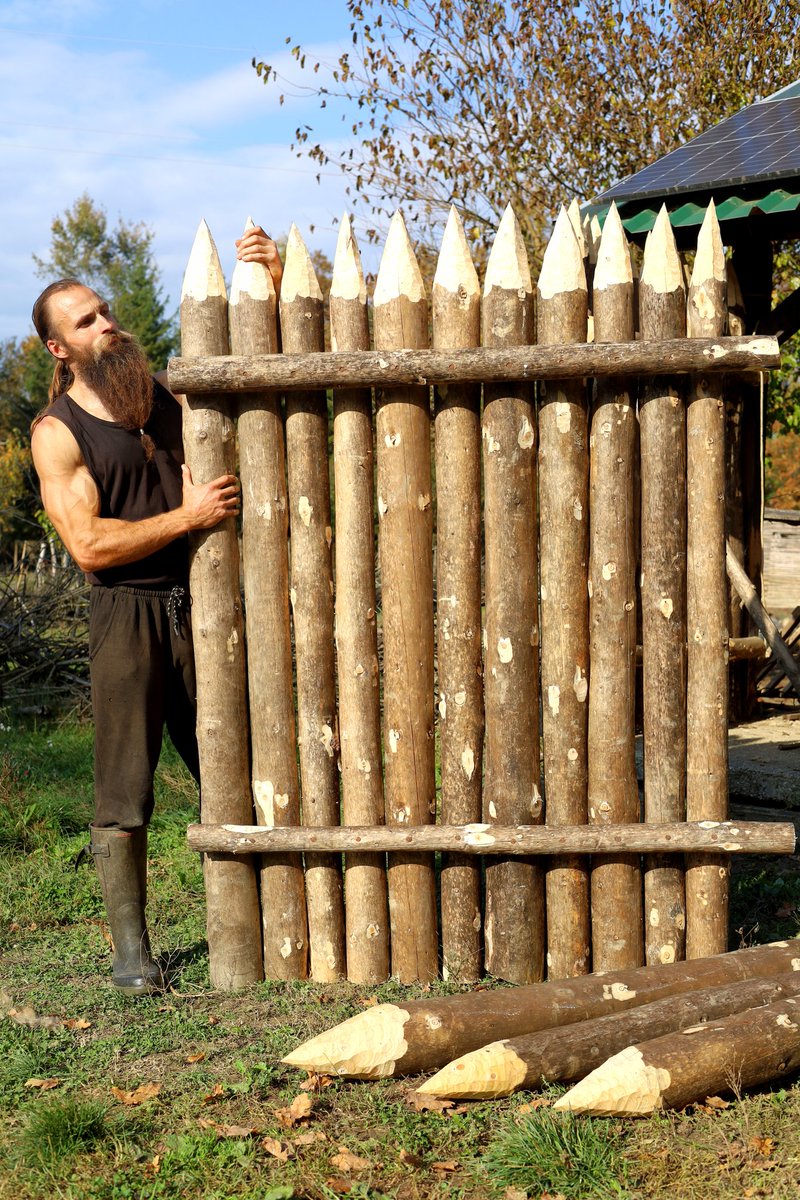
@Andercot @KingVelesI Just think how much more productive he would be if he stopped gaming and starting building fences!
English
0
0
7
333
Andrew Côté
Andrew Côté@Andercot·
@KingVelesI The most productive and wealthiest impactful entrepreneur on the planet is an avid gamer.
English
22
0
118
8.3K
King of the Marsh
King of the Marsh@KingVelesI·
No matter how much you love gaming (I sure did), you'll probably regret the time you've spent on it one day. Sure, you can cope by telling yourself you are "learning stuff", "increasing your problem-solving skills", "improving your reflexes", etc., but deep down, you know that's BS, as I did in my gaming days. Once that screen goes dark, you have NOTHING to show for all the hours of your life you've poured into it. They're gone forever. Sure, you got some cheap dopamine out of it. For a minute, you felt that sweet sense of progress and accomplishment. But that was merely fake progress and the illusion of accomplishment. Back in reality, you did nothing but sit in a chair while moving pixels on a screen. Hundreds, thousands, tens of thousands of hours poured into mastering a skill that is completely inapplicable to anything in the real world. Had you devoted that time to a worthy skill instead, you would've been a master craftsman, artist, athlete, musician, you name it, by now. It's not too late, though. You still have a choice. You can keep whittling your life away while moving strong, intelligent, capable, and impressive characters on a screen, or... you can become one of them. Choose wisely, for time is the stuff life is made of, and you have less of it than you think. As a former passionate gamer, let me tell you: There's far more joy, accomplishment, and fulfillment to be found in the real world.
King of the Marsh tweet mediaKing of the Marsh tweet mediaKing of the Marsh tweet media
English
1.1K
380
4.3K
680.8K