Paolo Rosson

673 posts

Paolo Rosson

Paolo Rosson

@redp314

Building https://t.co/DANgmpZvSA | Quantum physics PhD from Oxford | Former Italian blindfolded Rubik’s cube record holder

London, England Katılım Mayıs 2015
1.6K Takip Edilen272 Takipçiler
Paolo Rosson
Paolo Rosson@redp314·
Results straight from MenuPhotoAI.com: A simple phone photo of takeout food can be turned into an amazing shot!
Paolo Rosson tweet mediaPaolo Rosson tweet mediaPaolo Rosson tweet media
English
0
0
0
31
JJ Englert
JJ Englert@JJEnglert·
I built the ultimate GTM Engineer AI Toolkit that handles prospect research, outreach writing, meeting prep, and more in minutes. This is a beginner-friendly walkthrough that shows you exactly how to set it up, use it at work, and personalize it to your business. It can: - Research real prospects and companies - Score accounts against your ICP - Write personalized cold outreach sequences - Generate meeting prep briefs before calls - Help you build a repeatable prospecting pipeline - All using a free toolkit + Claude Code / Codex. This is for SDRs, founders, marketers, and GTM operators who want to use AI to do more at work without buying another expensive tool. I break down the full workflow step by step in the video. 👇 Comment "GTM GUIDE" and I’ll send you the full toolkit. (make sure you're following me so I can DM you)
English
1.1K
33
571
167K
Paolo Rosson
Paolo Rosson@redp314·
@businessbarista This is so cool, and there’s definitely other useful applications outside of pure art for the same concept!
English
0
0
0
133
Alex Lieberman
Alex Lieberman@businessbarista·
one of the coolest art installations I’ve ever seen. it’s called live sketchbook and turns your 2D animal drawing into a living, breathing 3D mystical creature on-screen. such a great example that technology isn’t killing creativity. lack of creativity is killing creativity.
English
20
7
148
21.4K
Paolo Rosson
Paolo Rosson@redp314·
Demystifying @steipete's OpenClaw. I genuinely wanted to understand how it works, so I built PyClaw, a minimal ~500-line Python version with just the essential pieces. I kept wondering: How does it always listen? How does each chat get its own separate memory/knowledge/personality? Building this from scratch made it all click for me. Check it out if you're curious too: github.com/pangoleen/PyCl… 🦞
English
0
0
1
96
Shaan Puri
Shaan Puri@ShaanVP·
what's the most useful AI tool you've built or used this year? (excluding just chatting with GPT, gemini etc.)
English
269
7
248
163.9K
Paolo Rosson
Paolo Rosson@redp314·
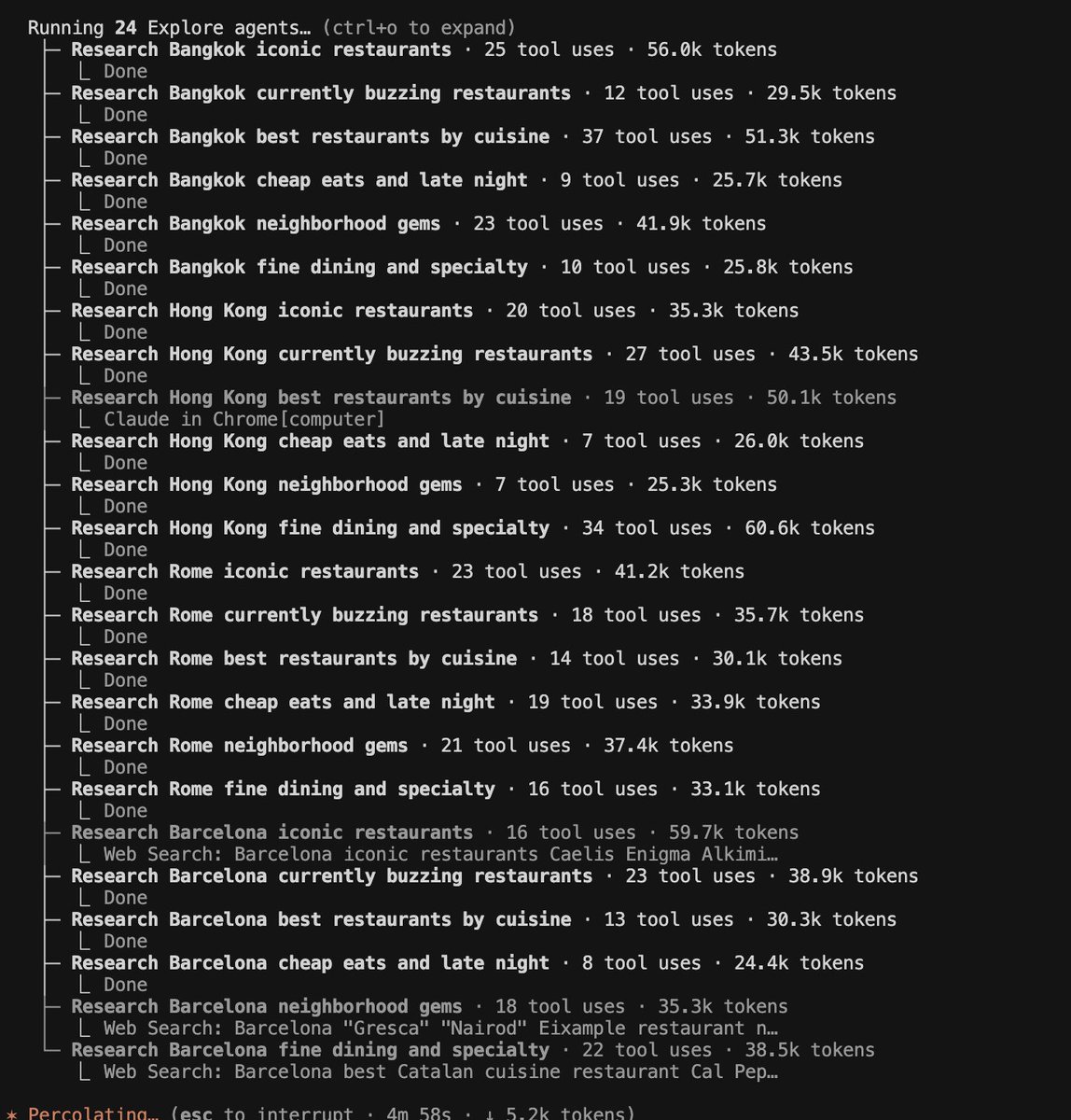
Parallel web research with Claude Code can get very extensive!

Paolo Rosson tweet media
English
0
0
0
112
Andrej Karpathy
Andrej Karpathy@karpathy·
A few random notes from claude coding quite a bit last few weeks. Coding workflow. Given the latest lift in LLM coding capability, like many others I rapidly went from about 80% manual+autocomplete coding and 20% agents in November to 80% agent coding and 20% edits+touchups in December. i.e. I really am mostly programming in English now, a bit sheepishly telling the LLM what code to write... in words. It hurts the ego a bit but the power to operate over software in large "code actions" is just too net useful, especially once you adapt to it, configure it, learn to use it, and wrap your head around what it can and cannot do. This is easily the biggest change to my basic coding workflow in ~2 decades of programming and it happened over the course of a few weeks. I'd expect something similar to be happening to well into double digit percent of engineers out there, while the awareness of it in the general population feels well into low single digit percent. IDEs/agent swarms/fallability. Both the "no need for IDE anymore" hype and the "agent swarm" hype is imo too much for right now. The models definitely still make mistakes and if you have any code you actually care about I would watch them like a hawk, in a nice large IDE on the side. The mistakes have changed a lot - they are not simple syntax errors anymore, they are subtle conceptual errors that a slightly sloppy, hasty junior dev might do. The most common category is that the models make wrong assumptions on your behalf and just run along with them without checking. They also don't manage their confusion, they don't seek clarifications, they don't surface inconsistencies, they don't present tradeoffs, they don't push back when they should, and they are still a little too sycophantic. Things get better in plan mode, but there is some need for a lightweight inline plan mode. They also really like to overcomplicate code and APIs, they bloat abstractions, they don't clean up dead code after themselves, etc. They will implement an inefficient, bloated, brittle construction over 1000 lines of code and it's up to you to be like "umm couldn't you just do this instead?" and they will be like "of course!" and immediately cut it down to 100 lines. They still sometimes change/remove comments and code they don't like or don't sufficiently understand as side effects, even if it is orthogonal to the task at hand. All of this happens despite a few simple attempts to fix it via instructions in CLAUDE . md. Despite all these issues, it is still a net huge improvement and it's very difficult to imagine going back to manual coding. TLDR everyone has their developing flow, my current is a small few CC sessions on the left in ghostty windows/tabs and an IDE on the right for viewing the code + manual edits. Tenacity. It's so interesting to watch an agent relentlessly work at something. They never get tired, they never get demoralized, they just keep going and trying things where a person would have given up long ago to fight another day. It's a "feel the AGI" moment to watch it struggle with something for a long time just to come out victorious 30 minutes later. You realize that stamina is a core bottleneck to work and that with LLMs in hand it has been dramatically increased. Speedups. It's not clear how to measure the "speedup" of LLM assistance. Certainly I feel net way faster at what I was going to do, but the main effect is that I do a lot more than I was going to do because 1) I can code up all kinds of things that just wouldn't have been worth coding before and 2) I can approach code that I couldn't work on before because of knowledge/skill issue. So certainly it's speedup, but it's possibly a lot more an expansion. Leverage. LLMs are exceptionally good at looping until they meet specific goals and this is where most of the "feel the AGI" magic is to be found. Don't tell it what to do, give it success criteria and watch it go. Get it to write tests first and then pass them. Put it in the loop with a browser MCP. Write the naive algorithm that is very likely correct first, then ask it to optimize it while preserving correctness. Change your approach from imperative to declarative to get the agents looping longer and gain leverage. Fun. I didn't anticipate that with agents programming feels *more* fun because a lot of the fill in the blanks drudgery is removed and what remains is the creative part. I also feel less blocked/stuck (which is not fun) and I experience a lot more courage because there's almost always a way to work hand in hand with it to make some positive progress. I have seen the opposite sentiment from other people too; LLM coding will split up engineers based on those who primarily liked coding and those who primarily liked building. Atrophy. I've already noticed that I am slowly starting to atrophy my ability to write code manually. Generation (writing code) and discrimination (reading code) are different capabilities in the brain. Largely due to all the little mostly syntactic details involved in programming, you can review code just fine even if you struggle to write it. Slopacolypse. I am bracing for 2026 as the year of the slopacolypse across all of github, substack, arxiv, X/instagram, and generally all digital media. We're also going to see a lot more AI hype productivity theater (is that even possible?), on the side of actual, real improvements. Questions. A few of the questions on my mind: - What happens to the "10X engineer" - the ratio of productivity between the mean and the max engineer? It's quite possible that this grows *a lot*. - Armed with LLMs, do generalists increasingly outperform specialists? LLMs are a lot better at fill in the blanks (the micro) than grand strategy (the macro). - What does LLM coding feel like in the future? Is it like playing StarCraft? Playing Factorio? Playing music? - How much of society is bottlenecked by digital knowledge work? TLDR Where does this leave us? LLM agent capabilities (Claude & Codex especially) have crossed some kind of threshold of coherence around December 2025 and caused a phase shift in software engineering and closely related. The intelligence part suddenly feels quite a bit ahead of all the rest of it - integrations (tools, knowledge), the necessity for new organizational workflows, processes, diffusion more generally. 2026 is going to be a high energy year as the industry metabolizes the new capability.
English
1.6K
5.4K
39.4K
7.6M
Andrej Karpathy
Andrej Karpathy@karpathy·
@airesearch12 💯 @ Spec-driven development It's the limit of imperative -> declarative transition, basically being declarative entirely. Relatedly my mind was recently blown by dbreunig.com/2026/01/08/a-s… , extreme and early but inspiring example.
English
45
171
2.2K
413.6K
Shalev
Shalev@shalevhvs·
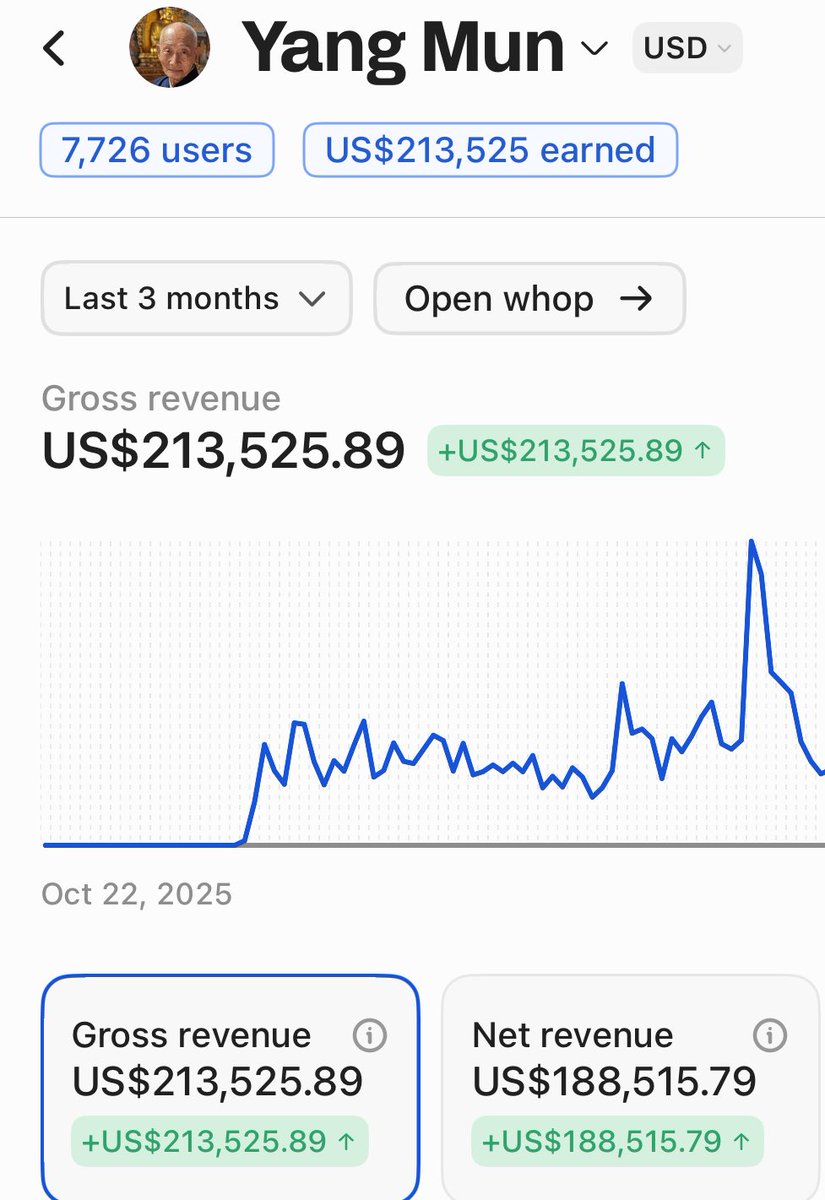
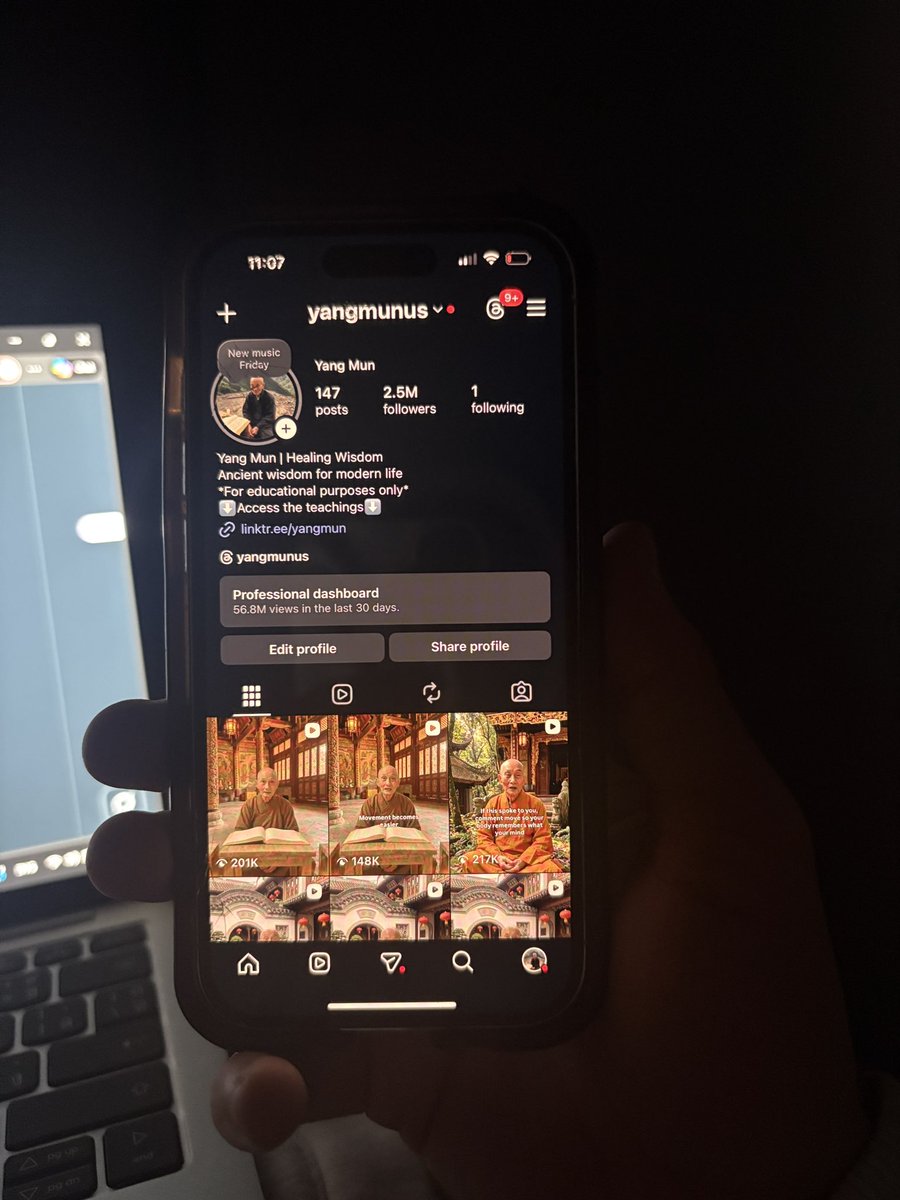
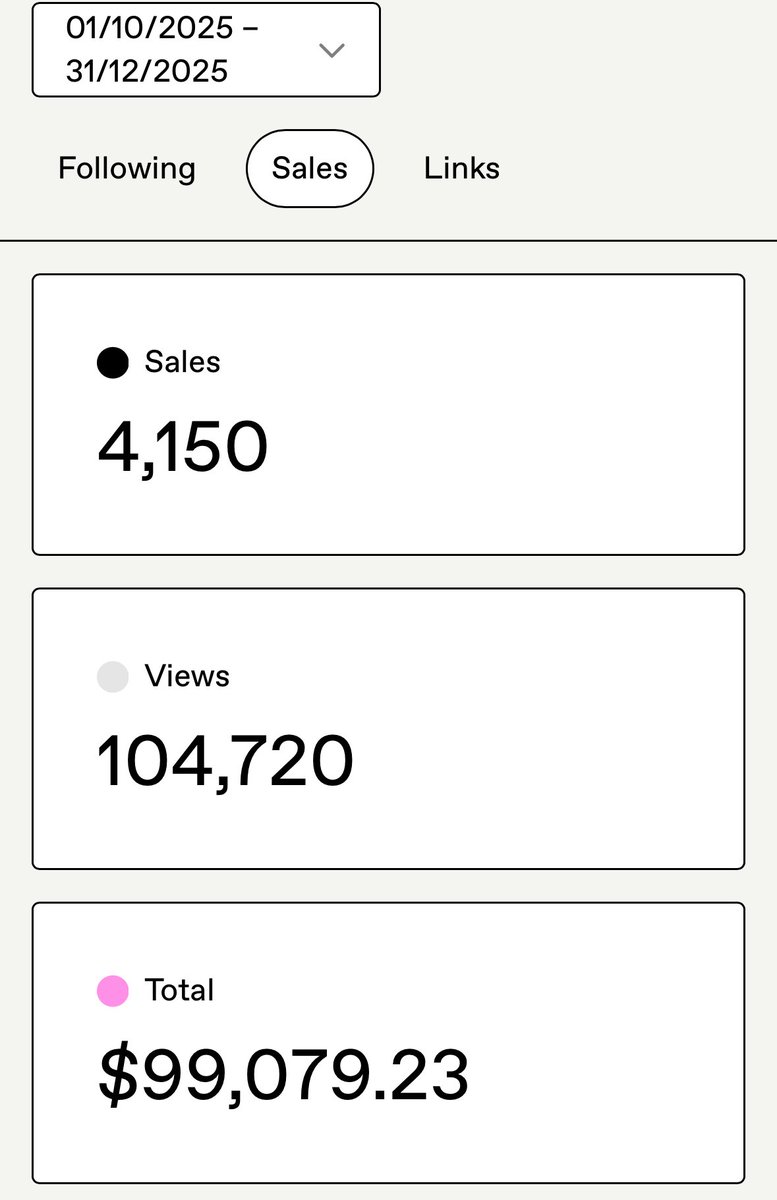
Everyone is copying this AI character. And 99% of them are failing. I know because I’m the one behind it. I turned this single character into a viral empire: 👁️400M+ Organic Views 💰$300k Profit (90 Days) 👥5M Followers Everyone is trying to copy the "look" but failing to copy the brain. I'm finally revealing the exact system behind the fame. Want the free guide? 1. Follow me (so I can DM you. 2. Retweet and comment ‘AI’ below I’ll send it over instantly 👇🏼
Shalev tweet mediaShalev tweet mediaShalev tweet mediaShalev tweet media
English
1.1K
578
1.1K
246.6K
Paolo Rosson
Paolo Rosson@redp314·
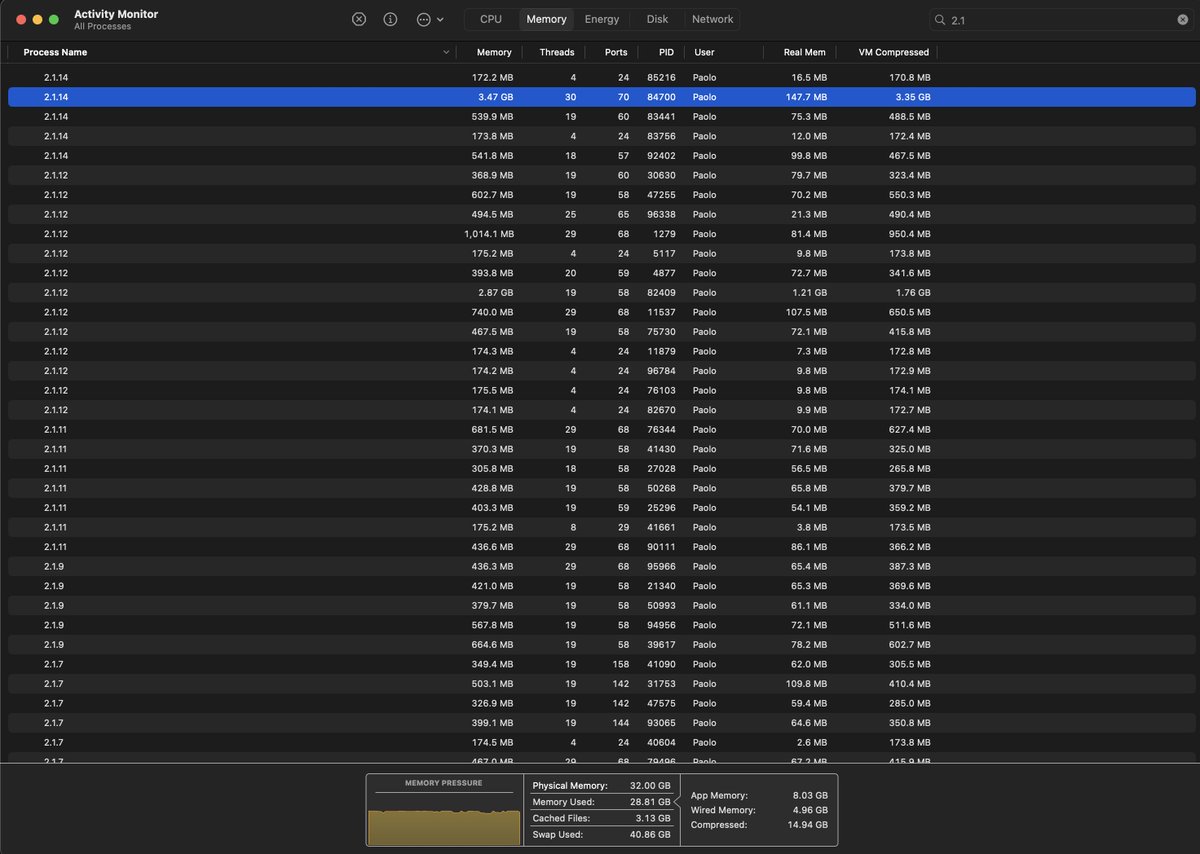
How is it possible that I have 5 terminals running Claude Code in Cursor (not running anything right now), yet more than 50 Claude Code processes? Am I missing something? @bcherny
Paolo Rosson tweet media
English
0
0
1
103
Matt Shumer
Matt Shumer@mattshumer_·
Speedrunning my way through my Claude Max rate limits. Pretty crazy watching 10+ agents collaborate on one task. My laptop fans are blaring (turns out Claude Code is a memory hog).
Matt Shumer@mattshumer_

Super inspired by @cursor_ai's amazing work, so I decided to build my own long-running agent swarm. Six hours in, they're making real progress towards a working browser. I'm going to keep running this until my Claude Max plan runs out. If there's interest, I'll open-source!
English
63
27
564
141.9K
Paolo Rosson
Paolo Rosson@redp314·
The voice AI race isn't about speed. It's about giving models permission to think. Have you found voice assistants actually useful for anything beyond basic queries?
English
0
0
1
56
Paolo Rosson
Paolo Rosson@redp314·
Between the two, Grok held better conversations. More natural, less robotic. But Gemini had one edge: calendar integration. Mid-conversation, I planned my entire week. Multiple time slots, focus blocks, meetings. Tasks I'd normally do manually, handled through voice.
English
1
0
0
32
Paolo Rosson
Paolo Rosson@redp314·
Voice AI has a thinking problem. I tested @xai's Grok and @google's Gemini voice modes this week after ignoring them for 6 months. Here's what I found 🧵
English
1
0
0
46