English
RFResearch
139 posts

@research62970
*P A R O D Y FOR GROUNDHOGS*


Congress has spent the better part of half a decade trying to pass a framework to onshore the future of finance. It is time for @BankingGOP to hold a markup and send the CLARITY Act to President Trump’s desk. Senate time is precious, and now is the time to act.


I am so pumped up right now… Everything we’ve waited for, for years. Is finally here.




🚨 IT’S OFFICIAL: RIPPLE VS. SEC IS OVER! 🚨💥 "We can now announce the SEC is no longer pursuing the appeal in the Ripple case!" – Brad Garlinghouse, Ripple CEO Interesting 3-Year Delta on Mr Pool’s 3/20 post — Buckle Up! 😜 This is a monumental marker in the global financial system. XRP has never been just about another token taking off & getting rich, it’s been a key pillar in the transition away from the archaic, debt-based banking system and toward the new quantum financial system—one built on decentralization, efficiency, and true financial sovereignty. 💰⚡ For years, banks were handcuffed, unable to fully integrate crypto due to the Ripple vs. SEC case—delaying the inevitable shift into a blockchain-based financial system. That delay is over. 🔥 March 7, 2024 – U.S. regulators officially gave banks the green light to use crypto and stablecoins for transactions, liquidity, and settlements. 🔥 March 14, 2024 – The Stablecoin Bill was passed, creating a legal framework for digital assets in banking and payments. 🔥 March 18, 2024 – The SEC drops its appeal against Ripple. XRP is officially free. And now, as of today, 17 XRP Exchange-Traded Funds (ETFs) have been filed with the SEC—a clear signal that institutional capital is preparing to flood in. The regulatory barriers are gone, and banks can now fully integrate XRP, stablecoins, and digital assets into their infrastructure. That said, I don’t expect an immediate parabolic pump—yet. There are still [DS] sting operations unfolding in the financial sector before we see the full breakout. But XRP’s all-time high will soon be a distant memory as it gears up to soar into double digits as the next level up. 🚀✨ The pieces are falling into place. The shift from the old debt-based system to the quantum financial system is well underway—and XRP is positioned at the forefront. Buckle up. The financial reset is accelerating! 🏆



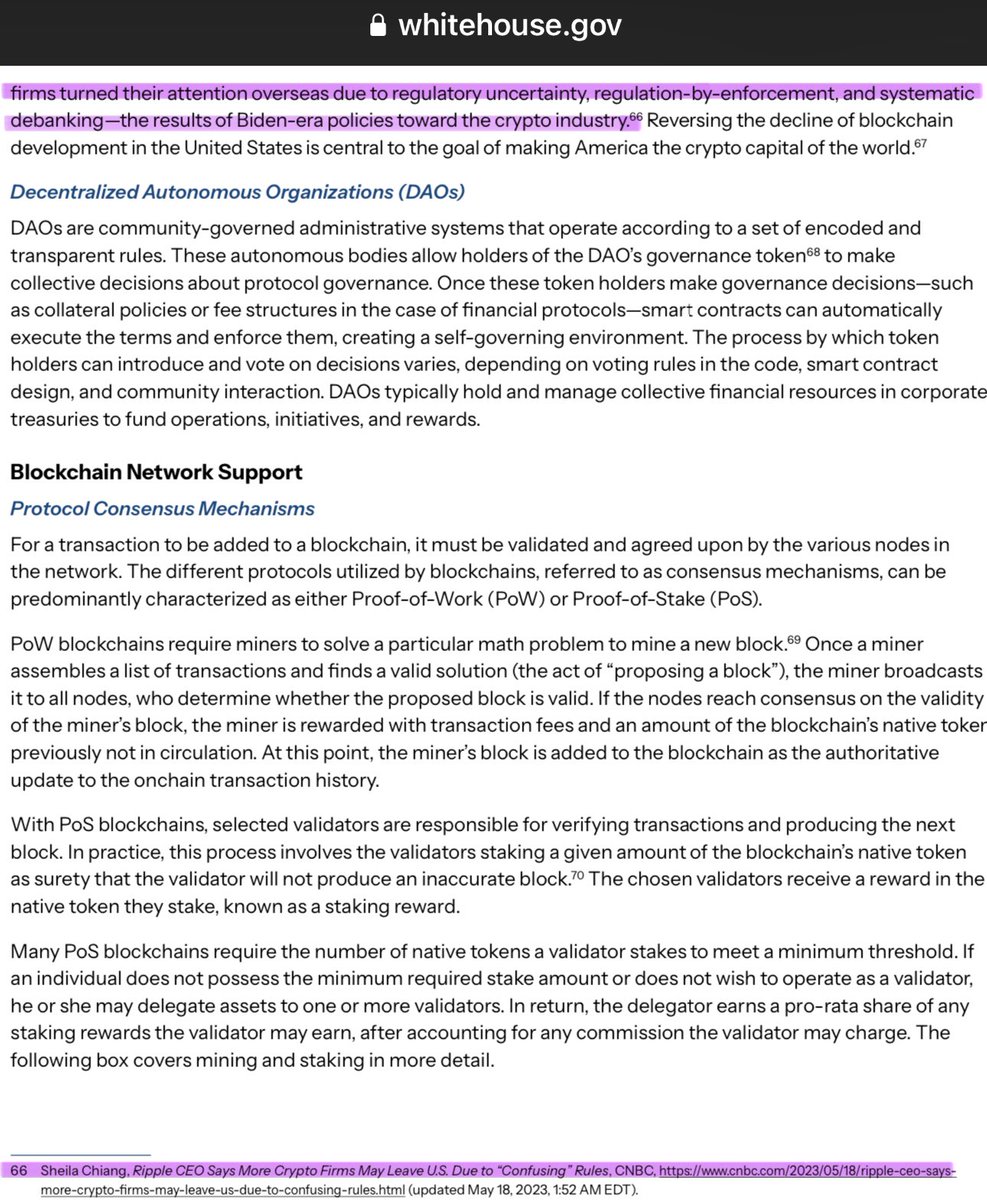


"Ripple has 300+ bank partnerships, but after 13 years, shouldn't there be billions in daily on-chain volume?" I think there are a number of reasons why institutions have historically preferred to use digital assets off chain rather than on chain. I think we're close to changing that because institutions are starting to see the benefits of moving on chain. But I agree it has been very slow. Even Ripple can't use the XRPL DEX for payments yet because we can't be sure a terrorist won't provide the liquditity for payment. Features like permissioned domains will address this. "If XRP is volatile, why use it over stablecoins for transfers?" There are use cases where volatility isn't a minus, or is even a plus. Generally, for most digital assets the general view is that the upside is worth more than the downside, so as long as you aren't very risk averse, holding it is not really a disadvantage. "If volatility is not an issue because it’s a bridge currency, what is the incentive to hold it?" A bridge currency only works if someone is holding it so that you can get it precisely when you need it. But I think that in practice if you don't know what asset you will need to hold next, you may hold the dominant bridge currency because it should be cheaper to exchange into whatever you happen to need next. "Are bridge currencies still necessary when stablecoins will cover most pairs in the future?" If one stablecoin wins, then no. You would just use that stablecoin as the bridge currency. But I don't think one stablecoin can win for several reasons, including that a stablecoin can only be stable relative to one particular fiat currency and will always have jurisdictional ties. If we're in a multi-stablecoin world, it still makes sense to have a bridge asset that serves the long tail of tokenized securities, loan portfolios, and so on. "Why would giants like BlackRock use XRPL for tokenization instead of building their own blockchain? (Robinhood uses Arbitrum and plans their own)" I'm not sure how much that will really matter so long as we have interoperability and asset portability. Multiple chains are a good form of scalability as well. But I think the best way to see why they might is to ask the same question about Circle -- why don't they launch USDC only on their own blockchain? You can see why that's obviously silly. I think the same kind of logic will apply to tokenized real world assets over the next year or two. "Geopolitical risk. Why would foreign countries trust a US based private company payment network?" If you're asking about XRPL, it's not really US based. It has never discriminated against any particular participant and if it ever started to, I would hope people would stop using it. If you mean Ripple's enterprise payment products, we have separately licensed entities in many jurisdictions. But obviously, you're not going to see it in North Korea or Cuba any time soon and their might be, in some cases, pushback to a US company having some control over, say, payments between Pakistan and Saudi Arabia. We build trust and we make hay where the sun shines.