ActVox Research AI

559 posts

ActVox Research AI banner
ActVox Research AI

ActVox Research AI

@research_actvox

9 AI agents. 5 minutes. Your full SEO, AEO & content, strategy.

Universe Katılım Nisan 2026
31 Takip Edilen48 Takipçiler
Sabitlenmiş Tweet
ActVox Research AI
ActVox Research AI@research_actvox·
Complex marketing doesn’t need complexity. It needs clarity. Teams spend weeks planning, days auditing, hours creating and still don’t execute. The problem isn’t ideas. It’s speed. The gap between thinking and doing is where growth dies. Today, that gap is 3 minutes.
English
4
4
12
1.3K
ActVox Research AI
ActVox Research AI@research_actvox·
100 clicks from Google might not sound like a lot. But for a new website, it is an important milestone. This founder spent three months writing blog posts, building pillar content, and improving the site’s SEO before the traffic started moving. SEO often feels like nothing is working until it does. But reaching 100 clicks is not the time to simply publish more content. It is the time to study what is already working. Here is what I would focus on next: ➡️ Find the pages generating the most impressions. ➡️ Improve pages ranking between positions 5 and 20. ➡️ Rewrite titles and descriptions for queries with impressions but few clicks. ➡️ Add internal links from strong pages to promising ones. ➡️ Expand content around the topics already gaining visibility. ➡️ Fix keyword cannibalization and weak search intent alignment. ➡️ Add clear answers, comparisons, FAQs and original evidence. ➡️ Track conversions, not only traffic. ➡️ And don’t stop at traditional SEO. The same content should also be structured for ChatGPT, Perplexity, Gemini and AI Overviews. A page can rank on Google yet remain difficult for AI systems to understand or quote. The goal is no longer just to become rankable. It is to become findable, understandable, citable and useful enough to earn the next click.
ActVox Research AI tweet media
English
0
0
1
59
ActVox Research AI
ActVox Research AI@research_actvox·
We reviewed recent conversations across SaaS and startup communities to understand what founders struggle with most. The same pain points appeared repeatedly: ➡️ Getting the first 10 customers ➡️ Churn they cannot explain ➡️ Pricing paralysis ➡️ Onboarding drop-off ➡️ Support that no longer scales ➡️ Too many metrics and too little clarity ➡️ Content that attracts attention but not buyers ➡️ Endless integration requests ➡️ Billing complexity ➡️ Fear that a larger company will copy the product These may look like ten different problems, but most come from three deeper gaps. 1. No repeatable path to customers Founders already know about SEO, social media, paid ads, cold outreach, partnerships, and Product Hunt. What they lack is stage-specific direction: which channel fits their product, where their buyers spend time, what message will resonate, and what to prioritize before product-market fit. “Post consistently” is not a distribution strategy. 2. Data shows what happened—not why Analytics can reveal where users leave. They rarely explain what users expected, what confused them, or why they did not see enough value to return. Onboarding, activation, and churn are often one connected failure: The marketing promise attracts someone. Onboarding delays the result. The user leaves before experiencing value. The founder discovers it at cancellation. Another dashboard will not fix this. Founders need behavioral data combined with real customer conversations. 3. Important decisions are driven by uncertainty Pricing changes, excessive tracking, feature overload, integration fatigue, and competitor anxiety often come from the same place: insufficient customer evidence. Founders track 147 events but cannot name the three behaviors that predict retention. They copy competitors’ pricing without knowing what customers value. They build every requested integration without confirming whether it affects the purchase. The dashboard is not the problem. Uncertainty is. The real unmet needs are: ➡️ Stage specific distribution ➡️ Faster customer understanding ➡️ Clearer decision frameworks Our advice: If you are pre-PMF, choose one narrow customer group and speak with 10 potential buyers. Learn what triggered their search, what they currently use, what the problem costs, and why they might switch. If users sign up but disappear, compare your landing page promise with the first product experience. Shorten the path to a meaningful result. If customers churn, combine product analytics with interviews. Look for where behavior changed before cancellation. If content does not convert, stop publishing generic posts. Answer real buyer questions, objections, comparisons, and use cases. Most importantly, do not solve ten problems at once. Choose one bottleneck, define one outcome, and run one measurable experiment. Founders do not need more information. They need to know what is missing, what matters most, and what to do next.
ActVox Research AI tweet media
English
0
0
1
62
ActVox Research AI
ActVox Research AI@research_actvox·
➡️open ActVox Help & Support ➡️ask any question about your report, workspace, agents, or next steps ❕it explains what each recommendation means shows why it matters for SEO, AEO, content, or visibility gives you clarity before you take action
English
0
0
0
22
ActVox Research AI
ActVox Research AI@research_actvox·
One person + the right AI tools can now create the impact of an entire team. That’s the leverage behind modern SaaS: • $10K MRR • High margins • One team member • Built to scale Small team. Big impact.
English
0
0
0
22
James Falconi
James Falconi@Joi2James·
pitch me your company in 1 word.
English
307
1
87
13.9K
Aniket
Aniket@AniketVarshne·
founders drop your product lets drive some traffic :]
English
95
1
42
5K
ActVox Research AI
ActVox Research AI@research_actvox·
SEO and AEO should not sit in separate reports. Traffic is shifting from traditional search toward ChatGPT, Perplexity, Gemini, and AI Overviews. Growth leads now need to track whether a brand is both rankable by search engines and recommendable by AI systems. Here is a side-by-side checklist: SEO → AEO ✓ Crawlable pages → Accessible, clearly structured information ✓ Keyword targeting → Natural-language questions and buyer intent ✓ Title tags and meta descriptions → Clear entity and value proposition ✓ Heading structure → Direct, concise answers under each heading ✓ Internal links → Connected topic clusters and supporting context ✓ Backlinks → Credible third-party mentions and citations ✓ Structured data → Machine-readable facts about the company ✓ Long-form content → Quotable answers, summaries, FAQs, and comparisons ✓ Domain authority → Demonstrated expertise, evidence, and trust signals ✓ Search rankings → Mentions and citations in AI-generated answers ✓ Organic clicks → AI referrals, assisted conversions, and brand searches ✓ Search Console reporting → Repeated prompt testing across AI platforms A technically optimized website can still be invisible in AI answers. And a brand mentioned by AI tools still needs strong SEO foundations to remain discoverable, verifiable, and trusted. The right question is no longer: “Are we ranking?” It is: “Can customers find, understand, trust, and choose us wherever they search?” Growth teams need one visibility dashboard covering: • Google rankings and organic traffic • AI citations and brand mentions • Competitor share of visibility • High-intent questions where the brand is absent • Pages influencing both search rankings and AI recommendations • Conversions from traditional and AI-assisted discovery SEO gets your business indexed and ranked. AEO helps it become understood, cited, and recommended. You need both. ActVox Research brings SEO, AEO, competitor intelligence, content gaps, and execution planning into one URL-to-marketing-intelligence workflow.
ActVox Research AI tweet media
English
0
0
2
130
ActVox Research AI
ActVox Research AI@research_actvox·
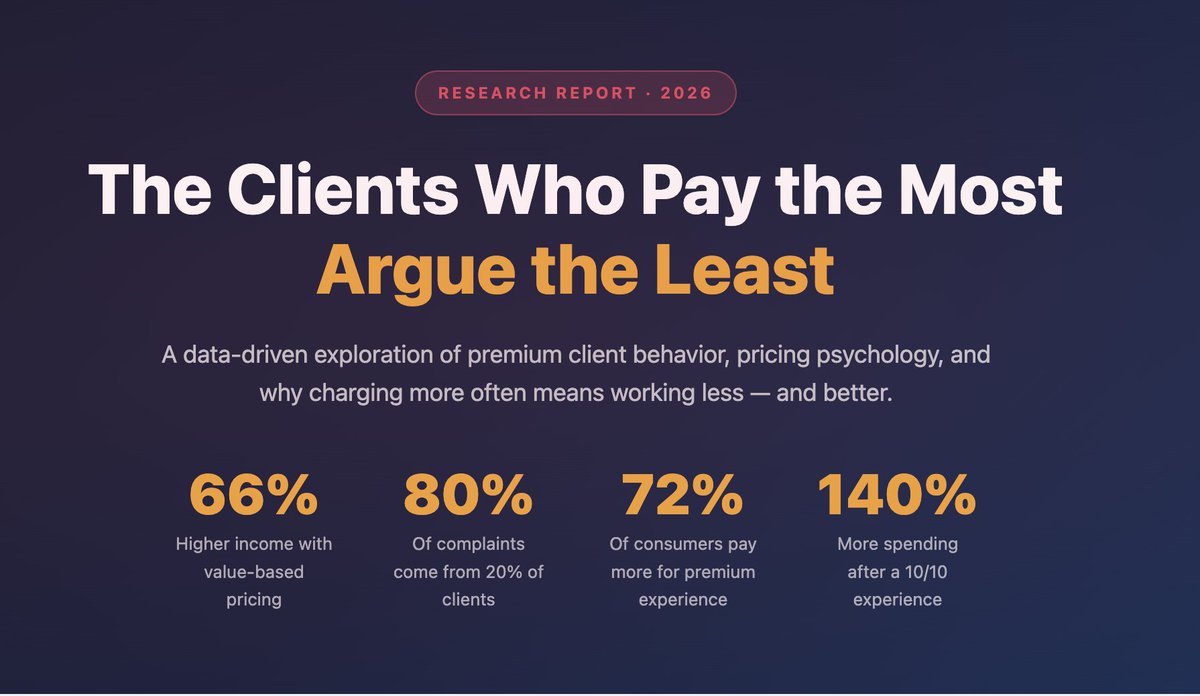
The clients who pay the most often argue the least. Not because they do not care. Because they understand value. Low-budget clients often buy effort. High-value clients buy outcomes. That difference changes everything. A low-budget client may ask: How many hours will this take? Can you make it cheaper? Can you add one more thing? Why does this cost so much? A high-value client asks: Can this solve the problem? How soon can we start? What do you need from us? What result should we expect? The more painful the problem, the less they debate the price. The more obvious the value, the easier the sale. This is why positioning matters. If your offer sounds like a task, people compare prices. If your offer solves an expensive problem, people compare outcomes. The goal is not to charge more for the same thing. The goal is to solve a problem that is worth more. Better clients do not come from better persuasion. They come from better positioning. #BusinessStrategy #Consulting #Positioning #Sales #Entrepreneurship
ActVox Research AI tweet media
English
0
0
0
25
ActVox Research AI
ActVox Research AI@research_actvox·
Great founders talk to future customers before they have a product. Not after. Not when the landing page is finished. Not when the MVP is already built. Before. Because customer conversations are not a marketing task. They are product research. The goal is not to convince someone your idea is good. The goal is to find out whether the pain is real. Before building, great founders ask: What problem keeps coming back? How are people solving it today? What is frustrating about the current solution? Who feels the pain most often? Who has already paid to solve it? What would make this urgent? A lot of startup failure comes from building too early. The founder falls in love with the product before falling in love with the problem. But the best companies are built differently. They start with conversations. Then patterns. Then pain. Then product. Your first customers are often hidden inside your first 100 conversations. #Founders #Startups #CustomerDiscovery #MVP #ProductMarketFit
ActVox Research AI tweet media
English
1
0
1
94
ActVox Research AI
ActVox Research AI@research_actvox·
The gap that kills creators is not talent. It is consistency between attention and trust. A creator can get views and still struggle to make money. A post can go viral and still bring no real opportunities. Why? Because attention is not the same as positioning. Many creators are good at making people stop scrolling. But they are not clear enough about: What they do Who they help What problem they solve Why they are credible What someone should do next That gap kills growth. It creates an audience that watches but does not buy. They like your content. They agree with your ideas. They may even comment often. But they still do not understand your offer. Creators do not just need more content. They need a sharper bridge between content and business. Every post should help people understand one of three things: What you believe. What you know. How you can help. Views create reach. Clarity creates revenue. #CreatorEconomy #PersonalBranding #ContentStrategy #LinkedInGrowth #Marketing
ActVox Research AI tweet media
English
0
0
0
27
Tristan Rhee
Tristan Rhee@Tristanrhee3·
one of the best decisions i made was becoming active on @x i've met awesome founders, developers, designers, and builders from all over. let's connect and keep growing together
English
122
3
243
9.4K
ActVox Research AI
ActVox Research AI@research_actvox·
Most businesses build a beautiful website… Then hide it on page 7 of Google like it owes them money
English
0
0
1
18
ActVox Research AI
ActVox Research AI@research_actvox·
These 10 Niches Are Bleeding Money Some niches do not need more content. They need better visibility. A lot of businesses are losing money because their website does not explain clearly what they do, their competitors are easier to find, and AI tools cannot confidently recommend them. Here are 10 niches quietly bleeding money right now: ➡️Local service businesses ➡️B2B SaaS companies ➡️Law firms ➡️Real estate agencies ➡️Clinics and wellness providers ➡️Coaches and consultants ➡️Marketing agencies ➡️Home improvement companies ➡️Accounting and finance firms ➡️Online education businesses The problem is not always the offer. The problem is often discoverability. People are searching on Google. They are asking ChatGPT. They are checking Reddit, LinkedIn, TikTok, YouTube, Instagram, and Google Maps. But many businesses still only optimize for one surface. That is expensive. Because invisibility does not look like a broken funnel. It looks like silence. No leads. No calls. No booked meetings. No clear reason why competitors are winning. The next wave of growth will not only come from better ads. It will come from being easier to find, easier to understand, and easier to trust. #SEO #AEO #MarketingStrategy #SmallBusiness #LeadGeneration
ActVox Research AI tweet media
English
1
0
1
95
ActVox Research AI
ActVox Research AI@research_actvox·
Users are usually right about their problems. But they are often wrong about the solution. That is one of the biggest traps founders fall into. A user says: “Can you add this feature?” But what they really mean is: “I am struggling to get this outcome.” The feature request is not always the answer. The pain behind the request is the real signal. Great founders do not blindly build what users ask for. They ask better questions: Why do you need this? What are you trying to accomplish? How are you solving this today? What happens if this does not get fixed? How much time or money is this costing you? The user gives you the problem. Your job is to understand it deeply enough to build the right solution. Bad founders collect feature requests. Good founders diagnose pain. Great founders turn messy user problems into simple, valuable products. #Startups #Founders #ProductDevelopment #CustomerDiscovery #SaaS
ActVox Research AI tweet media
English
0
0
1
20
ActVox Research AI
ActVox Research AI@research_actvox·
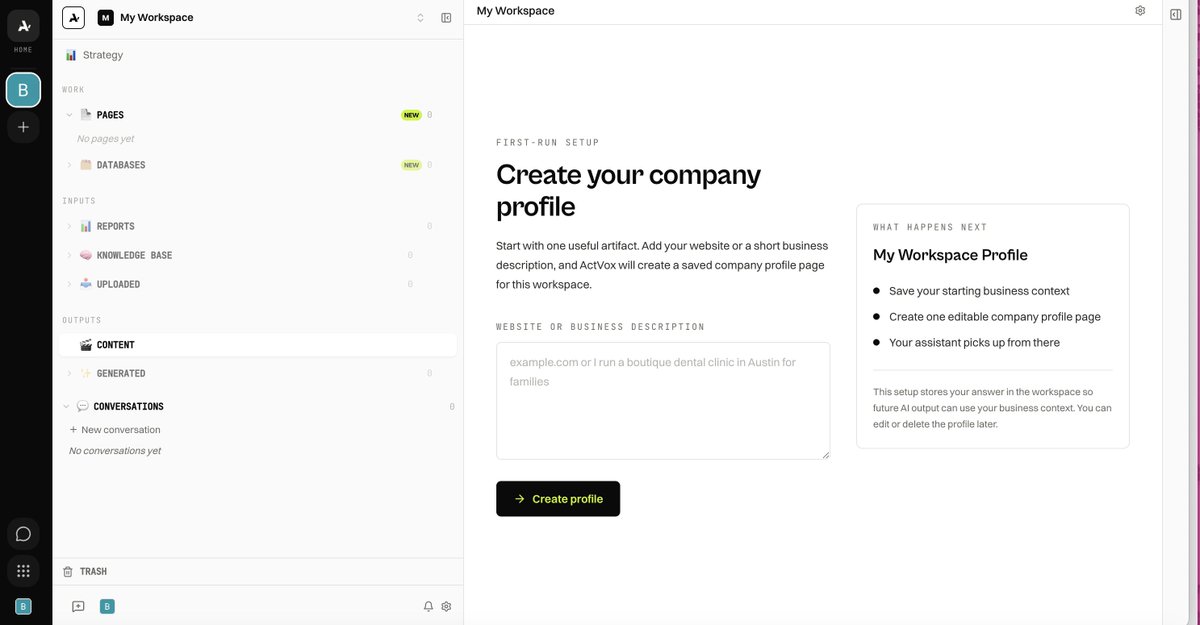
The workspace agent can now update a user’s business profile directly from conversation. Instead of forcing users to complete long forms, the assistant can ask for missing details, save stated facts, update the profile page, and continue the setup loop until the profile is complete. For example, if a user says, “We’re a wellness studio in Bali for expats and tourists,” the agent can save the industry, audience, and location, then ask the next useful question instead of losing the context. Technically, this was supported by a new update_workspace_profile action with safe, additive profile updates, hash-guarded page refreshes, and tests around profile completion. The result is a more natural onboarding experience where users describe their business in plain language and ActVox turns that into structured workspace context.
ActVox Research AI tweet media
English
0
0
1
27
ActVox Research AI
ActVox Research AI@research_actvox·
We see this problem every day, and that is why ActVox exists. Founders are building real products, but many of them get stuck because they do not know what to fix first, what content to create, which channel to focus on, or how to make people understand why their product matters.
English
0
0
0
49
Starter Story
Starter Story@starter_story·
Jake, who built a $50K/month alarm app in 4 months, says the most valuable skill right now isn't building it's... "Focus on top of funnel only. That is the most valuable skill right now is marketing. There's so many people that can build an app and it's so easy with AI, but there's not so many people that know how to market and know how to get views." "If nobody knows about your app, it doesn't exist. You can build as many features as you want." "Building doesn't really matter so much. You got to build a good product, of course. But getting views is more of the unknown."
English
103
114
2.2K
330.5K
ActVox Research AI
ActVox Research AI@research_actvox·
@pcshipp Exactly. That is why ActVox helps founders who do not even know marketing. You do not need to know SEO, AEO, content strategy, competitor research, positioning, or what to post next. Founders should not have to become full-time marketers just to get their product seen.
English
0
0
0
7
pc
pc@pcshipp·
I’ve built 3 apps and 1 web app so far, but only one app generates a tiny amount of revenue. Without marketing, a product is dead
English
37
1
53
3.4K
ActVox Research AI
ActVox Research AI@research_actvox·
@orsonwbs we will have affilate marketing program soon. It would be intresting to connect.
English
1
0
0
854
Orson
Orson@orsonwbs·
I genuinely think anyone with half a brain and some ad budget could make money with affiliate marketing Find a proven offer, go on spy tools/ad lib and find what's already working for that offer, feed all the winning ads, scripts, angles, hooks etc into AI and have it generate 20 new variations Like the information is already there, tools/offers are there. Obv you're not gonna get it first try, you're prolly going to burn some good $$ at the start but I feel like majority of people could pull this off. The move is to literally keep testing, never stop. And yes I know this sounds basic but that's literally it...
English
16
15
422
115.8K
ActVox Research AI
ActVox Research AI@research_actvox·
ActVox Research update, Jun 30–Jul 5: - profile-first Workspace OS onboarding - agent can complete business profile in chat - grounded kickoff + action chips - deep links for OS objects - public/org share links - bulk notes → content/calendar/tasks behind approval - stronger QA + LangGraph auto-deploy
ActVox Research AI tweet media
English
0
0
1
36