reva

56 posts

reva banner
reva

reva

@revaharke

Building websites for B2B tech | Basenine | Clients include Supermove, Kodex Global, FEDS Group, Uniqkey

Pune Katılım Nisan 2026
59 Takip Edilen242 Takipçiler
Sabitlenmiş Tweet
reva
reva@revaharke·
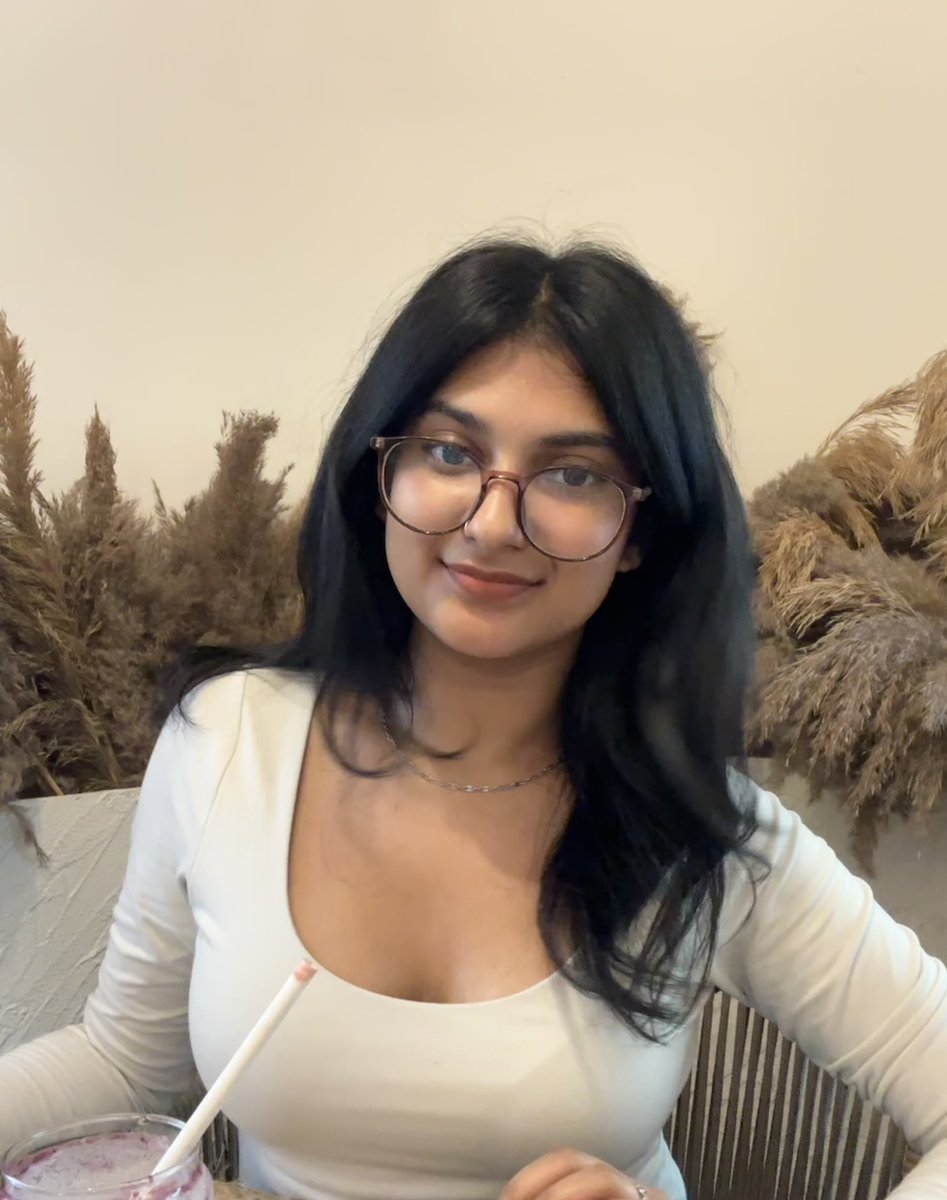
Hi, I'm Reva. I've spent the last year at Basenine, mostly behind the scenes, so I thought I'd finally say hello. If you'd asked me a few years ago what I'd be doing today, this probably wouldn't have been my answer. During college, I realized I enjoyed design a lot more than I expected. I found Webflow, spent two days learning it, and applied for a Webflow developer internship. Somehow, I got it. I learned a lot, worked on the company's website, and figured that was the end of it once the internship wrapped up. It wasn't. Almost a year into Basenine now, I've gone from working on one website to working across SaaS, AI, robotics, cybersecurity, insurance, and deep tech. More recently, I've started spending time on the client and marketing side of things too, not just development. It's a different way of thinking about the same work, and I've learned a ton from it. When I look back at the last year, what surprises me most is how quickly everything happened. I clicked "apply" because I liked design. Looking back, that was the start of something much bigger.
reva tweet media
English
24
1
166
9.4K
reva retweetledi
Basil Alosious
Basil Alosious@basilalosious·
Your website has two audiences now. The person evaluating your product. And the model deciding whether to put you on the shortlist before that person ever lands. We've rebuilt 50+ B2B websites. Most of them, ours included until recently, were built for the first audience only. EP 2 of Site Sins is up. Three ways B2B sites forget the second audience. No structured content for a model to read. A footer with nothing in it. No comparison page for it to pull from. Small fixes. Most sites skip all three anyway. Your buyer decides once they land. The model decides if they land at all. — Almost every example here comes from two newsletters worth following. Casey Hill's DoWhatWorks, which scans millions of B2B sites and tracks what actually converts. And Emily Kramer's MKT1, which pulled the best of these into one sharp breakdown. Both worth a follow if you build or run B2B websites.
English
0
2
2
28
reva
reva@revaharke·
A case studies page should help buyers trust faster. We’ve been working with Uniqkey, a European access security platform, across their website. We’ve worked with B2B teams across SaaS, cybersecurity, deep tech, and enterprise software, including Kodex, Supermove, Shikenso, and Uniqkey. We know a B2B website has to turn interest into trust quickly. For Uniqkey’s case studies page, that meant making customer proof easier to scan and believe. Long stories and buried outcomes shouldn’t slow that down. Security buyers are looking for specific signals before they trust a product. Who uses it? What changed for them? Does it work for teams like ours? Can it fit into our stack? Customer stories, ratings, quotes and outcomes all sit in one flow. The goal wasn’t to make the page feel full. It was to make trust easier to find.
English
0
0
3
205
reva
reva@revaharke·
buttons from an upcoming rebrand 👀
English
33
9
327
12.5K
reva
reva@revaharke·
The more websites I work on, the more annoying my eye gets. I notice smaller things sooner now, which is how I’ve realized taste builds quietly, through repetition, until your standards shift without asking. Over the last year, I’ve worked on websites for SaaS, AI, cybersecurity, and deep-tech teams at Basenine. Earlier, I’d notice the bigger things first. Whether the page felt clear, whether the flow made sense, whether the design matched the company behind it. Now I catch details I would’ve missed before. A product section that explains the feature, but not the value. A screenshot that looks good, but doesn’t build enough trust. A layout that works visually, but slows the story down. Earlier, those details would take me longer to see. Now they bother me almost immediately. That’s what I mean when I say taste builds slowly. It’s not one big shift. It’s being around good work long enough that your eye starts catching what it used to miss.
reva tweet media
English
1
0
4
212
reva
reva@revaharke·
We worked on this website for Shikenso, a category-leading German SaaS trusted by brands like Vodafone and global sports organizations to measure sponsorship ROI. Shikenso helps brands measure and verify sponsorship performance across social, streaming, and broadcast channels. The website had to carry that same clarity. Clear enough to understand quickly. Polished enough to build trust. Structured enough to support different buyers across the site. The work was about making a complex product feel credible without making the website feel heavy. Because when the product is built to clarify performance, the website has to do the same.
English
1
0
3
273
reva
reva@revaharke·
A new look. Coming soon!
English
18
16
605
16.9K
reva
reva@revaharke·
We’ve been pulling together a brand deck for Kodex. A16z-backed, trusted by teams like Coinbase, LinkedIn, and OpenAI. We’ve been helping shape how that story shows up across their brand, website, and marketing assets. So every marketing asset has a stronger place to start from, without losing what already makes Kodex feel like Kodex.
English
1
1
12
797
reva
reva@revaharke·
Value props section for Supermove, an a16z-backed platform for enterprise moving companies across the US. A simple section on the surface, but exactly the kind of thing we’ll keep tweaking until it feels right.
English
2
0
11
700
reva
reva@revaharke·
We worked on the website for WatchIT AI, a deep-tech team building intelligent vision systems for maritime safety. Their product helps yachts detect danger before humans can. The system is already being used by some of the biggest yacht manufacturers in the world. We’ve worked with enough deep-tech teams to know that complexity can’t be handled with a generic website. WatchIT fits that category. When the technology is sophisticated and the stakes are high, buyers aren't just evaluating features. They're evaluating whether they trust the team behind them. So the website had to carry confidence without over-explaining the product. That’s a hard balance with deep tech. Too much detail and the site starts to feel dense. Too little and the product starts to feel vague. For WatchIT, the work was about making the technology feel clear, serious, and easy to trust. Because buyers aren’t just asking, “What does it do?” They’re asking, “Would I trust this when it matters?” That’s the job of a deep-tech website. Make the technology feel as credible online as it is in the real world.
reva tweet media
English
0
0
0
267
reva
reva@revaharke·
AI is making websites faster to ship. It's also making a lot of them feel forgettable. Across 50 B2B website projects, we've learned that a good site doesn't just explain what a product does. It explains why buyers should care. And it makes them feel something. Trust. Confidence. Curiosity. That part comes down to taste. A lot of AI-generated sites are starting to blur together. Clean layouts. Soft gradients. Nothing is technically wrong. The page works. But it doesn't feel like it belongs to anyone. Without taste, you're just shipping faster into work that feels interchangeable.
reva tweet media
English
0
0
7
512
reva
reva@revaharke·
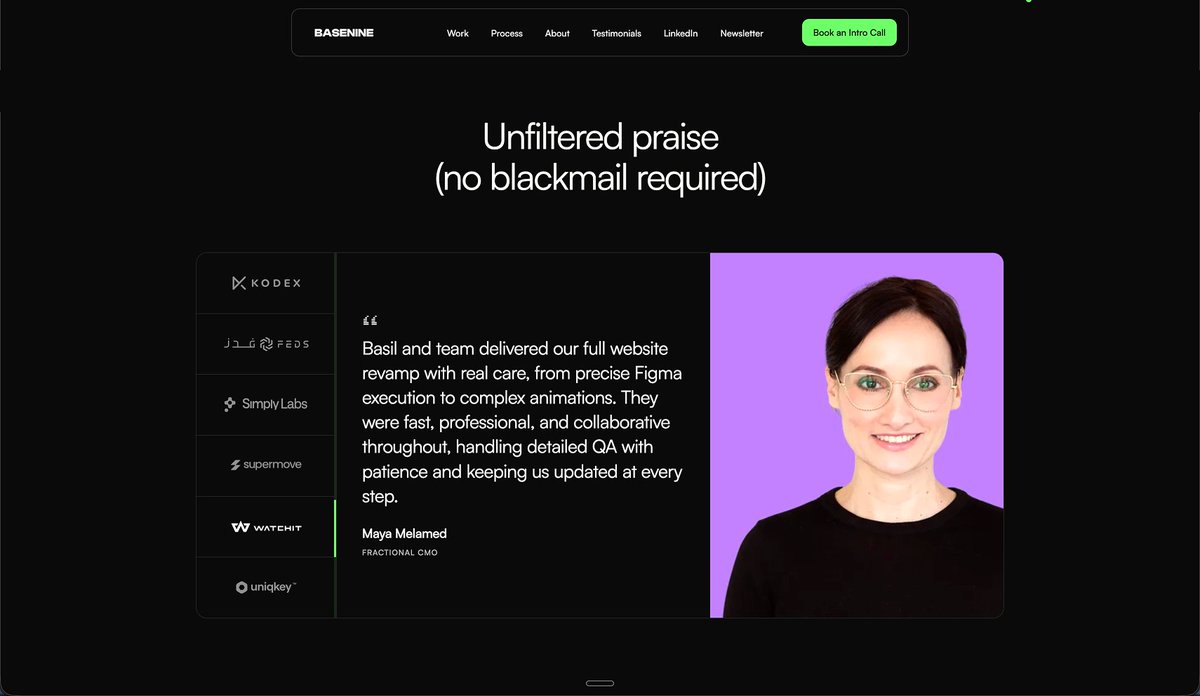
The best testimonial sections don’t try to impress buyers. They make the decision feel safer. That matters because website projects carry real risk. A buyer isn’t only checking whether the work looks good. They’re trying to understand what the process will feel like once the project starts. Across 50 B2B website projects, we’ve seen that trust gets built in the small things. Clear communication. Careful QA. Speed without chaos. Patience when details change. That’s why good testimonials matter. They don’t just praise the final website. They show the buyer what it’s like to work with you. A testimonial section isn’t there to make you look impressive. It’s there to make the decision feel easier. Just look at ours for example!
reva tweet media
English
0
0
3
352
reva
reva@revaharke·
@mariyav4leva Hello 👋It seems like we're in similar corners of the B2B world. I'd love to connect!
English
0
0
0
11
Mariya Valeva
Mariya Valeva@mariyav4leva·
hi X, my name is Mariya and I'm (relatively) new to X i'm a fractional CFO and i've spent the last decade helping founders navigate the messy middle of building the hypergrowth, the pivots, the near-bankruptcies and the hard conversations nobody posts about i'll be sharing lessons and my journey through building my successful $2M ARR CFO practice + more if you're building and posting here, tell us who you are and what you're building i'd genuinely love to know + grow along cheers to building.
Mariya Valeva tweet media
English
40
2
105
6.4K
Amani • Design Partner
Amani • Design Partner@hello_amani·
funny thing — someone just changed the copy and resubmitted my template as their own on @framer marketplace. @TuahaAthar bro, if you’re going to copy someone’s work without any original effort, at least have the respect to make it your own. original work always wins in the long run. #buildinpublic #framer
English
19
2
68
6.9K
reva
reva@revaharke·
Built for where B2B websites are going next. Basenine Labs. Coming soon!
English
15
4
272
9.8K