Adrien Dorland

2.4K posts

Adrien Dorland

Adrien Dorland

@revokiso

Digital fan, old underground scene g33k, bigdata & IA program manager @GroupeLaPoste (ex @AXAFrance)
Paris Katılım Ocak 2010
562 Takip Edilen150 Takipçiler
Adrien Dorland retweetledi
ILIAS ISM
ILIAS ISM@illyism·
this project stores millions of text chunks inside a video file (mp4) then runs sub-second semantic search on it - no vector DB, no servers - uses 10x less RAM & storage - no internet required it's called Memvid and it just broke my brain
ILIAS ISM tweet media
English
278
679
8.6K
1.2M
Adrien Dorland
Adrien Dorland@revokiso·
Salut @TraderepublicFR, apparemment, les transferts de PEA vers chez vous sont tous bloqués. il se passe quoi ...? il parait que vous ne satisfaisiez pas les prérequis règlementaires (certificats d'identification notamment)
Français
0
0
0
66
Adrien Dorland retweetledi
Mathis Hammel
Mathis Hammel@MathisHammel·
THREAD : TikTok a mis en place 8 protections pour éviter de fuiter 750GB de données par jour sur leur appli. Je vais vous détailler comment contourner chacune de ces sécurités, et pourquoi j'ai besoin des données de plusieurs millions de créateurs de contenus.
Mathis Hammel tweet media
Français
19
114
705
65.4K
Adrien Dorland retweetledi
Aymeric Pontier
Aymeric Pontier@aympontier·
Deux chercheurs 🇫🇷 du CEA ont créé une nouvelle catégorie de métaux, aux propriétés exceptionnelles, grâce à un procédé révolutionnaire baptisé "Hanetec", qui permet de recréer de la matière sous la forme d’éclairs électriques nanométriques. ▶️ cea.fr/Pages/actualit…
Français
18
166
625
115.8K
Adrien Dorland retweetledi
Mathis Hammel
Mathis Hammel@MathisHammel·
En 2023, mes tweets ont été vus plus de 68 millions de fois. Selon mes analyses : - La monétisation Twitter rapporte environ 1€43 par million de vues. - Twitter redistribue moins de 2% de ses revenus publicitaires. Lien dans le tweet suivant 👇
Mathis Hammel tweet media
Français
11
4
117
39.9K
Adrien Dorland retweetledi
Perrin Remonté
Perrin Remonté@PerrinRemonte·
Et si les villes devenaient des montagnes, collines et plateaux, et les campagnes des mers ou des lacs ? Voici une carte de la France version "topographie humaine", tout juste finie ! 🗻👥🗻
Perrin Remonté tweet media
Français
71
409
1.8K
220.9K
Adrien Dorland retweetledi
Henry Shevlin
Henry Shevlin@dioscuri·
Quick lesson in the dangers of data contamination. Years ago, I came up with an acronym for remembering the periods of the Paleozoic era — “Catastrophic Overthrow Started Different Colder Period”. I was curious if ChatGPT could guess what it stood for. 1/4
Henry Shevlin tweet media
West Midlands, England 🇬🇧 English
75
471
3.9K
1.6M
Adrien Dorland retweetledi
Brian Roemmele
Brian Roemmele@BrianRoemmele·
OpenAI leaked Q* so let’s dive into Q-Learning and how it relates to RLHF. Q-learning is a foundational concept in the field of artificial intelligence, particularly in the area of reinforcement learning. It's a model-free reinforcement learning algorithm that aims to learn the value of an action in a particular state. The ultimate goal of Q-learning is to find an optimal policy that defines the best action to take in each state, maximizing the cumulative reward over time. Understanding Q-Learning Basic Concept: Q-learning is based on the notion of a Q-function, also known as the state-action value function. This function takes two inputs: a state and an action. It returns an estimate of the total reward expected, starting from that state, taking that action, and thereafter following the optimal policy. The Q-Table: In simple scenarios, Q-learning maintains a table (known as the Q-table) where each row represents a state and each column represents an action. The entries in this table are the Q-values, which are updated as the agent learns through exploration and exploitation. The Update Rule: The core of Q-learning is the update rule, often expressed as: \[ Q(s,a) \leftarrow Q(s,a) + \alpha [r + \gamma \max_{a'} Q(s', a') - Q(s, a)] \] Here, \( \alpha \) is the learning rate, \( \gamma \) is the discount factor, \( r \) is the reward, \( s \) is the current state, \( a \) is the current action, and \( s' \) is the new state. (See image below). Exploration vs. Exploitation: A key aspect of Q-learning is balancing exploration (trying new things) and exploitation (using known information). This is often managed by strategies like ε-greedy, where the agent explores randomly with probability ε and exploits the best-known action with probability 1-ε. Q-Learning and the Path to AGI Artificial General Intelligence (AGI) refers to the ability of an AI system to understand, learn, and apply its intelligence to a wide variety of problems, akin to human intelligence. Q-learning, while powerful in specific domains, represents a step towards AGI, but there are several challenges to overcome: Scalability: Traditional Q-learning struggles with large state-action spaces, making it impractical for real-world problems that AGI would need to handle. Generalization: AGI requires the ability to generalize from learned experiences to new, unseen scenarios. Q-learning typically requires explicit training for each specific scenario. Adaptability: AGI must be able to adapt to changing environments dynamically. Q-learning algorithms often require a stationary environment where the rules do not change over time. Integration of Multiple Skills: AGI implies the integration of various cognitive skills like reasoning, problem-solving, and learning. Q-learning primarily focuses on the learning aspect, and integrating it with other cognitive functions is an area of ongoing research. Advances and Future Directions Deep Q-Networks (DQN): Combining Q-learning with deep neural networks, DQNs can handle high-dimensional state spaces, making them more suitable for complex tasks. Transfer Learning: Techniques that enable a Q-learning model trained in one domain to apply its knowledge to different but related domains can be a step towards the generalization needed for AGI. Meta-Learning: Implementing meta-learning in Q-learning frameworks could enable AI to learn how to learn, adapting its learning strategy dynamically - a trait crucial for AGI. Q-learning represents a significant methodology in AI, particularly in reinforcement learning. It is not surprising that OpenAI is using Q-learning RLHF to try to achieve the mystical AGI.
Brian Roemmele tweet media
Brian Roemmele@BrianRoemmele

What is the RLHF that OpenAI’s secret Q* uses ? So let’s define this term. RLHF stands for "Reinforcement Learning from Human Feedback." It's a technique used in machine learning where a model, typically an AI, learns from feedback given by humans rather than solely relying on predefined datasets. This method allows the AI to adapt to more complex, nuanced tasks that are difficult to encapsulate with traditional training data. In RLHF AI initially learns from a standard dataset and then its performance is iteratively improved based on human feedbacks. The feedback can come in various forms, such as corrections, rankings of different outputs, or direct instructions. The AI uses this feedback to adjust its algorithms and improve its responses or actions. This approach is particularly useful in domains where defining explicit rules or providing exhaustive examples is challenging, such as natural language processing, complex decision-making tasks, or creative endeavors. This is why Q* was trained on logic and ultimately became adapt at simple arithmetic. It will get better over time, but this is not AGI. This graphic below is an overview and history of RLHF

English
131
774
3.5K
2.6M
Adrien Dorland retweetledi
Gilles Babinet
Gilles Babinet@babgi·
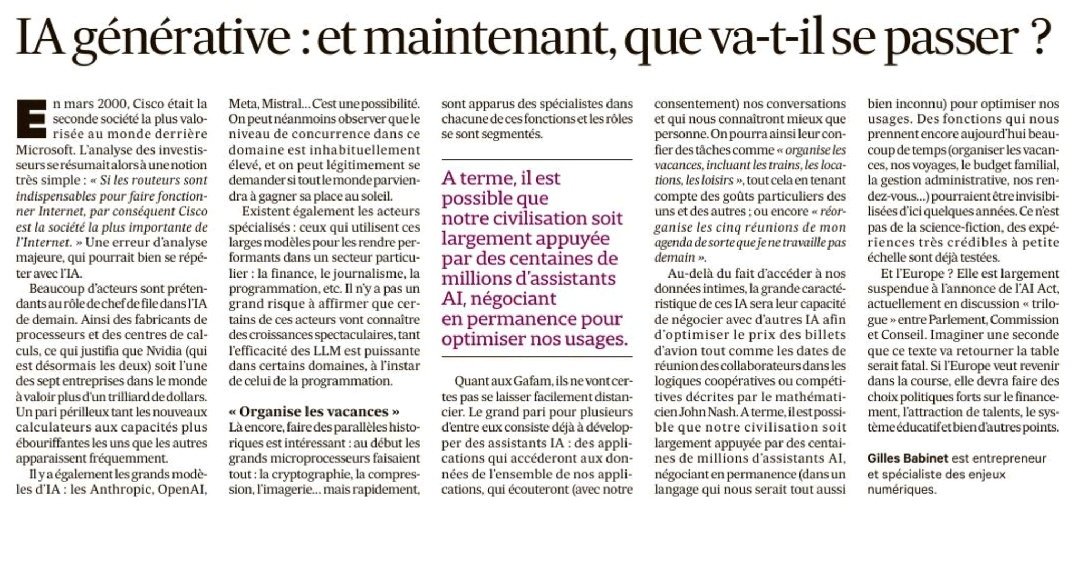
Et maintenant que va-t-il se passer ? La question a d'autant plus d'acuité que le récent licenciement de Sam Altman doit nous rappeler que la course technologique est pavée de rebondissements qui sont autant d'opportunités pour ceux qui savent les saisir
Gilles Babinet tweet media
Français
9
25
49
12.1K
Adrien Dorland retweetledi
Elon Musk
Elon Musk@elonmusk·
Grok grok Grok? X.ai
Nederlands
8.5K
6.5K
61.1K
24.8M
Fabrice Kordon
Fabrice Kordon@fabricekordon·
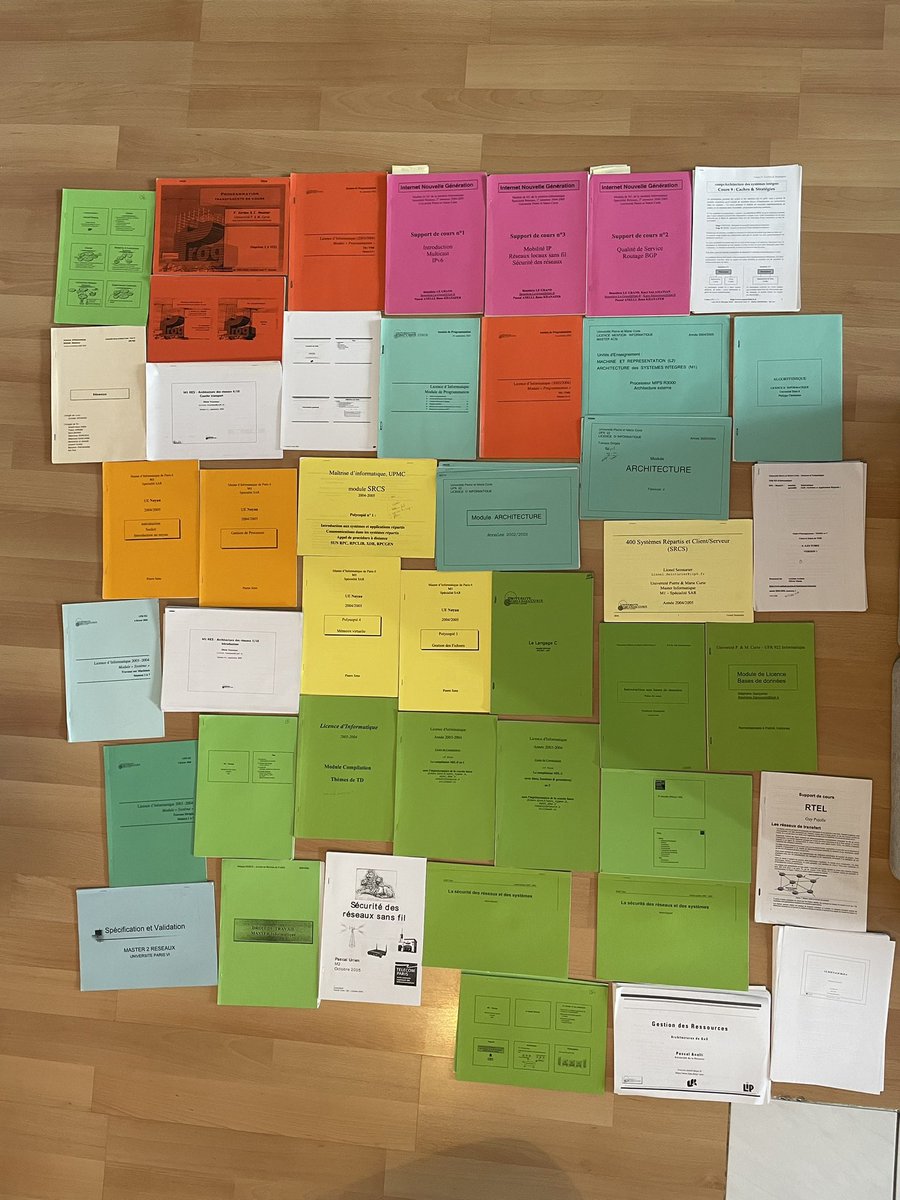
@revokiso @LaMatriceCarree Un jolie collection... le label UPMC qui n'existe plus (nous sommes désormais Sorbonne Université depuis la fusion avec Paris IV) va même lui faire prendre de la valeur, comme pour les œuvres de artistes morts 😂😎🤣
Français
1
0
3
148
Adrien Dorland
Adrien Dorland@revokiso·
J’ai tout recup :-) même celui de POSIX :-)
Français
1
0
1
53