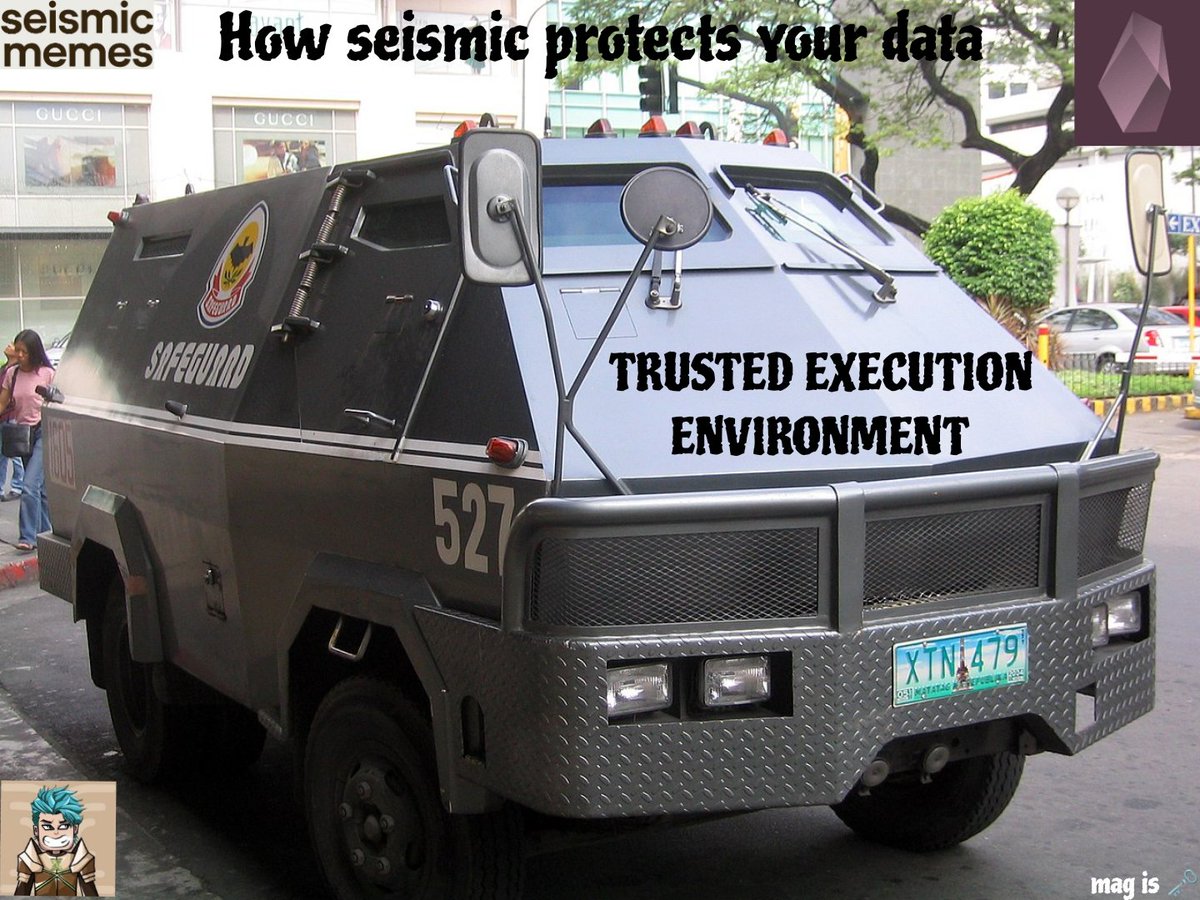
Public blockchains move money like cash in the open!!!
where as @SeismicSys is the bullion van of digital finance where value moves at full speed, sealed by encryption, and executed inside secure enclaves.
@heathcliff_eth@NoxxW3@xealistt@xplanettt
GM ☀️🌊
A calm morning steady mindset.
No rush no noise just silent progress.
Small moves today,
big @SeismicSys shifts tomorrow.
Have a grounded and peaceful day 🤍
@SeismicSys Lets enjoy this upcoming and much awaited New Year 🎊
@SeismicSys is for us and we all are for the dedicated and committed to the excellence of ecosystem.⛓️
🍺Have a drink to enjoy the New year
Cheers to the nights.
@xealistt@NoxxW3@heathcliff_eth@BharatWormie
SEISMIC QUIZ ALERT @SeismicSys
Brace yourself for the Seismic Quiz Competition!
Ready to test your knowledge? This is your moment to shine.
Date: Monday, 29th December, 2025 at 3PM
Don’t miss out, folks!
@NoxxW3@xealistt@NoxxW3@SeismicSys
Seismic vs Octra Labs: Why TEE Beats FHE for Real Fintech
Today I want to look at two privacy focused blockchains taking very different approaches, both targeting fintech and both expected to launch around Q1 2026.
On one side, you have Seismic, which uses Trusted Execution Environments (TEE) powered by Intel TDX.
On the other, Octra Labs, which is building around Fully Homomorphic Encryption (FHE) using a custom hypergraph implementation.
Both aim to solve the same problem privacy in financial applications.
But only one approach is actually practical for production fintech.
Let’s talk about performance first
➪TEE-based systems like Seismic typically add around 3–5% overhead.
➪FHE-based systems, on the other hand, are still 100× slower or even more.
That difference isn’t theoretical it shows up immediately in real use cases like
When an app like Brookwell processes something as simple as a rent payment on Seismic, it takes seconds.
With FHE-level slowdowns, that same operation can take minutes. That’s not a small trade-off for fintech.
The same issue shows up in credit.
For something like Cred’s on-chain credit scoring, loan approvals need to feel instant. Waiting minutes for encrypted computation simply doesn’t work in real financial flows.
And once you start talking about cross-border payments, stablecoin transfers, or DeFi swaps, a 100× slowdown becomes a hard bottleneck, not just an inconvenience.
Developer adoption matters too, and this part often gets overlooked.
@SeismicSys is EVM compatible, which means developers can build using Solidity and tools they already understand.
That translates directly to faster development cycles and quicker time-to-market.
With FHE-based systems like Octra, developers are dealing with heavy cryptography concepts and custom implementations. That learning curve slows adoption, and in fintech, slower adoption usually means missed opportunities.
I’ll end this with something Seismic’s founder @lyronctk Co Ting Keh said in an interview with Fortune:
“Fintech interest in crypto is growing quickly, but privacy remains a major hurdle.”
The problem isn’t a lack of privacy technology.
It’s a lack of privacy tech that’s fast enough, developer-friendly enough, and proven enough for production use.
That’s exactly what Seismic is building.
And that’s why fintech apps are launching on Seismic now ....
Stay Seismic....stay private and stay blessed
@NoxxW3@heathcliff_eth@xealistt
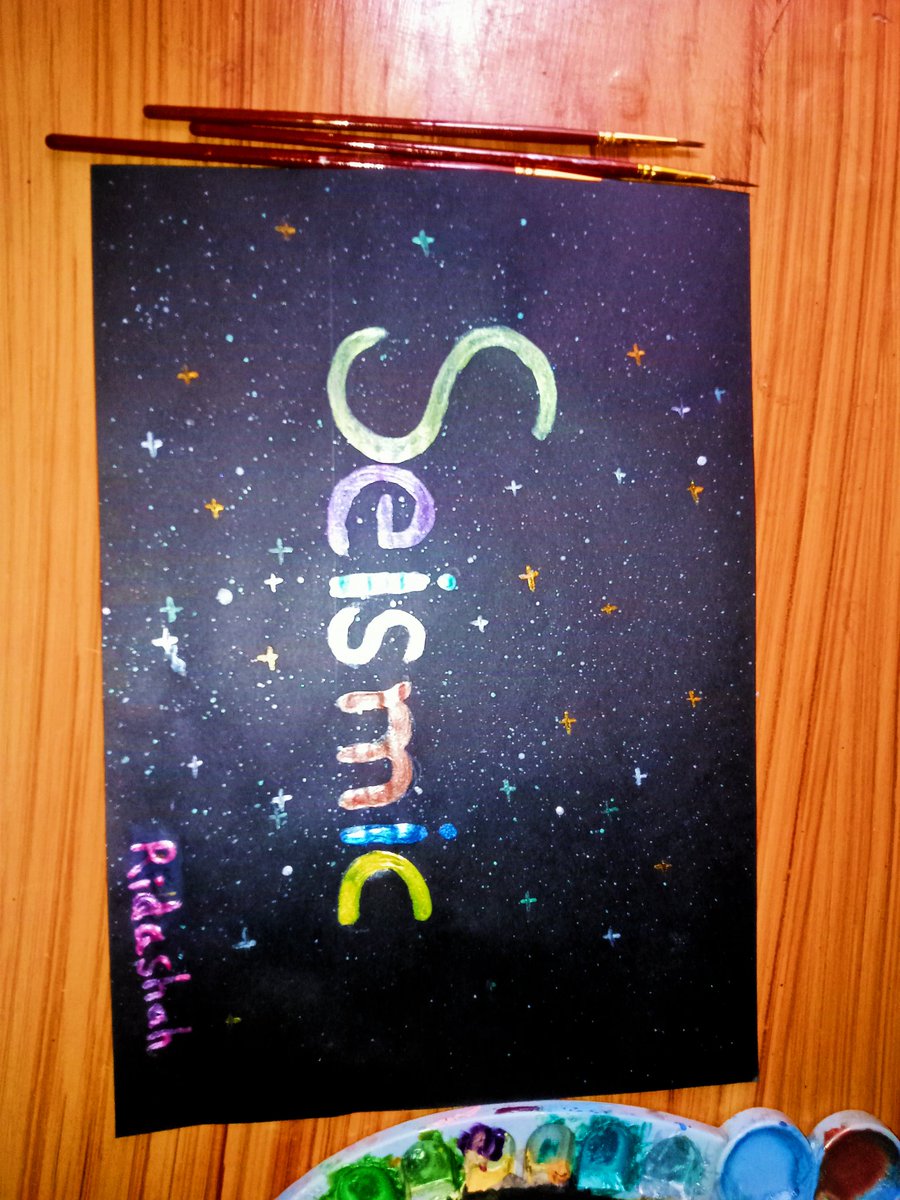
Just made an artwork for $SEISMIC ✨
🍀 What seismic offers :
- stops "front-running" attacks
- allows whales to sell large amounts through on chain dark pools enabling minimum slippage
- provides hybrid model , giving you speed like a CEX with self custody like a DEX