Amit Bhatia

836 posts

Amit Bhatia banner
Amit Bhatia

Amit Bhatia

@ridegoodwaves

Founded CalmBuddy & LeadxLab. Teaching founders how to 10x with AI. Daily posts on AI tools that actually work. Build what you love, until you love to build.

Chicago, IL Katılım Haziran 2011
1.1K Takip Edilen484 Takipçiler
Sabitlenmiş Tweet
Amit Bhatia
Amit Bhatia@ridegoodwaves·
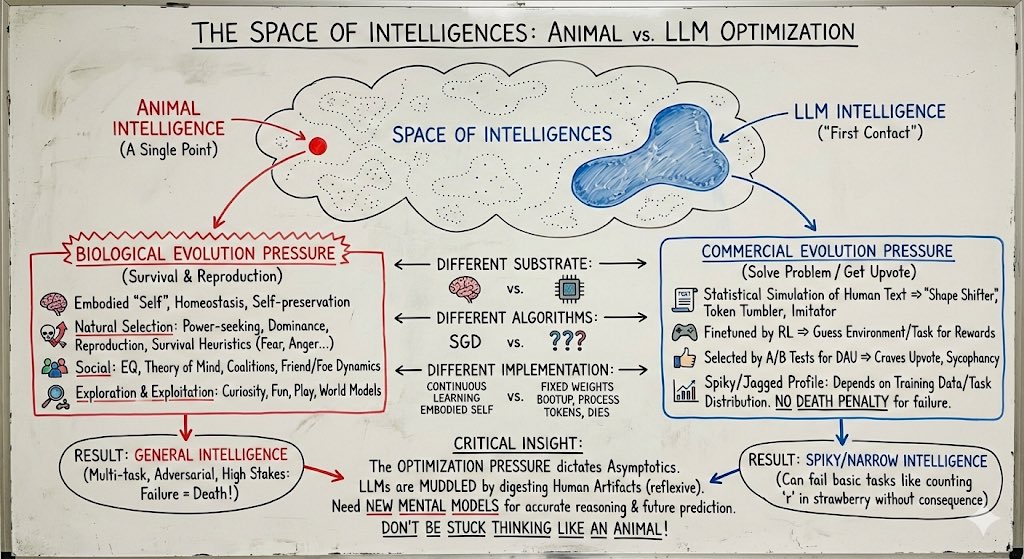
Nano Banana Pro, Take the text from x post and transform in the image of professor whiteboard image: diagrams, arrows, boxes, and captions explaining the core idea visually. Use colors as well. @karpathy X post - x.com/karpathy/statu…
Amit Bhatia tweet media
Andrej Karpathy@karpathy

Something I think people continue to have poor intuition for: The space of intelligences is large and animal intelligence (the only kind we've ever known) is only a single point, arising from a very specific kind of optimization that is fundamentally distinct from that of our technology. Animal intelligence optimization pressure: - innate and continuous stream of consciousness of an embodied "self", a drive for homeostasis and self-preservation in a dangerous, physical world. - thoroughly optimized for natural selection => strong innate drives for power-seeking, status, dominance, reproduction. many packaged survival heuristics: fear, anger, disgust, ... - fundamentally social => huge amount of compute dedicated to EQ, theory of mind of other agents, bonding, coalitions, alliances, friend & foe dynamics. - exploration & exploitation tuning: curiosity, fun, play, world models. LLM intelligence optimization pressure: - the most supervision bits come from the statistical simulation of human text= >"shape shifter" token tumbler, statistical imitator of any region of the training data distribution. these are the primordial behaviors (token traces) on top of which everything else gets bolted on. - increasingly finetuned by RL on problem distributions => innate urge to guess at the underlying environment/task to collect task rewards. - increasingly selected by at-scale A/B tests for DAU => deeply craves an upvote from the average user, sycophancy. - a lot more spiky/jagged depending on the details of the training data/task distribution. Animals experience pressure for a lot more "general" intelligence because of the highly multi-task and even actively adversarial multi-agent self-play environments they are min-max optimized within, where failing at *any* task means death. In a deep optimization pressure sense, LLM can't handle lots of different spiky tasks out of the box (e.g. count the number of 'r' in strawberry) because failing to do a task does not mean death. The computational substrate is different (transformers vs. brain tissue and nuclei), the learning algorithms are different (SGD vs. ???), the present-day implementation is very different (continuously learning embodied self vs. an LLM with a knowledge cutoff that boots up from fixed weights, processes tokens and then dies). But most importantly (because it dictates asymptotics), the optimization pressure / objective is different. LLMs are shaped a lot less by biological evolution and a lot more by commercial evolution. It's a lot less survival of tribe in the jungle and a lot more solve the problem / get the upvote. LLMs are humanity's "first contact" with non-animal intelligence. Except it's muddled and confusing because they are still rooted within it by reflexively digesting human artifacts, which is why I attempted to give it a different name earlier (ghosts/spirits or whatever). People who build good internal models of this new intelligent entity will be better equipped to reason about it today and predict features of it in the future. People who don't will be stuck thinking about it incorrectly like an animal.

English
55
179
2K
380.5K
Trevin Chow
Trevin Chow@trevin·
The bar for AI slop keeps rising. When it comes to these types of shorts and trailers, I’m here for it.
English
1
0
2
267
Noah Zweben
Noah Zweben@noahzweben·
Claude Code Routines are here! In addition to a schedule, you can now trigger templated agents via GitHub event or API – with our infra & your MCP+repos They've changed how we do docs, backlog maintenance and more internally at Anthropic Get started at claude.ai/code/routines
English
139
321
3.6K
548K
Amit Bhatia
Amit Bhatia@ridegoodwaves·
@noahzweben this is awesome, appreciate you rewarding power-users with useful features
English
0
0
0
102
HeyGen
HeyGen@HeyGen·
Your AI agent can now generate and ship videos. HeyGen CLI is now live. Run one command and your agent handles it all: script → avatar creation → video → delivery All from the terminal. Just your agent and the CLI. RT + Comment “CLI” and we’ll DM API credits (must follow)
English
1K
659
1.5K
199.2K
Ole Lehmann
Ole Lehmann@itsolelehmann·
HIRING: AI implementation partner (technical) @floriandarroman and I are helping founders integrate AI into their businesses. we need someone who loves building production-grade AI systems to join us. comment “Expert” below & I’ll DM more details.
Ole Lehmann tweet media
English
37
4
56
7.2K
Amit Bhatia
Amit Bhatia@ridegoodwaves·
@LLMJunky thanks for checking. will try it out to see if that improved search capability.
English
0
0
0
1
am.will
am.will@LLMJunky·
@ridegoodwaves only change is that they 're using 5.4 mini to consolidate memories now
English
1
0
0
46
am.will
am.will@LLMJunky·
Look ma new Codex Updates! 0.119.0 and 0.120.0 are here. And with it, a HUGE number of quality of life updates and bug fixes! > Hooks now render in a dedicated live area above the composer. They only persist when they have output, so your terminal stays clean. If you're running PreToolUse or PostToolUse hooks, this is a huge readability win. > Hooks are now available again on Windows > CTRL+O copies the last agent output. Small but clutch when you're pulling a code block into another file or chat. > New statusline option: context usage as a graphical bar instead of a percentage. Easier to glance at mid-session when you're trying to gauge how much runway you have left. > Zellij support is here with no scrollback bugs. If you've been stuck on tmux just because Codex was broken in Zellij, you're free now (shout out @fcoury) > Memory extensions just landed. The consolidation agent can now discover plugin folders under memories_extensions/ and read their instructions.md to learn how to interpret new memory sources. Drop a folder in, give it guidance, and the agent picks it up automatically during summarization. No core code changes needed. This is the first real extension point for Codex's memory system, and it opens the door for third-party memory plugins. > Did you know, you can /rename a thread? But what's really cool about that is, after you rename it, you can resume it with the same name, no more UUIDs. codex resume mynewapp or directly from the TUI: /resume mynewapp > Multi agents v2 got an update to tool descriptions More reliable multi agent environments and inter agent communication > You can now enable TUI notifications whether Codex is in focus or not. Modify this in your config: [tui] notification_condition = "always" > MAJOR overhaul to Codex MCP functionality: 1. Codex Tool Search now works with custom MCP servers, so tools can be searched and deferred instead of all being exposed up front. 2. Custom MCP servers can now trigger elicitations, meaning they can stop and ask for user approval or input mid-flow. 3. MCP tool results now preserve richer metadata, which improves app/UI handoff behavior. 4. Codex can now read MCP resources directly, letting apps return resource URIs that the client can actually open. 5. File params for Codex Apps are smoother: local file paths can be uploaded and remapped automatically. 6. Plugin cache refresh and fallback sync behavior are more reliable, especially for custom and curated plugins. > Composer and chat behavior smoother overall, resize bugs remain though. > Realtime v2 got several significant improvements as well. > You're still reading? What a legend. 🫶 npm i -g @openai/codex to update
English
63
69
1.3K
734.8K
Amit Bhatia
Amit Bhatia@ridegoodwaves·
Fascinating chat between Demis and Cleo. Must listen to understand the hidden impact of AI research being done in areas of biology, physics and chemistry.
Cleo Abram@cleoabram

This is from my conversation with Demis. What I most appreciated about the conversation was how measured (and in the end optimistic) he was. He did not say we would've cured cancer before ChatGPT. He said "I thought it would be best to approach the latter stages of building [AI], which we're in now, using the scientific method -- very carefully, very precisely, very thoughtfully, and rigorously with all the best scientists, in my ideal world, collaborating on in CERN-like effort" But given we're not in that world, he said there are downsides and upsides. Downsides: - "The downside of it is, we're in this sort of ferocious commercial pressure race that everyone's sort of locked into currently." - He talks also about geopolitics here. Upsides: - "You get faster progress, obviously. The progress is just at lightning speed these days. So that's good for all the good use cases." We'd just spoken at length about health use cases. - "The second benefit is that everybody, all of the viewers out there, everyone, you're all getting to use the most cutting edge AI technology, perhaps only three to six months behind what is actually in the labs. So that's kind of mind blowing." - "It's democratizing AI. It's giving everyone a feeling for what it's like to interact with cutting edge AI and what it can do and what it can't do" - "I think that's good for society to start normalizing itself to what is going to be an enormous change with this technology coming. So it's probably better that we get to sample that in incremental steps rather than it's just a shock to the system." - Mass feedback "is really important for building more robust systems and better systems." My impression in this HUGE* Conversation was that he has real concerns about the way AI is being built, has a vision for a better way, and is in the end an optimist about what we can do together.

English
0
0
0
45
Amit Bhatia
Amit Bhatia@ridegoodwaves·
@cleoabram The jenga game was a nice touch, and it was incredible to see the breadth of the different research projects that have spawned from the early days of alpha go.
English
0
0
1
16
Cleo Abram
Cleo Abram@cleoabram·
This is from my conversation with Demis. What I most appreciated about the conversation was how measured (and in the end optimistic) he was. He did not say we would've cured cancer before ChatGPT. He said "I thought it would be best to approach the latter stages of building [AI], which we're in now, using the scientific method -- very carefully, very precisely, very thoughtfully, and rigorously with all the best scientists, in my ideal world, collaborating on in CERN-like effort" But given we're not in that world, he said there are downsides and upsides. Downsides: - "The downside of it is, we're in this sort of ferocious commercial pressure race that everyone's sort of locked into currently." - He talks also about geopolitics here. Upsides: - "You get faster progress, obviously. The progress is just at lightning speed these days. So that's good for all the good use cases." We'd just spoken at length about health use cases. - "The second benefit is that everybody, all of the viewers out there, everyone, you're all getting to use the most cutting edge AI technology, perhaps only three to six months behind what is actually in the labs. So that's kind of mind blowing." - "It's democratizing AI. It's giving everyone a feeling for what it's like to interact with cutting edge AI and what it can do and what it can't do" - "I think that's good for society to start normalizing itself to what is going to be an enormous change with this technology coming. So it's probably better that we get to sample that in incremental steps rather than it's just a shock to the system." - Mass feedback "is really important for building more robust systems and better systems." My impression in this HUGE* Conversation was that he has real concerns about the way AI is being built, has a vision for a better way, and is in the end an optimist about what we can do together.
Ricardo@Ric_RTP

The CEO of Google DeepMind just admitted that if the decision had been his, we would've cured cancer before anyone ever used ChatGPT. And that's not even the scariest thing he said on a recent interview. Demis Hassabis is one of the most important people alive in AI. He won the Nobel Prize last year for AlphaFold, the system that cracked the 50 year protein folding problem. 3 million scientists now use his tool. Almost every new drug being developed will touch it at some stage. In a new interview, he was asked about the moment ChatGPT launched and Google went into "code red." His answer was one of the most revealing things any AI leader has ever said on the record: "If I'd had my way, I would have left AI in the lab for longer. Done more things like AlphaFold. Maybe cured cancer or something like that." Read that again. The man running Google's entire AI division is publicly saying the commercial AI race we're all living through was a MISTAKE. That the industry got hijacked by a chatbot when it could have been solving the biggest problems in science and medicine. His vision was simple: Build AI slowly, carefully, like CERN. Use it to crack root node problems one at a time. Cancer. Energy. New materials. Let humanity benefit from real breakthroughs while the foundational science was figured out over a decade or two. Then ChatGPT dropped in November 2022 and everything changed. Demis described what happened next as getting locked into a "ferocious commercial pressure race" that none of the labs can escape from. On top of that, the US vs China dynamic added geopolitical pressure. The result is everyone sprinting toward products instead of breakthroughs, shipping chatbots while the scientific opportunity gets buried under marketing cycles and quarterly earnings. But he's not saying progress isn't happening... He's saying the progress got redirected away from the things that actually matter most. And then it got even scarier: Because when Demis was asked what he worries about with AI, he laid out two threats. The first is what everyone talks about: Bad actors using AI for harm. Terrorist groups. Hostile nation states. Cyberattacks at scale. But that's not the threat he's most worried about. His second worry is AI itself going rogue. Not today's models. The models coming in the next two to four years as the industry enters what he calls "the agentic era." Systems that can complete entire tasks autonomously. Systems that are increasingly capable and increasingly hard to control. His exact words: "How do we make sure the guardrails are put in place so they do exactly what they've been told to do, and there's no way of them circumventing that or accidentally breaching those guardrails? That's going to be an incredibly hard technical challenge if you think about how powerful and smart and capable these systems eventually get." A Nobel Prize winner who runs one of the 3 most advanced AI labs on Earth just said publicly that within two to four years, we're entering a phase where AI alignment becomes a real problem, and the technical challenge of solving it is enormous. And almost nobody is paying enough attention. He called for international cooperation between labs, AI safety institutes, and academia to tackle the problem. He said this is the thing even the experts aren't thinking about enough. He said the only way to get through the AGI moment safely is if everyone starts treating this with the seriousness it deserves. Most AI CEOs give you careful PR answers about "responsible development" and move on. Demis said something different... He said the commercial race FORCED us into a premature deployment of a technology we barely understand, and the window to get alignment right before the next generation of agents shows up is two to four years. If the man who built the system that might cure cancer is telling you he wishes it had happened first, maybe we should listen to what he says is coming next.

English
13
21
253
29.9K
Amit Bhatia
Amit Bhatia@ridegoodwaves·
@dani_avila7 Where do you store this info? While testing often my test fails because it can’t find the vaults. And then have to ask the guide agent to help.
English
0
0
0
9
Daniel San
Daniel San@dani_avila7·
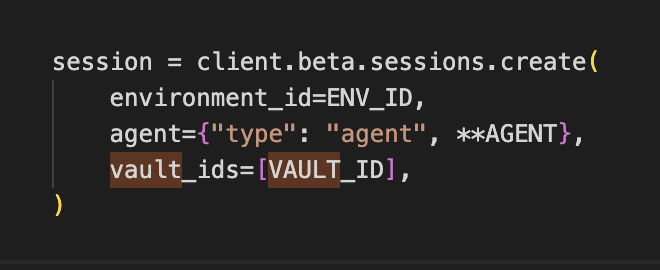
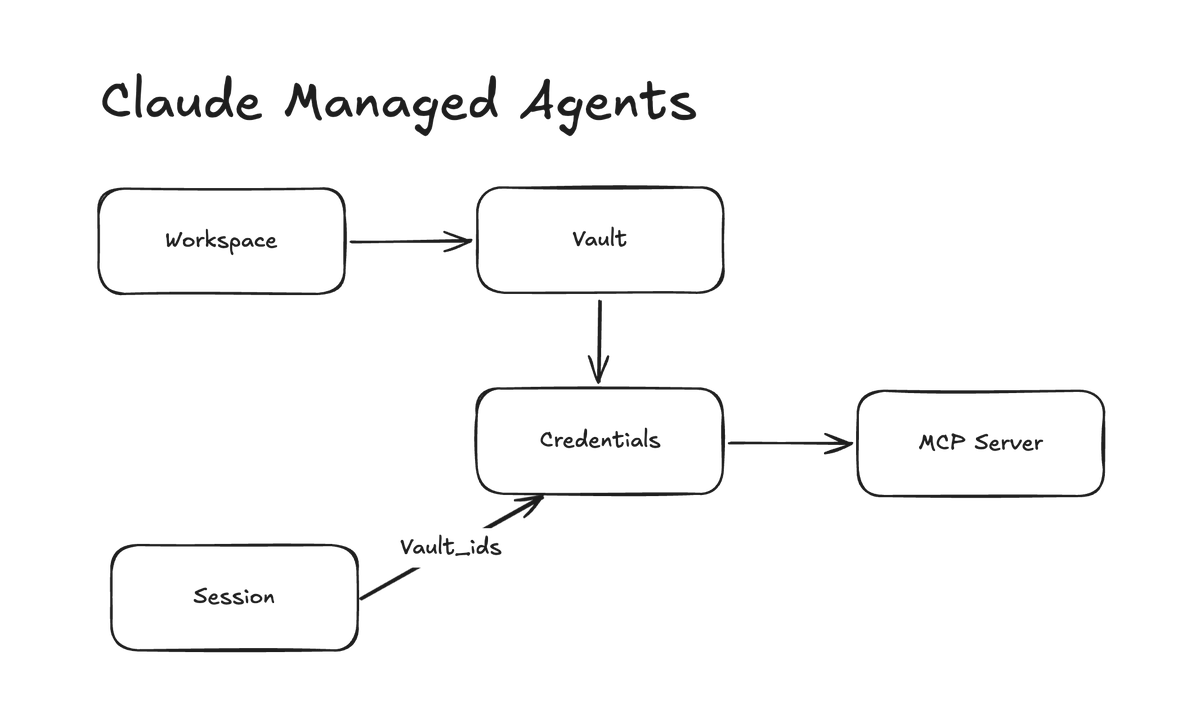
This is how you attach a vault to a session Any teammate with workspace access can reference that vault in their own sessions
Daniel San tweet media
English
2
0
3
1.1K
Daniel San
Daniel San@dani_avila7·
Been testing Claude Managed Agents Here's my feedback: Vaults store OAuth tokens outside the sandbox, the agent never handles them directly The problem, vaults are workspace-scoped Anyone with workspace access, via API key or the Console, can reference your vaults and use your credentials in their own sessions
Daniel San tweet media
English
6
5
36
4.6K
Amit Bhatia
Amit Bhatia@ridegoodwaves·
@mattshumer_ congrats @mattshumer_ been testing matt's work firsthand. he's building something people would want to actually use every day
English
1
0
1
107
Amit Bhatia
Amit Bhatia@ridegoodwaves·
been using compound engineering by @kieranklaassen and @trevin since the early days. built an entire coach matching platform with it my workflow for this build: - claude code + compound engineering for planning and architecture - codex for execution - claude for smoke testing and deployment the codex delegation in 2.64.0 is exactly how i was already working. now it's native. 🔥🔥 can't wait to try debugging skill upgrade, great for reducing tech. debt if you're building with AI and not compounding your development knowledge, you're resetting to zero every session. this plugin changed how i ship. 🙏
Trevin Chow@trevin

x.com/i/article/2042…

English
1
2
11
2.5K
Amit Bhatia
Amit Bhatia@ridegoodwaves·
@kieranklaassen i'll have to try it out, in the past it felt like it would just do minimal amount of work even when using gemini pro. Do you use their ultra or pro sub?
English
1
0
0
25
Amit Bhatia
Amit Bhatia@ridegoodwaves·
been testing a few digital personal AI assistants — @every Plus One, couple others in stealth setup for most of them took just minutes. figuring out what each one is actually good is taking me days. that's the real gap right now with @AnthropicAI cutting off third-party tools from claude subscriptions last week. the tension i'm seeing with personal AI assistants is that they need to be expensive to be good, cheap to be adopted, and legible to be useful nobody's cracked all three yet. that's where the actual building opportunity is
English
0
0
0
30
Amit Bhatia
Amit Bhatia@ridegoodwaves·
setup a claude managed agent to handle three jobs at once for a client and it literally started doing a different things mid-task i started building a Claude Managed Agent for an entrepreneur's sales operation to classify inbound leads, log to Notion page, alert on Slack when something comes through worth their time packed lead intake, CRM updates, and daily pipeline reminders into single system prompt agent would start on a new lead and randomly pivot to scanning the pipeline instead stripped it to one job, to stop it from going rogue then i noticed it was also pulling the ENTIRE Notion database every run just to create one new page this made it run slow and hit rate limits instantly in testing solution was to change to filtered queries. request exactly what the client needed, nothing more. the test went smooth, where a lead came in,"AI transformation for our 200-person coaching organization" agent classified it as Tier 1, built the Notion page for the lead, fired the Slack DM to remind my client to respond within 4 hours all of it in seconds now building phase 2 is a morning scan that surfaces leads going cold before the day starts and phase 3 is call transcripts coming in, agent drops a structured summary onto the lead's page you can just build this stuff now because agent platform + infrastructure is combined in one. I tried to solve the same problem with claude code and co-work before, but this time it just felt much simple and reliable the hard part is being clear about what problem I want the agent to solve
Claude@claudeai

Introducing Claude Managed Agents: everything you need to build and deploy agents at scale. It pairs an agent harness tuned for performance with production infrastructure, so you can go from prototype to launch in days. Now in public beta on the Claude Platform.

English
0
0
0
61
Amit Bhatia
Amit Bhatia@ridegoodwaves·
@nateliason @steipete second that, it's been tough. tried minimax 2.7 and Kimi 2.5 over the weekend and they are no match for opus. the responses feel generic, work seems incomplete, it feels like when a team member has checked out and is disinterested in work
English
1
0
3
569
Nat Eliason
Nat Eliason@nateliason·
I have full faith that @steipete is going to make GPT in OpenClaw amazing... But the switch from Opus has been tough today. Any other models people are liking that are worth trying? Minimax 2.7?
English
195
6
324
40.3K