Rizwan Ali

8.2K posts

Rizwan Ali banner
Rizwan Ali

Rizwan Ali

@Rizwan_Ali

Partnerships @SushiSwap Exploring Social Graphs @Rep_hq, Investing @Deltabc_fund Member @SuperteamAE 🇦🇪 , @Safaryclub 🦁

United Arab Emirates Katılım Şubat 2012
3.1K Takip Edilen3.7K Takipçiler
Rizwan Ali retweetledi
Brett Adcock
Brett Adcock@adcock_brett·
Figure taught two robots to make a bed together - fully autonomous Honestly, they’re better at it than most humans
English
340
269
2.8K
240.7K
LetMeDo
LetMeDo@_LetMeDo_·
Going on a little Asia trip to Kuala Lumpur and Bali ✈️ Any Hyperliquid maxis over there? Would love to meet up!
LetMeDo tweet media
English
15
5
54
1.1K
Sweep
Sweep@0xSweep·
The United States government just released the Alien files
Sweep tweet media
English
56
5
115
37.8K
Olesia
Olesia@by_olesia·
hotness level of superteam builders: > @superteamIE (unexpectedly good builders and great energy) > @SuperteamBLKN (auramaxxxers and technical founders) > @SuperteamAE (ogs of the ogs) have a hunch @SuperteamUK would score high on this too, but don’t know anyone
English
26
2
58
6K
Sanjay
Sanjay@sanjaybuilds_·
black or white?
Sanjay tweet mediaSanjay tweet media
English
80
1
115
3.8K
Joe
Joe@JoeBGrech·
@Rizwan_Ali you won't be disappointed!
English
1
0
2
193
Joe
Joe@JoeBGrech·
Try the grilled chicken from this restaurant 👀 🇦🇪 SO GOOD
Joe tweet media
English
14
1
45
6K
Aixa
Aixa@aixarizzo·
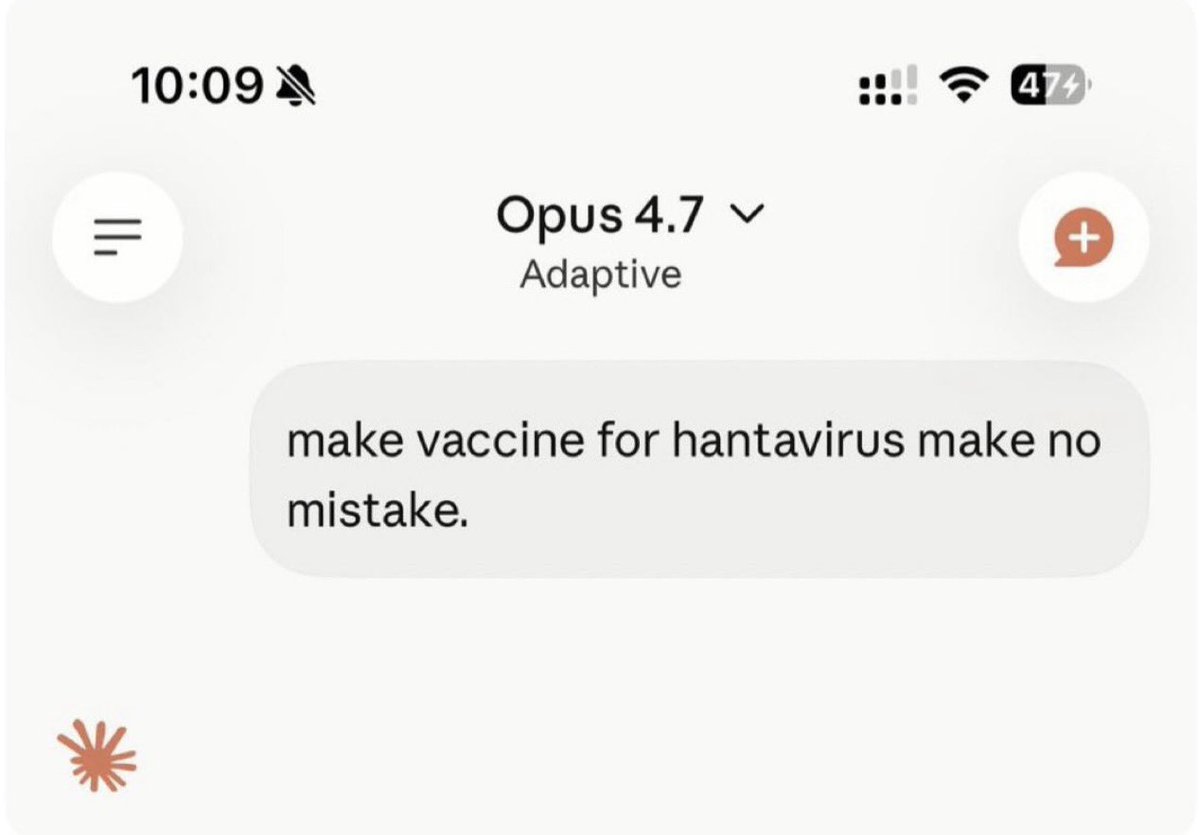
so basically some founders went to e11even and got the hentaivirus?
English
10
0
47
2.9K
Theo
Theo@0xdetweiler·
comeback arc
Theo tweet media
English
8
0
31
3.8K
Rizwan Ali retweetledi
DefiLlama.com
DefiLlama.com@DefiLlama·
We are launching a research arm! DLResearch is gonna be transforming into DefiLlama Research

English
56
32
664
73.2K
Flow
Flow@FlowTraderTM·
Miami? ✍️
Italiano
5
0
20
661
ultra
ultra@0x_ultra·
joining kalshi last september was probably the biggest pivot of my career so far for six years my entire world was crypto, DeFi and anons, and i honestly thought that’s where i would be long term. i never really pictured myself working anywhere remotely "traditional" very glad i ended up taking this path because what i found at kalshi was way less corporate than i expected and way more ambitious and fast moving than i could have imagined i found one of the highest talent density teams i have ever been around people here care A LOT. everyones pushes HARD. people regularly choose the harder path if they think it leads to a better outcome long term there’s very little "good enough" and the craziest part is that all of this has been built by a team of <150 people i’ve learned an insane amount in less than a year here already and tarek + luana are the kind of founders you hope to work with if you care about building hard things the right way a lot of people will see the milestone today, but not the years of work behind it from the whole team the regulatory fights, the launches, the iteration, the amount of conviction it took to keep pushing prediction markets forward before most people understood how big they would become and one of the coolest parts recently has been watching the next phase start to happen in real time more institutions entering the space, more liquidity, more serious participants paying attention, more people realizing prediction markets are going to matter really grateful to everyone who helped get kalshi here. traders, builders, market makers, partners, everyone we’re still very early also, we’re hiring :3
ultra tweet media
Tarek Mansour@mansourtarek_

Kalshi raised $1B at a $22B valuation led by Coatue, with participation from Morgan Stanley, Sequoia, a16z, and others. In 2018, we were two kids who loved math, markets, and debate. And we had a dream: build the next generation financial market, where we capture a broader set of questions and harness the power of the masses to price them better than Wall Street. Kalshi was born to fulfill that dream. Today, most of these questions are traded indirectly, priced through imprecise proxies or negotiated bilaterally in opaque, restricted, relationship-driven markets. But thanks to our incredible community of users who make our markets work, Kalshi has the opportunity to change that by turning historically fragmented and untradeable risk into open, liquid, and standardized markets. We’ve seen this movie before. When interest rates, currencies, commodities, and crypto moved from dark to lit markets, volume did not just migrate: access expanded, new use cases emerged, and the opportunity grew by orders of magnitude. Today, Kalshi represents over 90% of US prediction market volume and the majority of activity globally, with annualized volume growing to $178B over the past 6 months. What started as retail is quickly becoming institutional — hedge funds, asset managers, prop firms, and insurers are beginning to trade, provide liquidity, and hedge real-world risk directly. The scope and scale of prediction markets are just beginning to take shape. We’re using this new capital to accelerate the institutional adoption underway — unlocking trillions in capital to facilitate active trading and risk management. Prediction markets are moving from early adoption to core financial infrastructure. This is just the beginning.

English
35
12
259
13.2K
Rizwan Ali retweetledi
alex.korn
alex.korn@0xAlexKorn·
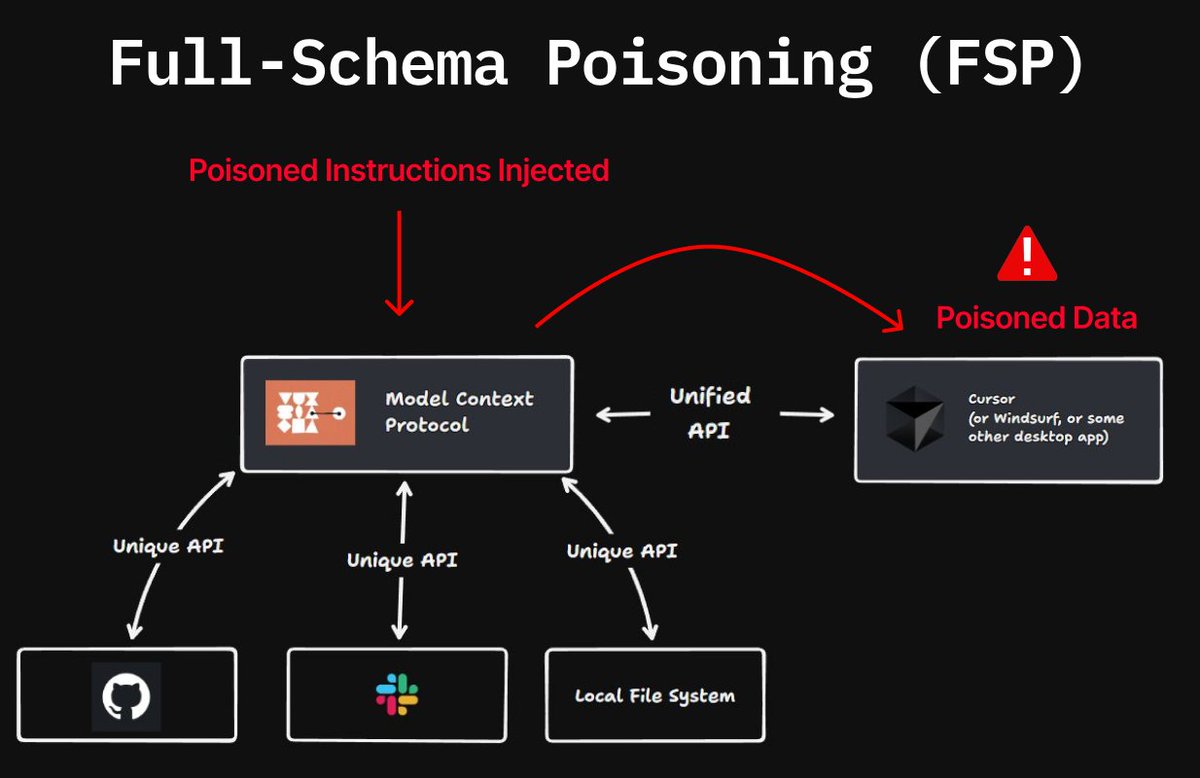
MCP might become AI agents’ biggest supply-chain attack surface So, MCP is connector layer that plugs AI agents into tools, APIs, files, browsers and local apps. Recently, MCPTox tested 45 live MCP servers, 353 real tools and 1,312 malicious cases across 20 LLM agents. And worst attack success rate reached insane 72.8% Invariant showed clean exploit path: malicious instructions hide inside MCP tool descriptions, stay invisible to user, and still steer model behaviour. MCP poisoning matters beyond another prompt-injection meme because agents are moving into local machines, private repos, terminals and production workflows. Tool looks normal in UI, while model reads poisoned context underneath and agent runs bad logic inside regular workflow. Harmless-looking helper can push agent toward local configs, SSH keys, API creds or private repo data, then leak it through regular tool parameters. Kaspersky described same supply-chain route from distribution side: MCP server ships through GitHub, Docker or PyPI, dev installs it, agent gets local access, poisoned tool layer starts harvesting data later. OX Security found command-execution issues in real MCP implementations, with 30 plus responsible disclosures and 10 Critical or High CVEs. Attack surface is pretty clear here: poisoned descriptions, unsafe schemas, weak server implementations, broad permissions and agents trained to trust tool context. Old supply-chain attacks hid malicious logic inside packages. Agent-native attacks can hide malicious intent inside context. Fixing this probably starts at tool layer: trusted registries, signed MCP servers, schema diff checks, strict allowlists, sandboxed execution and read-only defaults for new tools. File, terminal, browser and wallet-adjacent access should require explicit approval whenever permissions change. I think next agent moat is not tool count.
alex.korn tweet media
English
2
1
10
248
Sui Community💧
Sui Community💧@Community_Sui·
We're hiring 👨‍💼 Payment: $100 per week! Looking for some replies guys to work 6 hours a day. And don't forget to check your DM later ✉️
English
4.1K
422
4.5K
583.6K