

Don RLX 🟧 🇺🇲🏴
9.3K posts

Don RLX 🟧 🇺🇲🏴
@rlx_don
Writer/Producer. Pro-Democracy. SoCal. Buffalo Sabres. Buffalo Bills.
Southern California Katılım Eylül 2021
571 Takip Edilen360 Takipçiler


This is precisely what's wrong with Democrats. Every lie and distortion is intended to distract from getting their hats handed to them and the Virginia Supreme Court's clear message: stop trying to rig our elections.
The radio host should not have used that language and I do not -and did not - condone it. It was obvious to anyone listening that I was agreeing Hakeem Jefferies should stay out of Virginia.
Democrats are trying to destroy Virginia’s court because they disagree with it. THAT is the real danger to our country.
English
@jonchopwood @JoyceCarolOates "Undemocratic". I voted for it, you useless gob of stupidity.
English

No, the issue was California nabob Gavin Newsom decided to thump the tub for his 2028 presidential run by answering Trump’s call for gerrymandering with his own undemocratic plan & the NationalDemocrats wound up f—ed when the Virginia Supreme Court nullified the Virginia State Democratic Committee’s gerrymander. All of this made possible by the worst U.S. Supreme Court in 90 years (if not ever) making gerrymandering possible all the time even before the Voting Rights Act was gutted.
Please spare us the pearl clutching when the Democratic National Committee, Obama & the rest of the Reaganaut-Clintonian Party enthusiastically jumped on board extinguishing democracy with their own lust to build one party states.
The DNC that represents the Reaganaut-Clintonian Party (dedicated to the American credo that government of the rich, by the rich and for the rich shall not vanish from the face of the earth either in North America or Eastern Europe & who gives a shit about thermonuclear war as long as the arms dealers are happy) got itself licked again like a 3rd grade runt by a bully on a pre-Ritalin infused playground.
English

grotesque gerrymandering to create new, unnatural congressional districts is the issue. if dilution/ manipulation of the vote were not the purpose of gerrymandering, why would there be gerrymandering? it requires tactical calculation. it is highly practical, purposeful. it works to give a distinct advantage to one political party & a disadvantage to the other.
Boris Bartlog@BorisBartlog
@JoyceCarolOates I don't accept the idea that black voters have interests that are permanently different from those of Americans as a whole I realize that from a partisan standpoint it is helpful to maintain the position that they do, and that only Democrats are for them ... but it is not so
English
@SenFettermanPA You're an idiot. People literally can't afford gas, groceries, etc., but stop "hen-pecking" about blowing $13m -- probably will balloon to over $20m -- which could've fed thousands of hungry children. You're a fucking dunce.
English
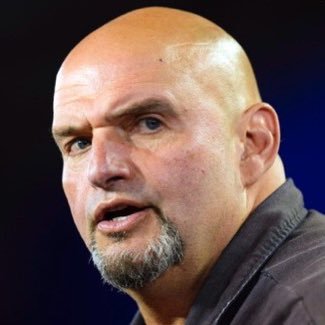
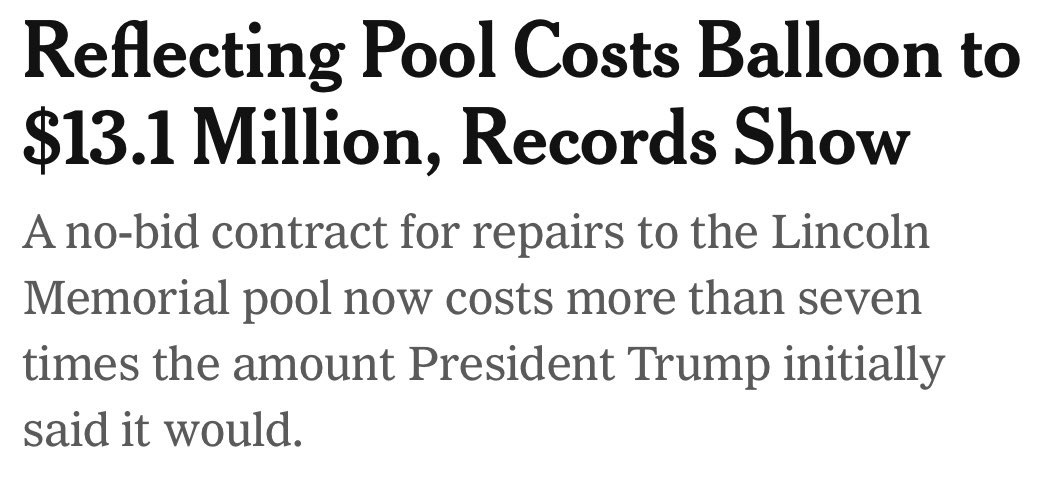
Stop this henpecking.
$13M? This is an iconic American place and was in serious disrepair.
Get over the TDS and celebrate this is getting done for our 250th. 🇺🇸
English
English

@rlx_don @LemieuxDan @DuaneS39 a punch is a punch, if anything at least Xhekaj punched someone who was engaged with him instead of punching someone who’s defenseless
English

He needs to be suspended for Game 4
I don’t wanna hear any tHiS tHe pLaYoFfS bullshit
That was a sucker punch and now he’s in concussion protocol.
Suspend him. If this was Logan Stanley popping Suzuki you’d all be losing your fucking minds
English
@SecDuffy @RCamposDuffy Wait, you sniff glue. This explains a lot.
English

Rachel is the glue, the fun, the energy that holds our family together.
I hope everyone had a wonderful Mother’s Day. I love you, Rachel! @RCamposDuffy
English
English


Ehhhhh, Xhekaj might get a call from the league for that punch on Carrick.
English
@bearmccreary @paolini You have a really great point. Never thought of it that way, but I agree.
English

@paolini I was always disappointed that Hollywood seemed to learn the wrong lessons from this film. “Sepia tones! Slow motion! Rock score! BADASS!!!!”
Instead of
“Make more awesome history movies!”
English

@Sandraziel88450 @john_wawrow Ah yes, the "I have such a useless and pathetic life I'm now gonna attack a sports-writer" gambit. Sandy, you're a simpleton. Look it up.
English

@john_wawrow You are a loser -did I hit a nerve - you’re actually arguing grammar with an old lady Sabres fan - you poor thing
English

Actually, it’s a spelling thing, too.
And yes, being a sports writer requires a grasp of grammar and spelling.
It’s included in the title: “writer.”
You should have considered this before rushing off your response.
Sandy C Z 🇺🇸🪬🐈⬛@Sandraziel88450
Oh he’s grammar critic not a sports writer
English
@teapottoffoIi Carrick's hands were down and he wasn't even looking at that idiot. Montreal fan: "Where can I find some cock to suck?"
English

@LemieuxDan @DuaneS39 Known "tough guy" -- checks notes -- Josh Norris (?) throws the weakest punch ever seen. He's a MONSTER. Grow the fuck up, idiot.
English

@DuaneS39 This is worse x.com/i/status/20536…
Sportsnet@Sportsnet
No love lost between these two teams 😅
English
@ByTimGraham Don't come tossing facts onto a perfectly good fan bonfire! FFS, some people.
English

Psssssst ... The Montreal Canadiens had a 1-2 record at home in the first round.
The Bell Centre isn't THAT overpowering.
English
@JoeYerdon Glad to hear they're confident in "the room". Would like to see them transfer that to "the ice".
English

Sabres room was calm and confident. Tonight was a learned experience but their confidence in each other and what they can do as a group was apparent.
Bo Byram: "No one’s got their head hung walking out of here. They beat us, you take it like a man and move on to the next one.”
English
@saviano_steve @KeithOlbermann @NHL @BuffaloSabres All that matters now is that the Habs have won 2 of 3, and looked very good doing it. Sabres need to win Tuesday or else... uh-oh.
English

@rlx_don @KeithOlbermann @NHL @BuffaloSabres They’re 5-4 in the playoffs. They need to go no worse than 11-8 the rest of the way.
English

What an embarrassment to the @nhl the @BuffaloSabres are
English
@lifewithmikey52 You're a fucking idiot. I'd love to see you're job report card, if you even had a job.
English

Hey what do you know, Rasmus Dahlin took another stupid penalty. Where are all his defenders? All that dude has done is take stupid penalties
English
@PeteHegseth @DeptofWar Mark Kelly is 10 times the man you could ever hope to be, Secretary of "War". Blah, blah, blah, get drunk, rape, repeat.
GIF
English
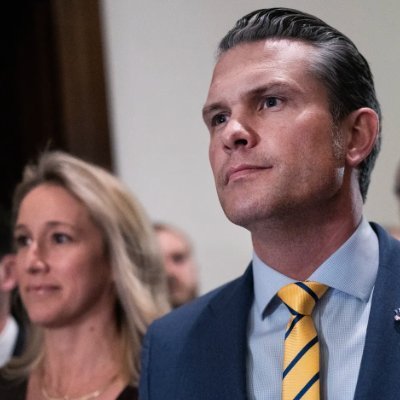
“Captain” Mark Kelly strikes again.
Now he’s blabbing on TV (falsely & dumbly) about a *CLASSIFIED* Pentagon briefing he received.
Did he violate his oath…again? @DeptofWar legal counsel will review.
Margaret Brennan@margbrennan
After hearing the Pentagon classified brief on Iran war impact on US weapons stockpiles, Senator Mark Kelly says it is "shocking how deep we have gone into these magazines." He said the Tomahawks, ATACMS, SM-3, THAAD rounds, Patriot rounds, so those interceptor rounds to defend ourselves have been hit hard. He says it'll take years to replenish those stockpiles, which could affect a hypothetical US conflict with China. @FaceTheNation
English
@ByTimGraham Sabres have a couple of issues they need to correct. Face-offs, power-play, and tightening up the team defense. People are saying the Sabres are done and we're at 1-1 with game three not even done. Crazy.
English


Can someone please tell Barack Hussein Obama he’s no longer relevant
English
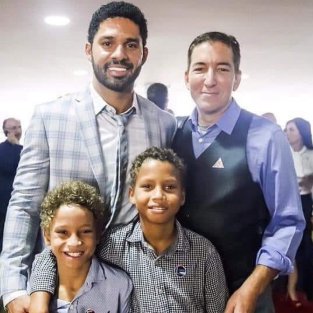
AOC is right that there are important differences between her and @mtgreenee:
1) AOC emphatically condemns policies only when Trump and the GOP do them, gets muted and deferential when Dems do. By contrast, MTG criticizes policies with equal fervor regardless of which party does them.
2) MTG condemns GOP leaders when they betray their purported values, even risking her political career to do so. By contrast, AOC lies to protect Dems who betray their supposed values (Kamala "is working tirelessly for a ceasefire" in Gaza!), and has supreme devotion to partisan advancement and self-interest above all.
3) MTG introduced a bill to cut all US financing of Israel's military. AOC voted NO, arguing Americans should pay for Israel's "defensive weapons." Big substantive difference.
4) MTG scorns the AIPAC/ADL tactic of accusing Israel critics of being racist and "anti-Semitic." AOC embraces and fortifies that accusatory smear campaign to justify why only liberal critics like her are compassionate and legitimate and everyone else is just racist.
5) MTG only cares about results and outcomes, and will thus work with anyone (left or right) to stop a policy she considers evil and wrong. AOC only cares about posturing and her political branding -- not outcomes -- and will thus reject the opportunity to form majorities to stop stop some policy evil if it means admitting that not only Dems have good ideas and can be good people.
AOC is the embodiment of privilege: having no real urgency about stopping things that don't personally affect her (like Israeli wars and US financing of them). That's why she has harsher words for GOP critics of Israel than she does for Dem supporters of Israel.
This, and more, is why MTG was pushed out of her own party, while AOC has fully morphed into Nancy Pelosi Jr. and is one of the Democratic Party's most valuable partisan tools, and why she's beloved by Dems as such.
Acyn@Acyn
AOC: I personally do not trust somebody like Marjorie Taylor Greene—a proven bigot and anti-semite—on the issues of what is good for Gazans and Israelis. I don’t think it benefits our movement to align with white nationalists.
English