Rob Bailey

34K posts

Rob Bailey banner
Rob Bailey

Rob Bailey

@RMB

AI-Native & Agentic Founder/Operator (Working On Something New In Enterprise AI)
New York, NY Katılım Ocak 2009
2K Takip Edilen13K Takipçiler
Sabitlenmiş Tweet
Rob Bailey
Rob Bailey@RMB·
There are massive opportunity areas in AI adoption that no one is thinking about yet.
English
2
0
9
1K
Paul Yacoubian
Paul Yacoubian@PaulYacoubian·
@RMB I know it is happening. But i don’t like the idea of maximizing resource consumption for its own sake.
English
1
0
1
17
Rob Bailey
Rob Bailey@RMB·
Spicy rumor: Devs at top companies that are being measured on their token usage are now finding tricks (and even building dedicated apps!) to max their token usage.
English
1
0
1
773
Rob Bailey retweetledi
Startup Archive
Startup Archive@StartupArchive_·
YC CEO Garry Tan: “Moat is not a noun. It’s a verb” Popular belief says startups win because they have one big, game-changing insight. But Varun Mohan (Windsurf CEO) argues that’s a myth. “Every single insight we have is a depreciating insight.” In other words: the value of your insight declines fast. Competitors catch up. Markets shift. What was once novel becomes table stakes. He uses Nvidia as the example: Even at a trillion-dollar scale and 70% gross margins, they still have to innovate, or AMD catches up. The real advantage? Continuously generating new insights — and executing on them. “It’s not about the insight you had one year ago. It’s whether you can compound that advantage over and over again.” That’s why Varun tells his team: being wrong is fine, but being stagnant isn’t. You need to stay sharp, learn from the market, and compound your edge over time. Or as Garry Tan (YC CEO) puts it aptly: “Moat is not a noun. It’s a verb.” Source: @ycombinator (May 2025)
English
25
66
622
91.5K
Paul Yacoubian
Paul Yacoubian@PaulYacoubian·
@RMB This whole thing never made any sense and i don’t understand why anyone credible talks about it 😭
English
1
0
0
571
Robert Scoble
Robert Scoble@Scobleizer·
I had breakfast this morning with a friend who runs AI in one of the world's biggest companies. He told me about their AI efforts, which are small and not that important yet. At the end of breakfast said "big enterprise won't adopt AI in huge scale for two more years. At minimum. The nerds in San Francisco don't understand humans and how they adopt things."
English
129
19
389
47.6K
Rob Bailey retweetledi
GREG ISENBERG
GREG ISENBERG@gregisenberg·
I just got back from SF and I FEEL INSPIRED. I spent 5 days with frontier AI model teams, AI startup founders, and 3 billionaires. My takeaways: 1. I had lunch with 3 billionaires. All of them are buying SaaS companies and rebuilding them agent-first. They were deeply inspired by Bending Spoons and Ryan Cohen's eBay deal. Buy the company, cut the headcount, rebuild the tech, add agents, add features, make more valuable experience, raise prices. 2. The frontier model companies are hungry for usage data from the field. They can see API calls and token counts. They can't see the actual workflows. If you're deep in a niche using these models in ways the model companies haven't seen, that understanding is incredibly valuable. Usage intelligence is the new alpha. 3. Consumer AI is massively underbuilt. Every billboard in SF is either B2B inference infrastructure or vertical agent companies. The entire city is optimized for enterprise. Meanwhile you have companies like Cal AI doing $50M ARR in 18 months as a consumer app. I met with a cool few teams doing consumer AI (@paulscherer / @ekuyda) 4. MCP came up in literally every conversation. The companies exposing their product as MCP endpoints are getting pulled into deals they never pitched for. The ones that aren't are becoming invisible to agents. This is the new SEO. If agents can't find you, you don't exist. Building products for agents is the new zeitgeist in general. 5. Not uncommon for hot seed rounds to be $25-50 million valuations. I saw a Series A at $450 million 6. If I had a dollar every time someone mentioned "forward-deployed engineer" this trip I could have funded a seed round. It's the hottest role in SF right now. The person who sits between the agent and the customer, making sure everything actually works. 7. The mood around open source shifted. A year ago it felt like open source was chasing the frontier models. Now founders are telling me Gemma and DeepSeek are good enough for 80% of what they need at a fraction of the cost. The "which model do you use" conversation is being replaced by "which model for which task." Model loyalty kinda feels dead. 8. Voice agents came up more than I expected. Multiple founders told me voice is the interface for the next billion users. The billion people who will never type a prompt will absolutely talk to one. 9. The Obsidian community in SF is weirdly intense. Multiple founders showed me their vaults unprompted. Like showing someone your home gym. It's a flex now. The quality of your knowledge base (second brain?) is becoming a status symbol among builders. 10. Maybe it was just the people I met but the age of the founders is shifting. I met more founders over 40 this trip than any trip before and more founders under age 21 than ever before. Founders getting older and younger at the same time. 11. I spoke to a lot of fast-growing startups, VCs and frontier models who are hiring content creators right now. 12. The restaurant scene in SF is actually better than it's been in years. Founders are going out more. Alcohol is out, not surprisingly. 13. SF doesn't feel like the only place anymore. We all have access to the same frontier models. We all read the same X feed. A founder in NYC or Lagos is calling the same APIs as a founder in SoMa. So in the past it felt like SF was always lightyears ahead, doesn't feel that way anymore. It's okay not to live in SF and have BIG DREAMS. 14. The coworking spaces in SF are half empty but the coffee shops are packed. People want to be around people. I had a few startup ideas here.... 15. Walking around the Mission I noticed something: the street-level businesses, the taquerias, the barbershops, the laundromats, none of them use any AI at all. 16. I heard the phrase "agent debt" for the first time. Like technical debt but for agents. When you hack together an agent workflow fast and never clean it up, the system prompts conflict, the memory gets polluted, the tools overlap. 6 months later the agent is doing weird things and nobody knows why lol. 17. Met a few people who carry two phones now. One for personal. One that's basically an agent terminal running Telegram or iMessage connections to their agent fleet. It's always amazing to get that dose of inspiration in SF. I FEEL INSPIRED. But I'm so happy to be back home, locked in and building. We're 12-18 months into a shift that will take 15 years to play out. The urgency in every conversation was real. What an incredible time to be building.
GREG ISENBERG tweet media
English
414
482
5.1K
430.3K
Rob Bailey
Rob Bailey@RMB·
What are the best NY tech week events next week for enterprise AI/agents? Been heads down building and just looking at events now.
English
0
0
1
273
jacks cod
jacks cod@Hojacks_·
Wells Fargo by far has to coolest private banking team
English
2
0
0
617
Rob Bailey
Rob Bailey@RMB·
@HCuccinello HI! Any chance you'd cover Wells again? I'm a private bank customer and I've had horrific service.
English
0
0
0
1
Hayley Cuccinello
Hayley Cuccinello@HCuccinello·
Clients have noticed the turnover. In one case, Scharf and exec Barry Sommers had to talk a customer with $300m+ off the ledge. This could have been averted. Abbot Downing's then-boss made two pitches to save the brand, but an exec said no, Insider can exclusively report. 5/6
English
2
0
1
235
Hayley Cuccinello
Hayley Cuccinello@HCuccinello·
The painful reorganization led to a mass exodus. Since 2021, at least 9 teams with $9.65b AUM have left. 1/3 of Abbot Downing left to follow an ex-boss. "A lot of people left because they felt there was no place for them here. People would rather get off the train." 4/6
English
1
0
1
252
Rob Bailey retweetledi
Jason Malefakis
Jason Malefakis@wayojason·
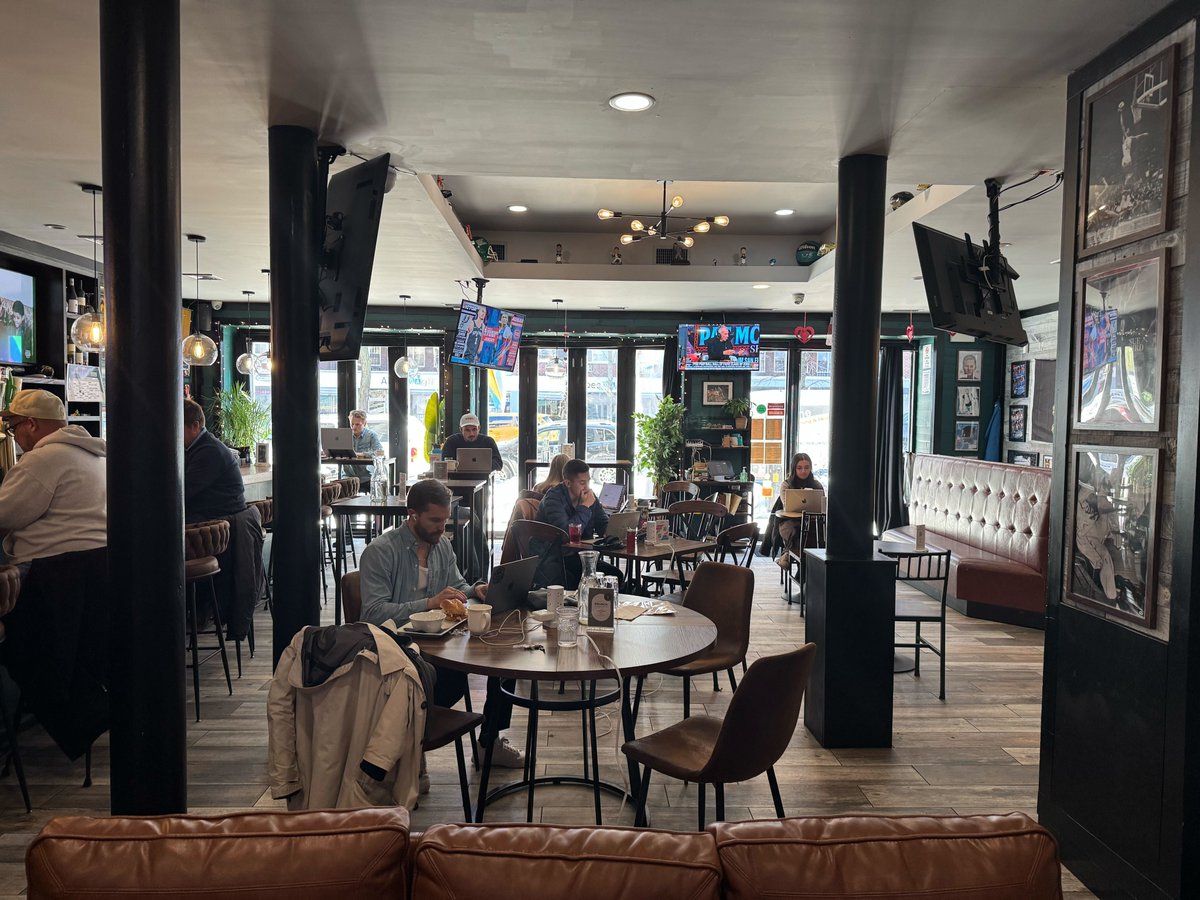
I have monetized my love for NYC. How? By turning the city into my workspace. When COVID hit, my wife and I were both working from our apartment. She'd be on Zoom in the bedroom while I crunched numbers in the living room. By month six, the walls were closing in. So we tried coffee shops first. Some days we'd find a table. Other days we'd circle for an hour like vultures. Mix that up with unstable WiFi and side-eye for taking the desk too long. Then came coworking spaces. Beautiful offices, kombucha on tap, $500–$600 a month for something we'd use twice a week. It was like paying a gym membership for one workout a week. Even setting the money aside, something was still off. We wanted to be productive with a real community of people who understood remote work. What we got was proximity without connection. The problem was meaningful collisions between the right people. Big companies missed this because they saw "remote workers need desks" and built real estate solutions. They never lived through six months at a kitchen table. They never felt the isolation of being productive but completely alone. So we built @WayoWork. A platform that facilitates Community and Pod Workdays at independently owned host venues across NYC – rooftops, restaurants, and private studios with curated groups. Members tell us they're more productive than they are at home or in a cafe, and they leave with a handful of real connections. So if you have been looking for something like this, come join us for a workday and you’ll become a fan for sure.
Jason Malefakis tweet mediaJason Malefakis tweet mediaJason Malefakis tweet mediaJason Malefakis tweet media
English
3
2
22
1.7K
Rob Bailey
Rob Bailey@RMB·
@rileybrown Urbana. But for meetings go to Faena. Mediocre coffee but totally empty and quiet.
English
0
0
1
122
Riley Brown
Riley Brown@rileybrown·
Just landed in NYC. Whats the best coffee shop in Chelsea?
English
22
0
41
11.1K
Rob Bailey retweetledi
mads campbell
mads campbell@martyrdison·
the AI industry is currently: companies spending $300m a year because nobody built a system capable of asking “does this request actually need the most expensive model on earth?” also the model companies write the benchmarks, grade themselves on the benchmarks, then announce they won completely normal economy proud of @shensi and team 🥰
Shensi Ding@shensi

Introducing Merge Gateway - Build Your Own Router. You're three sprints into your coding assistant. You pick the most hyped model, integrate, test, deploy. A month later, a new model drops. Now you re-test, re-integrate, re-deploy. Your product didn't change, but the benchmark did. That's how most AI teams operate. Chasing a "best" defined by people who've never seen their product. There is no best model. There's only the right one for your product, users, and use-cases. Build Your Own Router runs on your definition of good. Pick your benchmarks, weigh them, add your own evals. @merge_api routes every request to your winner. 👉$100 in credits to the first 200 people that comment merge.dev/gateway

English
4
4
56
13.7K
Andrew Yeung
Andrew Yeung@andruyeung·
Is anyone here plugged into the nyc music x performance world? I'm hosting a special event on June 4 and I'm looking for the most unique live performers. Jazz musicians / saxophone players / acoustic singers / flash mobs / aerial dancers / breakdancers, etc. If that's you, or you know someone, DM me.
English
5
1
21
4.3K
Rob Bailey
Rob Bailey@RMB·
There is something big that sets aside early stage VC funds: Conviction Speed. I've noticed that the best funds work hard to get to high quality decisions very fast. Could be yes, could be no. But they decide faster than other firms.
English
0
0
1
81
Rob Bailey
Rob Bailey@RMB·
@aakashgupta People may be missing the point here. I wonder how many people are really buying this for the added height, not improved performance. :)
English
0
0
5
2.4K
Aakash Gupta
Aakash Gupta@aakashgupta·
Adidas just mass-released a $500 running shoe that is banned from every sanctioned race on the planet. And it sold out in minutes. The business logic is smarter than it looks. World Athletics caps stack height at 40mm for road racing shoes. The Prime X Evo sits at 50mm. That extra 10mm of Lightstrike Pro Evo foam means the shoe physically cannot be worn in any official competition. Adidas printed that fact on the marketing materials. They're selling illegality as a feature. The shoe helped Sibusiso Kubheka run 100km in 5:59:20, the first person to ever break six hours at that distance. A record that does not count in any official record book because the shoe violates the rules. Adidas spent years of R&D to break a record that technically doesn't exist. Here's why that's the play. The Prime X Evo isn't the product. The Prime X Evo is the commercial for the product. Every running publication on Earth wrote about this shoe for free. Millions in earned media. The actual revenue shoe is the Adizero Adios Pro 4 at $250, which uses a legal version of the same foam technology, sits under the 40mm limit, and ships in real quantities. The $500 price tag and lottery release aren't margin optimization. They're a scarcity engine that turns a running shoe into a streetwear drop. You're buying a concept car that happens to fit on your feet. Adidas found the loophole: you can build whatever you want if you never claim it's for competition. The regulations assumed shoe companies wanted to win races. Adidas realized winning the marketing race pays better.
TaraBull@TaraBull

The newest Adidas running shoe just dropped. The Adizero Prime X Evo - price $500

English
15
35
334
191.1K
Rob Bailey retweetledi
Noorie
Noorie@nooriefyi·
Our Vercel bill was $25k per month. We just switched to Cloudflare and our spend is $2k per month. This is your sign to switch to Cloudflare
Noorie tweet media
English
143
52
1.6K
208.9K