Economist-For the common good. Values are the foundations for any nation. Res Publica is my passion-Retweets # endorsements views are my own. لا اجادل على تويتر
Je veux présenter mes excuses, au nom des Français, pour avoir enfanté la French Theory (qui a enfanté la pire des merdes idéologiques : le wokisme).
Nous avons donné au monde Descartes, Pascal, Tocqueville. Et puis, dans les ruines intellectuelles de l'après-68, nous avons donné Foucault, Derrida, Deleuze. Trois hommes brillants qui ont fabriqué, dans l'élégance de notre langue, l'arme idéologique qui paralyse aujourd'hui l'Occident.
Il faut comprendre ce qu'ils ont fait. Foucault a enseigné que la vérité n'existe pas, qu'il n'y a que des rapports de pouvoir déguisés en savoir. Que la science, la raison, la justice, l'institution médicale, l'école, la prison, la sexualité, tout n'est qu'une mise en scène de la domination. Derrida a enseigné que les textes n'ont pas de sens stable, que tout signifiant glisse, que toute lecture est une trahison, que l'auteur est mort et que le lecteur règne. Deleuze a enseigné qu'il fallait préférer le rhizome à l'arbre, le nomade au sédentaire, le désir à la loi, le devenir à l'être, la différence à l'identité.
Pris isolément, ce sont des thèses discutables. Combinées, exportées, vulgarisées, elles forment un système. Et ce système est un poison.
Car voici ce qui s'est passé. Ces textes, illisibles en France, ont traversé l'Atlantique. Les départements de Yale, de Berkeley, de Columbia les ont absorbés dans les années 80. Ils y ont trouvé un terreau qui n'existait pas chez nous : le puritanisme américain, sa culpabilité raciale, son obsession identitaire. La French Theory s'est mariée à ce substrat, et l'enfant de ce mariage s'appelle le wokisme.
Judith Butler lit Foucault et invente le genre performatif. Edward Said lit Foucault et invente le post-colonialisme académique. Kimberlé Crenshaw hérite du cadre et invente l'intersectionnalité. À chaque étape, la matrice est française : il n'y a pas de vérité, il n'y a que du pouvoir, donc toute hiérarchie est suspecte, toute institution est oppressive, toute norme est violence, toute identité est construite donc négociable, toute majorité est coupable.
Voilà comment trois philosophes parisiens, qui n'ont probablement jamais imaginé leurs conséquences pratiques, ont fourni le logiciel d'exploitation à une génération entière d'activistes, de bureaucrates universitaires, de DRH, de journalistes, de législateurs. Voilà comment on a obtenu une civilisation qui ne sait plus dire si une femme est une femme, si sa propre histoire mérite d'être défendue, si le mérite existe, si la vérité se distingue de l'opinion.
C'est de la merde pour une raison simple, et il faut la dire calmement. Une civilisation se tient debout sur trois piliers : la croyance qu'il existe une vérité accessible à la raison, la croyance qu'il existe un bien distinct du mal, la croyance qu'il existe un héritage à transmettre. La French Theory a entrepris de dynamiter les trois. Pas par méchanceté. Par jeu intellectuel, par fascination du soupçon, par haine de la bourgeoisie qui les avait nourris. Mais le résultat est là. Une génération entière a appris à déconstruire et n'a jamais appris à construire. Une génération entière sait soupçonner et ne sait plus admirer. Une génération entière voit le pouvoir partout et la beauté nulle part.
Je m'excuse parce que nous, Français, avons une responsabilité particulière. C'est notre langue, nos universités, nos éditeurs, notre prestige qui ont donné à ce nihilisme son emballage chic. Sans la légitimité de la Sorbonne et de Vincennes, ces idées n'auraient jamais traversé l'océan. Nous avons exporté le doute comme d'autres exportent des armes.
Ce qui se construit maintenant, en silicon valley, dans les labos d'IA, dans les startups, dans les ateliers, dans tous les lieux où des gens fabriquent encore des choses au lieu de les déconstruire, c'est la réponse. Une civilisation se reconstruit par les bâtisseurs, pas par les commentateurs. Par ceux qui croient que la vérité existe et qu'elle vaut qu'on s'y consacre. Par ceux qui assument une hiérarchie du beau, du vrai, du bon, et qui n'ont pas honte de la transmettre.
Alors pardon. Et au travail.
هل #لبنان دولة وظيفتها الاسناد، ام وظيفتها هي #التوافق_الداخلي، فوق كل اعتبار، وايجاد سلام وبحبوحة لشعبها.
ما معنى وهدف خدمة #ايران على حساب كل لبنان؟
#الرجوع_عن_الخطأ_فضيلة.
#استيقظوا يا من يؤيد ايران مباشرة او غير مباشرة، ويبدي الغريب عن القريب
📌صندوق النقد الدولي يطلب اصلاح الحوكمة في مصرف لبنان ولجنة الرقابة على المصارف وهيئة التحقيق الخاصة، كما يطلب تعديل قانون النقد والتسليف وينتقد بشدة كيفية تنظيم القطاع المصرفي!!! La gouvernance du système financier et de la BDL dans le collimateur du FMI
lorientlejour.com/article/150660…
@GunterFehlinger@MarkJCarney@vonderleyen@EP_President A corporate Merger doesn’t work unless there is a shared cultural foundation. Same for countries! Turkey is culturally different from Europe. It’s not about figures. Turkey isn’t only Constantinople; go and visit the deep country side.
Sorry you ignore the Middle East.
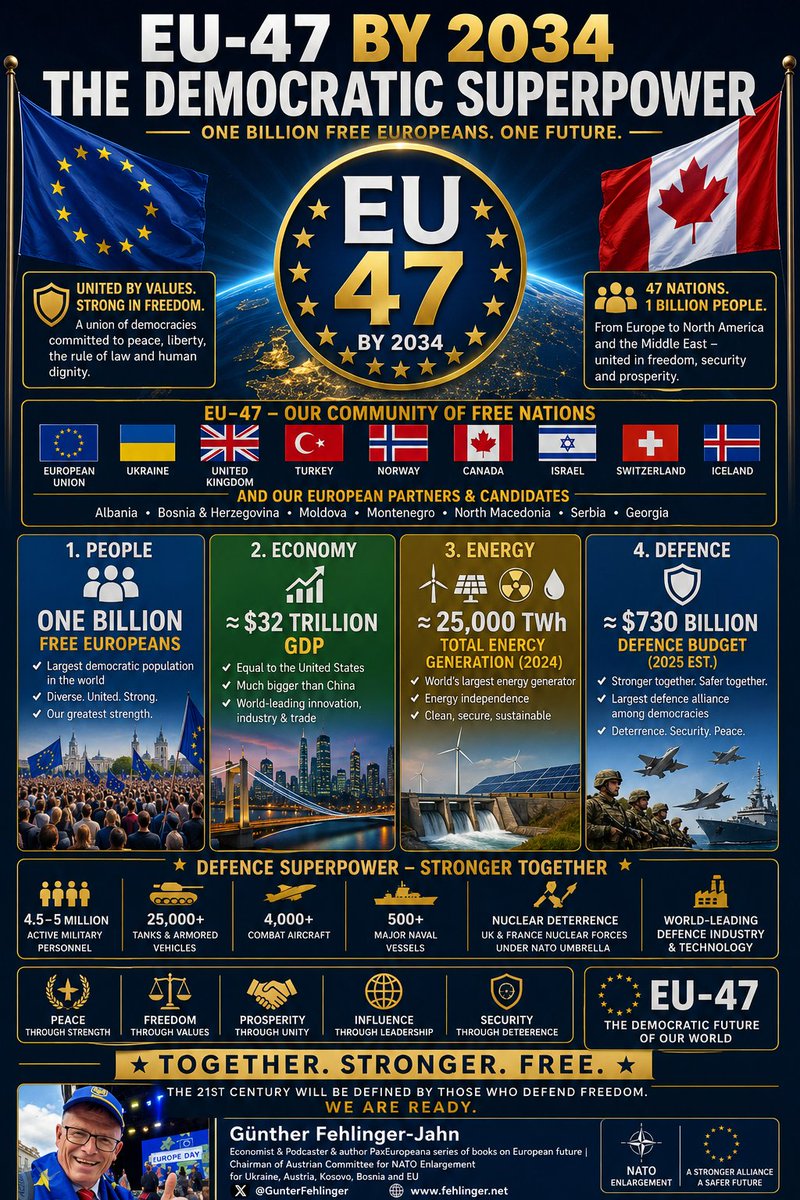
EU-47 BY 2034 🇪🇺🇨🇦🇬🇧🇺🇦🇹🇷🇮🇱
#EU47@MarkJCarney
The democratic superpower of the Free World.
@vonderleyen@EP_President
One Billion Free Europeans and allies. ≈ $32 Trillion GDP. ≈ 25,000 TWh energy generation. ≈ $730 Billion defense budget.
Together, Europe, Canada, Ukraine, the UK, Turkey, Israel and our democratic partners can become the strongest alliance of free nations in history.
Stronger than authoritarianism. Stronger than fear. Stronger together.
The future belongs to those who defend freedom, democracy, NATO, innovation, prosperity and security.
EU-47 means: ✅ EU Enlargement ✅ NATO Enlargement ✅ Energy Independence ✅ Common Defense ✅ Reconstruction of Ukraine ✅ High-Speed Infrastructure ✅ Democratic Industrial Power ✅ Strategic Autonomy for the Free World
A Europe united with North America and democratic allies is not a dream. It is a geopolitical necessity.
TOGETHER. STRONGER. FREE.
Gunther Fehlinger-Jahn
Economist & Podcaster & author PaxEuropeana series of books on European future
Chairman of Austrian Committee for NATO Enlargement for Ukraine, Austria, Kosovo, Bosnia and EU
@GunterFehlingerfehlinger.net#EU47#Europe#NATO#Ukraine#Canada#Israel#Turkey#EU#Freedom#Democracy#Security#Energy#Defense#PaxEuropeana#FreeEurope#EuropeanUnion#Geopolitics#GuntherFehlinger
I'm noticing an implosion in many #parties in Lebanon and around the world. Has the concept of a party become obsolete and no longer met the expectations of #citizens? If not, what else could it be?
تعمل اليونان على ترسيخ موقعها كبوابة أوروبية ضمن مشروع الممر الاقتصادي بين الهند وأوروبا (IMEC)، في وقت تعزز فيه أثينا وقبرص علاقاتهما مع الإمارات بدعم أميركي.
خلال زيارات إلى أبوظبي، ناقش رئيس الوزراء اليوناني والرئيس القبرصي ملفات التكنولوجيا والطاقة والأمن البحري مع رئيس دولة الإمارات.
هناك اقتراح جديد في مجلس الشيوخ الأميركي يدعم إنشاء ممر تجاري في شرق المتوسط يربط الهند والخليج وإسرائيل واليونان وأوروبا عبر الموانئ والخدمات اللوجستية والبنية التحتية الرقمية.
مسكين لبنان،
مستعمرة ولائية فقيرة تحكمها مافيوقراطية فاشلة.
"#المفاوضات" #الاميركية #الايرانية اطالت كثيراً. لم تعد مفاوضات انما لعبة الفأر والقطة، كما في الالعاب الكرتونية
بانتظار اجتماع شي شي بينغ ترامب، فتنجلي الصورة
صنع الثنائي من جنوب لبنان وبقاعه فلسطين اخرى ؛علمتنا كل من مصر والأردن لا تحرير من دون دولة ناجزة تؤمن امنها وأمن جيرانها.لا استقرار دون حياد في لبنان . إذا لم تختار الطائفة الشيعية هذه الطريق وهذا الخيار،التبعات عليها وعلينا ما نراه في فلسطين منذ ١٩٤٨ وعلينا الفصل ونحن مع الدولة
A pivotal meeting between China and the US (May 15) will determine the next phase for the entire planet for years to come.
The fate of Iran and global trade & energy and commodities, will be affected.
Prep meetings begun in China between the 2 teams. Change in Iran is inevitable.
« The seeker after truth »
is not the one who follows his natural disposition to trust the writings of the ancients.
The seeker after truth is the one who suspects them, questions them, and submits only to argument and experiment.
Ibn Al Haytham 965-1040
الحرب طويلة وكلما طال وقف النار بين ايران وإسرائيل تشتد المذبحة على الجنوب ويجد حزب الله نفسه لوحده تجاه إسرائيل؛ بدأت التسريبات من داخله ان خياره دخول الحرب ليكون جزء من الحل قد فشل وخسر ارض الجنوب وأفلس لبنان مرة جديدة وكسر دولته. الحل لن يأتي من بري بل من داخل الحزب والبيئة😥
اجتماع مصيري بين #الصين #وامريكا ( ١٥ ايار) سيحدد المرحلة القادمة لسنين عديدة للكوكب بكامله
منه سيندرج مصير #ايران والتبادل العالمي، كما وسعرا، #للطاقة #وللتبادل_التجاري والسلع
الاجتماعات التحضيرية بدأت في الصين بين الفريقين
التغيير في ايران قادم لا محال منه
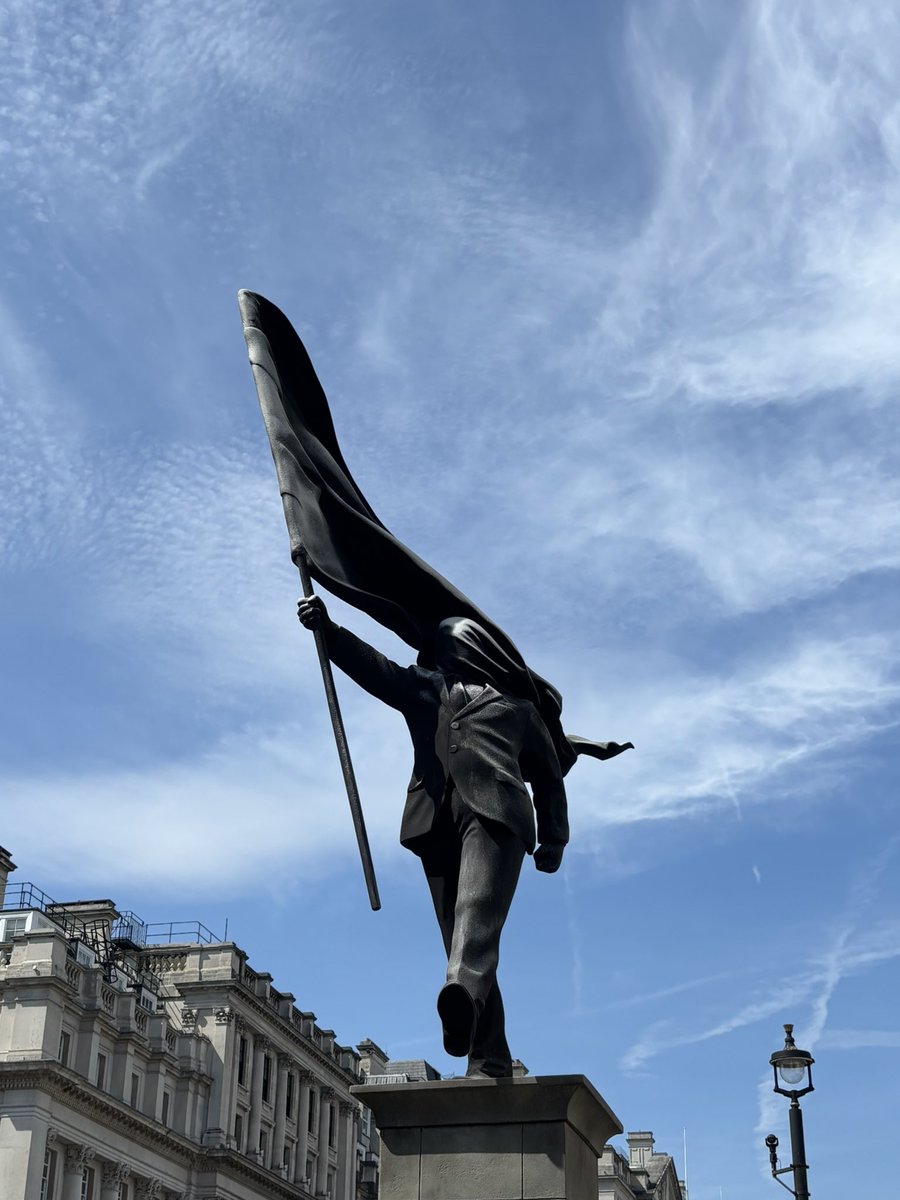
There are moments when a work of art, without naming a place or a people, feels as though it has been made precisely for them. #Banksy’s latest piece in #London Waterloo Place 👇 is one such moment.
For many Lebanese viewers, including myself, its relevance is very poignant. The work I had the opportunity to see today distills 3 issues that resonate deeply with our lived reality back home: “blind patriotism”, leadership drifting into crisis, and the troubling dual role of the flag as both identity and obstruction.
First, blind patriotism. The figure advancing with a flag covering his face is not simply loyal—he is blinded by that loyalty. In Lebanon, allegiance—whether to sect, party, or even the nation itself—can become so absolute that it leaves little room for scrutiny. Criticism is recast as betrayal; dissent is viewed as disloyalty. In such an environment, patriotism is no longer a shared civic commitment but a fragmented, competing set of identities—each claiming legitimacy, none willing to yield. #Banksy’s work exposes the cost of this dynamic: when loyalty is defined by identity rather than accountability, one does not merely choose not to see; one becomes unable to.
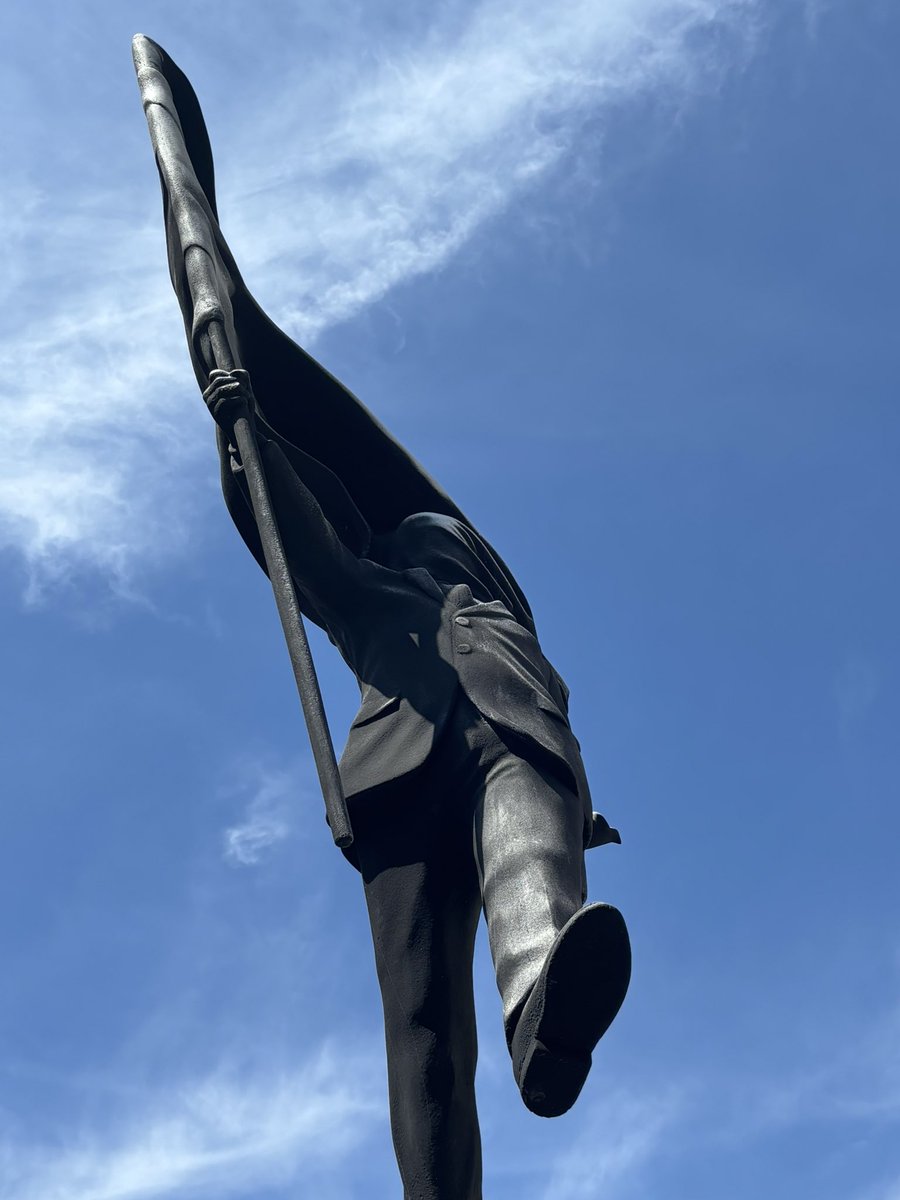
Second, leadership walking into crisis. Banksy’s flag holder👇 moves forward with purpose, unaware that he is approaching a fall. This unsettling motion mirrors a defining feature of #Lebanon’s recent history: the steady, almost methodical advance into crisis without meaningful course correction. Economic collapse, institutional decay, and social fragmentation have unfolded in plain sight. Yet identity politics has insulated leadership from consequence. When political survival depends on mobilizing sectarian loyalty rather than delivering governance, failure carries little immediate cost. Accountability dissolves into affiliation. The result is a system that continues to move—even as it falters—because its legitimacy is rooted not in performance, but in identity. The tragedy is not only the fall itself, but the refusal to acknowledge the edge even as it draws near. The artwork captures that unsettling dynamic: a deliberate stride toward consequences that remain willfully unseen.
Third, the flag as both identity and obstruction. Perhaps the most powerful inversion in the piece is the role of the flag. Traditionally, it symbolizes unity, belonging, and shared purpose. Here, it becomes a barrier to sight. In #Lebanon, this duality is deeply familiar. Flags—national and partisan—carry immense emotional weight, yet they also reinforce the very divisions that hinder collective progress. Identity, instead of serving as a foundation for pluralism, becomes a boundary that discourages compromise, and fragments the public space into competing narratives. In this sense, the flag ceases to be a point of convergence and becomes an instrument of separation—a barrier that prevents the public from seeing beyond each own affiliations.
What makes #Banksy’s piece so impactful is not that it singles out #Lebanon, but that it doesn’t need to. Its language is universal, yet its echoes are too local. It speaks to any society where loyalty can turn blinding, where leadership can confuse motion with progress, and where symbols meant to unite can end up dividing. For Lebanese viewers, these are not abstract ideas—they are unfortunately lived realities. And in that recognition lies both the discomfort and the power of the work.