

"Disregard" breaks Google is something I never contemplated. And I contemplate a lot of stuff.
English
Robert Cathey
16.8K posts
@robertcathey
https://t.co/r11DmojLYa supports the companies and open source projects building the future of AI infrastructure and apps with messaging, content, and PR strategies.





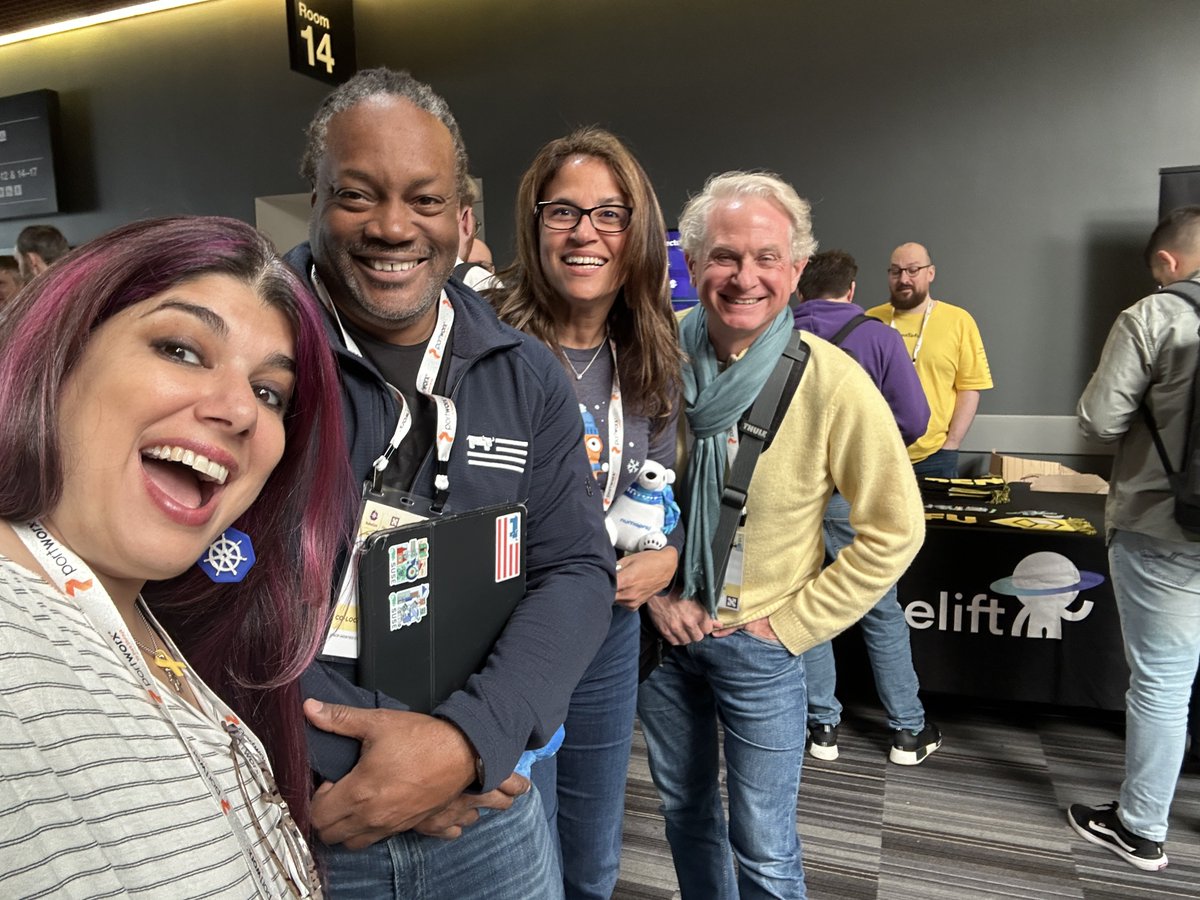
Hey @SWDevAngel @robertcathey - hi spy you both on the keynote slide. You around here at #kubeconEU?

It all starts tomorrow. #KubeCon + #CloudNativeCon Europe, 23-26 March, Amsterdam. 🇳🇱 Don't miss an epic event, including the new #CloudNative Theater featuring 2.5-hour deep dives. See you on the show floor! 🎟 events.linuxfoundation.org/kubecon-cloudn…


Dario Amodei just told software engineers exactly how long they have. Six to twelve months. Amodei: “I have engineers within Anthropic who say I don’t write any code anymore. I just let the model write the code, I edit it, I do the things around it.” The people building the most powerful AI in history have already stopped writing code. That is not a forecast. That is the current working condition inside the lab closest to the frontier. Amodei: “We might be six to 12 months away from when the model is doing most, maybe all, of what SWEs do end-to-end.” The tech industry spent a decade making software engineers its highest-paid, most protected class. That era has a last day now. When a model can execute an entire software build end-to-end, the ability to write syntax stops being a skill. It becomes a credential for a job that no longer exists. Amodei: “And then it’s a question of how fast does that loop close.” That is the sentence everyone skipped. The code was never the hard part. The hard part was everything around it. The model just learned everything around it. Writing the code is already nearly gone. Testing is next. Deployment is next. When all three collapse into a single autonomous execution loop, the machine no longer needs a human in the chain at all. The corporation or sovereign state that closes that loop first does not gain a competitive advantage. It gains a category of speed that biological engineers cannot match, track, or reverse. That is not disruption. That is replacement at a systems level. Amodei is not describing a future disruption. He is describing the current state of his own building. The loop is already closing. The only question is whether you are inside it or outside it when it seals.
