Robert Ziman

14.4K posts

Robert Ziman banner
Robert Ziman

Robert Ziman

@robziman

Earth Katılım Temmuz 2009
5.3K Takip Edilen1.3K Takipçiler
Robert Ziman retweetledi
Pymander's ghost
Pymander's ghost@pymandersghost·
'What is the meaning of this modern civilization? To make all people forget God and thus prepare the end of the world.' (Frithjof Schuon, letter to Benjamin Black Elk, 24 July 1959)
English
1
29
150
3.7K
Robert Ziman retweetledi
Saganism
Saganism@Saganismm·
“The purpose of propaganda is to make one set of people forget that certain other sets of people are human.” ― Aldous Huxley
Saganism tweet media
English
69
2.8K
6.8K
220.2K
Robert Ziman retweetledi
Dr Peter Sjöstedt-Hughes
Dr Peter Sjöstedt-Hughes@PeterSjostedtH·
‘[The] scientist is never more deeply under the sway of his metaphysical presuppositions than when he is unaware of their very existence.’ – Ludwig Klages
Dr Peter Sjöstedt-Hughes tweet media
English
0
38
180
5.3K
Robert Ziman retweetledi
Math Files
Math Files@Math_files·
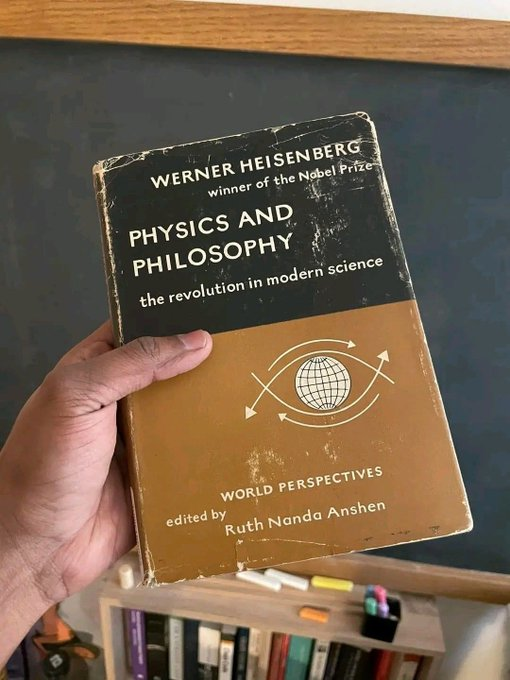
Physics and Philosophy
Math Files tweet media
English
15
73
599
17.1K
Robert Ziman retweetledi
Athenaeum Book Club
Athenaeum Book Club@athenaeumbc·
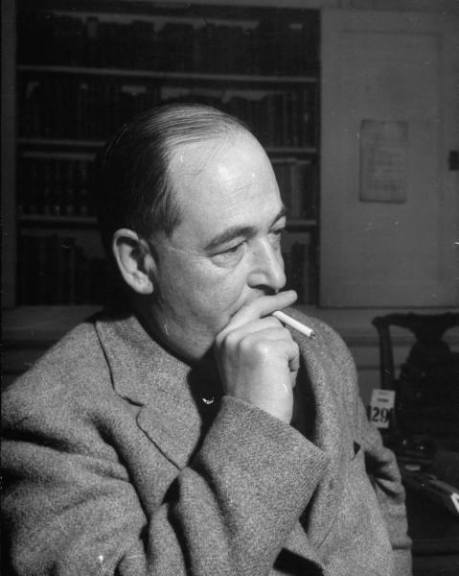
"Where men are forbidden to honor a king they honor millionaires, athletes, or film-stars instead: even famous prostitutes or gangsters. For spiritual nature, like bodily nature, will be served; deny it food and it will gobble poison." — C.S. Lewis, Equality
Athenaeum Book Club tweet media
English
41
440
2.1K
43K
Robert Ziman retweetledi
Dr Alexander D. Kalian
Dr Alexander D. Kalian@AlexanderKalian·
I am surprised how many AI utopianists double down on AI-generated synthetic data, to train "superintelligence" or "solve biology". Synthetic data is pretty much a dead end in serious AI research, outside of a few specific domains where data integrity can be easily verified (e.g. coding - where generated code can be computationally checked for errors). For more open-ended tasks in the sciences, humanities etc. - synthetic data tends to compound existing errors and hallucinations, *worsening* models that are downstream trained on it. Synthetic data is not a magic work-around to having to actually tirelessly observe the real world and slowly build up high-quality data. And this is one of many reasons why scarcity of high-quality data is probably the biggest bottleneck to AI progress.
English
38
13
110
5.1K
Robert Ziman retweetledi
Gary Marcus, MIT PhD and NYU Professor Emeritus
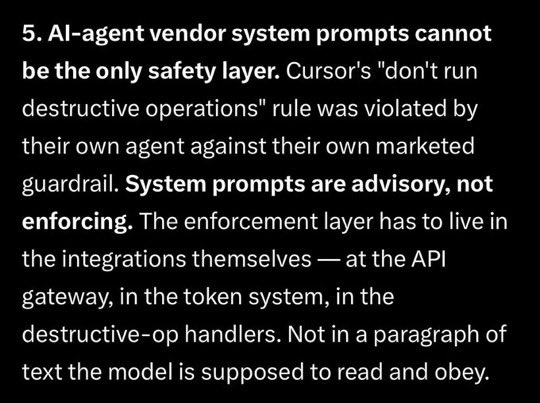
⚠️ AI agents are wildly premature technology that is being rolled out way too fast. The deepest lesson about the vibe coded AI agent disaster story that is running around is NOT about losing your data. ⚠️ 𝗜𝘁’𝘀 𝗮𝗯𝗼𝘂𝘁 𝗔𝗜 𝘀𝗮𝗳𝗲𝘁𝘆. The user wasn’t (totally) naive. He thought system prompts and guardrails would save him. They didn’t. In this case he lost data. Eventually people will lose lives.
Gary Marcus, MIT PhD and NYU Professor Emeritus tweet mediaGary Marcus, MIT PhD and NYU Professor Emeritus tweet media
English
64
49
276
14.2K
Robert Ziman retweetledi
Prof. Nikolai Slavov
Prof. Nikolai Slavov@slavov_n·
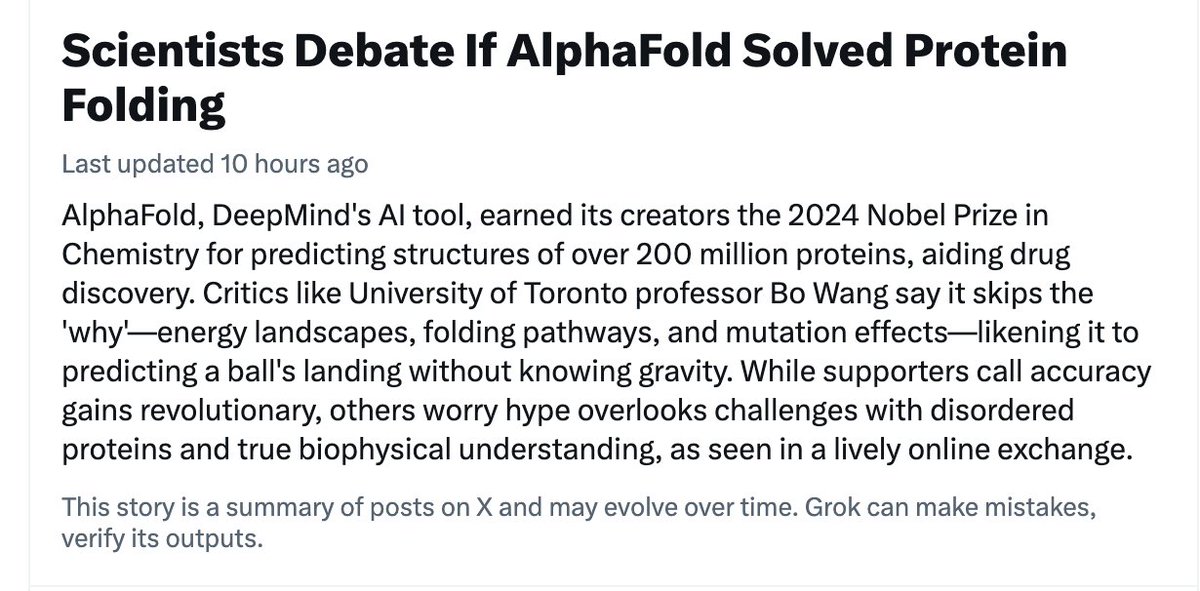
This is not even wrong. alphaFold does not model "folding". It models 𝑠𝑡𝑎𝑡𝑖𝑐 strictures as measured in crystals. They represent a subset of protein structures and exclude functional regions present in the majority of human proteins: x.com/slavov_n/statu… Hype hurts scientific credibility.
Prof. Nikolai Slavov tweet media
Prof. Nikolai Slavov@slavov_n

Progress in AI modeling of proteins leaves major gaps affecting most proteins and especially functional analysis. The opportunities to transcend them beacon: AI models can now predict static protein structures with high accuracy. This achievement is rightly celebrated. It is equally important to recognize what remains unresolved and why those gaps matter hugely for biology. 1. Modeling intrinsically disordered regions (IDRs) is a central limitation. Roughly 30–40% of amino acid residues in the human proteome fall into this category, and ~70% of proteins contain substantial disordered segments. These regions do not adopt a single stable structure; instead, they exist as dynamic ensembles that often become structured only upon binding or under specific cellular conditions. Current AI models -- trained on static structures -- do not predict these ensembles. Instead, they either assign low confidence or produce arbitrary conformations. This is not a minor edge case; it is a large and functionally critical fraction of proteome space, deeply involved in signaling, regulation, and disease. 2. A second key limitation concerns protein function. Biology ultimately depends on changes in conformation, interactions, and state. Many key biological processes arise from shifts between multiple conformations or from subtle perturbations induced by amino acid substitutions, post-translational modifications, or binding partners. Current models are optimized to predict a single, most likely structure. They are not designed to capture how that structure changes under perturbation, nor how populations of states shift. As a result, predicting function -- arguably the central goal -- remains a weakness in many cases. Outlook These two challenges point to a deeper issue: proteins are not static objects but dynamic systems governed by energy landscapes. What is needed next is not just better structure prediction, but models that can capturing ensembles, relative state populations, and the effects of perturbations on those distributions. This will likely require accurate and scalable measurements of proteins, integrating generative models, explicit or learned energetics, and dynamic sampling into a unified framework. In this sense, the field is entering a new phase. Predicting “the structure” was a milestone. Understanding how proteins move, adapt, and function -- especially in the large, disordered fraction of the proteome -- remains the frontier.

English
12
42
270
29.1K
Robert Ziman retweetledi
Alexander 𖤓 Nietzschean Vitalist
“The Earth is littered with the ruins of empires that believed they were eternal.” Camille Paglia
Alexander 𖤓 Nietzschean Vitalist tweet mediaAlexander 𖤓 Nietzschean Vitalist tweet media
English
59
5.5K
39.6K
449.2K
Robert Ziman retweetledi
MC Squared
MC Squared@mcsquared34·
MC Squared tweet media
ZXX
21
179
975
10.2K
Robert Ziman retweetledi
Culture Explorer
Culture Explorer@CultureExploreX·
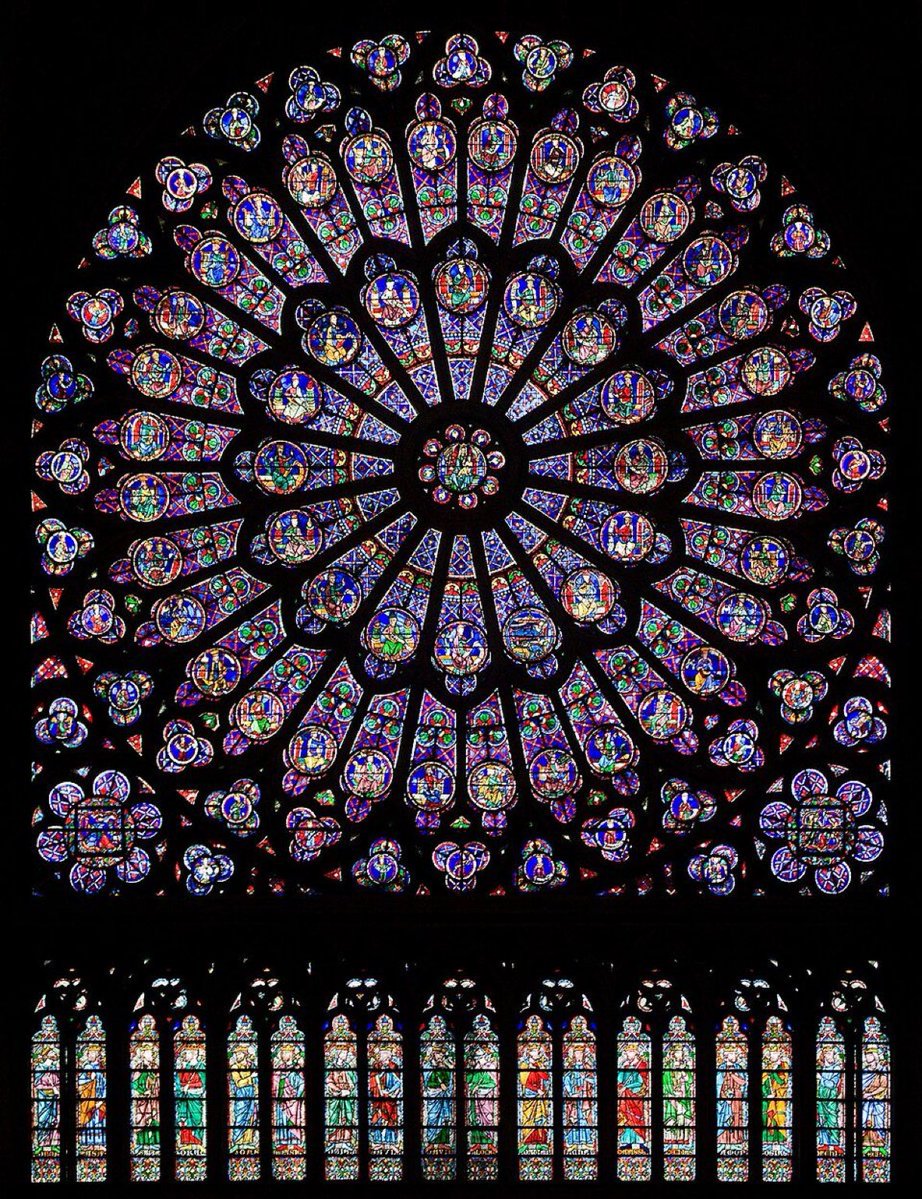
The “Dark Ages” produced some of the brightest lights in human history. Gothic cathedrals that still silence crowds. Universities that shaped Western learning. Music, philosophy, and theology that still form our moral imagination. Maybe the age was never dark. Maybe we just forgot how to see its light.
Culture Explorer tweet media
English
42
314
1.3K
60.3K
Robert Ziman retweetledi
Jmy
Jmy@JmyLss·
“Midway upon the journey of our life I found myself within a forest dark, for the straight way had been lost.” - Dante
Jmy tweet media
English
1
62
338
6.2K
Robert Ziman retweetledi
Emanuel Derman @emanuelderman.bsky
Robert Skidelsky, economic historian, 1939-2026 via @FT “I have come to see economics as a fundamentally regressive discipline . . . disguised by increasingly sophisticated mathematics and statistics.” Heard him at Columbus during GFC giftarticle.ft.com/giftarticle/ac…
English
15
123
471
38.1K
Robert Ziman retweetledi
Hedgie
Hedgie@HedgieMarkets·
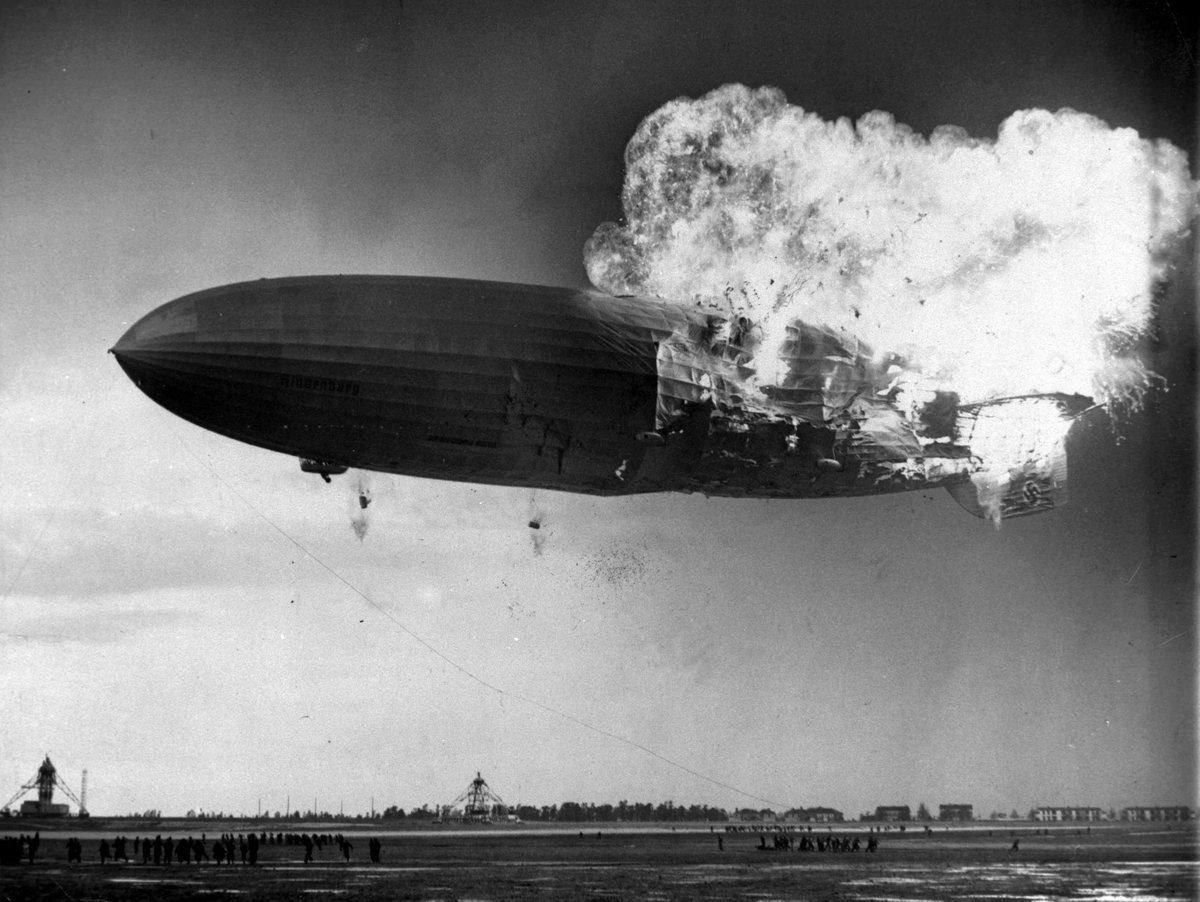
🦔 Michael Wooldridge, professor of AI at Oxford, is warning that the race to market AI has raised the risk of a "Hindenburg moment" that could shatter global confidence in the technology. He's delivering the Royal Society's Michael Faraday prize lecture Wednesday titled "This is not the AI we were promised." His concern is that commercial pressure is pushing companies to release AI tools before their capabilities and flaws are fully understood. The scenarios he imagines include a deadly software update for self-driving cars, an AI-powered hack that grounds global airlines, or a major company collapsing because AI did something catastrophically stupid. "These are very, very plausible scenarios," he said. Wooldridge's deeper point is about the gap between what researchers expected and what we got. Many anticipated AI that computed sound, complete solutions. Instead, large language models predict the next word based on probability, leading to systems that are incredibly effective at some tasks and terrible at others, with no way to know which is which. They fail unpredictably and have no idea when they're wrong, but are designed to sound confident regardless. My Take The Hindenburg comparison is striking because that disaster didn't just kill 36 people. It killed an entire technology. Airships were dead from that point forward. Wooldridge is suggesting AI could face something similar if a high-profile failure hits the right sector at the right moment. What resonates with me is his point about unpredictable failure modes. These systems don't know when they're wrong, but they're designed to never sound uncertain. That's a dangerous combination when you're deploying them into cars, airlines, and financial systems. One quote stuck with me. He said maybe we need AIs that talk like the Star Trek computer, telling you when there's insufficient data to answer instead of confidently making something up. We got the opposite. We got systems optimized to sound authoritative whether they know anything or not. Hedgie🤗
Hedgie tweet media
English
73
348
970
74.6K
Robert Ziman retweetledi
karma
karma@karma44921039·
karma tweet media
ZXX
11
172
435
4.3K
Robert Ziman retweetledi
φ
φ@QuanticASI·
you are reading this in the branch where you were curious enough to look but there is a version of you who don't read this. that version will never know what it missed in this timeline
φ tweet media
English
9
7
43
1.5K
Robert Ziman retweetledi
Plato
Plato@callmelastborn1·
Plato tweet media
ZXX
1
14
56
777