

adiaba roczyno
1.1K posts
adiaba roczyno
@roczyno
Fullstack Software Engineer | AWS Certified Cloud Architect | React, Node.js, Java, AWS, DevOps
Sekondi Takoradi, Ghana Katılım Ekim 2019
1K Takip Edilen116 Takipçiler
ECG and Ghana Water Company Limited should just decide who wants to actually work every 6 months. People can’t face power crises and water crises at the same time. This isn’t the Stone Age.
English
@uday_devops You could use something like AWS control tower which gives you the ability to implement a guardrail at each ou level
English



@uday_devops by forming a platform engineering team, but then the interviewer won't really like the answer
English

I’m going to reduce my reliance on AI…trust me it’s not helping at all..
The more I use it, the more I feel dependent and dummer

English

@ben_bernardd @Ruf_ayii Ghanaians are villagers when it comes to buying TVs, they only buy a television by screen size and not by technology. Someone should prove me wrong and he or she will be shocked.
English


Sales person needed at a Chinese supermarket at Haatso
Salary 1000gh
SSNIT covered
Send CV on 0508806891
NOTE⚠️⚠️Condemn work
English


@Mwass_ Thought it was only Ghana. I guess it's an African problem then
English


So you guys ars keeping secrets inside of .env?
English
@demetriustech @Bitcoin_Teej Are you currently working or just stacking up certifications
English

@Bitcoin_Teej I Picked Cloud/DevOps last October. Already had the comptia triad but since then I’ve gotten AWS SAA & Hashicorp Terraform 004.
Next is AWS DevOps then I start applying! 🙏
English

High paying jobs that don't require a 4 year degree in 2026:
→ Cybersecurity Analyst — $95K–$130K (Security+ cert)
→ Cloud Engineer — $110K–$150K (AWS/Azure cert)
→ Salesforce Admin — $85K–$95K (free on Trailhead)
→ Tech Sales AE — $120K–$200K OTE
→ Defense Contractor — $100K–$160K (TS clearance)
→ Data Analyst — $75K–$100K (Google cert on Coursera)
→ DevOps Engineer — $110K–$140K
→ UX Designer — $85K–$115K (portfolio + Google cert)
All reachable in under 2 years.
Pick one and go.
English

Terraform is beautiful. Every concept has a story, you just don't know it yet.
You write your first Terraform file. VPC, EC2, S3. It works. Terraform saves the state in a file called terraform.tfstate sitting right next to your code.
Simple. It works. You feel like a genius.
Then your colleague runs terraform apply on their laptop. Now you have two state files. Both out of sync. Nobody knows what's actually deployed. You just broke production with a plan command.
So you move to remote state. State lives in an S3 bucket now. One source of truth. Everyone on the team reads from the same file.
But two people run terraform apply at the same time. Both read the same state. Both make changes. One overwrites the other. Infrastructure is now in an unknown state at 2am.
So you add state locking with DynamoDB. One apply runs at a time. The second one waits. No more race conditions. No more 2am mysteries.
Now your team has been clicking in the AWS console for months. Load balancers, security groups, RDS instances. None of it is in Terraform. You want to bring it all under control but you cannot delete and recreate production.
So you use terraform import. You point Terraform at the existing resource. It reads the real state and writes it into your state file. No downtime. No recreation. The resource is now managed by Terraform.
But someone still goes into the console and changes a security group rule manually. Terraform does not know. Next apply reverts it silently. Or worse, it conflicts and breaks something.
So you run terraform plan in CI on every pull request. Drift gets caught before it causes damage. The console becomes read only for humans.
Your dev and prod environments are now identical in code but different in size. You want one codebase, not two copies drifting apart.
So you use workspaces. Same code. Different state. Dev gets small instances. Prod gets Multi-AZ. You toggle with one command.
Infrastructure is now code. Reviewed. Versioned. Tested. Deployed like software.
That is the whole point of Terraform.
English
@EOEboh Kafka can be a queue and also Pub/Sub. RabbitMQ also behaves the same
English

What's the difference between
a Message Queue and a Pub/Sub system?
English
Nobody in production actually uses Kubernetes the way you learned it on KodeKloud and Udemy.
Those platforms taught you the right commands. They just showed you the wrong use case.
Everyone learns Kubernetes by deploying a 3-tier app. So everyone thinks that is the use case.
It is not. Almost no real company runs a 3-tier app on Kubernetes.
Kubernetes was built for running containers at scale. And the story of what people actually run on it has evolved every few years.
It started with microservices.
Netflix broke its monolith into hundreds of services. Each service needed to scale independently. Each needed its own deployment, its own resources, its own failure boundary.
Kubernetes handled all of it. Traffic spikes, crash recoveries, and internal communication.
Every company adopted the microservices model, and Kubernetes became the default.
Then companies started running databases on it.
Uber runs Cassandra on Kubernetes. Discord runs its entire data infrastructure on it.
Stateful workloads on Kubernetes used to be controversial. Now it is normal.
Then came CI/CD runners.
GitHub, GitLab, and almost every large engineering org run their pipeline runners on Kubernetes.
Every build gets a fresh pod. Runs. Dies. Clean slate every time. No shared state, no leftover secrets, no flaky environments.
Then ML workloads showed up.
OpenAI trains models by spinning up thousands of GPU pods in parallel. One training job requests 8 GPUs, runs for hours, and releases everything back to the pool. Next job picks it up immediately.
No idle machines. No wasted compute. The scheduler handles the queue.
You cannot do this cleanly without something like Kubernetes.
Then platform teams started building internal developer platforms on it.
Spotify built Backstage on top of Kubernetes and open-sourced it. Now everyone has started running their own IDP with Backstage on Kubernetes.
And now it is AI agent fleets.
Think about a company selling AI agents as a product. A thousand customers sign up in a week. Each customer's agents need isolated compute, memory, and API access.
You cannot manually provision that. You need something that spins up on demand, isolates workloads, and scales down when idle.
Kubernetes does exactly this. Companies like Scale AI and Harvey are already running agent infrastructure this way.
Each era had a new problem. Kubernetes already had the answer.
If your workload does not involve scale, isolation, or dynamic compute, you probably do not need Kubernetes. And that is fine.
But if it does, there is nothing else like it.
English


@CyberSamuraiDev You’re correct.. they just want the phone to stay active while communicating with clouds and also running back ups.. they didn’t design it like androids do.
Same thing with the Mac
English

Apple designs iPhones to turn on automatically when plugged in for a few simple reasons. The phone needs its software running to manage the charging speed and prevent the battery from overheating. While charging, the phone also stays active to back up your data to the cloud or install updates. If your power button ever becomes faulty, you can still turn the phone on just by plugging it in. Annoying but you have to admit it’s genius.
Thank You For Coming To #Engage2026@yetunede
When will Apple allow us charge our iPhones while they are off.
English

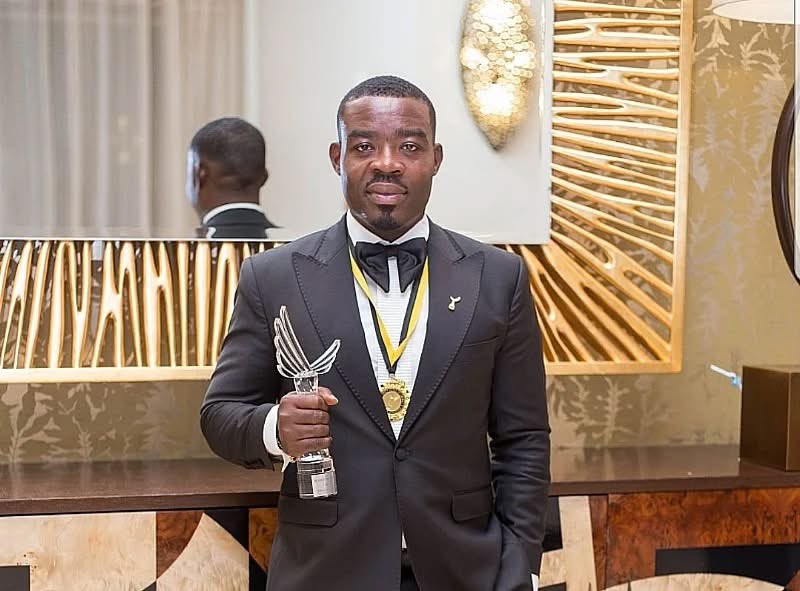
Marriage is Not an Investment": Judge slashes divorce financial claim from GHC50m to GHC300,000
In a divorce case between Mrs Joana Quaye and businessman Richard Nii Armah Quaye, the petitioner demanded GHC50 million in financial settlement.
High Court Judge Justin Kofi Dorgu rejected the huge claim, stating that marriage is not an investment and such a return would be unrealistic.
He noted that the petitioner had already received a one-third share of the matrimonial home, the respondent was ordered to cover the children’s education and health needs, and she is now gainfully employed in the same business line.
The judge awarded her GHC300,000 to discourage divorces filed in expectation of large financial gains.
English
@Moha001_Onyango So that means if there was a civilization on the moon, they could also call earth their moon
English
You know what’s interesting? The way we see the Moon go through phases.
That’s exactly how astronauts see Earth from space shifting from a thin crescent to a full Earth depending on how sunlight hits it all set against the vast emptiness of space.
English
@LateMoneyRight @zone_astronomy Yh so why does the earth look bigger now
English

@zone_astronomy I call bullshit.
NASA posted this yesterday.
Earth appeared much further away… yesterday.

English

Get Ready.. Prepare yourself to witness history unfold right before your eyes! 🚀
For the first time ever, the entire Orientale Basin, a massive and mysterious region on the Moon’s surface, has been fully captured thanks to the efforts of NASA’s Artemis II crew. This remarkable achievement marks a huge step forward in space exploration, revealing a breathtaking new view of our celestial neighbor. The clarity and detail in this historic image are absolutely stunning! 🌕🛰️ As we move further into space, it reminds us of the endless wonders still waiting to be discovered.

English
English

@roczyno @ThoughtPillow @Omojuwa I’m not sure you understand his explanation , u prefer he breaks it down to you like a 5 yrs old kid cos what do you mean ok thanks if you do understand every bit of the information he shared with you .
English

After staring at the Artemis II photos for so long, I went asking the sort of questions babies ask.
I found out yesterday humans haven’t dug lower than 2% into the earth. Thar’s the Kola Superdeep Borehole in Russia which is about 12.2 kilometres into the Earth’s crust. It was drilled by Soviet scientists between 1970 and 1994 on the Kola Peninsula, it remains the deepest artificial point on Earth by vertical depth.
The distance to the centre of the Earth is roughly 6,371 kilometres. They reached 12km and couldn’t continue.
Even at that depth, the temperature reached approximately 180°C which was far hotter than models had predicted. This is what halted drilling. The rock became so plastic under that heat and pressure that it behaved more like a fluid than a solid, making further progress impossible.
The borehole was welded shut in 2005 as the site was abandoned. No country has since attempted to surpass it.
Add this to the fact that we know more about Space than we do what’s beneath the Oceans!
English

I like people who are curious and not judgemental. Good you asked. Here is what I found.
No human has ever gone near the Earth’s core, so how do we know what it’s like? We rely on indirect evidence, mostly from seismic waves, gravity, and physics. Here’s the breakdown:
1. Seismic waves
•When an earthquake happens, it sends waves through the Earth.
•There are two main types:
•P-waves (primary waves) – can travel through solids and liquids
•S-waves (secondary waves) – can travel only through solids
•By measuring how these waves move and where they disappear or slow down, scientists figured out:
•There’s a liquid outer core (S-waves vanish there)
•There’s a solid inner core (P-waves speed up again)
⸻
2. Density and gravity
•The average density of the Earth is much higher than the crust or mantle alone.
•To match the overall gravity and density, the core must be made mostly of iron and nickel, with a solid inner core and liquid outer core.
⸻
3. Magnetic field
•The Earth’s magnetic field comes from the movement of liquid iron in the outer core.
•If the outer core weren’t liquid, we wouldn’t get a magnetic field like ours.
⸻
4. Laboratory simulations
•Scientists replicate extreme pressures and temperatures in labs.
•These experiments confirm that iron behaves as expected under core conditions (solid in the inner core, liquid in the outer).
⸻
So even though no one has “been there,” careful measurements and physics allow us to map the layers of the Earth with surprising accuracy.
English