Ro Omrow

2.6K posts

Ro Omrow

Ro Omrow

@rohanomrow

My posts, opinions and comments are mine... Whose else would they be?

Canada Katılım Mayıs 2009
676 Takip Edilen214 Takipçiler
Ro Omrow retweetledi
Claude
Claude@claudeai·
You can now enable Claude to use your computer to complete tasks. It opens your apps, navigates your browser, fills in spreadsheets—anything you'd do sitting at your desk. Research preview in Claude Cowork and Claude Code, macOS only.
English
5K
14.4K
139.4K
77.3M
Ro Omrow retweetledi
Tim Thielmann
Tim Thielmann@timthielmann·
I saw this 15 years ago as a lawyer for a band in northern BC. A Chinese coal company rep handed a band official $20,000 in cash in an unmarked envelope. But that official wasn’t crooked and the band opposed the mine. We took pictures of the cash, gave it back, and took the company to court. The judge shrugged. Company got its permits. By giving tribal leaders a veto over major resource projects, bribery in one form or another is now the ordinary course of business, even if it’s no longer cash in envelopes. Now, it’s billion dollar payouts. This is how reconciliation despite its lofty goals and some well meaning individuals working for indigenous groups, has rapidly corrupted our economy, and will soon transform British Columbia into the third world.
Nadine Wellwood@NadineWellwood

Watch the full interview here: youtu.be/yZdYXIZ3ETI China is actively targeting First Nations jurisdictions in the North for intelligence operations, aiming to corrupt leaders for access to critical minerals.

English
48
776
1.9K
88.7K
Ro Omrow retweetledi
Mr PitBull
Mr PitBull@MrPitbull07·
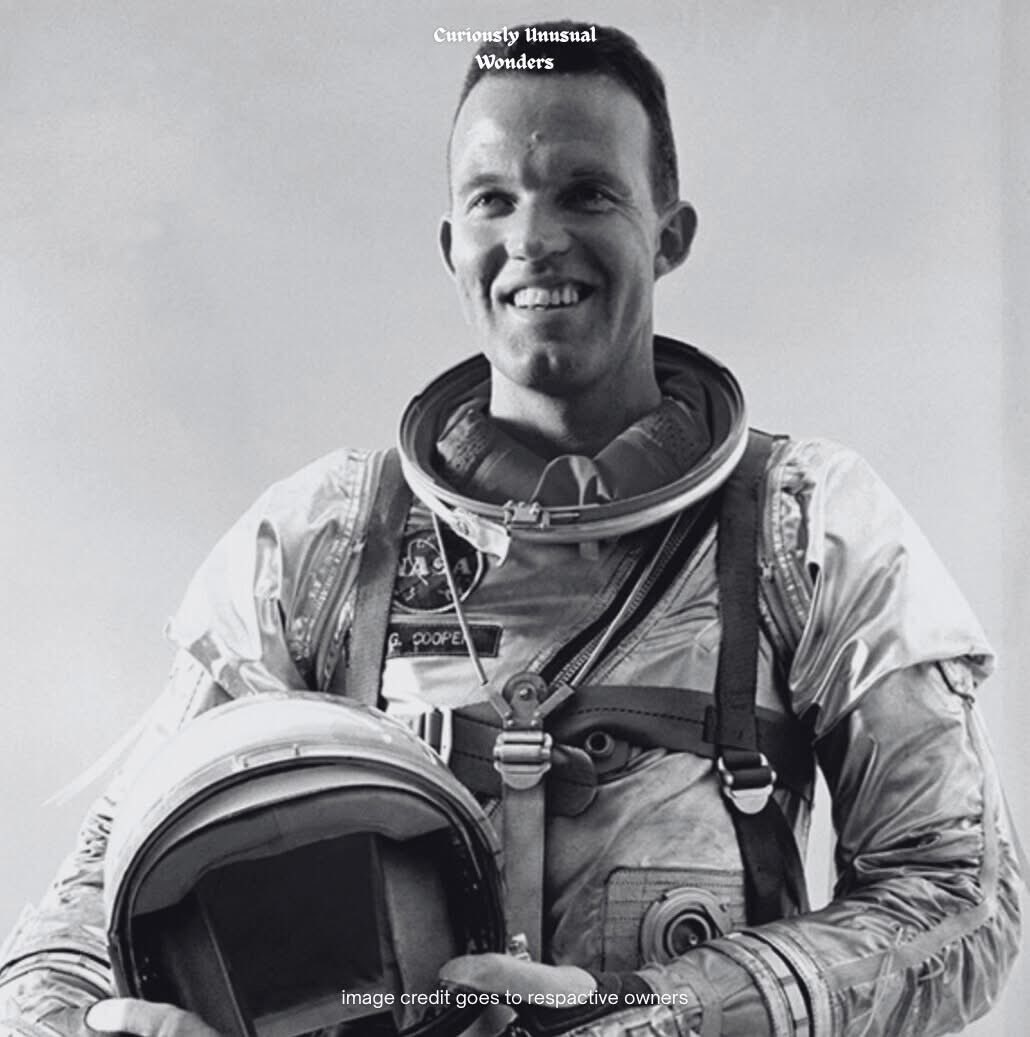
May 16, 1963. Gordon Cooper was orbiting Earth alone inside a capsule barely big enough to turn around in, moving at 17,500 miles per hour. He had been up there for over a day. Then the warnings started. First a faulty sensor screaming that the ship was falling — it wasn't. He switched it off. Then something far worse: a short circuit knocked out the entire automated guidance system. The one that kept the capsule steady. The one that was supposed to bring him home. Without it, reentry was nearly impossible. Too shallow an angle and the capsule would bounce off the atmosphere back into space. Too steep and it would incinerate. The margin for error was razor thin — and every computer that was supposed to hit that margin was dead. Down on the ground, NASA engineers watched the telemetry in silence. They could see everything going wrong. They could fix nothing. Cooper didn't panic. He uncapped a grease pencil and drew lines directly on the inside of his window to track the horizon. He looked up at the stars he had spent months memorizing and used their positions to orient the ship by eye. Then he set his wristwatch. Because when you have no computers left, you become the computer. At exactly the right moment — calculated in his head, confirmed by the stars outside — he fired the retrorockets. The capsule shook. The sky turned to fire. For several minutes, no one on Earth could reach him as plasma swallowed the ship whole. Then the parachutes opened. Faith 7 hit the water just four miles from the recovery ship — the single most accurate splashdown in the entire Mercury program. The man with a wristwatch and a few pencil marks on a window had outperformed every automated system NASA had. We talk a lot about technology saving us. And it often does. But Cooper's story is a quiet reminder that behind every machine, there still has to be a human being who can look out the window, think clearly under pressure, and decide what to do next. The final backup was never the software. It was him.
Mr PitBull tweet media
English
513
4K
16.6K
365.4K
Ro Omrow retweetledi
Archaeo - Histories
Archaeo - Histories@archeohistories·
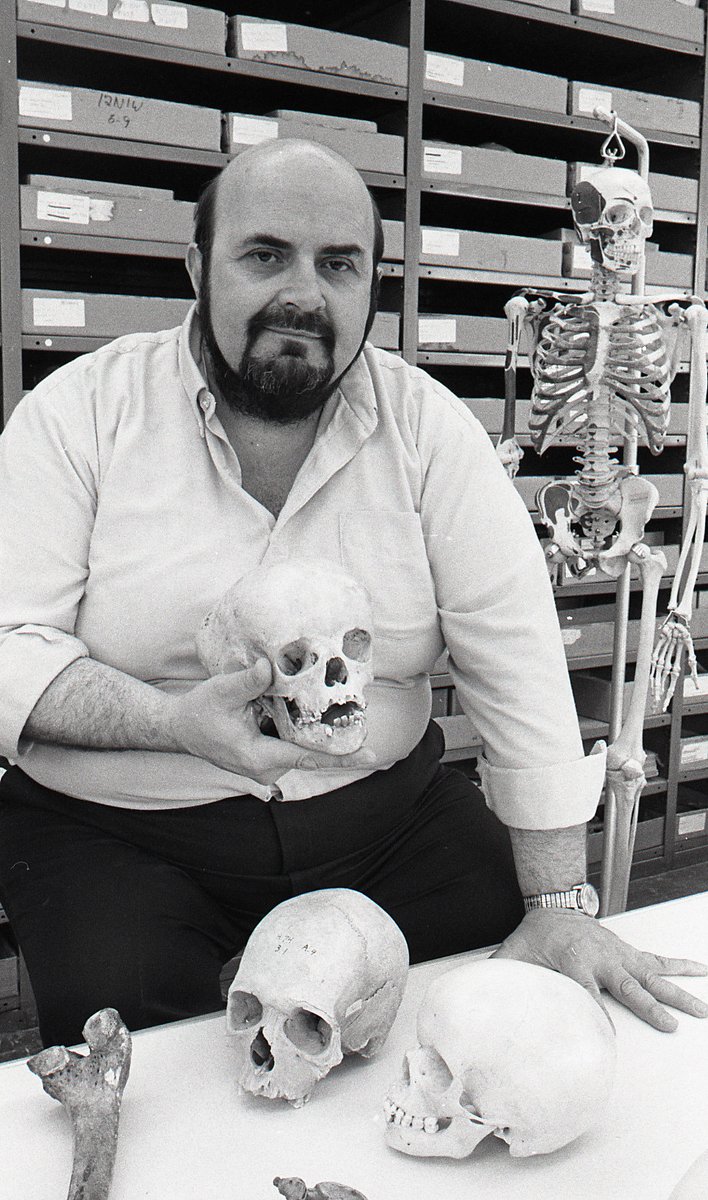
In 1980, a bioarchaeologist at Emory University named George Armelagos was studying ancient human bones from Sudanese Nubia, the kingdom that flourished along the Nile south of Egypt between roughly 350-550 CE, when something stopped him. Under ultraviolet light, the bones glowed. They fluoresced with a distinctive yellow-green color that Armelagos recognized immediately, because the same glow appeared in the bones of modern patients who had been treated with tetracycline. The antibiotic binds tightly to calcium and phosphorus in bone tissue as the body metabolizes it, leaving a permanent fluorescent marker. What Armelagos was seeing in bones nearly two thousand years old was chemically identical to what he saw in twentieth-century medical subjects. The archaeological community was skeptical. The received history of antibiotics began with Alexander Fleming’s discovery of penicillin in 1928, and tetracycline itself was not isolated until 1948. The idea that a pre-literate population in the Nile valley had been routinely ingesting it seemed implausible, and the initial findings were dismissed as post-mortem contamination from soil bacteria. Armelagos spent three more decades building the case. He eventually partnered with Mark Nelson, a leading tetracycline specialist at Paratek Pharmaceuticals, who agreed to perform a definitive chemical analysis. The process required dissolving the ancient bones in hydrogen fluoride, one of the most corrosive and dangerous acids in existence. What the resulting liquid-chromatography mass-spectrometry analysis found was not a trace of tetracycline. The bones were saturated with it. Multiple tetracycline variants were identified, including chlortetracycline and oxytetracycline, in concentrations indicating sustained exposure beginning in early childhood and continuing throughout life. Ninety percent of the Nubian individuals tested showed the labeling. The exposure had not been accidental or occasional. It had been lifelong and deliberate. The source was their beer. Ancient Egyptian and Nubian brewing began with grain, typically emmer wheat or barley, which in that region was naturally contaminated with Streptomyces, a soil bacterium that produces tetracycline as a metabolic byproduct. The grain was germinated, made into bread, then incompletely baked to preserve an active center, and finally fermented in vats of water. The standard practice was to seed each new batch with ten percent of the previous one, which kept the Streptomyces culture alive and active from batch to batch in a continuous chain. The resulting brew was thick, sour, low in alcohol, and highly nutritious. Everyone drank it, including children as young as two years old. The critical question Armelagos could not fully resolve was whether the Nubians understood what they were doing. The consensus among researchers is that they almost certainly did not know the mechanism. They had no concept of bacteria, no understanding of antibiotics as a drug class, and no language for what tetracycline was doing in their bodies. What they likely did know, accumulated through generations of observation and passed down as practical knowledge, was that this particular preparation of beer had medicinal effects. Ancient Egyptian and Jordanian medical texts record beer being used to treat gum disease, wounds, and other infections. The brewing method that produced tetracycline appears to have been deliberately maintained and refined over centuries, not by any understanding of the chemistry involved, but by the accumulated recognition that it worked. #archaeohistories
Archaeo - Histories tweet media
English
156
1.8K
8.5K
389.2K
Ro Omrow retweetledi
xierra ☾
xierra ☾@xierra·
@ezralevant speaks volumes that the CBSA would take this position on the photo rather than err on the side of concerned citizens. but hey, that’s New Canada for you i guess
English
0
5
19
867
Ro Omrow retweetledi
A.Ericksonn
A.Ericksonn@AEricksonn·
@PierrePoilievre Please let us not forget about dr. Bonnie Henry, the provincial health officer, who is a real piece of work herself. She and the others need to be held accountable. They were all in on it. x.com/WiretapMediaCa…
Wiretap Media@WiretapMediaCa

BREAKING: BC's Provincial Health Officer Bonnie Henry admits supporting the legalization of Heroin before lying to the committee about a former government colleague's special interest in a pharma company that shipped 15 kilos of Heroin into Canada!

English
1
3
12
428
Ro Omrow retweetledi
Dan Mazier
Dan Mazier@DanMazierMP·
BOMBSHELL TESTIMONY Former senior health officials in BC left their government positions and launched an opioid vending machine company and a company to manufacture injectable heroin. A researcher who advised the BC government on addiction for 20+ years revealed at health committee that both officials used their government positions to push safe supply and decriminalization before building companies around those same policies. Mark Tyndall launched MySafe Society while still serving as a senior government official. The company installed vending machines that dispensed opioids to drug users. The federal government gave them over $3.5 million in taxpayer dollars to do it. Perry Kendall founded Fair Price Pharma while serving as executive director of the government-funded BC Centre on Substance Use. The company's goal was to produce a domestic supply of injectable heroin. When I started asking questions, the Liberals tried to shut me down.
English
317
2.2K
4.7K
447.1K